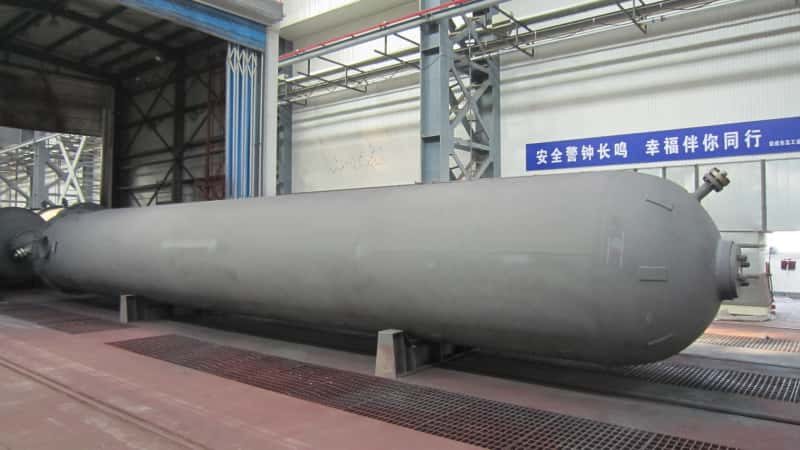

Selecting the wrong process columns can quietly undermine your entire operation—causing poor separation efficiency, excessive energy consumption, flooding or weeping issues, corrosion failures, and frequent shutdowns. Many engineers face the challenge of balancing performance, cost, and long-term reliability without a clear, structured approach. The good news is that with the right selection framework, you can avoid these pitfalls and ensure optimal performance tailored to your process needs.
To choose the right process columns for your application, you must first define your process objectives, including separation requirements, feed composition, flow rates, temperature, and pressure. Then select the appropriate column type (such as distillation, absorption, or stripping), determine suitable internals (trays or packing), choose corrosion-resistant materials, and ensure compliance with mechanical design standards. The final decision should optimize efficiency, safety, durability, and lifecycle cost.
Understanding that each application presents unique constraints and goals, it’s essential to evaluate process columns from both a process engineering and manufacturing perspective. The following structured outline will guide you through the most critical decision-making factors.
What Are Process Columns and Why Are They Essential for Your Application?

In many industrial operations, poor separation efficiency leads to inconsistent product quality, higher energy consumption, and increased operational costs. When mixtures are not properly separated, valuable components may be lost, impurities can remain, and downstream processes may fail or become inefficient. These issues not only reduce profitability but also create compliance risks in regulated industries. The solution lies in using well-designed process columns—engineered systems that enable precise, efficient separation and transformation of materials under controlled conditions.
Process columns are vertical vessels used to separate, purify, or chemically process mixtures by facilitating mass and heat transfer between phases (such as gas and liquid). They are essential because they ensure high product purity, process stability, energy efficiency, and scalability across industries like petrochemicals, pharmaceuticals, food processing, and environmental engineering.
To fully appreciate their importance, it’s crucial to understand how process columns work, their internal design, and how they directly impact your application’s performance and cost-effectiveness.
All process columns operate using the same internal design regardless of application.False
Different applications require different internals such as trays or structured packing to optimize efficiency, pressure drop, and mass transfer.
How Process Columns Work: Fundamental Engineering Principles
Process columns operate based on the principle of mass transfer, often combined with heat transfer, between two phases. The most common interaction is between a rising vapor and a descending liquid. As these two phases come into contact inside the column, components are selectively transferred based on properties like volatility, solubility, or chemical affinity.
For example, in a distillation column, components with lower boiling points vaporize and rise, while heavier components condense and fall. This repeated interaction across multiple stages leads to gradual separation into distinct fractions.
There are several main types of process columns, each designed for specific functions:
| Column Type | Working Principle | Typical Applications |
|---|---|---|
| Distillation Column | Separation by boiling point differences | Oil refining, solvents, fuels |
| Absorption Column | Gas absorbed into liquid solvent | Gas treatment, emission control |
| Stripping Column | Removal of volatile compounds from liquid | Wastewater treatment, solvent recovery |
| Extraction Column | Liquid-liquid separation | Pharmaceuticals, fine chemicals |
| Reactive Column | Simultaneous reaction and separation | Advanced chemical synthesis |
Each type uses either tray-based or packed internals to maximize surface area and contact time between phases.
Internal Design: The Key to Performance
The efficiency of a process column is largely determined by its internal components. These are carefully engineered to ensure optimal fluid distribution, contact, and separation.
Core Components
- Shell: The outer structure, designed to withstand pressure and temperature.
- Trays (Plates): Provide discrete stages for vapor-liquid contact. Types include sieve, valve, and bubble cap trays.
- Packing: Materials (random or structured) that provide continuous surface area for interaction.
- Reboiler: Supplies heat at the bottom to generate vapor.
- Condenser: Removes heat at the top to condense vapor into liquid.
- Distributors: Ensure even flow of liquid across packing.
| Component | Role in Process Column | Performance Impact |
|---|---|---|
| Trays | Stage-wise separation | High control, moderate pressure drop |
| Packing | Continuous contact surface | High efficiency, low pressure drop |
| Reboiler | Vapor generation | Energy input control |
| Condenser | Vapor condensation | Product recovery and reflux |
| Distributors | Uniform liquid spread | Prevents inefficiencies |
Why Process Columns Are Essential for Your Application
Process columns are not optional—they are foundational to modern industrial processing. Their importance spans multiple dimensions:
1. High Separation Efficiency
Process columns can achieve extremely high levels of purity, which is critical in industries like pharmaceuticals and specialty chemicals where even trace impurities are unacceptable.
2. Energy Optimization
Through techniques like heat integration and optimized reflux ratios, process columns minimize energy consumption while maximizing output.
3. Operational Stability
Well-designed columns provide consistent performance over long periods, reducing downtime and maintenance costs.
4. Scalability and Flexibility
From pilot plants to full-scale production, process columns can be designed to meet specific capacity and process requirements.
5. Regulatory Compliance
In environmental applications, such as gas scrubbing or wastewater treatment, process columns help meet strict emission and discharge standards.
Real-World Applications Across Industries
Process columns are used in a wide range of industries, each with unique requirements:
Petrochemical Industry
Distillation columns separate crude oil into usable products like gasoline, diesel, and jet fuel. These columns are often massive, with hundreds of trays and complex control systems.
Pharmaceutical Industry
Columns are used for purifying active ingredients, ensuring compliance with strict quality standards.
Food and Beverage
Distillation is used in alcohol production, while extraction columns are used for flavors and oils.
Environmental Engineering
Absorption columns remove pollutants like sulfur dioxide or ammonia from industrial emissions.
| Industry | Column Type Used | Application Outcome |
|---|---|---|
| Petrochemical | Distillation | Fuel separation |
| Pharmaceutical | Extraction/Distillation | High-purity compounds |
| Food & Beverage | Distillation | Alcohol production |
| Environmental | Absorption | Emission control |
Key Factors When Selecting a Process Column
Choosing the right process column is critical to achieving optimal performance. Consider the following:
Feed Characteristics
Chemical composition, phase behavior, and impurities must be understood to design the correct system.
Operating Conditions
Temperature, pressure, and flow rates influence material selection and internal design.
Desired Output
Purity levels and recovery rates determine the number of stages and column height.
Material Compatibility
Corrosive or high-temperature environments require specialized materials.
Maintenance Requirements
Ease of access and component replacement can significantly impact long-term costs.
Advanced Innovations in Process Columns
Modern process columns are benefiting from technological advancements:
- Structured Packing: Offers superior efficiency and lower pressure drop.
- Digital Simulation: Software tools allow precise modeling and optimization before construction.
- Smart Sensors: Enable real-time monitoring and predictive maintenance.
- Modular Design: Allows faster installation and scalability.
These innovations are transforming how industries approach separation and processing, making operations more efficient and sustainable.
Conclusion
Process columns are indispensable in modern industrial systems, enabling precise separation, purification, and transformation of materials. Their design and operation directly impact product quality, energy efficiency, and overall process reliability. By understanding their function and selecting the right configuration, you can significantly enhance your application’s performance and cost-effectiveness.
How Do Operating Conditions Influence the Design of Process Columns?

In industrial separation processes, overlooking operating conditions such as temperature, pressure, and flow rates can lead to catastrophic inefficiencies—poor product purity, excessive energy consumption, equipment failure, or even safety hazards. Many facilities struggle because their process columns are either overdesigned (wasting capital and energy) or underdesigned (failing to meet performance targets). The consequence is reduced profitability, operational instability, and frequent downtime. The solution lies in understanding how operating conditions directly shape the design of process columns, allowing engineers to tailor systems that are efficient, safe, and optimized for real-world performance.
Operating conditions—such as temperature, pressure, feed composition, and flow rates—directly determine the size, internal configuration (trays or packing), material selection, energy requirements, and overall efficiency of a process column. Properly aligning design with these conditions ensures optimal mass transfer, energy efficiency, mechanical integrity, and consistent product quality.
To truly optimize your system, it is essential to explore how each operating parameter influences column design decisions at a deep technical level.
Higher operating pressure always improves separation efficiency in process columns.False
Higher pressure can reduce relative volatility in distillation, making separation more difficult and increasing energy requirements in many systems.
Understanding the relationship between operating conditions and column design is not just theoretical—it is the foundation of reliable, high-performance industrial processing. Let’s examine each critical factor in detail and how it impacts engineering decisions.
Temperature: The Driving Force Behind Phase Equilibrium
Temperature is one of the most critical variables in process column design because it directly affects phase equilibrium, vapor-liquid interaction, and mass transfer efficiency. In distillation systems, temperature gradients are carefully controlled from the bottom (reboiler) to the top (condenser) to enable component separation based on boiling points.
Higher temperatures generally increase vaporization rates, but they also introduce challenges such as:
- Thermal degradation of sensitive compounds
- Increased energy consumption
- Material stress due to thermal expansion
Design implications include:
- Selection of heat-resistant materials (e.g., stainless steel alloys)
- Sizing of reboilers and condensers
- Determination of optimal temperature profiles
| Temperature Range | Design Impact | Engineering Consideration |
|---|---|---|
| Low (<100°C) | Reduced vaporization | Larger column or more stages required |
| Medium (100–300°C) | Balanced operation | Standard materials and internals |
| High (>300°C) | High vapor load, material stress | Special alloys, insulation required |
In advanced systems, temperature control loops and sensors are integrated to maintain precise gradients and ensure consistent separation.
Pressure: Balancing Volatility and Equipment Design
Pressure plays a pivotal role in determining relative volatility, which is the key factor in separation efficiency. Lower pressures generally enhance volatility differences, making separation easier, while higher pressures can suppress these differences.
However, pressure selection is a trade-off:
- Low Pressure (Vacuum Operation):
- Improves separation of heat-sensitive materials
- Requires larger المعدات due to increased vapor volume
- High Pressure:
- Reduces equipment size
- Increases energy demand and may reduce separation efficiency
| Pressure Level | Advantages | Design Challenges |
|---|---|---|
| Vacuum | Better separation, lower ताप | Larger diameter, vacuum sealing required |
| Atmospheric | Balanced cost and performance | Standard design |
| High Pressure | Compact design | ضخ material, higher energy consumption |
Pressure also dictates wall thickness, flange ratings, and safety systems, making it a critical mechanical design parameter.
Flow Rates: Determining Column Size and Internals
Flow rates of both liquid and vapor phases directly influence:
- Column diameter
- Tray spacing or packing type
- Flooding and weeping limits
If flow rates are too high, the column may experience flooding, where liquid is carried upward by vapor, reducing efficiency. If too low, weeping occurs, where liquid leaks through trays without proper contact.
| Flow Condition | Operational Risk | Design Adjustment |
|---|---|---|
| High Flow | Flooding | Larger diameter, high-capacity trays |
| Low Flow | Weeping | Smaller trays, optimized توزيع |
| Optimal | Stable operation | Balanced design |
Engineers use hydraulic calculations and simulation tools to determine the maximum allowable vapor velocity and ensure stable operation.
Feed Composition: Customizing the Separation Strategy
The chemical composition of the feed mixture determines:
- Type of column (distillation, absorption, etc.)
- Number of stages required
- Reflux ratio and energy input
Complex mixtures with close boiling points require:
- More stages (taller columns)
- Higher reflux ratios
- Advanced internals like structured packing
| Feed Type | Design Requirement | Complexity Level |
|---|---|---|
| Simple binary mixture | Standard distillation | Low |
| Multi-component | Multi-stage separation | Medium |
| Azeotropic mixture | Special techniques (entrainers) | High |
Material Selection: Ensuring Durability and Safety
Operating conditions such as temperature, pressure, and chemical composition directly influence material choice. For example:
- Corrosive environments → stainless steel, Hastelloy
- High ताप → heat-resistant alloys
- Food/pharma → sanitary-grade materials
| Condition Type | Recommended Material | Reason |
|---|---|---|
| Corrosive | Stainless steel 316L | Corrosion resistance |
| High Temperature | Alloy steel | Thermal stability |
| Hygienic | Polished stainless steel | Cleanability |
Material selection impacts not only durability but also compliance with industry standards.
Energy Integration and Efficiency Optimization
Operating conditions determine how energy is supplied and recovered within the column. Techniques include:
- Heat integration between streams
- Use of multiple-effect distillation
- Optimized reflux ratios
Energy consumption can account for up to 70% of operating costs in distillation systems, making this a critical design focus.
Advanced Design Tools and Simulation
Modern process column design relies heavily on simulation software such as Aspen Plus or HYSYS, which allow engineers to:
- Model phase behavior under varying conditions
- Predict column performance
- Optimize design before construction
These tools incorporate real thermodynamic data and enable scenario analysis for different operating conditions.
Real-World Case Study
A petrochemical plant redesigned its distillation column by adjusting operating pressure from atmospheric to mild vacuum. The result:
- 18% reduction in energy consumption
- 25% improvement in product purity
- Extended equipment lifespan
This demonstrates how aligning operating conditions with design can yield significant operational benefits.
Conclusion
Operating conditions are not just parameters—they are the foundation upon which process column design is built. Temperature, pressure, flow rates, and feed composition collectively determine the efficiency, safety, and cost-effectiveness of your system. By carefully analyzing and integrating these factors into the design phase, you can achieve optimal performance and long-term reliability.
Which Types of Process Columns Should You Choose for Your Application?

Choosing the wrong type of process column can quietly undermine your entire operation—leading to poor separation efficiency, excessive energy consumption, frequent maintenance issues, and even product contamination. Many engineers and plant managers face the challenge of balancing performance, cost, and operational stability without fully understanding how different column types behave under real process conditions. The result is often over-engineered systems or, worse, underperforming equipment that fails to meet production goals. The solution is to clearly understand the different types of process columns available and match their design characteristics to your specific application requirements.
The best type of process column for your application depends on factors such as separation mechanism, feed composition, operating conditions, and efficiency requirements; common options include distillation columns for volatility-based separation, packed columns for high-efficiency low-pressure operations, tray columns for robust handling of varying loads, absorption columns for gas-liquid transfer, and reactive columns for combined reaction and separation processes.
Understanding these options in depth will allow you to make a technically sound and economically optimal decision. Let’s explore each type and how to select the right one for your needs.
Packed columns always outperform tray columns in every application.False
Packed columns offer higher efficiency and lower pressure drop in many cases, but tray columns are better suited for handling fouling, high liquid loads, and operational flexibility.
Selecting the appropriate process column is not a one-size-fits-all decision—it requires a detailed evaluation of process goals, constraints, and long-term operational considerations. The following sections provide a deep technical breakdown to guide your choice.
Distillation Columns: The Backbone of Separation Processes
Distillation columns are the most widely used process columns in industries such as petrochemical, refining, and chemical manufacturing. They separate components based on differences in boiling points through repeated vapor-liquid equilibrium stages.
There are two main configurations:
- Tray Distillation Columns
- Packed Distillation Columns
Tray columns use discrete stages (trays), while packed columns use continuous contact surfaces.
| Feature | Tray Column | Packed Column |
|---|---|---|
| Efficiency | Moderate to high | High |
| Pressure Drop | Higher | Lower |
| Fouling Resistance | Better | Poorer |
| Maintenance | Easier to inspect | More complex |
| Capacity Handling | Excellent for large flows | Better for smaller to medium flows |
Distillation columns are ideal when:
- You need high-purity separation
- Components have distinct boiling points
- Large-scale continuous processing is required
However, for close-boiling mixtures or azeotropes, additional techniques like extractive or azeotropic distillation may be necessary.
Packed Columns: High Efficiency with Low Pressure Drop
Packed columns are designed to maximize surface area for mass transfer using materials such as structured or random packing. These are particularly effective in applications where pressure drop must be minimized.
Types of Packing:
- Random Packing: Raschig rings, Pall rings
- Structured Packing: Corrugated metal sheets arranged in a regular pattern
| Packing Type | Surface Area | Pressure Drop | Cost | Application Suitability |
|---|---|---|---|---|
| Random Packing | Moderate | Low | Lower | General-purpose |
| Structured Packing | Very High | Very Low | Higher | High-efficiency separations |
Packed columns are best suited for:
- Vacuum distillation
- Heat-sensitive materials
- Low liquid flow rates
- Applications requiring high efficiency
Tray Columns: Robust and Flexible for Industrial Use
Tray columns remain a popular choice due to their robustness and flexibility. They are particularly effective in handling:
- High liquid and vapor flow rates
- Dirty or fouling systems
- Wide operating ranges
Common Tray Types:
- Sieve Trays: Simple and cost-effective
- Valve Trays: Adjustable, better efficiency
- Bubble Cap Trays: High flexibility, higher cost
| Tray Type | Efficiency | Cost | Flexibility | Typical Use Case |
|---|---|---|---|---|
| Sieve Tray | Moderate | Low | Low | Stable operations |
| Valve Tray | High | Medium | High | Variable loads |
| Bubble Cap | Very High | High | Very High | Complex separations |
Tray columns are ideal when:
- You expect fluctuating operating conditions
- Fouling or solids are present
- Easy maintenance is required
Absorption Columns: Gas Purification and Environmental Control
Absorption columns are used to transfer components from a gas phase into a liquid solvent. These are critical in:
- Gas treatment (e.g., CO₂ removal)
- Pollution control (e.g., SO₂ scrubbing)
- Chemical recovery systems
They typically use packed internals to maximize contact efficiency.
| Parameter | Design Focus |
|---|---|
| Gas Flow Rate | Determines column diameter |
| Solvent Type | Affects absorption efficiency |
| Contact Time | Influences column height |
Absorption columns are essential when:
- Removing contaminants from gas streams
- Meeting environmental regulations
- Recovering valuable gases
Stripping Columns: Removing Volatile Components
Stripping columns operate in the opposite manner of absorption columns. They remove volatile components from a liquid using a gas (often steam).
Applications include:
- Wastewater treatment
- Solvent recovery
- Chemical purification
| Feature | Impact on Design |
|---|---|
| Steam Rate | Affects stripping efficiency |
| Temperature | Influences volatility |
| Column Height | Determines separation completeness |
Reactive Columns: Process Intensification at Its Best
Reactive columns combine chemical reaction and separation in a single unit. This integration offers:
- Reduced equipment count
- Lower capital costs
- Improved reaction conversion
They are commonly used in:
- Esterification
- Etherification
- Catalytic processes
| Benefit | Description |
|---|---|
| Process Integration | Reaction + separation combined |
| Energy Savings | Reduced heat requirements |
| Higher Yield | Continuous removal of products |
However, they require precise design and control due to the complexity of simultaneous processes.
How to Choose the Right Column for Your Application
Selecting the optimal process column involves evaluating multiple technical and economic factors:
1. Separation Mechanism
- Boiling point differences → Distillation
- Solubility differences → Absorption/Extraction
2. Operating Conditions
- High pressure → Tray columns
- Vacuum → Packed columns
3. Feed Characteristics
- Clean systems → Packed columns
- Fouling systems → Tray columns
4. Efficiency Requirements
- High purity → Structured packing
- Moderate purity → Tray systems
5. Budget and Maintenance
- Lower cost → Sieve trays or random packing
- Long-term efficiency → Structured packing
Comparative Selection Matrix
| Criteria | Best Column Type |
|---|---|
| High Purity | Structured Packed Column |
| High Throughput | Tray Column |
| Low Pressure Drop | Packed Column |
| Fouling Resistance | Tray Column |
| Gas Treatment | Absorption Column |
| Combined Reaction | Reactive Column |
Real-World Example
A chemical plant processing heat-sensitive solvents switched from a tray distillation column to a structured packed column under vacuum conditions. The results included:
- 30% reduction in energy consumption
- 20% increase in product purity
- Lower thermal degradation
This demonstrates how proper column selection directly impacts operational success.
Conclusion
Choosing the right type of process column is a critical engineering decision that directly affects efficiency, cost, and product quality. By understanding the strengths and limitations of each column type—distillation, packed, tray, absorption, stripping, and reactive—you can align your selection with your process requirements and achieve optimal performance.
How Do You Select the Right Internals for Process Columns?

In many industrial separation systems, the column shell itself is rarely the problem—inefficiencies almost always originate from poorly selected internals. When trays flood, packing channels, or liquid distributors fail to spread fluids evenly, the result is reduced mass transfer efficiency, off-spec products, higher energy consumption, and costly shutdowns. These issues are often subtle at first but compound over time, eroding profitability and process reliability. The solution is a rigorous, engineering-driven selection of process column internals tailored to your exact operating conditions and process goals.
Selecting the right process column internals requires matching tray or packing type, liquid distribution systems, and support structures to your operating conditions (flow rates, pressure, temperature), feed characteristics, and efficiency targets; the optimal choice maximizes mass transfer, minimizes pressure drop, prevents operational issues like flooding or channeling, and ensures long-term reliability.
To make the right decision, you must go beyond basic categories and evaluate the deep technical interactions between hydraulics, thermodynamics, and mechanical design.
Structured packing is always the best choice for maximizing efficiency in any process column.False
While structured packing offers high efficiency and low pressure drop, it is not suitable for fouling systems, high liquid loads, or applications requiring high operational flexibility.
Understanding how each internal component behaves under real operating conditions will allow you to design a column that performs consistently and efficiently over its lifecycle.
Core Categories of Column Internals: Trays vs Packing
The first and most critical decision is choosing between tray-based internals and packed internals. Each has fundamentally different operating principles and performance characteristics.
Tray Internals: Stage-Based Contact
Tray columns create discrete stages where vapor and liquid interact. Each tray acts as an equilibrium stage, making them ideal for systems requiring controlled separation.
Types of Trays:
- Sieve trays
- Valve trays
- Bubble cap trays
| Tray Type | Efficiency | Pressure Drop | Fouling Resistance | Flexibility | Typical Use Case |
|---|---|---|---|---|---|
| Sieve Tray | Moderate | Medium | Low | Low | Stable, clean systems |
| Valve Tray | High | Medium | Moderate | High | Variable flow conditions |
| Bubble Cap Tray | Very High | High | High | Very High | Complex, low-flow applications |
Tray internals are preferred when:
- You have high liquid loads
- The system contains solids or fouling components
- You require operational flexibility
Packed Internals: Continuous Contact Systems
Packed columns rely on surface area rather than stages. Liquid flows over packing material while vapor passes through, creating continuous contact.
Types of Packing:
- Random Packing: Raschig rings, Pall rings
- Structured Packing: Corrugated sheets arranged geometrically
| Packing Type | Surface Area | Pressure Drop | Efficiency | Fouling Sensitivity | Cost |
|---|---|---|---|---|---|
| Random Packing | Moderate | Low | Moderate | Medium | Lower |
| Structured Packing | Very High | Very Low | Very High | High | Higher |
Packed internals are ideal when:
- Low pressure drop is critical (e.g., vacuum systems)
- You need high separation efficiency
- The system is clean and free of particulates
Liquid Distribution: The Hidden Performance Driver
Even the best packing will fail without proper liquid distribution. Maldistribution leads to:
- Channeling
- Reduced contact area
- Poor separation efficiency
Key Distributor Types:
| Distributor Type | Application Range | Performance Impact |
|---|---|---|
| Gravity Distributor | Low to medium flow rates | Simple, cost-effective |
| Pressure Distributor | High flow rates | Uniform distribution |
| Spray Nozzles | Large قطر columns | Flexible but less precise |
Design considerations include:
- Number of توزيع points
- Uniformity of liquid spread
- Resistance to fouling
Vapor Distribution and Support Systems
Proper vapor distribution ensures that gas flows evenly through trays or packing. Poor vapor flow can cause:
- Dead zones
- Reduced efficiency
- Increased pressure drop
Support structures must:
- تحمل weight of packing
- Allow free vapor flow
- Resist corrosion and thermal stress
Hydraulic Performance: Avoiding Operational Failures
Selecting internals requires understanding hydraulic limits:
Flooding
Occurs when vapor flow is too high, pushing liquid upward.
Weeping/Dumping
Occurs when vapor flow is too low, causing liquid to fall through trays.
| Condition | Cause | Solution |
|---|---|---|
| Flooding | Excess vapor velocity | Increase column diameter |
| Weeping | Low vapor velocity | Adjust tray design or spacing |
| Channeling | Poor liquid distribution | Improve distributor design |
Engineers must calculate capacity factors and design within safe operating windows.
Material Selection for Internals
Operating conditions dictate material choice:
- Corrosive systems: Stainless steel, Hastelloy
- High ताप environments: Alloy steels
- Cost-sensitive systems: Carbon steel or plastics
| Material Type | Advantage | Limitation |
|---|---|---|
| Stainless Steel | Corrosion resistance | Higher cost |
| Plastics | Lightweight, corrosion-resistant | Temperature limitations |
| Ceramics | Excellent chemical resistance | Fragile |
Matching Internals to Application Scenarios
Scenario 1: High Throughput Petrochemical Plant
- Recommended: Valve trays
- Reason: Handle large flow rates and variability
Scenario 2: Vacuum Distillation of Heat-Sensitive Compounds
- Recommended: Structured packing
- Reason: Low pressure drop and high efficiency
Scenario 3: Wastewater Treatment with Fouling जोखिम
- Recommended: Tray columns or robust random packing
- Reason: Resistance to clogging
Scenario 4: Gas Absorption System
- Recommended: Packed column with high-efficiency distributors
- Reason: Maximized gas-liquid contact
Comparative Selection Table
| Application Condition | Recommended Internals | Key Benefit |
|---|---|---|
| High capacity | Tray (valve) | Handles large flow rates |
| Low pressure drop | Structured packing | Energy efficiency |
| Fouling system | Tray or random packing | Durability |
| High purity requirement | Structured packing | Maximum separation efficiency |
| Variable operation | Valve or bubble cap trays | Flexibility |
Real-World Case Study
A refinery replaced aging sieve trays with high-performance valve trays in a distillation column. The outcome:
- 15% increase in throughput
- 10% reduction in energy consumption
- Improved product purity
In another case, a pharmaceutical plant switched to structured packing and achieved:
- 25% higher separation efficiency
- Reduced thermal degradation
These examples highlight how proper internal selection directly impacts performance and profitability.
Advanced Design Tools and Simulation
Modern engineering relies on simulation tools to optimize internal selection:
- CFD (Computational Fluid Dynamics): Analyzes flow distribution
- Process simulators (Aspen, HYSYS): Predict separation efficiency
- Pilot testing: Validates real-world performance
These tools allow engineers to avoid costly design errors before installation.
Conclusion
Selecting the right internals for process columns is a highly technical decision that directly determines efficiency, reliability, and cost-effectiveness. By carefully evaluating operating conditions, feed characteristics, and performance goals, you can choose between trays and packing—and their supporting systems—to achieve optimal results.
What Materials Are Best for Process Columns in Different Environments?

Selecting the wrong material for a process column is not a minor mistake—it can lead to corrosion, contamination, mechanical failure, safety hazards, and unplanned shutdowns. Many facilities underestimate how aggressive operating environments—such as high temperatures, corrosive chemicals, or pressure fluctuations—can rapidly degrade unsuitable materials. The consequences include increased maintenance costs, shortened equipment lifespan, and compromised product quality. The solution is a precise, environment-driven material selection strategy that aligns chemical compatibility, mechanical strength, and lifecycle cost with your process requirements.
The best materials for process columns depend on the operating environment: carbon steel is ideal for non-corrosive, cost-sensitive applications; stainless steel offers excellent corrosion resistance and hygiene; high-performance alloys (e.g., nickel-based) are suited for extreme temperatures and aggressive chemicals; and non-metallic materials like FRP or plastics excel in highly corrosive, low-pressure environments.
Understanding these material options in depth will enable you to design safer, more durable, and cost-efficient process systems.
Stainless steel is always the best material choice for all process columns.False
While stainless steel offers strong corrosion resistance, it is not always suitable for highly aggressive chemicals or cost-sensitive applications where other materials may perform better or be more economical.
Material selection is a multidisciplinary engineering decision involving corrosion science, mechanical design, thermodynamics, and economics. Let’s explore each material category and its suitability across different environments.
Carbon Steel: Cost-Effective for Mild Environments
Carbon steel is one of the most widely used materials in process column construction due to its affordability and mechanical strength. It performs well in non-corrosive or mildly corrosive environments, making it a common choice in industries like oil refining and bulk chemical processing.
Key Characteristics:
- High strength and structural integrity
- Low material and fabrication cost
- հեշտ to weld and manufacture
However, carbon steel is highly susceptible to:
- Rust and oxidation
- Acidic or alkaline corrosion
- Moisture-induced degradation
| Property | Carbon Steel Performance | Limitation |
|---|---|---|
| Cost | Very low | — |
| Corrosion Resistance | Poor | Requires coatings or linings |
| Temperature Range | Moderate | Not ideal for extreme heat |
| Maintenance | High (due to corrosion risk) | Frequent inspections needed |
Best Applications:
- Atmospheric distillation columns
- Hydrocarbon processing without corrosive agents
- Large-scale systems where cost is critical
Stainless Steel: Versatile and Corrosion-Resistant
Stainless steel is a go-to material for many industries due to its excellent resistance to corrosion and contamination. Grades like 304, 316, and 316L are commonly used depending on the environment.
Advantages:
- Strong resistance to oxidation and corrosion
- Hygienic surface for food and pharmaceutical use
- Good բարձր-temperature performance
| Grade | Key Feature | Typical Use Case |
|---|---|---|
| 304 | General corrosion resistance | Food processing, mild chemicals |
| 316 | مقاومة chloride corrosion | Marine, chemical processing |
| 316L | Low carbon, improved weldability | Pharmaceutical, high-purity systems |
However, stainless steel can fail in:
- Highly acidic environments (e.g., sulfuric acid)
- Chloride-rich conditions causing pitting or stress corrosion cracking
Best Applications:
- Pharmaceutical and food-grade columns
- Moderate chemical processing
- Systems requiring cleanliness and durability
High-Performance Alloys: Extreme Conditions Demand Advanced Materials
For highly aggressive environments, standard metals are insufficient. This is where nickel-based alloys (e.g., Hastelloy, Inconel) come into play.
Key Benefits:
- Exceptional resistance to acids, chlorides, and oxidation
- High ताप and pressure tolerance
- Long operational lifespan
| Alloy Type | مقاومت Feature | Application Example |
|---|---|---|
| Hastelloy | Acid resistance | Sulfuric acid processing |
| Inconel | High-temperature strength | Furnace गैस systems |
| Monel | Seawater resistance | Marine chemical plants |
The downside is cost—these materials can be 5–10 times more expensive than carbon steel.
Best Applications:
- Acidic or highly corrosive الكيميائي processes
- High-temperature реактор columns
- Offshore and marine environments
Non-Metallic Materials: FRP and Plastics for Corrosion Resistance
Non-metallic materials such as Fiberglass Reinforced Plastic (FRP) and thermoplastics (PVC, PP, PVDF) are increasingly used in highly corrosive, low-pressure systems.
Advantages:
- Excellent corrosion resistance
- Lightweight and easy to install
- Lower تكلفة compared to alloys
| Material | Strength | Corrosion Resistance | Temperature Limit | Typical Use Case |
|---|---|---|---|---|
| FRP | Moderate | Excellent | ~120°C | Acid गैस scrubbers |
| PVC | Low | Excellent | ~60°C | Water treatment |
| PVDF | Moderate | Superior | ~150°C | High-purity chemical systems |
Limitations include:
- Lower mechanical strength
- Temperature constraints
- Susceptibility to UV degradation (for outdoor use)
Best Applications:
- Gas absorption towers
- Wastewater treatment columns
- Acidic or الكيميائي corrosive environments
Material Selection Based on Operating Environment
Choosing the right material requires aligning environmental conditions with material capabilities.
Environmental Matching Table
| Operating Condition | Recommended Material | Reason |
|---|---|---|
| Non-corrosive, low cost | Carbon Steel | տնտեսական and strong |
| Moderate corrosion | Stainless Steel (316/316L) | Balanced performance |
| Highly corrosive (acidic) | Hastelloy / FRP | Superior resistance |
| High temperature (>400°C) | Inconel / Alloy Steel | Thermal stability |
| Hygienic (food/pharma) | Stainless Steel 316L | Cleanability and safety |
| Low pressure, corrosive gas | FRP / Plastics | Cost-effective corrosion resistance |
Corrosion Mechanisms and Mitigation Strategies
Understanding corrosion types helps refine material selection:
- Uniform Corrosion: Even material loss → coatings help
- Pitting Corrosion: Localized attack → choose مقاومة alloys
- Stress Corrosion Cracking: Caused by stress + البيئة → material upgrade needed
Mitigation strategies include:
- Protective linings (rubber, epoxy)
- Cathodic protection
- Corrosion inhibitors
Lifecycle Cost vs Initial Investment
A common mistake is selecting materials based solely on upfront cost. A more accurate approach is lifecycle cost analysis (LCCA):
| Material | Initial Cost | Maintenance Cost | Lifespan | Overall Value |
|---|---|---|---|---|
| Carbon Steel | Low | High | Medium | Moderate |
| Stainless Steel | Medium | Low | High | High |
| Alloys | Very High | Very Low | Very High | Excellent (long-term) |
| FRP | Low-Medium | Low | Medium | High (specific use) |
Real-World Case Study
A chemical plant handling hydrochloric acid initially used stainless steel columns. Within two years, severe corrosion caused failures. After switching to FRP-lined columns:
- Maintenance costs dropped by 40%
- Equipment lifespan doubled
- Operational reliability improved significantly
This demonstrates the importance of matching material to environment rather than relying on general-purpose options.
Conclusion
Material selection for process columns is a critical engineering decision that directly impacts safety, durability, and cost-efficiency. From carbon steel for basic applications to advanced alloys and FRP for extreme environments, each material has a specific role. By carefully evaluating operating conditions, corrosion risks, and lifecycle costs, you can ensure optimal performance and long-term reliability.
How Do You Evaluate the Right Supplier for Process Columns?

Selecting the wrong supplier for your process columns can quietly derail your entire project—leading to delays, substandard fabrication, compliance failures, and long-term operational inefficiencies. Many buyers focus too heavily on price, only to encounter hidden costs such as poor quality control, lack of engineering support, or inadequate after-sales service. The consequences can include unplanned shutdowns, safety risks, and expensive retrofits. The solution is a structured, technical, and lifecycle-focused evaluation approach that ensures your supplier is not just a vendor, but a reliable engineering partner.
To evaluate the right supplier for process columns, you must assess their engineering capability, manufacturing quality systems, material expertise, compliance with international standards, project experience, customization ability, delivery reliability, and after-sales support—ensuring they can meet both technical and operational requirements over the full lifecycle of your equipment.
Making the right choice requires going beyond surface-level comparisons and deeply analyzing the supplier’s capabilities, processes, and track record.
The lowest-cost supplier is usually the best choice for process column procurement.False
Choosing suppliers based solely on cost often leads to compromised quality, higher lifecycle costs, and operational risks.
A well-qualified supplier contributes not only to equipment delivery but also to process optimization, safety assurance, and long-term operational success. Below is a comprehensive, expert-level framework to guide your evaluation.
1. Engineering Expertise and Design Capability
A top-tier supplier must demonstrate strong in-house engineering capabilities. This includes:
- Process design understanding (mass transfer, thermodynamics)
- Mechanical design expertise (pressure vessels, ASME calculations)
- Simulation and modeling tools (Aspen, HYSYS, CFD)
A supplier without engineering depth may simply fabricate to drawings—but cannot optimize performance or troubleshoot issues.
| Evaluation Criteria | What to Look For | Risk if Missing |
|---|---|---|
| Process Engineering | Separation design knowledge | Inefficient column performance |
| Mechanical Design | ASME/API compliance | Structural failure |
| Simulation Capability | Advanced software usage | Poor design optimization |
2. Manufacturing Quality and Certifications
Manufacturing quality directly impacts safety and durability. Evaluate:
- Certifications (ASME, ISO 9001, PED, etc.)
- Welding procedures and qualifications (WPS/PQR)
- Non-destructive testing (NDT) capabilities
| Quality Factor | Importance | Verification Method |
|---|---|---|
| ASME Certification | Pressure vessel compliance | Certificates, audit reports |
| Welding Quality | Structural integrity | WPS/PQR documentation |
| NDT Testing | Defect detection | UT, RT, PT reports |
A reliable supplier will provide full traceability and documentation for all materials and processes.
3. Material Expertise and Supply Chain Strength
Process columns often require specialized materials such as stainless steel, alloys, or FRP. Your supplier must:
- Understand material compatibility
- Source certified المواد
- Manage supply chain risks
| Material Capability | Why It Matters | Supplier Requirement |
|---|---|---|
| Corrosion Knowledge | Prevents premature failure | Material selection expertise |
| Certified Sourcing | Ensures quality | Mill test certificates |
| Inventory Management | Avoids delays | Reliable suppliers |
4. Customization and Application Fit
Every process column is unique. A good supplier should offer:
- Custom डिजाइन solutions
- Flexible fabrication options
- Adaptation to site constraints
Avoid suppliers offering only standard designs—they may not meet your specific process needs.
5. Project Experience and Industry Track Record
Experience is a critical indicator of reliability. Evaluate:
- Number of similar projects completed
- Industries served (petrochemical, pharma, etc.)
- Client references and case studies
| Experience Metric | Indicator of Capability |
|---|---|
| वर्षों in business | Stability and expertise |
| Project portfolio | Proven performance |
| Client references | Customer satisfaction |
6. Delivery Capability and Logistics Management
Process columns are large, heavy, and complex to transport. Suppliers must demonstrate:
- Ability to meet deadlines
- Expertise in heavy logistics
- Proper packaging and protection
| Delivery Factor | Risk if Poor | What to Check |
|---|---|---|
| Lead Time | Project delays | Production schedule |
| Logistics Handling | Damage during transport | Shipping plan |
| Documentation | Customs delays | Export compliance |
7. After-Sales Support and Technical Service
A supplier’s responsibility does not end at delivery. Evaluate:
- Installation support
- Commissioning assistance
- Spare parts availability
- Maintenance guidance
| Support Type | Benefit |
|---|---|
| Technical Support | Faster problem resolution |
| Spare Parts Supply | Reduced downtime |
| Training | Improved operational efficiency |
8. Cost vs Value: Lifecycle Perspective
Instead of focusing only on upfront cost, evaluate total lifecycle value:
| Cost Component | Low-Cost Supplier | High-Quality Supplier |
|---|---|---|
| Initial Price | Low | Medium-High |
| Maintenance Cost | High | Low |
| Downtime Risk | High | Low |
| Lifespan | Short | Long |
| Total Cost | Higher over time | Lower over time |
9. Compliance with Standards and Regulations
Ensure the supplier complies with relevant standards:
- ASME Boiler and Pressure Vessel Code
- API standards
- ISO quality systems
- Environmental and safety regulations
Non-compliance can result in legal issues and operational shutdowns.
10. Communication and Project Management
Effective communication is often overlooked but critical:
- Clear technical documentation
- Responsive communication
- Transparent project updates
Poor communication can lead to misunderstandings, delays, and costly errors.
Real-World Example
A refinery selected a low-cost supplier without proper certification. During operation:
- Weld defects caused leaks
- Column required shutdown within 6 months
- Replacement cost exceeded original savings by 3x
In contrast, another project chose a certified supplier with strong engineering support:
- Delivered on time
- Achieved 20% higher efficiency
- Required minimal maintenance over 5 years
Conclusion
Evaluating the right supplier for process columns is a strategic decision that directly impacts safety, efficiency, and long-term profitability. By thoroughly assessing engineering capability, manufacturing quality, material expertise, experience, and support services, you can ensure that your supplier delivers not just equipment—but a reliable, high-performance solution.
In conclusion
Choosing the right process columns requires a comprehensive evaluation of process parameters, equipment design, materials, and supplier expertise. A well-designed column not only improves separation efficiency but also enhances operational stability and reduces long-term costs.
FAQ
Q1: How do you determine the right process column for your application?
A1: Selecting the right process column starts with clearly defining the separation objective—whether it’s distillation, absorption, stripping, or extraction. Each process requires a different design approach. Engineers evaluate feed composition, desired product purity, and separation difficulty, often using vapor-liquid equilibrium (VLE) data. The next step is assessing operating conditions such as pressure, temperature, and flow rates. High-pressure systems may require thicker walls and specialized materials, while vacuum operations favor designs that minimize pressure drop. Capacity and throughput requirements determine column diameter and height. Additionally, factors like fouling tendency, corrosion potential, and maintenance accessibility must be considered. Simulation tools such as Aspen HYSYS or CHEMCAD are often used to model performance before finalizing the design. Ultimately, the best column balances efficiency, cost, safety, and long-term reliability.
Q2: Why is the choice between packed and tray columns important?
A2: The choice between packed and tray columns significantly impacts performance, cost, and maintenance. Packed columns use structured or random packing to enhance surface area for mass transfer and are typically more efficient at lower liquid and vapor loads. They are ideal for vacuum operations and corrosive environments because they offer lower pressure drop and can use corrosion-resistant materials like plastics or ceramics. Tray columns, on the other hand, use plates (such as sieve, valve, or bubble cap trays) to promote vapor-liquid contact. They are better suited for high-capacity operations and systems with wide turndown ratios. Tray columns are also easier to inspect and clean, making them preferable in fouling services. The decision depends on factors like pressure drop limits, efficiency requirements, operational flexibility, and maintenance considerations.
Q3: How do column internals affect process efficiency?
A3: Column internals play a critical role in determining separation efficiency, pressure drop, and operational stability. In tray columns, the design and spacing of trays influence vapor-liquid contact, affecting mass transfer efficiency. Poor tray design can lead to issues like weeping, dumping, or flooding, which reduce performance. In packed columns, the type of packing—random or structured—affects surface area, liquid distribution, and pressure drop. Proper liquid distributors are essential to ensure uniform flow across the packing; otherwise, channeling can occur, reducing efficiency. Additional internals such as demisters, redistributors, and support grids also contribute to optimal operation. High-quality internals improve separation performance, reduce energy consumption, and extend equipment life.
Q4: What role does material selection play in process column design?
A4: Material selection is crucial for ensuring durability, safety, and compliance with industry standards. Columns are exposed to various chemicals, temperatures, and pressures, so the material must resist corrosion, erosion, and thermal stress. Common materials include carbon steel for general use, stainless steel for moderate corrosion resistance, and high-alloy metals (such as Hastelloy) for aggressive environments. In highly corrosive applications, non-metallic options like fiberglass-reinforced plastic (FRP) or lined steel may be used. Material choice also affects fabrication cost, maintenance frequency, and regulatory compliance. Engineers must consider chemical compatibility, mechanical strength, temperature limits, and lifecycle cost when selecting materials.
Q5: How do you optimize process column performance and cost?
A5: Optimizing process column performance involves balancing efficiency, energy consumption, and capital investment. Key strategies include selecting the appropriate column type, optimizing internals, and using advanced simulation tools to predict performance under different conditions. Energy integration techniques, such as heat recovery and reflux optimization, can significantly reduce operating costs. Proper sizing of the column prevents issues like flooding or underutilization. Regular maintenance and monitoring ensure long-term efficiency and prevent costly downtime. Additionally, considering lifecycle cost—not just initial investment—helps in making economically sound decisions. By combining good design practices with modern technology, engineers can achieve high performance while minimizing costs.
References
- Distillation Column Design — https://encyclopedia.che.engin.umich.edu/distillation-columns/ — University of Michigan
- Absorption and Stripping Fundamentals — https://eng.libretexts.org/Bookshelves/Chemical_Engineering — LibreTexts
- Separation Process Principles — https://www.wiley.com/en-us/Separation+Process+Principles — Wiley
- Packed vs Tray Columns Overview — https://www.chemengonline.com/packed-vs-tray-columns/ — Chemical Engineering Magazine
- Process Column Internals — https://amacs.com/resources/ — AMACS
- Column Design Considerations — https://epcmholdings.com/column-design-considerations/ — EPCM Holdings
- Chemical Engineering Design Guide — https://www.sciencedirect.com/book/9780080966595/chemical-engineering-design — ScienceDirect
- Aspen HYSYS Simulation — https://www.aspentech.com/en/products/engineering/aspen-hysys — AspenTech
- Pressure Vessel Design Codes — https://www.asme.org/codes-standards — ASME
- Perry’s Chemical Engineers’ Handbook — https://www.mheducation.com/highered/product/perry-s-chemical-engineers-handbook — McGraw-Hill