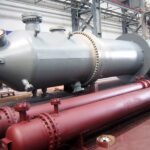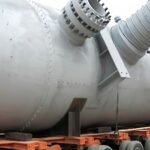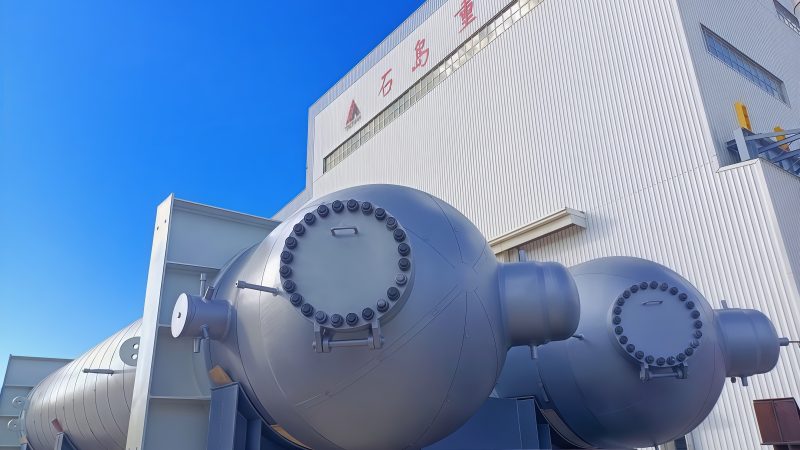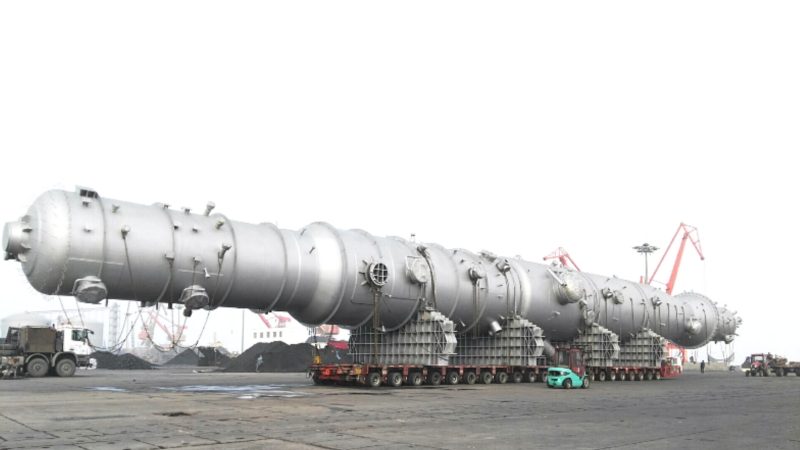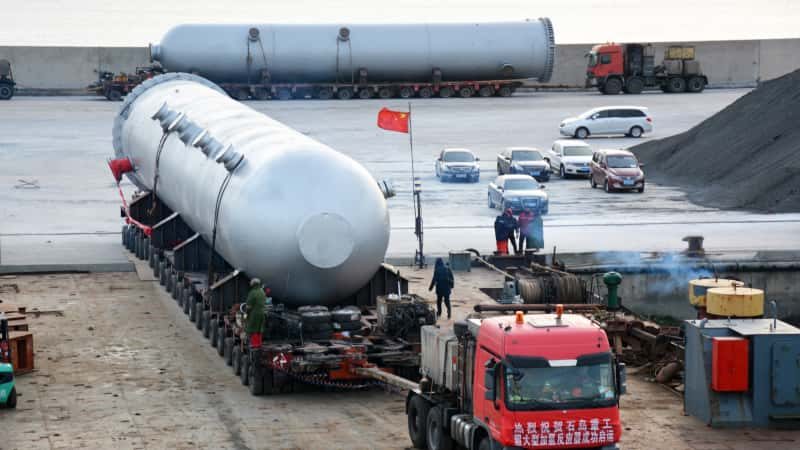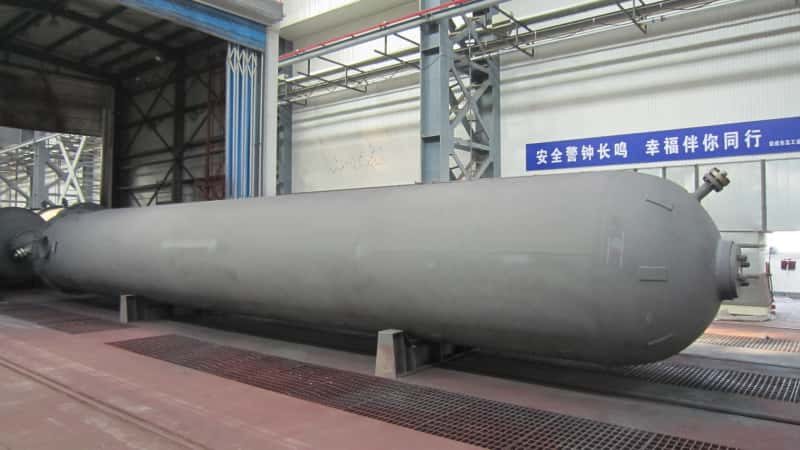

A breech lock heat exchanger is a specialized shell and tube heat exchanger designed for severe high-pressure and high-temperature service. Its thermal purpose is familiar: one fluid flows through the tubes while another fluid flows across the shell side to transfer heat. What makes the design different is the high-pressure channel closure. Instead of relying mainly on a large conventional bolted channel cover, the breech lock design uses a threaded, screw-plug, or locking closure arrangement to carry the major pressure load.
For EPC contractors, refinery engineers, and equipment procurement teams, this distinction matters because the closure system affects pressure containment, gasket loading, maintenance time, tooling, inspection, fabrication complexity, and lifecycle cost. Breech lock type heat exchangers are often evaluated for hydroprocessing, hydrotreating, hydrocracking, hydrogen-rich service, reactor feed-effluent heat recovery, high-pressure gas processing, and other severe refinery or petrochemical duties.

This guide explains how the design works, how it differs from conventional shell and tube heat exchangers, when it should be considered, and what buyers should review before selecting a breech lock type heat exchanger supplier.
A breech lock type heat exchanger is still a shell and tube heat exchanger, but its high-pressure channel closure uses a threaded or locking load path instead of relying mainly on a large conventional bolted flange.True
The heat transfer arrangement remains shell and tube, while the breech lock closure changes how the channel cover resists pressure load and seats the gasket.
A breech lock heat exchanger always gives higher thermal efficiency than a conventional shell and tube exchanger with the same tube bundle design.False
The breech lock mainly changes the mechanical closure, compactness, sealing control, and maintenance behavior at high pressure; thermal performance still depends on tube geometry, flow arrangement, fouling, baffles, materials, and heat transfer area.
What Is a Breech Lock Type Heat Exchanger?
A breech lock type heat exchanger is a high-pressure shell and tube exchanger with a special channel closure. In a conventional design, a large bolted cover or bonnet commonly carries pressure end force and provides gasket seating. In a breech lock design, the closure load is transferred through a forged threaded structure, lock ring, screw plug, or similar closure arrangement. The cover bolts, where used, have a different role and may mainly help compress or position the gasket rather than carry the full pressure thrust.
This design is especially relevant when the tube-side pressure is very high, the channel diameter is large, or frequent opening for inspection and cleaning is expected. Chart Industries describes the Lummus Advanced Breech-Lock Exchanger as a high-pressure heat exchanger closure technology for demanding services, and Lummus has discussed next-generation breech-lock closure development for high-pressure exchanger applications. These industry references show that the design is treated as a specialized severe-service solution rather than a standard utility exchanger configuration.
Buyers can think of a breech lock unit as a pressure-vessel and exchanger hybrid where both heat transfer and closure mechanics matter. It may be supplied as part of a wider package that includes industrial heat exchangers, reactors, separators, and other custom pressure vessels.
How the Load Path Differs from Conventional Designs
The key difference is the pressure load path. In a high-pressure exchanger, the internal pressure creates a force that tries to push the channel cover open. In a conventional bolted cover design, large bolts and flanges resist that opening force while also maintaining gasket seating. As pressure and diameter increase, bolt size, flange thickness, cover weight, and assembly requirements can become significant.
In a breech lock design, the closure threads or locking structure absorb much of the opening force. This can reduce reliance on very large cover bolting and make the pressure boundary more compact. However, the design introduces its own requirements: thread condition, engagement control, alignment, lubrication, galling prevention, gasket-seat protection, special tools, and strict maintenance procedures.
| Design point | Conventional shell and tube closure | Breech lock type closure |
|---|---|---|
| Main pressure load path | Large cover bolts and flange resist pressure end force | Channel threads, screw plug, or lock ring carry much of the opening force |
| Bolt function | Resist pressure thrust and seat gasket | Mainly control gasket seating or closure positioning, depending on design |
| Cover and flange size | Can become very heavy at high pressure and large diameter | Can be more compact because the massive external bolted flange is reduced |
| Maintenance work | Large-bolt loosening, tensioning, flange cleaning, gasket replacement | Locking mechanism handling, thread inspection, plug handling, gasket work |
| Best fit | Low, medium, and many standard process duties | Severe high-pressure, hydrogen-rich, or frequent-opening duties |
| Key risk | Bolt load scatter, flange rotation, gasket seating issues | Thread damage, galling, alignment error, incorrect closure procedure |
Does Breech Lock Design Improve Heat Transfer?
Not by itself. A breech lock closure does not automatically increase heat transfer coefficient, reduce fouling, improve LMTD, or change the basic tube-side and shell-side heat transfer mechanism. Thermal performance still depends on tube count, tube diameter, tube length, baffle design, flow velocity, phase behavior, fouling factor, pressure drop, fluid properties, and material conductivity.
The breech lock design can indirectly support process performance by making high-pressure exchangers more maintainable and practical. In a hydroprocessing feed-effluent service, for example, a maintainable high-pressure closure can reduce turnaround time and improve access for inspection. But the exchanger still needs proper thermal rating, vibration review, fouling strategy, materials selection, and mechanical design.
Standards and Design Governance
Breech lock exchangers are usually specified within established pressure-equipment and shell and tube exchanger frameworks. ASME BPVC Section VIII Division 1 is commonly referenced for pressure vessel construction, while TEMA standards are widely used for shell and tube heat exchanger mechanical practice. API Standard 660 is also commonly referenced for shell and tube heat exchangers in petroleum, petrochemical, and natural gas industries.
These references do not replace project-specific engineering judgment. For actual procurement, the purchaser’s datasheet, local jurisdiction, inspection authority, licensor requirements, hydrogen service rules, materials selection, NDT scope, gasket specification, maintenance philosophy, and site lifting constraints must be aligned before fabrication begins.
When Should Buyers Consider a Breech Lock Design?
A breech lock heat exchanger is not automatically better than a conventional exchanger. It is usually justified when the closure problem becomes important enough to outweigh higher design complexity, specialized fabrication, special tooling, and maintenance procedure requirements.
| Application condition | Likely better default choice | Reason |
|---|---|---|
| Cooling water, lube oil, low-pressure steam, general utility service | Conventional shell and tube | Lower cost, simpler fabrication, easier sourcing |
| Moderate pressure with infrequent opening | Conventional shell and tube | Breech lock complexity may not be justified |
| High-pressure hydrogen-rich service | Breech lock type heat exchanger | Compact closure and high-pressure maintainability are valuable |
| Hydrocracker or hydrotreater feed-effluent service | Breech lock type heat exchanger | Severe pressure, temperature, hydrogen, and shutdown cost can justify the design |
| Very large diameter plus very high pressure | Breech lock or another special high-pressure closure | Conventional bolted flanges can become extremely heavy |
| Low-budget, non-critical process duty | Conventional shell and tube | Lower capital cost and simpler spare parts usually matter more |
Breech lock type heat exchanger design is most valuable when high pressure, large diameter, hydrogen-rich service, or frequent maintenance makes a conventional bolted channel closure heavy or difficult to reseal.True
The breech lock closure changes the pressure-retaining load path and reduces dependence on massive conventional channel-cover bolting, which is especially useful in severe high-pressure service.
Advantages Compared with Conventional Shell and Tube Types
The main advantage of a breech lock design is not ordinary heat transfer efficiency. Its value is mechanical and operational. In high-pressure service, it can make the channel closure more compact, reduce the size and handling burden of massive bolted covers, improve controlled access during shutdowns, and support more practical maintenance for severe exchanger duties.
For refinery and petrochemical projects, reduced shutdown time can matter as much as equipment purchase price. If a reactor feed-effluent exchanger must be opened, cleaned, inspected, and reassembled during a turnaround, closure design affects schedule risk, crane planning, tool availability, specialist labor, leak testing, and restart confidence.
Limitations and Extra Responsibilities
Breech lock exchangers are not simple upgrades for every service. They can involve higher initial cost, more specialized machining, proprietary details, limited supplier options, dedicated opening tools, careful thread inspection, and trained maintenance crews. The closure must be opened only after complete depressurization, draining, purging, gas testing, and site safety controls. No mechanical closure advantage replaces process safety discipline.
For moderate service, a conventional exchanger may be the better choice because it is easier to source, easier to understand, and easier for general maintenance teams to handle. Buyers should compare total lifecycle cost rather than assuming special design equals better design.
Maintenance and Inspection Differences
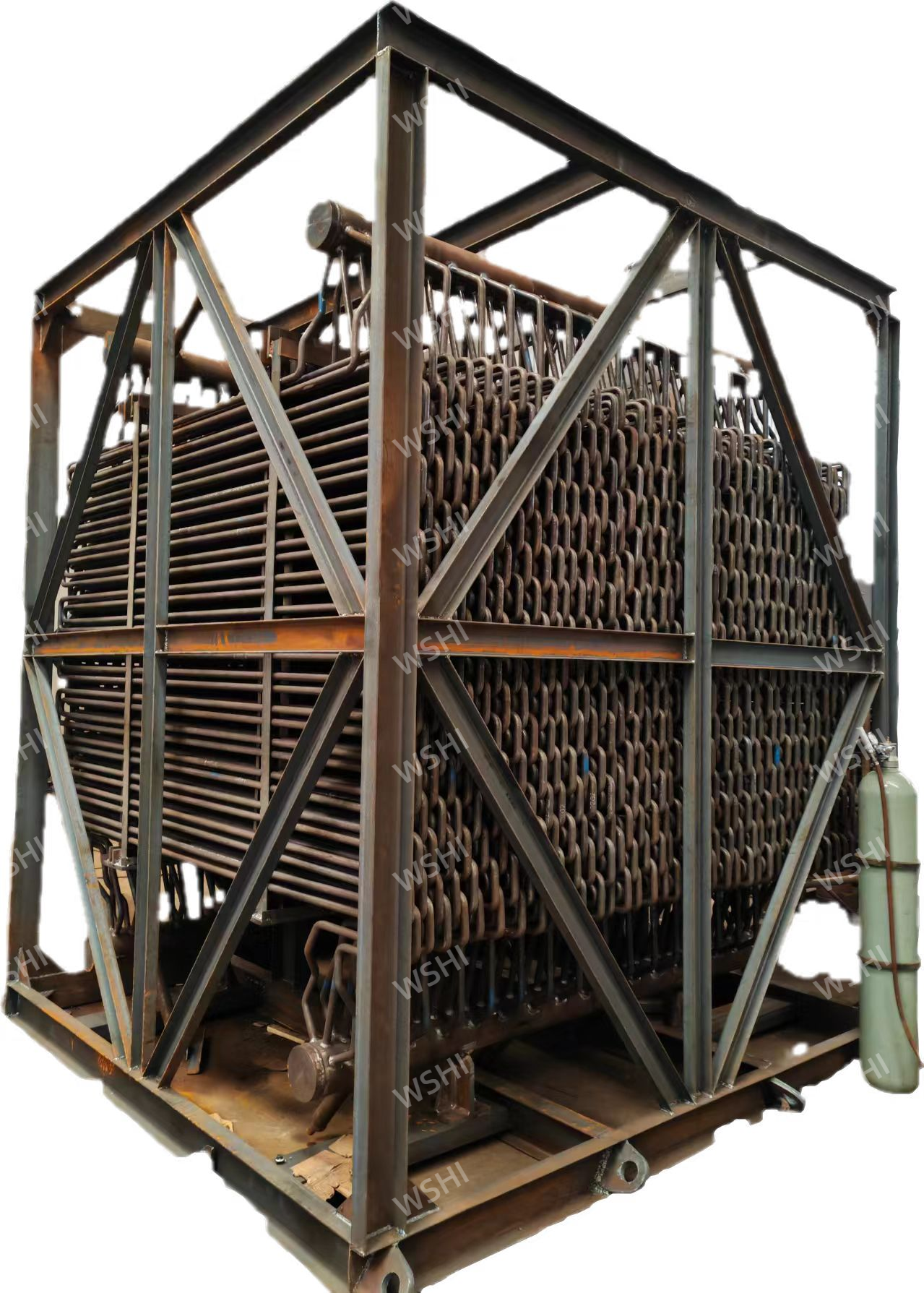
Maintenance is one of the most important reasons to evaluate breech lock technology. A conventional bolted exchanger requires bolt loosening, cover handling, flange cleaning, gasket replacement, bolt tightening, and controlled torque or tensioning. A breech lock exchanger may reduce some large-bolt work, but it adds closure-specific tasks such as thread cleaning, lock engagement verification, seal-seat inspection, plug handling, and use of the correct hydraulic or mechanical tool.
| Maintenance stage | Conventional shell and tube workflow | Breech lock type workflow |
|---|---|---|
| Pre-shutdown preparation | Prepare gaskets, studs, nuts, bolting tools, crane plan | Prepare closure jig, seal kit, thread lubricant, vendor procedure, trained crew |
| Opening | Loosen cover bolts, separate flange, lift cover | Unlock closure, use correct tool or appliance, remove plug or closure component |
| Cleaning | Clean flange faces, gasket grooves, tube side, and bundle | Clean gasket seat, plug, lock ring, threads, tubes, and internal surfaces |
| Inspection | Check flange, bolts, gasket face, tubes, shell, and bundle | Check all exchanger parts plus threads, lock engagement surfaces, plug seating, and seal system |
| Reassembly | Install gasket, align cover, tighten bolts in sequence | Install seal, lubricate threads if specified, engage closure, verify lock position |
| Testing and startup | Hydrotest or leak test according to procedure | Same testing discipline, with extra attention to closure engagement and seal behavior |
Manufacturing and Quality Control Considerations
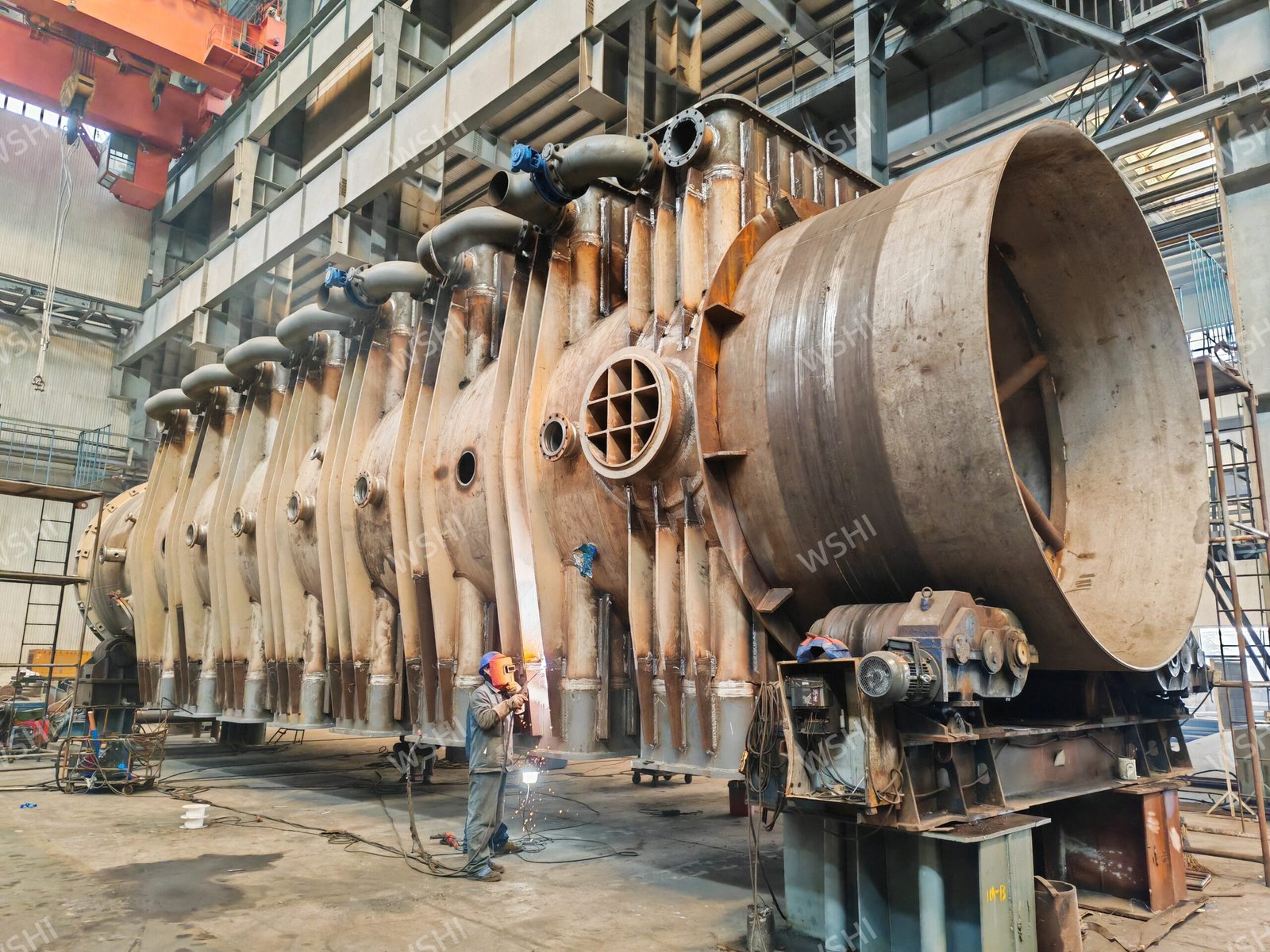
A breech lock exchanger requires strong mechanical design and fabrication discipline. Buyers should review forging quality, machining accuracy, thread geometry, gasket-seat finish, channel tolerances, tubesheet design, welding procedure qualification, post-weld heat treatment where required, NDT scope, hydrostatic testing, dimensional inspection, and final documentation.
A large-scale pressure vessel manufacturer should also support manufacturability review, lifting design, transport dimension checking, inspection coordination, and document planning. For severe-service exchangers, the project team should define inspection hold points, third-party inspection requirements, material certificates, NDT reports, pressure test reports, and as-built drawings before the purchase order is issued.
What Buyers Should Prepare Before Requesting a Quotation
A quotation request that only says “breech lock heat exchanger” is not enough. The manufacturer needs enough process, mechanical, and maintenance data to evaluate whether the design is justified and how it should be fabricated.
| Required input | Why it matters |
|---|---|
| Process datasheet and heat duty | Defines thermal rating, area, flow arrangement, and pressure drop |
| Design pressure and design temperature | Controls pressure boundary design, closure load, thickness, and testing |
| Fluid composition and service condition | Influences materials, corrosion allowance, hydrogen service rules, and hazard review |
| Applicable codes and standards | Defines ASME, TEMA, API, local regulation, and inspection authority requirements |
| Materials and gasket specification | Affects sealing reliability, corrosion resistance, and spare parts strategy |
| Inspection and testing scope | Defines RT, UT, MT, PT, PMI, hardness, pressure testing, and witness points |
| Maintenance philosophy | Determines opening tools, bundle access, closure procedure, and turnaround planning |
| Delivery destination and transport limits | Affects shop fabrication, lifting lugs, packing, port handling, and site unloading |
Common Buyer Mistakes
Assuming Breech Lock Means Better Thermal Performance
The design mainly changes the mechanical closure. Thermal performance still depends on the exchanger rating, tube bundle design, velocity, fouling factor, baffles, and process conditions.
Ignoring Special Tooling and Maintenance Training
A breech lock closure may reduce large-bolt work, but it requires the correct procedure, closure tools, seal kits, thread protection, and experienced personnel. These should be included in procurement and turnaround planning.
Comparing Only Initial Price
The correct comparison is lifecycle cost and risk. A conventional exchanger may be cheaper and better for moderate services, while a breech lock exchanger may be justified where high pressure, shutdown cost, leak risk, and maintenance difficulty dominate.
Leaving Closure Details to Late Engineering
Closure design affects weight, length, channel geometry, tooling, access space, lifting, NDT, spare parts, and maintenance. It should be reviewed early with the EPC contractor, owner, manufacturer, and inspection authority.
FAQ
What is a breech lock type heat exchanger design?
It is a specialized shell and tube heat exchanger for severe high-pressure service. Its key feature is a threaded, screw-plug, or locking channel closure that carries pressure load differently from a conventional bolted cover.
How does it differ from a conventional shell and tube exchanger?
The main difference is the closure system. A conventional exchanger usually uses a large bolted channel cover, while a breech lock design transfers much of the opening force through a forged threaded or locking structure.
Is a breech lock heat exchanger always better?
No. It is valuable for specific severe services such as high-pressure hydrogen-rich refinery duty. Conventional shell and tube exchangers remain better for many lower-pressure, general process, utility, and cost-sensitive applications.
Does a breech lock design improve heat transfer efficiency?
Not directly. Heat transfer efficiency depends on thermal design, tube geometry, flow arrangement, materials, baffles, fouling, and pressure drop. The breech lock mainly improves the high-pressure mechanical closure and maintainability.
What standards may apply?
Projects may reference ASME BPVC Section VIII for pressure vessel construction, TEMA standards for shell and tube exchanger practice, API 660 for petroleum and petrochemical shell and tube exchangers, and project-specific or local requirements.
What should buyers evaluate in a manufacturer?
Buyers should evaluate high-pressure exchanger experience, closure design capability, materials, forging and machining control, welding quality, NDT, pressure testing, documentation, maintenance tooling, and delivery support.
Conclusion
A breech lock type heat exchanger is a severe-service shell and tube exchanger whose value comes from its high-pressure channel closure. Compared with conventional shell and tube types, it can offer a more compact and maintainable closure arrangement for high-pressure, hydrogen-rich, large-diameter, or frequent-opening services. It is not automatically superior for every duty, and it does not replace proper thermal design, pressure vessel engineering, inspection, and maintenance discipline.
If you are sourcing breech lock heat exchangers, shell and tube heat exchangers, high-pressure pressure vessels, reactors, separators, towers, or other custom process equipment for refinery, petrochemical, hydrogen, ammonia, methanol, or EPC projects, you can discuss your project requirements with an engineering and manufacturing team. Sharing datasheets, drawings, operating conditions, material requirements, inspection needs, maintenance philosophy, and delivery terms will support technical communication and fabrication evaluation.