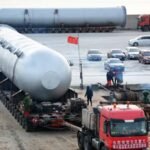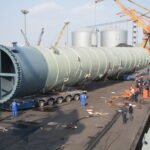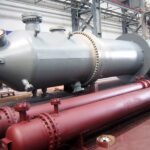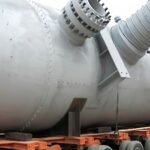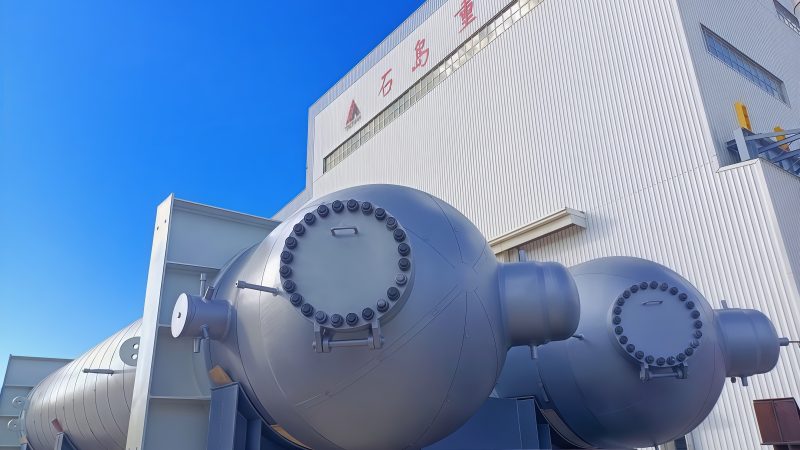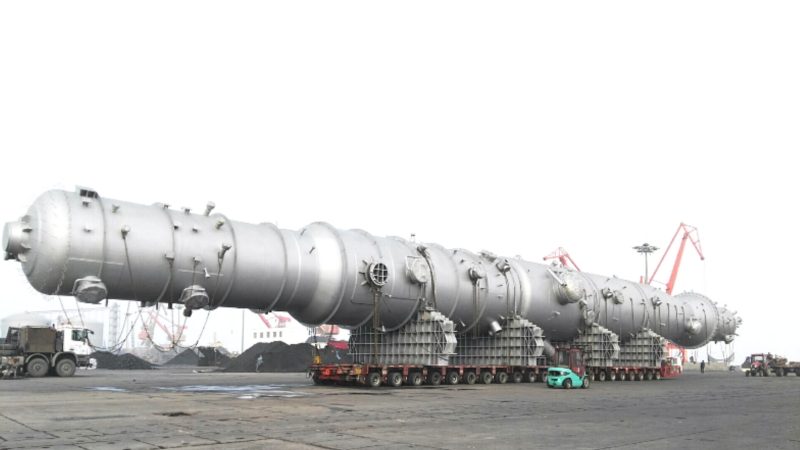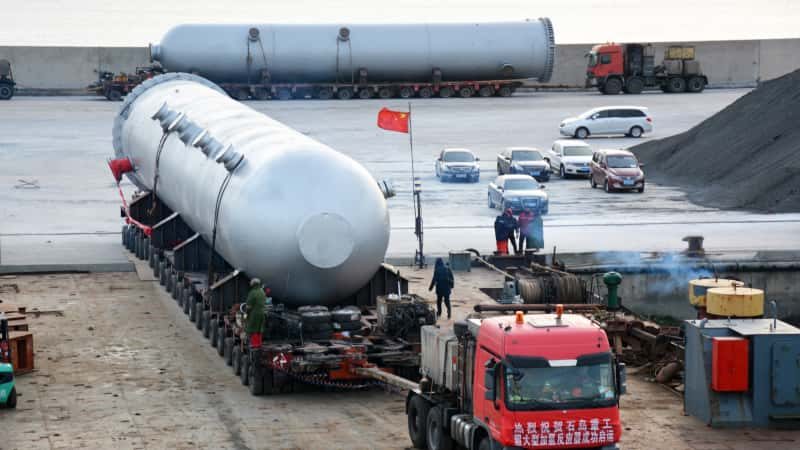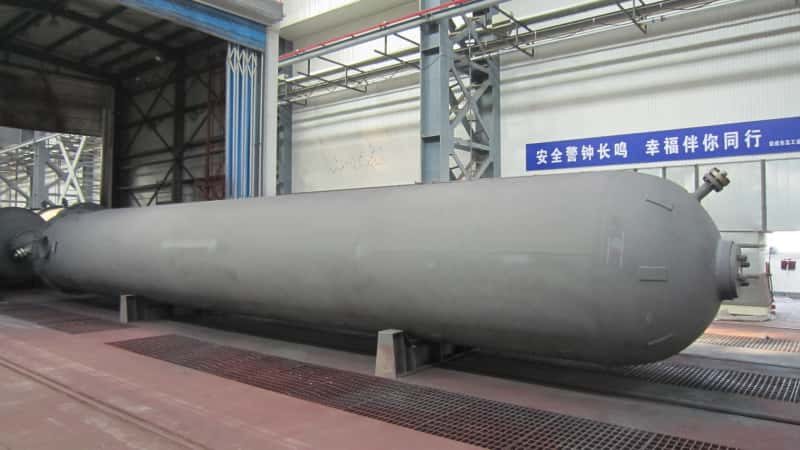

Choosing the wrong shell and tube heat exchanger manufacturer can lead to undersized heat transfer area, excessive pressure drop, tube vibration, corrosion failure, leaking tube-to-tubesheet joints, late delivery, missing certificates, and costly plant shutdowns. Many buyers compare only price and delivery time, but a shell and tube heat exchanger is a pressure-retaining, process-critical asset. A better purchasing decision starts with engineering capability, code compliance, thermal design experience, welding quality, material control, testing procedures, documentation discipline, and after-sales support.
When choosing a manufacturer, buyers should evaluate code certification, TEMA design capability, thermal and mechanical engineering strength, material selection experience, welding and NDT quality, manufacturing facilities, inspection and testing procedures, delivery reliability, documentation quality, service support, and total lifecycle cost rather than only the quoted price. A qualified supplier should be able to design or verify the exchanger duty, select the correct configuration, comply with the required pressure-equipment rules, provide traceable materials, perform hydrostatic and non-destructive testing, and supply a complete data book for safe installation, operation, and maintenance.
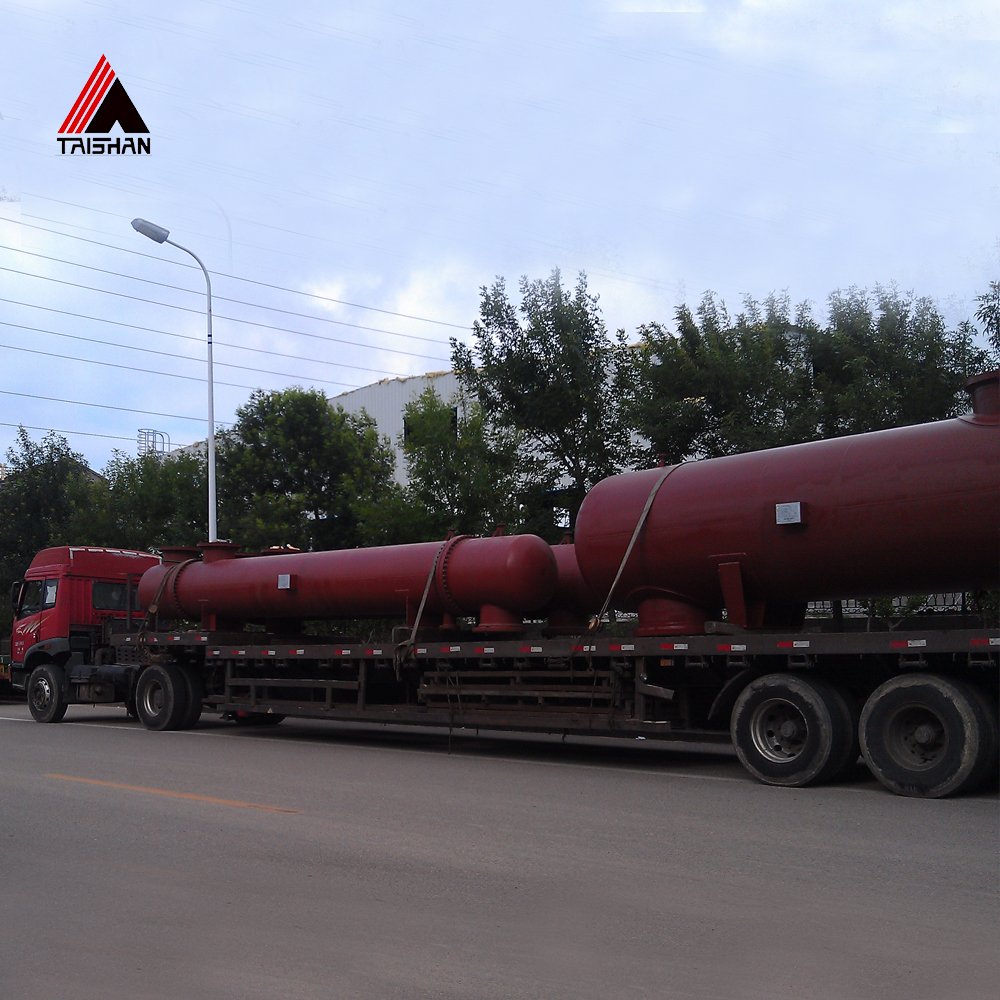
A good manufacturer does not simply build a vessel with tubes. It helps translate the process duty into a reliable exchanger configuration, such as a fixed tubesheet exchanger, U-tube exchanger, floating head exchanger, kettle reboiler, condenser, vaporizer, or high-pressure process exchanger. Buyers can compare these options with broader industrial heat exchangers and dedicated shell and tube heat exchanger equipment categories when planning an EPC procurement package.
The cheapest shell and tube heat exchanger manufacturer is usually the best choice if the heat transfer area is the same.False
Two exchangers with similar heat transfer area can differ greatly in code compliance, tube vibration resistance, corrosion allowance, materials, welding quality, inspection scope, documentation, maintainability, and service life.
A reliable shell and tube heat exchanger manufacturer should prove both engineering capability and fabrication quality.True
Shell and tube heat exchangers require correct thermal design, mechanical design, pressure-code compliance, qualified welding, material traceability, inspection, testing, and complete documentation.
1. Verify Pressure-Vessel Code Capability First
The first question is whether the manufacturer can legally and technically build the exchanger for the target market and service. For many industrial projects, the shell and tube heat exchanger is also a pressure vessel, so it may need compliance with ASME BPVC Section VIII, PED 2014/68/EU, GB, EN, or another local pressure-equipment regulation.
ASME describes its Boiler and Pressure Vessel Certification Program as covering the quality-control system used for pressure-vessel component design, fabrication, assembly, and inspection. For European-market pressure equipment, the European Commission states that the Pressure Equipment Directive 2014/68/EU applies to stationary pressure equipment above 0.5 bar. Final applicability must always be confirmed by project engineers, the owner, and the relevant inspection authority.
A serious manufacturer should clearly state which code stamps, certificates, notified-body approvals, and inspection agencies it can support. Ask for copies of current certificates, not old marketing brochures. Also ask whether the supplier has built similar equipment under the same code, pressure class, material grade, inspection level, and service condition. A workshop that can fabricate a low-pressure carbon steel cooler may not be suitable for a high-pressure hydrogen exchanger, titanium seawater condenser, sour-gas exchanger, lethal-service exchanger, or cryogenic exchanger.
2. Check TEMA Knowledge and Configuration Experience
TEMA capability is important because shell and tube exchangers are not one standard shape. The Tubular Exchanger Manufacturers Association provides widely used mechanical standards for shell and tube heat exchangers, and its standards page identifies the current published editions and scope. A competent manufacturer should understand front-head types, shell types, rear-head types, baffle arrangements, impingement protection, tube supports, expansion joints, pass partitions, removable bundles, cleaning access, and service classes.
The manufacturer should help choose the right configuration rather than blindly copying an old drawing. For dirty cooling water, removable bundles and mechanical cleanability may matter more than the lowest initial cost. For large temperature differences between shell side and tube side, a U-tube or floating head design may be more suitable than a fixed tubesheet. For condensing or boiling service, nozzle position, vapor disengagement, liquid level, and shell-side distribution become critical. For high-velocity service, tube vibration review is essential.
| Exchanger configuration | Where it may be considered | Buyer concern |
|---|---|---|
| Fixed tubesheet | Clean services, moderate temperature difference, compact budget-sensitive duties | Shell-side mechanical cleaning and thermal expansion limitations |
| U-tube | Higher thermal expansion difference, removable bundle requirements | Tube-side cleaning difficulty in U-bends |
| Floating head | Fouling shell-side service, removable bundle, thermal expansion control | Higher cost and more complex sealing details |
| Kettle reboiler | Boiling service, distillation and process heating systems | Liquid level, vapor disengagement, bundle access, and process control |
| High-pressure process exchanger | Refinery, petrochemical, hydrogen, gas processing, or chemical services | Thick-wall design, welding, NDT, PWHT, and documentation requirements |
3. Evaluate Engineering Strength, Not Just Workshop Capacity
A manufacturer’s engineering team should be able to review process data, thermal rating, pressure drop, fouling factors, metallurgy, corrosion allowance, mechanical thickness, nozzle loads, bundle pull space, lifting lugs, supports, and maintainability. The best manufacturers can work from a complete datasheet, but they can also identify missing or conflicting data before fabrication starts.
If the buyer provides only inlet and outlet temperatures without allowable pressure drop, fouling factor, fluid properties, phase behavior, corrosion data, or cleaning requirements, the exchanger design may be unsafe, inefficient, or difficult to maintain. For petrochemical pressure vessels, refinery projects, chemical plants, and gas processing systems, missing process data can quickly become a mechanical design problem.
Ask whether the manufacturer uses recognized thermal-rating tools, in-house calculation methods, finite-element analysis when needed, vibration checks, and mechanical design calculations. Also ask whether it can provide general arrangement drawings, tube layout drawings, nozzle orientation drawings, welding maps, inspection and test plans, and calculation reports before fabrication. A manufacturer that resists design review may be hiding weak engineering.
4. Review Material Selection and Traceability
Material selection is one of the most important lifecycle-cost decisions. Carbon steel may be suitable for many utility services, but stainless steel, duplex stainless steel, copper alloys, titanium, nickel alloys, clad construction, or special tube materials may be required for corrosive, seawater, sour, high-temperature, hydrogen, or high-purity service. The manufacturer should be able to explain why each material is selected for the shell, tubes, tubesheet, baffles, tie rods, gaskets, bolts, nozzles, and supports.
Material traceability is equally important. Require mill test certificates, heat-number traceability, positive material identification where applicable, welding consumable certificates, gasket and bolting certificates, and a material control procedure. Low-cost suppliers sometimes substitute similar-looking materials or use unverified stock. That risk is unacceptable for regulated custom pressure vessels, corrosive service, high-pressure service, or export EPC projects.
5. Inspect Welding, Tube Expansion, and NDT Capability
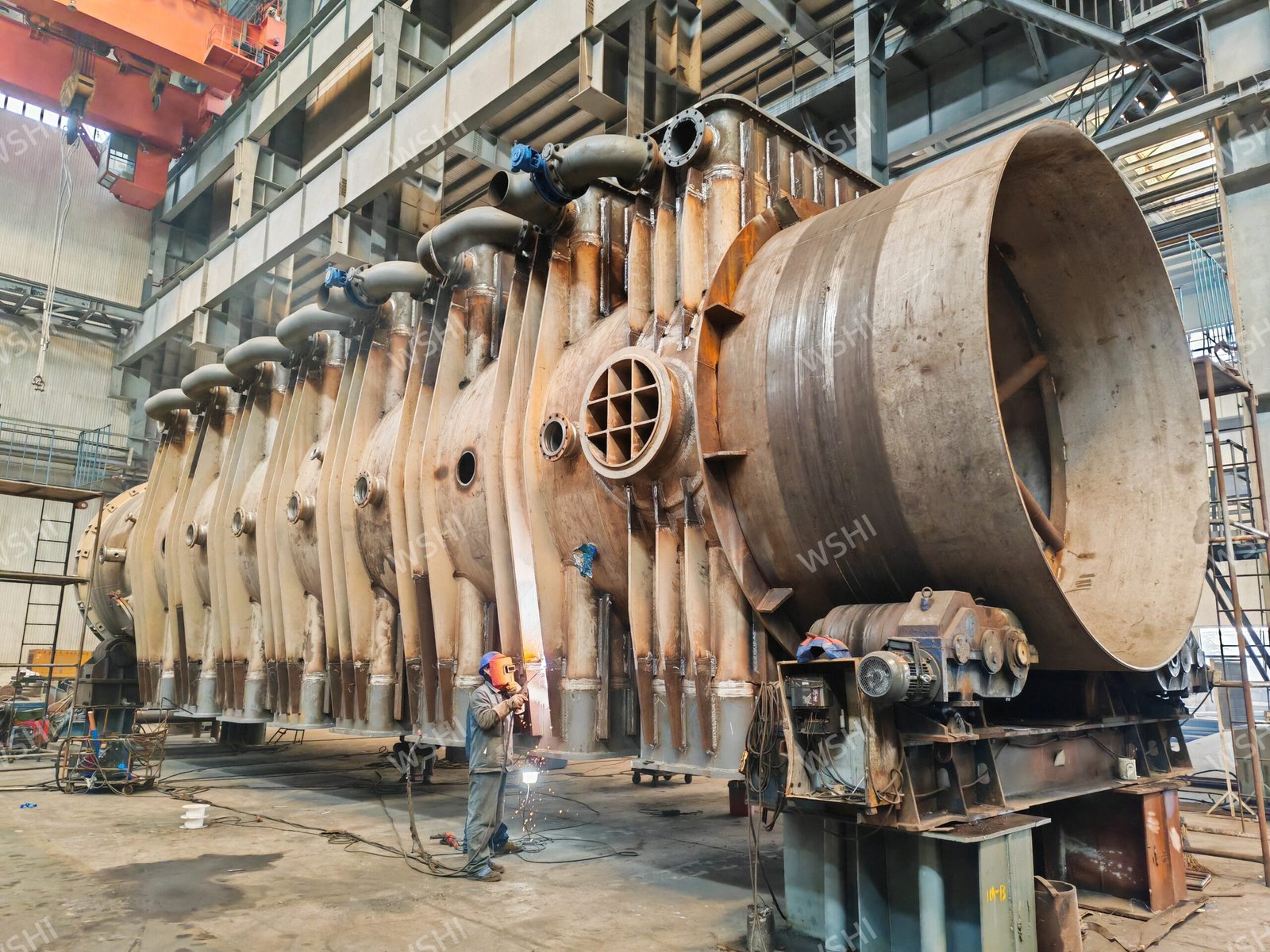
In shell and tube heat exchangers, many failures occur at welds, tube-to-tubesheet joints, nozzles, pass partitions, and gasketed joints. The manufacturer should have qualified welding procedures, qualified welders, controlled welding consumables, preheat and post-weld heat treatment capability where required, and a clear non-destructive testing plan.
Depending on code and service, inspection may include visual testing, radiographic testing, ultrasonic testing, magnetic particle testing, liquid penetrant testing, hardness testing, ferrite testing, PMI, helium leak testing, pneumatic leak testing, or hydrostatic testing. Tube-to-tubesheet joint quality deserves special attention. Ask whether the design uses strength welding, seal welding, expansion, roller expansion, hydraulic expansion, or a combined method. Ask how the manufacturer controls expansion depth, torque, wall thinning, groove geometry, and leak testing.
6. Compare Manufacturers Using a Technical Scorecard
A structured scorecard prevents price from overwhelming technical risk. It also helps the buyer compare multiple suppliers on the same basis.
| Evaluation factor | What to check | Why it matters | Recommended buyer action |
|---|---|---|---|
| Code certification | ASME, PED, local pressure-vessel license, third-party inspection support | Determines legal acceptance and safety basis | Request current certificates and project references |
| TEMA capability | Correct TEMA type, baffle design, bundle removal, vibration review | Controls reliability and maintainability | Ask for similar drawings and calculations |
| Thermal design | Duty, LMTD, fouling, pressure drop, phase change, margin | Prevents underperformance | Require thermal rating or independent verification |
| Mechanical design | Shell thickness, tubesheet design, nozzle loads, supports, expansion | Prevents mechanical failure | Review calculation report before fabrication |
| Materials | MTCs, PMI, corrosion allowance, gasket compatibility | Prevents corrosion and substitution risk | Require full material traceability |
| Welding and NDT | WPS, PQR, welder qualification, RT, UT, PT, MT, hydrotest | Prevents leakage and pressure-boundary defects | Include ITP hold points |
| Manufacturing capacity | Tube drilling, rolling, welding, heat treatment, lifting, test bay | Affects quality and delivery | Audit workshop or request factory evidence |
| Documentation | Drawings, data book, certificates, test reports, manuals | Needed for installation, audit, and maintenance | Define document list in the purchase order |
| Service support | Spare tubes, gaskets, repair advice, troubleshooting | Reduces downtime after commissioning | Confirm warranty and response process |
| Total cost | Purchase price plus energy, fouling, maintenance, downtime | Determines real economic value | Compare lifecycle cost, not only CAPEX |
7. Ask for the Right Quality Documents
Quality-system certificates are useful, but they do not replace project-specific quality records. For pressure equipment, the purchase order should define exactly which documents must be submitted before fabrication, during inspection, and after final testing.
| Document or record | Why buyers need it |
|---|---|
| Approved datasheet | Confirms duty, design pressure, temperature, fluids, materials, and codes |
| Thermal calculation | Confirms heat-transfer area, pressure drop, fouling margin, and performance |
| Mechanical calculation | Confirms code thickness, tubesheet design, nozzle reinforcement, and supports |
| General arrangement drawing | Confirms dimensions, nozzle orientation, maintenance space, and lifting |
| Tube layout drawing | Confirms tube count, pitch, passes, baffle spacing, and cleaning access |
| Inspection and test plan | Defines inspection hold points, witness points, and acceptance criteria |
| Welding procedures and qualifications | Confirms welding is controlled and qualified |
| Material certificates | Confirms material grade, heat number, chemistry, and mechanical properties |
| NDT and hydrostatic test reports | Confirm inspection and pressure test completion |
| Final data book | Supports registration, commissioning, maintenance, and future repair |
8. Consider Delivery Reliability and Project Communication
A manufacturer may be technically capable but commercially difficult. Evaluate quotation clarity, response speed, engineering communication, drawing revision control, procurement transparency, and realistic delivery promises. Late heat exchangers can delay an entire project because they are often installed before piping completion, insulation, hydrotest, and commissioning.
A trustworthy manufacturer will explain long-lead items such as tubes, forged tubesheets, alloy plates, special gaskets, expansion joints, large flanges, and third-party inspection scheduling. Be cautious when a supplier promises a delivery time far shorter than every other manufacturer. Sometimes this means real stock and capacity; often it means the supplier has not understood the code, NDT, documentation, approval cycle, or export packing requirements.
9. Look Beyond Purchase Price
The cheapest shell and tube heat exchanger can become the most expensive option if it has high pressure drop, poor cleanability, weak corrosion resistance, frequent tube leaks, excessive fouling, or inadequate documentation. Lifecycle cost includes purchase price, pumping energy, thermal efficiency, cleaning frequency, spare parts, downtime, retubing cost, inspection cost, and lost production.
For example, a fixed-tubesheet exchanger may be cheaper than a floating-head exchanger, but if the shell side fouls and cannot be mechanically cleaned, the plant may pay later through chemical cleaning, reduced duty, or replacement. Similarly, choosing thinner tubes or a cheaper alloy may reduce initial price but increase leak risk. The manufacturer should help evaluate these trade-offs honestly.
10. Warning Signs When Evaluating a Manufacturer
Be careful if the manufacturer cannot provide valid code certificates, refuses third-party inspection, gives only a lump-sum quote without technical exclusions, avoids naming material grades, cannot explain the TEMA configuration, offers no thermal or mechanical calculation, has no inspection and test plan, cannot provide similar project references, or treats documentation as an optional extra.
Another warning sign is overconfidence without questions. A good manufacturer will ask about process fluid composition, fouling tendency, corrosion, allowable pressure drop, cleaning method, installation orientation, design code, operating cases, turndown, startup, shutdown, and inspection requirements. If a supplier quotes immediately from only duty and material, the design basis is probably incomplete.
Practical Buyer Checklist Before Placing the Order
| Question | Good answer from manufacturer | Risky answer |
|---|---|---|
| Which design code will you use? | ASME Section VIII Div. 1 with TEMA and project specification, if applicable | Our standard design is enough |
| Can you provide calculations? | Yes, thermal and mechanical calculations for approval | Calculations are internal only |
| How do you control materials? | MTCs, heat-number traceability, PMI for alloys where required | We buy from trusted suppliers |
| What NDT is included? | As per code and ITP, with RT, UT, PT, or MT as specified | We test if the customer pays extra |
| How is tube leakage tested? | Controlled expansion or welding procedure plus hydrotest or leak test | Our workers have experience |
| Can we inspect fabrication? | Yes, with agreed witness and hold points | Factory inspection is not necessary |
| What documents are delivered? | Final data book with drawings, certificates, NDT, and test reports | Invoice and packing list |
| What happens after startup? | Warranty, spare parts, troubleshooting, and repair guidance | Installation is your responsibility only |
FAQ
What should buyers check first when choosing a shell and tube heat exchanger manufacturer?
Buyers should first check whether the manufacturer can meet the required pressure-vessel code, project standard, inspection scope, material specification, and documentation requirements. Code capability and quality control should be confirmed before comparing price.
Why does TEMA knowledge matter?
TEMA knowledge matters because shell and tube exchanger reliability depends on the correct configuration, baffle design, tube support, vibration control, bundle removal, expansion allowance, cleaning access, and mechanical details.
What documents should be requested before fabrication?
Buyers should request approved datasheets, thermal calculations, mechanical calculations, general arrangement drawings, tube layout drawings, material certificates, welding procedures, inspection and test plans, and applicable project standards before fabrication starts.
How should buyers compare two heat exchanger quotations?
Compare design basis, material grade, corrosion allowance, tube thickness, NDT scope, testing, documentation, spare parts, delivery terms, and lifecycle cost. Two quotations with similar heat transfer area may not include the same technical scope.
Can one manufacturer support multiple heat exchanger types?
A capable manufacturer may support fixed tubesheet, U-tube, floating head, condenser, reboiler, vaporizer, and high-pressure shell and tube exchangers if its engineering, fabrication, and inspection capabilities match the project requirements.
Conclusion
Choosing a shell and tube heat exchanger manufacturer should be a technical and commercial evaluation, not a price-only comparison. The best manufacturer has proven code certification, TEMA design experience, strong thermal and mechanical engineering, reliable material traceability, qualified welding, disciplined inspection, complete documentation, realistic delivery control, and practical after-sales support.
If you are sourcing shell and tube heat exchangers, pressure vessels, reactors, separators, towers, storage tanks, or other custom process equipment for petrochemical, refining, gas processing, chemical, environmental, or EPC projects, you can discuss your project requirements with an engineering and manufacturing team. Sharing process datasheets, operating conditions, fluid properties, design code, material preferences, inspection needs, and delivery terms will support technical communication and fabrication evaluation.