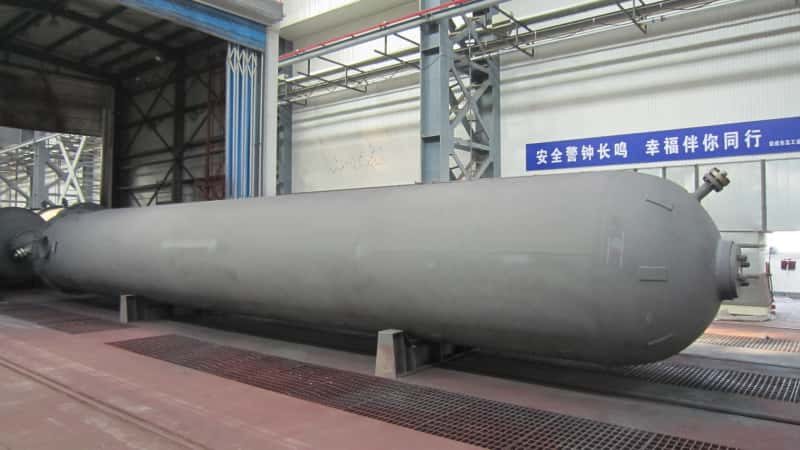

Purchasing a breech lock heat exchanger is different from buying a standard utility cooler or ordinary shell and tube exchanger. The equipment is usually selected for severe high-pressure service, where process duty, pressure containment, hydrogen exposure, closure design, gasket reliability, material traceability, inspection scope, maintenance procedure, and vendor documentation all affect safe long-term operation.
The most critical specifications include heat duty, shell-side and tube-side design pressure, design temperature, hydrogen partial pressure, fluid composition, corrosion allowance, fouling factor, allowable pressure drop, tube layout, tube material, tubesheet design, gasket type, closure design, NDT scope, hydrotest requirements, maintenance tools, spare parts, and final vendor data book. A buyer should not treat the purchase as a simple heat-transfer area comparison.

This article summarizes the purchasing specifications EPC contractors, refinery buyers, and engineering teams should define before requesting a quotation. For related equipment categories, buyers can review breech lock type heat exchangers, shell and tube heat exchangers, industrial heat exchangers, and broader custom pressure vessels.
A breech lock type heat exchanger purchase specification must include both thermal process data and pressure-service data because the closure, gasket, metallurgy, tube bundle, and inspection plan are all affected by operating conditions.True
Thermal data sizes the heat-transfer surface, while pressure, temperature, fluid composition, hydrogen service, corrosion, and cycling conditions govern the high-pressure closure, sealing system, materials, testing, and maintenance requirements.
For a breech lock type heat exchanger, heat duty alone is enough for the supplier to finalize the design.False
Heat duty is only one input; the supplier also needs pressures, temperatures, fluid properties, composition, phase behavior, fouling, pressure drop, corrosion data, design cases, codes, inspection requirements, and maintenance philosophy.
1. Start with the Service and Process Duty
The purchase specification should begin with the exchanger’s process role. A breech lock exchanger may be used in hydrocracker feed-effluent service, hydrotreater reactor effluent service, hydrogen-rich refinery service, gas compression service, ammonia or methanol process service, or another severe duty. Each service has different pressure, temperature, fouling, corrosion, and maintenance risks.
The service description should identify the process unit, duty name, operating mode, clean or fouling tendency, shutdown interval, and whether the exchanger is part of a licensed process package. The buyer should also clarify whether the breech lock closure is mandatory, preferred, or open for manufacturer evaluation against a conventional high-pressure shell and tube design.
2. Define Complete Process Datasheet Items
A complete process datasheet is the foundation of the quotation. Missing process data forces the supplier to make assumptions, and assumptions are dangerous for high-pressure equipment. The buyer should define normal, minimum, maximum, startup, shutdown, upset, and cleaning conditions where they affect the design.
| Specification item | What the purchaser should provide | Why it is critical for breech lock design |
|---|---|---|
| Service name and unit location | Hydrocracker feed-effluent, hydrotreater reactor effluent, recycle gas, ammonia synthesis, etc. | Defines severity, inspection expectations, and supplier reference basis |
| Fluid composition | Normal, minimum, maximum, and upset composition for both shell and tube sides | Drives metallurgy, hydrogen risk, corrosion allowance, fouling, phase behavior, and safety classification |
| Hydrogen partial pressure | Normal, maximum, startup, and upset values | Essential for hydrogen service assessment, material selection, sealing risk, and inspection planning |
| Operating and design pressure | Shell side and tube side separately, including vacuum or transient cases if applicable | Determines pressure thickness, closure load, test pressure, and code compliance |
| Operating and design temperature | Inlet/outlet temperatures, maximum and minimum design metal temperature, startup and shutdown cases | Governs allowable stress, toughness, PWHT, gasket behavior, fouling, and thermal expansion |
| Flow rate and heat duty | Mass or volumetric flow for each stream under all operating cases | Determines tube count, velocity, pressure drop, vibration risk, and heat-transfer area |
| Allowable pressure drop | Shell side and tube side separately | Controls tube passes, baffle design, velocity, erosion risk, and operating cost |
| Phase behavior | Liquid, vapor, two-phase, condensing, boiling, flashing, vapor fraction | Affects thermal model, pressure drop, maldistribution, vibration, and nozzle sizing |
| Fouling and cleaning basis | Fouling factor, expected deposits, cleaning method, opening interval | Determines area margin, velocities, bundle design, and closure maintenance philosophy |
3. Specify Pressure, Temperature, and Hydrogen Service Clearly
Design pressure and temperature should be stated separately for shell side and tube side. The buyer should include normal operating pressure, maximum operating pressure, design pressure, relief basis where relevant, minimum design metal temperature, design temperature, steam-out or cleaning temperature, and any cyclic pressure or thermal conditions.
For hydrogen-rich service, total pressure is not enough. The specification should include hydrogen partial pressure and maximum metal temperature. Hot hydrogen service may require owner review against high-temperature hydrogen attack criteria and project-specific material rules. If the service is sour or contains hydrogen sulfide, cracking resistance, hardness limits, and environmental limits should be defined in the material specification.
4. Define Applicable Codes and Standards
Breech lock exchangers are usually procured within established pressure-vessel and shell and tube exchanger frameworks. ASME BPVC Section VIII Division 1 is commonly referenced for pressure vessel construction. TEMA standards are widely used for shell and tube heat exchanger design practice. API Standard 660 is widely used for shell and tube exchangers in petroleum, petrochemical, and natural gas industries. IOGP S-614 provides supplementary procurement requirements based on API 660.
The purchase specification should state the governing hierarchy: local regulation, project specification, pressure vessel code, heat exchanger standard, welding standard, NDT standard, materials requirements, and owner-specific requirements. If the requirements conflict, the purchase order should define which requirement governs and how deviations are approved.
5. Material and Corrosion Specifications
Material requirements must cover more than shell and tube names. A breech lock exchanger includes pressure-retaining parts, sealing surfaces, threaded or locking parts, tubes, tubesheets, bolting, gaskets, weld overlay, cladding, internals, supports, and nozzles. Each part may have different corrosion, strength, toughness, hydrogen, and inspection requirements.

| Component | Critical material specification |
|---|---|
| Shell | Code material grade, corrosion allowance, impact testing, PWHT, sour or hydrogen suitability |
| Channel body | Forging or plate grade, toughness, hardness, corrosion allowance, overlay or cladding, thread-region protection |
| Lock ring or screw plug | Forging grade, yield strength, hardness range, galling resistance, thread finish, NDT, lubricant compatibility |
| Tubesheet | Base material, clad or weld overlay layer, tube-hole finish, gasket-face overlay, corrosion allowance on each side |
| Tubes | Alloy grade, outside diameter, wall thickness, seamless or welded basis, heat treatment, eddy-current testing |
| Nozzles and flanges | Matching metallurgy, reinforcement, flange facing, corrosion allowance, sour-service compliance where applicable |
| Bolting and nuts | Grade, coating, temperature rating, sour-service limits, lubrication, spare set |
| Gaskets and seals | Metal winding or ring material, filler, facing compatibility, temperature/pressure rating, spare storage requirement |
| Weld overlay or cladding | Alloy type, minimum thickness after machining, chemistry, ferrite if applicable, dilution control, NDT |
Material specifications for a breech lock type heat exchanger must cover the closure, pressure boundary, tubes, tubesheet, bolting, gaskets, weld overlay, corrosion allowance, hardness control, and material traceability, not only the shell and tube material names.True
The breech lock exchanger is a high-pressure shell and tube unit whose reliability depends on all wetted, pressure-retaining, sealing, threaded, welded, and heat-transfer materials working together under the specified process conditions.
6. Closure, Gasket, and Maintenance Specifications
The closure is the defining feature of the breech lock design. The buyer should specify or request vendor clarification on the closure type, load path, lock ring or threaded arrangement, gasket type, gasket seating method, bolt function, tightening sequence, allowable closure wear, thread inspection method, lubricant, opening tools, closure handling equipment, and spare closure parts.
Maintenance requirements should be part of the purchase specification. The vendor should provide opening and closing procedures, gasket replacement instructions, thread cleaning and inspection steps, special tools, lifting devices, bundle removal method, recommended spare parts, and training or site supervision requirements for critical turnarounds. If proprietary tools are required, the purchase order should state whether they are included in the supply scope.
7. Thermal and Mechanical Design Specifications
The exchanger should be specified with enough detail for both thermal performance and mechanical integrity. Thermal data should include heat duty, flow rates, inlet and outlet temperatures, allowable pressure drop, fouling factor, fluid properties, phase behavior, and performance margin. Mechanical data should include design pressure, design temperature, corrosion allowance, tube layout, tubesheet design, nozzle loads, supports, lifting lugs, bundle pull space, and transport limits.
For high-pressure applications, the supplier should also review tube vibration, differential thermal expansion, channel and closure stress, gasket seating, nozzle reinforcement, fatigue or cyclic loading where applicable, and testing feasibility. The purchase order should require calculation reports for approval before fabrication begins.
8. Welding, NDT, and Pressure Testing Requirements
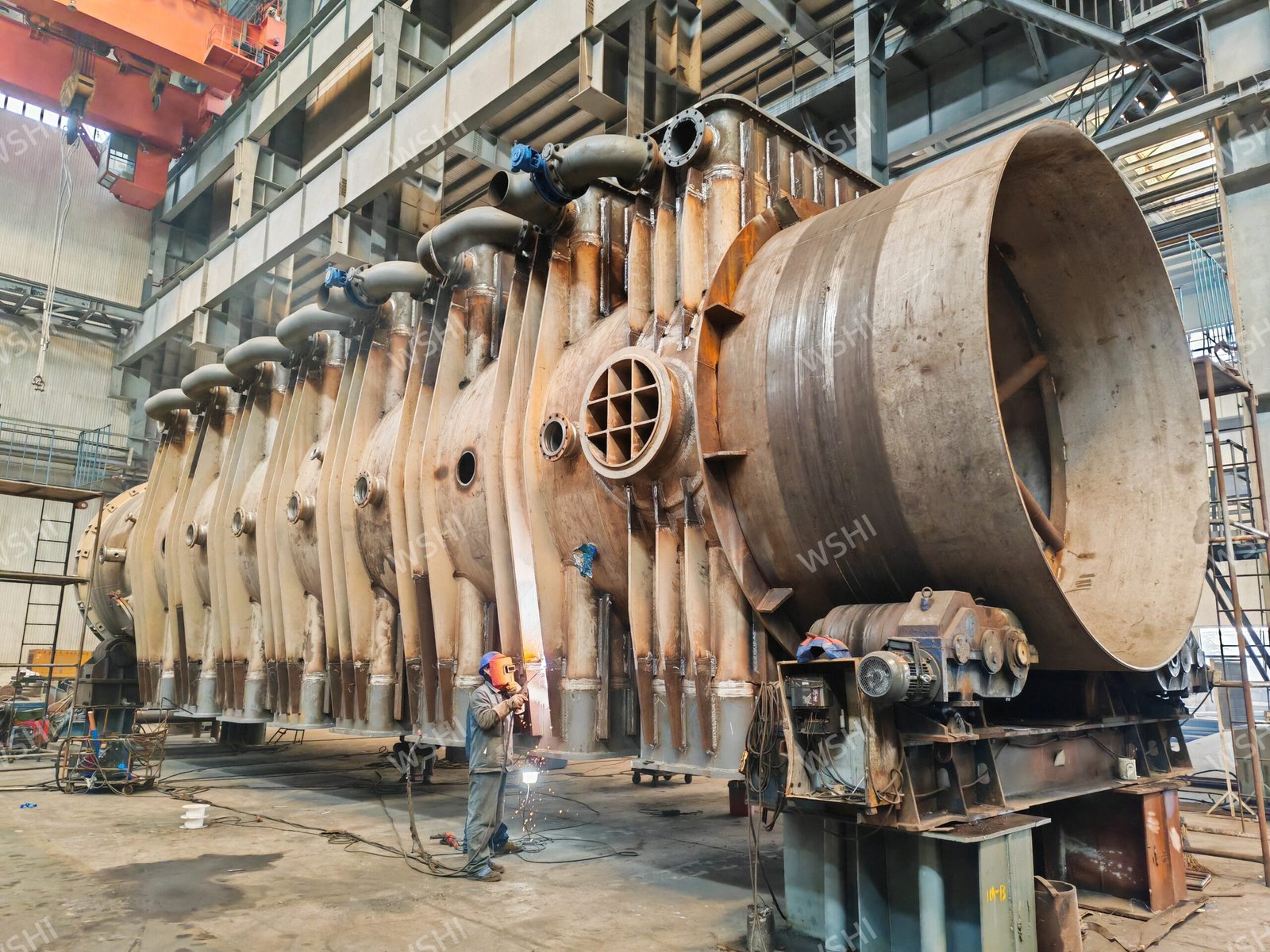
Welding and inspection requirements should be defined before fabrication starts. ASME BPVC Section IX is commonly referenced for welding, brazing, and fusing qualifications where ASME code requirements apply. Project specifications may also require ASME Section V methods, third-party inspection, additional PMI, hardness testing, ferrite testing, or special NDT for weld overlay and high-pressure closure areas.
| Inspection or test item | Why it matters | Specification note |
|---|---|---|
| Material certificate review | Confirms grade, heat number, chemistry, and mechanical properties | Require traceability to pressure parts, tubes, bolting, and weld consumables |
| PMI where required | Reduces alloy substitution risk | Define percentage and components to test |
| RT, UT, MT, PT | Detects weld and surface defects | Specify methods, acceptance criteria, and hold points |
| Hardness testing | Important for sour, hydrogen, or heat-treated service | Define locations and limits |
| Tube inspection | Confirms tube quality before assembly | Consider eddy-current or other required testing |
| Tube-to-tubesheet joint test | Controls leakage risk | Define expansion, welding, leak testing, and acceptance criteria |
| Hydrostatic or pressure test | Confirms pressure boundary integrity | State shell-side and tube-side test basis separately |
| Dimensional inspection | Supports fit-up, module integration, and maintenance access | Include nozzle orientation, support location, and bundle pull clearance |
9. Vendor Documentation Package
A complete vendor document package is essential for review, inspection, commissioning, registration, maintenance, and future repairs. The purchase order should define which documents are required for approval, which are required before shipment, and which must be included in the final data book.
| Document | When to request it | Purpose |
|---|---|---|
| Thermal and mechanical datasheets | Before order and for approval | Confirm process and mechanical design basis |
| General arrangement and nozzle orientation drawings | For approval before fabrication | Verify layout, access, supports, lifting, and interface dimensions |
| Tube layout, bundle, and closure drawings | For approval before fabrication | Review tube arrangement, maintainability, and closure details |
| Calculation reports | For approval | Confirm code thickness, tubesheet, closure, nozzle, and support design |
| Inspection and test plan | Before fabrication | Define hold points, witness points, NDT, pressure testing, and acceptance criteria |
| WPS, PQR, welder qualification records | Before welding | Confirm welding qualifications and procedure control |
| Material certificates and traceability list | During and after material procurement | Confirm material compliance and heat-number control |
| NDT, PWHT, hydrotest, and dimensional reports | Before shipment | Verify fabrication and inspection completion |
| Operation and maintenance manual | Before shipment | Support safe opening, closing, gasket replacement, and startup |
| Spare parts list | Before order finalization and before shipment | Define gaskets, seals, bolting, tools, and critical replacement items |
10. Delivery, Preservation, and Site Readiness
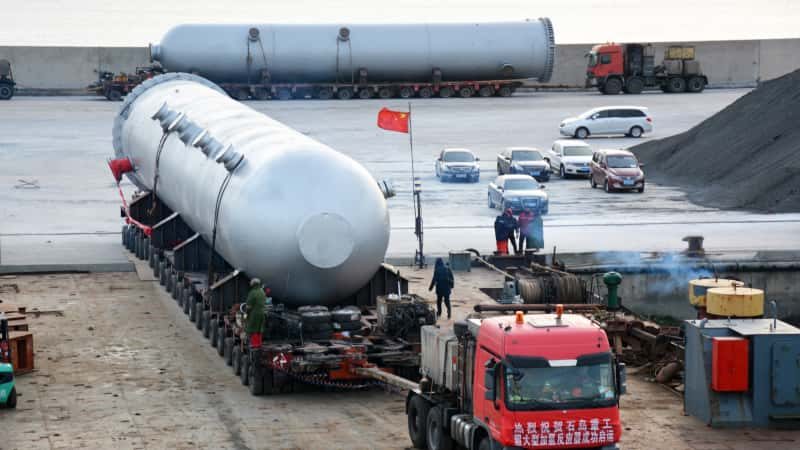
Breech lock exchangers can be heavy, high-value, and dimensionally sensitive. Buyers should define delivery destination, packing method, lifting points, transport saddles, sea shipment requirements, preservation, nitrogen blanketing if needed, flange protection, thread protection, gasket-seat protection, and storage conditions.
Site readiness also matters. The plant or module yard should have lifting capacity, bundle pull space, closure tool storage, spare gasket storage, clean maintenance area, access platforms, drainage, and safe depressurization and purging procedures. These requirements should be reviewed before the unit arrives on site.
Common Procurement Mistakes
Sending Only Heat Duty and Dimensions
Heat duty and dimensions are not enough for high-pressure exchanger design. The supplier needs full process, pressure, material, inspection, and maintenance data.
Leaving Closure Tools Out of the Scope
If special jigs, lock-ring tools, lubricants, seals, or vendor procedures are required, they should be included or clearly excluded in the quotation. Otherwise, the plant may discover the gap during the first shutdown.
Using Generic Material Names
Names such as carbon steel, stainless steel, or alloy steel are not specific enough. The specification should define code material grade, product form, heat treatment, hardness, cladding, weld overlay, PMI, and traceability.
Comparing Quotations Without Normalizing Inspection Scope
One supplier may include NDT, PMI, hardness testing, third-party inspection, pressure testing, final data books, and spare gaskets. Another may exclude them. Compare quotations by full technical scope, not only price.
FAQ
What are the most critical specifications when buying a breech lock heat exchanger?
Critical specifications include process duty, design pressure, design temperature, service fluids, hydrogen partial pressure, materials, corrosion allowance, closure design, gasket type, inspection scope, testing requirements, maintenance tools, and vendor documentation.
How should design pressure and temperature be specified?
They should be specified separately for shell side and tube side, including normal operating conditions, maximum conditions, upset cases, startup, shutdown, cleaning, and minimum design metal temperature where applicable.
Why are materials and corrosion requirements so important?
Breech lock exchangers are often used in high-pressure refinery, petrochemical, or hydrogen-rich services. Materials must address corrosion, cracking, hydrogen exposure, sour service, high temperature, cladding, weld overlay, hardness, and traceability.
What closure and maintenance details should be included?
The specification should define the closure type, lock ring or threaded arrangement, gasket material, tightening method, special tools, opening and closing procedures, thread inspection, spare parts, and maintenance access.
What vendor documents should buyers request?
Buyers should request datasheets, drawings, calculations, material certificates, welding records, inspection and test plans, NDT reports, pressure test reports, operation manuals, maintenance manuals, and spare parts lists.
Can a standard shell and tube supplier build a breech lock exchanger?
Not always. The supplier must have high-pressure exchanger experience, closure design capability, machining control, material traceability, welding qualifications, NDT capability, testing facilities, and maintenance documentation suitable for the project.
Conclusion
Purchasing a breech lock type heat exchanger requires a complete specification package. The buyer should define process conditions, pressure and temperature cases, hydrogen service, materials, corrosion allowance, closure details, gasket system, thermal and mechanical design requirements, inspection scope, pressure testing, maintenance tools, spare parts, documentation, preservation, and delivery requirements before placing the order.
If you are sourcing breech lock heat exchangers, high-pressure shell and tube heat exchangers, refinery heat exchangers, pressure vessels, reactors, separators, towers, or other custom process equipment for refinery, petrochemical, hydrogen, ammonia, methanol, or EPC projects, you can discuss your project requirements with an engineering and manufacturing team. Sharing datasheets, drawings, material requirements, inspection needs, maintenance philosophy, and delivery terms will support technical communication and fabrication evaluation.