
A pressure vessel quotation is only as reliable as the engineering basis and supply scope behind it. Two suppliers may price vessels with the same nominal volume but arrive at different offers because they have assumed different design conditions, materials, inspection requirements, or delivery responsibilities. For EPC contractors and industrial buyers, useful pressure vessel RFQ information therefore includes not only the equipment data, but also the maturity of that data, unresolved decisions, and the rules for comparing supplier responses.
A budget inquiry can proceed with clearly identified preliminary inputs. A firm technical and commercial quotation normally needs a more controlled basis, although the exact required maturity depends on the project and the commitment being requested. The following guide explains what to provide, how to label information that is not yet approved, and how to keep competing quotations comparable for a complete custom pressure vessel.
Quick Answer: What Information Should Buyers Provide?
Identify the vessel duty and quantity; fluid composition and operating cases; design pressure and temperature; capacity and layout constraints; applicable construction code and project specifications; material and corrosion requirements; nozzle and interface arrangements; inspection, testing, and documentation scope; and destination, packing, delivery terms, and target schedule. Attach available datasheets and drawings with document numbers, revisions, and status. If a value is unresolved, mark it as such and identify who will confirm it. Do not present an estimate as an approved design input.
| RFQ information | Buyer should supply or identify | Why it affects the offer |
|---|---|---|
| Equipment and duty | Equipment tag, service, quantity, required capacity, process function | Establishes the package boundary |
| Operating and design cases | Pressure, temperature, vacuum or external pressure if applicable, transients, and paired conditions | Supports mechanical review and identifies exceptional cases |
| Process medium | Phase, composition, relevant physical and corrosion properties, cleaning media | Informs material and service assessment |
| Vessel arrangement | Orientation, preliminary envelope, supports, connection schedule, access limitations | Affects fabrication, interfaces, and transport feasibility |
| Code and quality | Contract-specified code and edition, certification route, examination, testing, witness points, documentation | Establishes the technical and verification basis |
| Materials and protection | Material grade or selection basis, corrosion allowance, cladding or lining, external coating | Affects material procurement and fabrication scope |
| Delivery and interfaces | Delivery location, route limitations, scope split, packing, Incoterms rule and named place | Determines logistics responsibilities and inclusions |
| Information status | Drawing revision, outstanding decisions, assumptions and response deadline | Prevents bidders from silently pricing different bases |
This is an RFQ preparation framework, not a code-mandated universal list. The relevant parties should agree which entries are required for the particular equipment and quotation stage.

Budgetary Inquiry or Firm Quotation: How Much Design Maturity Is Needed?
One of the most important details in a pressure vessel inquiry is the type of commercial response being requested. The same preliminary datasheet can be useful for budget development but inadequate for an unconditional manufacturing commitment.
| Procurement stage | Suitable input basis | What the buyer should expect from the supplier |
|---|---|---|
| Early budget estimate | Preliminary duty, credible operating envelope, approximate geometry, candidate material and known code/jurisdiction | Indicative price or range with explicit assumptions, exclusions, validity, and information still required |
| Firm technical and commercial quotation | Coordinated datasheet, applicable project specification, identified code and certification basis, controlled drawings or clear dimensional limits, inspection and delivery scope | Defined price and schedule against a listed document revision, with deviations and qualifications disclosed |
| Material procurement authorization | Approved information sufficient for the specific material commitment and agreed project approval gates | Authorization limited to identified materials and quantities; unresolved risks are recorded |
| Fabrication release | Approved documents and other release prerequisites under the contract and project procedures | Controlled permission to perform the defined manufacturing activity |
A quotation is not permission to buy material or start fabrication. Nor does a drawing marked reviewed automatically mean approved for manufacture. Approval terminology and release authority belong to the contract and project document-control procedure. For the differences between early procurement and later commitment, see the related discussion on refinery equipment procurement before design freeze.
For an early inquiry, provide the best available values plus a short register of open decisions. For a firm offer, establish which inputs are approved, which remain provisional, and how a change in any of them will be priced and scheduled. There is no universal percentage of engineering completion that guarantees an RFQ is sufficiently mature.
A pressure vessel manufacturer can provide a reliable final quote using only volume and material.False
Volume and material are not enough. The quote also depends on design pressure, design temperature, medium, corrosion allowance, code, nozzle layout, inspection scope, documentation, coating, packing, and delivery conditions.
A complete RFQ package helps buyers compare pressure vessel suppliers more accurately.True
When all suppliers quote against the same design basis, materials, inspection scope, documentation, and delivery terms, the buyer can compare technical scope and total project value instead of only headline price.
Why Complete RFQ Information Matters
Vessel dimensions alone do not determine manufacturing cost. Material grade, thickness and reinforcement, welding complexity, required examination, post-weld heat treatment when applicable, coating or lining, project inspection, documentation, and shipping preparations may all change the scope. A low initial price is not necessarily a lower installed project cost if these elements are excluded or estimated on a different basis.
Complete information does not mean that every fabrication detail must be final before inquiry. It means that the buyer and manufacturer can distinguish confirmed requirements from provisional inputs and supplier-developed design details. Where engineering choices remain open, the technical proposal should show the proposed solution and the assumptions supporting it.
Minimum Technical Data and Operating Cases
State the service and equipment tag, required volume or process capacity, normal operating cases, and proposed design conditions. Pressure and temperature values should not be treated as isolated maxima without considering which combinations can occur. Identify startup, shutdown, upset, low-temperature, cyclic, vacuum, or steam-cleaning cases where applicable, together with the party responsible for approving the design basis.
Operating pressure and temperature describe process conditions; design pressure and temperature are engineering design inputs established under the applicable code and project requirements. The manufacturer should not be expected to infer missing design cases from a single normal operating point. Where values are preliminary, show their status instead of selecting an unjustified universal margin.
Relevant RFQ questions include whether the vessel can experience external pressure, a different temperature during cleaning, or repeated pressure cycles. These questions do not imply that such conditions occur on every vessel. A qualified project engineering team must establish the credible cases.
Fluid and Process Information
Identify the process fluid by more than a broad label such as gas or chemical. Depending on the service, useful information may include constituent concentrations, phases, density, viscosity, vapor pressure, water or chloride content, corrosive contaminants, solids, flammability and toxicity. List temporary media that may contact the vessel during cleaning, flushing or commissioning if they influence design or material selection.
For a separator, the relevant process basis may also include gas and liquid flow ranges, liquid level targets, phase behavior and carryover limits. For a reactor or process drum, internal arrangement and batch or cyclic service may matter. The buyer should supply the information that is actually relevant to the complete vessel, rather than filling the RFQ with unrelated properties.
| Service feature | Clarification to include | Potential issue if omitted |
|---|---|---|
| Corrosive constituents | Identity, concentration or applicable corrosion study | Material and corrosion protection cannot be evaluated consistently |
| Changing phases | Expected phases and applicable operating range | Internal and process requirements may be misunderstood |
| Solids or fouling | Characteristics and cleaning expectations | Access and protection assumptions may diverge |
| Repeated operation | Relevant pressure and temperature cycles | Cyclic service assessment may be overlooked |
| Vacuum or external pressure | Credible cases and their temperature conditions | External-pressure design might not be considered |
Mechanical Configuration, Connections and Site Interfaces
Provide the preferred horizontal or vertical orientation, any fixed dimensional envelope, head and support preferences if determined, and the available general arrangement (GA) drawing. When the layout is still evolving, identify constraints rather than presenting a preliminary drawing as final. These may include building openings, pipe rack interfaces, support elevations, foundation constraints and maintenance clearances.
A nozzle schedule should identify the service and relevant geometry of process connections, vents, drains, relief connections, manways and instrument nozzles. Where size, rating, facing or orientation is provisional, mark it accordingly. The package should clarify who will supply the approved nozzle loads, piping interface information, supports and any site-specific load criteria. These are interfaces of the full vessel package, not a request to purchase separate small fittings.
Code, Certification and Regulatory Basis
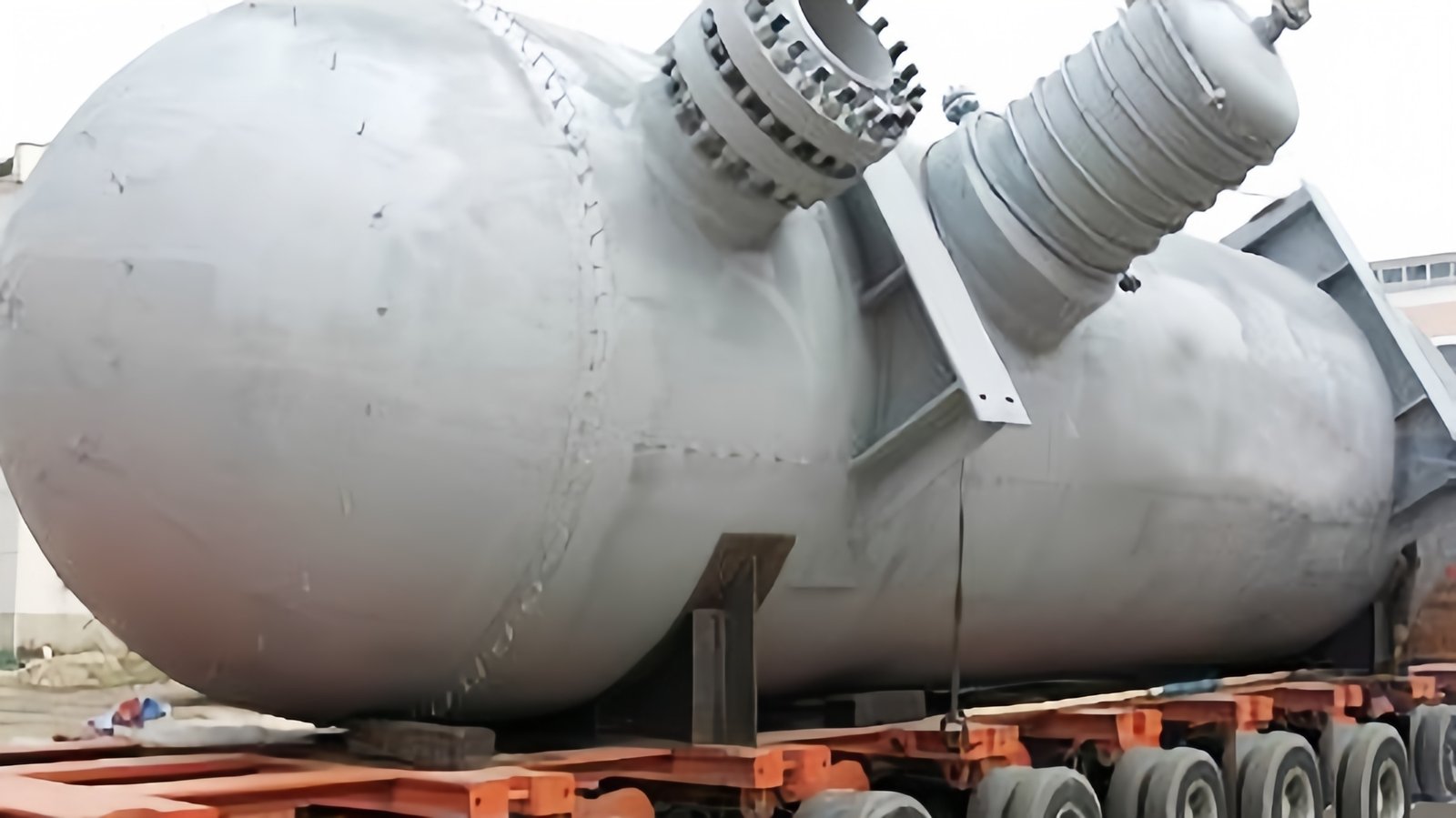
Specify the construction code and contractual edition where known, the installation country or jurisdiction, owner standards, and the requested conformity or certification route. These requirements are not interchangeable. For example, ASME BPVC Section VIII, Division 1 addresses design, fabrication, inspection, testing and certification within its scope, while the European Union’s Pressure Equipment Directive 2014/68/EU establishes a regulatory conformity framework for equipment within its scope. The project team must confirm the applicable route rather than naming every standard as though all apply simultaneously.
If the project requires particular third-party involvement, inspection witness points, registration, documentation language or marking, state this before bids are compared. Do not assume certification is automatically included simply because a manufacturer discusses a particular code.
Materials, Corrosion Allowance and Surface Treatment
Provide an approved material grade where one exists. If material selection is not final, specify the process environment, operating and design temperatures, corrosion study status, project life assumptions where relevant, and acceptable alternatives for technical review. A generic instruction to use stainless steel may conceal significant differences in grade, weldability and corrosion resistance.
Clarify whether the vessel requires corrosion allowance, a metallic corrosion-resistant layer, an internal lining, surface finishing, or an external coating system. The supplier should not assume that a metallic clad layer, weld overlay and a nonmetallic lining are interchangeable. The final solution and any required thermal treatment remain subject to engineering evaluation and the applicable specification.
Inspection, Testing and Documentation Requirements
List the required inspection and testing basis rather than relying on a generic phrase such as full inspection. Depending on the code and project requirements, the scope may involve material certificates, welding qualifications, visual examination, specified nondestructive examination, dimensional checks, heat-treatment records where applicable, pressure or leak testing, and coating inspection. Their exact applicability and acceptance criteria must come from the governing documents and approved inspection plan.
Specify whether the buyer, EPC, independent inspection agency or applicable authority must review documents or attend particular hold or witness points. Also identify the expected final records: approved drawings, applicable calculations, material traceability, welding and examination records, test reports, coating records, and the manufacturing data book if required. The RFQ should state which documents are needed with the bid, before fabrication, before shipment, and at final handover; these are different deliverable milestones.
For an expanded document-by-document treatment, the site’s pressure vessel RFQ documents guide can be read separately. The purpose here is to make document scope comparable across quotations, not to prescribe the manufacturer’s internal inspection procedures.

Pressure Relief and Instrument Interfaces
Where relief devices and instruments are outside the vessel manufacturer’s supply, the associated nozzles and mechanical interfaces still need coordination. Identify the required connections and the engineering party responsible for relief-system sizing, instrument selection and approved interface data. Do not infer that the vessel fabricator is supplying a complete protective system from the presence of a relief connection in a drawing.
Site, Transport and Delivery Boundaries
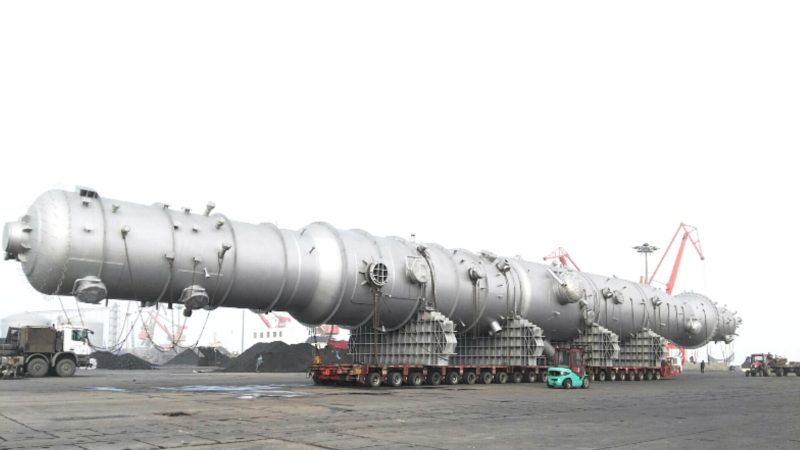
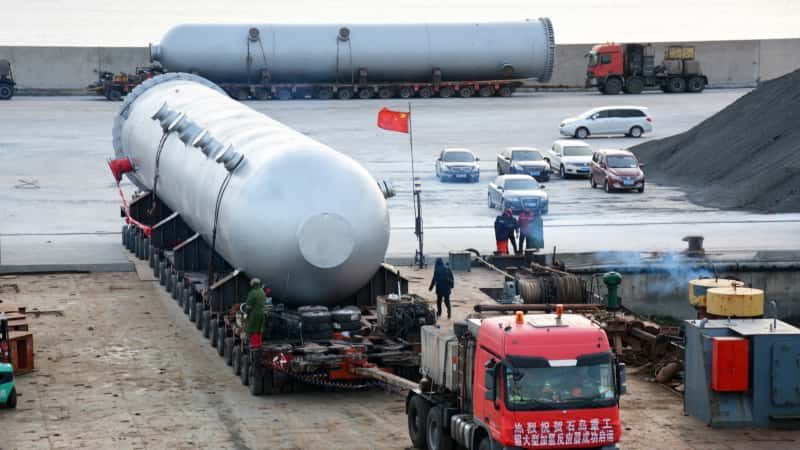
For large industrial vessels, transport and installation constraints can affect the proposed vessel envelope, supports, shipping configuration and interface responsibilities. Provide the destination and relevant route or port restrictions, maximum shipping dimensions or weight if established, access to the site, unloading and lifting interface requirements, and any required preservation or storage conditions.
The RFQ should separate what is included in the vessel quotation from what is handled by the EPC, site contractor or buyer. This is particularly important for export packing, lifting attachments, temporary shipping supports, site unloading, storage preservation, installation assistance and final touch-up. Neither the manufacturer nor the buyer should assume an unlisted activity belongs to the other party.
| Delivery interface | Identify in the RFQ | Evidence to request in the bid |
|---|---|---|
| Packing and preservation | Required environment and responsibility up to handover | Packing/preservation scope statement |
| Transport configuration | Maximum dimensions, weight limits, required segmentation if any | Preliminary transport envelope and stated assumptions |
| Loading and unloading | Location and responsible party | Explicit inclusion or exclusion |
| Site erection or installation support | Whether included, excluded or subject to separate agreement | Scope boundary and schedule assumption |
| Documents for shipment | Required export, quality and release records | Deliverables schedule or document list |
Use the correct Incoterms rule and a named place, if Incoterms are used in the contract. The International Chamber of Commerce explains that Incoterms rules allocate certain delivery obligations, costs and risks; they do not replace a complete contract or settle all engineering and installation responsibilities.
Record Unresolved Data Instead of Hiding It
A controlled open-item register is one of the most useful additions to an RFQ. It turns missing information into a managed engineering decision rather than an unrecorded supplier assumption. At minimum, record the item, currently issued value or status, responsible party, due date or decision gate, and the anticipated effect on quotation scope.
| Open item | Current status | Responsible party | Needed before | Quotation instruction |
|---|---|---|---|---|
| Final design-temperature case | Pending process approval | EPC/process | Firm technical basis | Bidder to state assumed case and effect of change |
| Nozzle orientation revision | Preliminary GA | EPC/piping | Affected drawing approval | Bid against listed GA revision; identify clashes |
| Inspection witness points | Owner review pending | Owner/quality | Inspection-plan agreement | Price the stated base scope; list alternatives separately |
| Shipping envelope | Route assessment pending | Project logistics | Transport commitment | State envelope and transport exclusions |
These rows are illustrative placeholders, not actual project data or approvals. Their value is the control structure. An item marked TBD is not the same as not applicable. A supplier may offer a conditional solution, but the buyer must decide who can approve the assumption and when it must be closed.
Keep One Controlled RFQ Revision
Issue a document register identifying each datasheet, specification, drawing and schedule by number, revision, issue date and purpose (such as for quotation). Distribute the same baseline to every bidder. When a clarification changes the basis, issue a numbered addendum, identify what it supersedes, and request written bidder acknowledgment. Maintain the answers in a common clarification log rather than providing a critical answer to only one supplier.
Configuration-management principles support clear identification and control of changes; ISO 10007:2017 describes guidance for configuration management. It is not, by itself, a universal pressure-vessel RFQ mandate. The project’s own contractual document-control rules govern the actual approvals.
Compare Supplier Assumptions, Deviations and Exclusions on the Same Basis
A complete quotation is more than a price. Ask each bidder to respond against the same RFQ revision, with a line-by-line statement of assumptions, exceptions, exclusions and unresolved dependencies. These categories should not be merged:
- Assumption: an input the bidder has adopted because the RFQ is incomplete or permits supplier selection.
- Deviation: a proposal that differs from an explicit requirement in the RFQ or project specification.
- Exclusion: equipment, service, testing, documentation or delivery activity omitted from the price.
- Qualification: a condition on validity, price, performance commitment or schedule.
| Bid-comparison question | Evidence the buyer should request |
|---|---|
| Which document revision is priced? | Bid document register and acknowledgment of RFQ addenda |
| Are operating and design cases identical? | Completed datasheet or marked-up case schedule |
| Is the material and corrosion basis unchanged? | Material schedule and stated alternatives |
| Are examination and certification scopes identical? | Inspection and test scope with any exceptions |
| What drawings and records are included? | Deliverables list with milestones and exclusions |
| Who supplies site and transport interfaces? | Scope split and named delivery obligations |
| What remains conditional? | Assumptions/deviations register with cost and schedule effects |
Do not automatically treat a proposed material substitution, reduced examination scope or altered design condition as a commercial saving. First assess whether the proposed departure is technically and contractually acceptable. For a fair comparison, the buyer may request a common base bid and separately priced alternatives rather than allowing bidders to optimize against different unstated requirements.
A Practical Evaluation Sequence
- Confirm each offer identifies the same RFQ and addendum revisions.
- Check that the technical basis and supply limits match the buyer’s specified base case.
- Classify unresolved differences as assumptions, deviations, exclusions or qualifications.
- Ask the responsible engineering, quality and commercial parties to evaluate their impact.
- Compare prices and schedules only after the material scope differences are understood and recorded.
When Does an RFQ Change Require a Quotation Recheck?
Not every new document revision changes the price. However, an updated specification, drawing or clarification should be evaluated whenever it alters the technical basis, the supply boundary, an approval requirement or the assumptions supporting a supplier’s original offer. An unchanged price should be confirmed, not inferred, when a material part of the RFQ has changed.
| Change to the issued RFQ basis | Buyer or EPC review | Supplier response to request |
|---|---|---|
| Design conditions, service medium or approved operating cases | Identify which vessel tags and calculations may be affected | Confirm technical acceptability and any change to price, scope or lead time |
| Material grade, corrosion allowance or protective system | Check the approved material and corrosion basis | Identify revised material/fabrication assumptions and commercial effect, if any |
| Inspection, certification or documentation scope | Review applicable contract and quality requirements | State any additional examination, third-party involvement, records or cost |
| Nozzle schedule, supports, dimensions or access envelope | Confirm interfaces with piping, civil and transport teams | Review drawing or fabrication impact and timing |
| Packing, shipping split, delivery place or site-service boundaries | Reconcile the scope split and delivery responsibilities | Confirm inclusion/exclusion and revised delivery assumptions |
| Closure of a previously provisional input | Compare the approved value against the assumption used for pricing | Confirm that the offer still applies or issue a qualified revision |
Maintain a quotation-change log identifying the prior and new document revisions, affected equipment tags, responsible approver, supplier reply, and the disposition of any cost or schedule effect. Issue a common addendum to all active bidders where the tender basis changes; request acknowledgment and, where necessary, a revised offer referencing that addendum. If a change has no technical or commercial effect, record the bidder’s written no change confirmation.
The need to reprice, the authority to approve the change, and any contractual adjustment are governed by the project’s agreed procedures and purchase terms. This review remains separate from material procurement authorization or fabrication release.
Commercial Information and Quotation Terms
Provide the requested quotation currency and validity, quantity, preferred payment structure, warranty expectations, delivery milestone, documentation language and any commercial requirements that affect the scope. State whether installation or commissioning support is required from the vessel supplier. Treat small components and accessories as included or excluded parts of a complete vessel package rather than separate procurement opportunities.
A schedule should identify the event that starts the manufacturing lead time: order acknowledgment, receipt of an agreed advance payment, final engineering approval, material authorization, or another contractual milestone. This avoids comparing one supplier’s delivery period measured from purchase order with another’s measured from the last approved drawing.
Practical RFQ Readiness Checklist
Before issuing a request for quotation, the buyer can make the following checks:
- Identify the equipment tag, service, quantity, vessel capacity and expected operating cases.
- Separate confirmed process/design inputs from values still awaiting approval.
- Specify the governing code, contractual edition or current code-selection status, and local requirements.
- Identify material requirements, corrosion basis, coating/lining and key vessel dimensions or constraints.
- Provide relevant drawings and nozzle information with document numbers and revisions.
- State inspection, testing, certification and staged documentation expectations.
- Define transport limits, packing, named delivery place and interfaces with site contractors.
- Label the inquiry budgetary or firm and state the expected response level.
- Include an open-item register and a deadline or gate for resolving important inputs.
- Require bidders to list assumptions, deviations, exclusions and quote qualifications separately.
- Issue all bidders the same RFQ baseline and controlled clarifications.
- Define how changed requirements will be assessed for quotation validity, price and schedule impact.
This list is intended to expose missing inputs, not to substitute for a project specification or a code compliance review.
Common RFQ Mistakes to Avoid
The most consequential mistakes are not always missing technical fields. They are often mismatched document revisions, unsupported assumptions presented as approved requirements, inspection activities omitted from one quotation, or a delivery date measured from different starting events. Another common issue is assuming that preliminary size limits have been checked against the transport route when the route review is still open.
An effective pressure vessel RFQ can acknowledge uncertainty. It should not conceal uncertainty. What matters is that the unknowns are visible, owned and considered during comparison.
Related Industrial Equipment
The same information-control approach can be useful when complete equipment packages include process columns, reactors, separators, heat exchangers or large industrial storage tanks. Their detailed thermal or process specifications differ, so a generic pressure-vessel checklist should not replace the technical datasheet needed for each equipment duty.
Frequently Asked Questions
Can buyers request a pressure vessel quotation without final drawings?
Yes, for preliminary budgeting if the available process data and dimensional constraints are sufficient for a qualified estimate. The buyer should identify the drawings as preliminary and expect explicit assumptions. A firm quotation may require more mature drawings or an agreed design-development responsibility.
What information is essential for comparable pressure vessel quotes?
A common service and design basis, material and corrosion requirements, code and inspection scope, vessel interfaces, documentation, delivery boundaries, and the same RFQ revision. Supplier assumptions, deviations and exclusions must be visible before price comparison.
Should design pressure and operating pressure be the same?
Not necessarily. Operating conditions describe process service; design conditions are established by the responsible engineering team under the applicable code and project specification, considering relevant cases. Buyers should not set design pressure using an arbitrary rule without that review.
What if a material grade or nozzle arrangement is still undecided?
Mark it as pending, assign an owner and target decision gate, and ask the supplier to state the assumption used for the quoted base scope. A later approved change may affect price, fabrication and schedule.
Does an RFQ acknowledgment authorize fabrication?
No. Quotation acknowledgment, purchase order, material authorization and fabrication release are distinct project actions. The authority and required document status for each must be defined by the contract and project procedures.
When should a supplier reissue a pressure vessel quotation?
When a controlled change affects the quoted design basis, material, inspection requirements, interfaces, delivery boundary, or commercial assumptions, the buyer should request a documented impact assessment and a revised quotation where needed. A bidder may instead confirm in writing that the offer is unchanged. Both responses should identify the applicable RFQ revision.
Must every buyer use the same RFQ checklist?
No. Construction codes, regulatory regimes, equipment duties and owner specifications differ. The checklist helps structure a discussion; it is not a substitute for project engineering or regulatory review.
Conclusion
A better pressure vessel quotation starts with reliable data, but it does not end there. Buyers need to tell suppliers which information is approved, which is provisional, which document revision controls the bid, and which services and documents are actually included. This makes budget estimates more transparent and formal bids more comparable without implying that every design decision must already be final at inquiry stage.
For complete industrial vessel projects, prepare a concise datasheet, current drawings, the applicable code and quality requirements, an open-item register, and a common supplier deviation format. These can then be shared with the project manufacturer through the WSHI contact page for technical clarification and quotation review.
References
- ASME — BPVC Section VIII, Division 1: Rules for Construction of Pressure Vessels. Official standard scope; detailed contractual requirements must be checked against the applicable edition.
- European Commission — Pressure Equipment Directive 2014/68/EU. Official overview of the EU regulatory framework.
- ISO — ISO 10007:2017, Quality management — Guidelines for configuration management. Published guidance on configuration management; not presented as a pressure vessel RFQ regulation.
- International Chamber of Commerce — Incoterms Rules. Official explanation of trade terms, delivery tasks, cost and risk allocation.