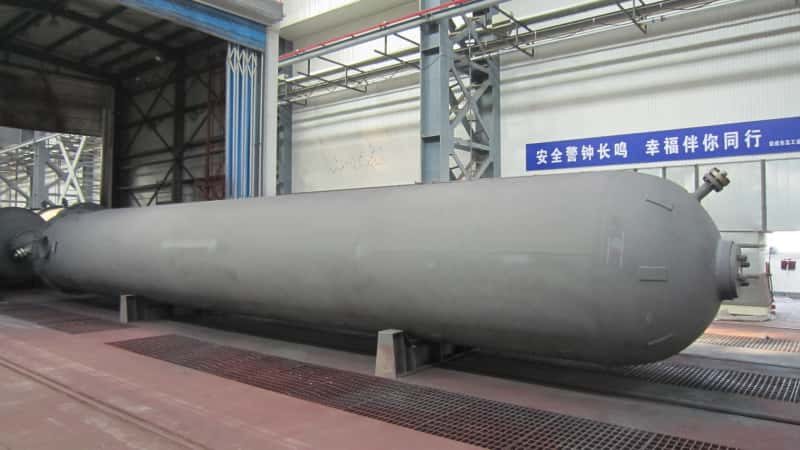

In chemical plants, refineries, petrochemical units, and large industrial utility systems, high-pressure condensate still contains recoverable heat. When condensate is discharged to a lower pressure, part of it becomes flash steam that may be reused in low-pressure steam headers, preheaters, reboilers, evaporators, or other heat recovery services.
For EPC buyers, the key question is not whether a small standard flash tank can handle the duty. The practical procurement question is how to specify large condensate flash vessels above 1,000 liters for project-based steam recovery systems. These vessels should be reviewed as engineered pressure equipment, not as simple utility tanks.

WSHI focuses on project-based custom pressure vessels and storage tanks above 1,000 liters, rather than small packaged boiler-room tanks. This guide is written for buyers working on chemical plants, petrochemical units, refinery utility systems, evaporation systems, and large condensate recovery networks.
For technical context, Spirax Sarco explains flash steam recovery as a way to recover usable energy when hot condensate is released to a lower pressure. For pressure vessel construction context, ASME BPVC Section VIII Division 1 is a common reference for pressure vessel design, fabrication, inspection, testing, and certification requirements, depending on project scope and jurisdiction.
A large condensate flash vessel should be specified only by total volume.False
Volume is not enough. The vessel also depends on condensate flow, pressure reduction, flash steam quantity, vapor-liquid separation, nozzle layout, design code, inspection scope, and delivery constraints.
Large condensate flash vessels should be treated as part of the steam recovery system.True
The vessel must match upstream condensate pressure, downstream flash steam users, liquid discharge, controls, relief requirements, nozzles, supports, and plant utility integration.
What Is a Large Condensate Flash Vessel?
A condensate flash vessel is a pressure vessel that receives hot condensate from higher-pressure steam users and allows a controlled pressure reduction. As the pressure drops, part of the condensate flashes into low-pressure steam. The remaining liquid condensate is separated and discharged to a condensate receiver, return system, drain system, or other approved destination.
In industrial projects, a large flash vessel may support steam condensate recovery, reboiler condensate return, evaporation and concentration units, refinery utility systems, process heat recovery networks, and boiler feedwater preheating. It may also connect with control valves, relief devices, condensate pumps, steam headers, and industrial heat exchangers.
Where Large Flash Vessels Are Used
Large condensate flash vessels are typically used where steam consumption and condensate return volume are significant. Common project scenarios include chemical production units, petrochemical process plants, refinery offsites, fertilizer plants, industrial evaporation systems, and EPC utility packages.
In pressure vessels for petrochemical plants, flash vessels may help recover usable low-pressure steam from process heaters, reboilers, and heat exchangers. In pressure vessels for chemical plants, they may support heat recovery from batch or continuous process heating systems. The final arrangement depends on plant steam pressure levels, condensate temperature, heat users, control philosophy, and site safety requirements.
Key Selection Factors for EPC Buyers
Condensate Load and Steam Pressure Levels
The most important input is the actual condensate flow rate and pressure difference between the upstream condensate source and the downstream flash steam user. A vessel specified without reliable process data may lead to unstable operation, poor steam recovery, liquid carryover, oversized equipment, or missing relief requirements.
Before requesting a quotation, buyers should prepare condensate flow rate, upstream steam or condensate pressure, target flash vessel operating pressure, condensate temperature, low-pressure steam user or receiving header, continuous or intermittent operating pattern, and required design code. The flash steam quantity should be calculated by the project engineering team using steam tables or approved process software.
| Selection Input | What Buyers Should Provide | Why It Matters |
|---|---|---|
| Condensate load | Normal, maximum, and intermittent condensate flow rate | Controls vessel size, separation volume, nozzle sizing, and liquid discharge |
| Pressure levels | Upstream condensate pressure and target flash vessel pressure | Determines flash steam quantity and downstream steam recovery potential |
| Temperature | Condensate temperature, design temperature, and upset cases | Affects design basis, material selection, insulation, and safety review |
| Steam user | Low-pressure steam header, reboiler, preheater, evaporator, or other user | Confirms whether recovered flash steam has a practical destination |
| Operating pattern | Continuous, batch, intermittent, startup, shutdown, and turndown data | Helps avoid unstable control, carryover, and poor heat recovery |
| Code and inspection | ASME, local pressure vessel rules, NDT, pressure testing, third-party inspection | Defines fabrication, documentation, nameplate, and delivery requirements |
Vessel Capacity Above 1,000 Liters
For WSHI’s manufacturing scope, the inquiry should clearly involve a project-based custom vessel above 1,000 liters. This helps avoid confusion with small packaged flash tanks used in compact boiler-room systems. For large vessels, capacity and geometry should be determined by vapor-liquid separation duty, residence time, nozzle layout, liquid level control, maintenance access, support design, and site layout restrictions.
Nozzle Orientation and Interface Design
Large condensate flash vessels often connect with multiple process lines, including condensate inlet, flash steam outlet, liquid condensate outlet, vent, drain, level instruments, pressure instruments, safety relief connections, and inspection openings. Nozzle orientation matters because it affects piping layout, maintenance access, lifting, insulation, platform arrangement, and site installation.
Buyers should review general arrangement drawings, nozzle schedules, P&IDs, piping layouts, and access constraints before fabrication begins. Early drawing review can reduce rework after shell cutting, welding, testing, coating, and delivery.
Manufacturing and Quality Control Considerations
Large condensate flash vessels are usually fabricated according to project drawings, pressure vessel codes, material specifications, and inspection requirements. Depending on the project, the vessel may require carbon steel, stainless steel, or another material selected by the engineering team.
Manufacturing may include plate cutting, shell rolling, head forming, fit-up, shell and head welding, nozzle reinforcement, support welding, dimensional inspection, NDT, pressure testing, surface preparation, coating, insulation interface coordination, and final documentation. For EPC projects, the manufacturer should support drawing review, material procurement, welding control, NDT coordination, pressure testing, coating, packing, and delivery preparation.
| Manufacturing Item | Buyer Review Point |
|---|---|
| Drawings | Confirm general arrangement, nozzle orientation, supports, lifting points, and access |
| Materials | Confirm material grade, corrosion allowance, certificates, and traceability |
| Welding | Review welding procedure, welder qualification, repair procedure, and heat treatment if required |
| Inspection | Define RT, UT, MT, PT, visual inspection, dimensional inspection, and hold points |
| Testing | Confirm pressure test, leak test, coating inspection, and final acceptance criteria |
| Documentation | Define data book, material certificates, welding records, NDT reports, test records, and as-built drawings |
Heat Recovery and Related Equipment
Condensate flash vessels rarely operate alone. A complete steam recovery system may include condensate receivers, pumps, control valves, pressure reducing stations, steam headers, flash steam users, heat exchangers, traps, vents, drains, instrumentation, and controls. In some systems, recovered flash steam may be sent to a shell and tube heat exchanger or other process heating equipment.
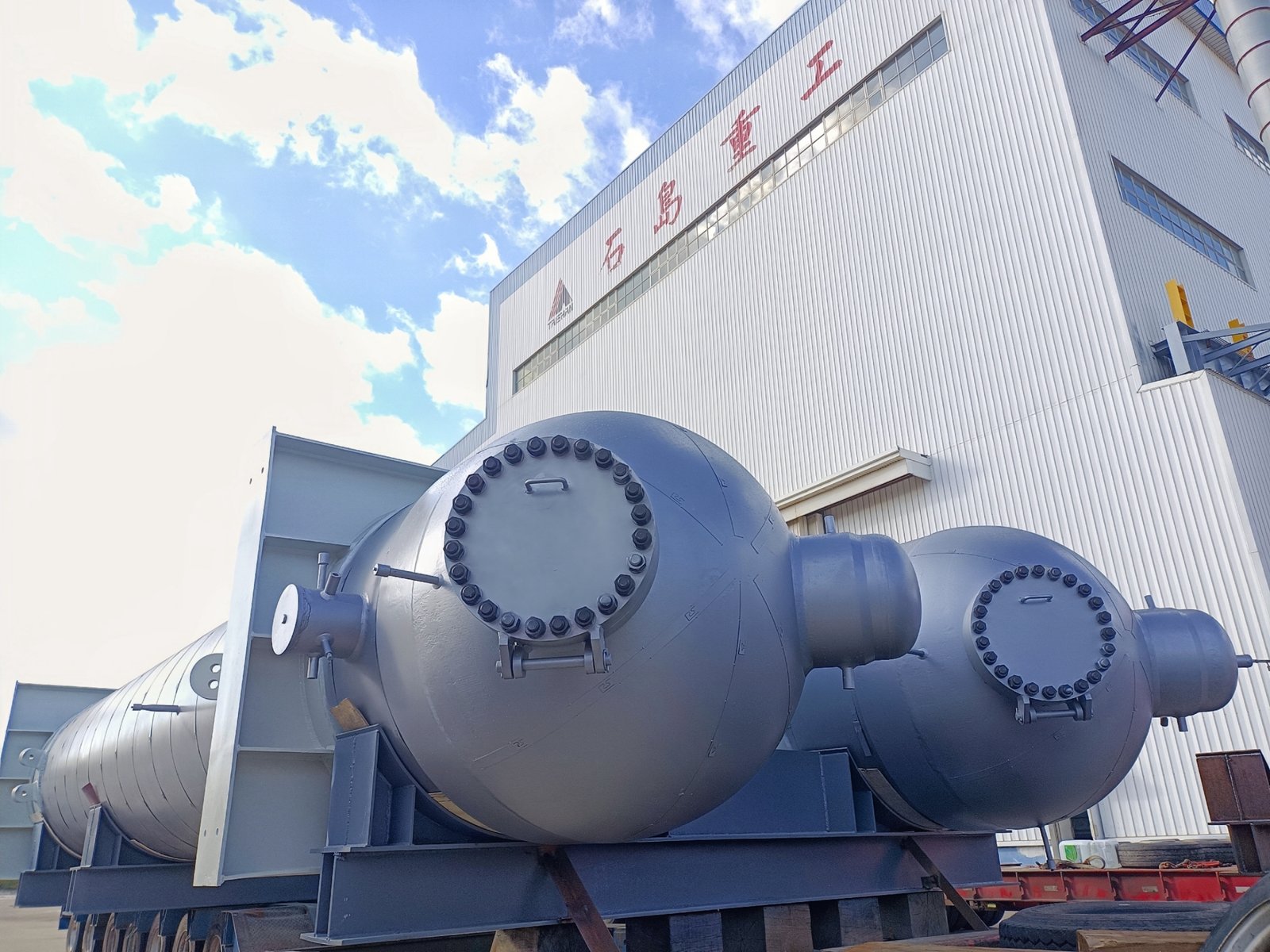
For broader heat recovery projects, buyers may need to evaluate the flash vessel, condensate collection vessels, control strategy, and heat transfer equipment as one integrated scope. This is especially important in chemical plants and refineries where steam users operate at different pressure levels.
Common Procurement Mistakes
One common mistake is treating every flash vessel as a small standard tank. Large chemical plants and refinery utility systems often require custom sizing, project documentation, pressure vessel manufacturing control, and site-specific nozzle orientation.
Another mistake is requesting a quotation without process data. A vessel name alone is not enough. Buyers should provide operating pressure, design pressure, temperature, condensate load, material requirements, inspection scope, and delivery destination. A third mistake is ignoring transportation and installation. Large vessels may require lifting lugs, saddles, transport supports, export packing, route planning, and site unloading coordination.
What Buyers Should Prepare Before Requesting a Quotation
| RFQ Item | Recommended Information |
|---|---|
| Process data | Condensate flow, pressure, temperature, operating pattern, and flash steam user |
| Mechanical data | Capacity above 1,000 liters, orientation, dimensions, supports, lifting requirements, and site limits |
| Nozzle layout | Condensate inlet, steam outlet, condensate outlet, vent, drain, relief, level, pressure, and inspection openings |
| Code and material | Design code, material grade, corrosion allowance, insulation, coating, and service environment |
| Inspection and testing | NDT, pressure testing, coating inspection, third-party inspection, and final data book |
| Delivery | Destination, Incoterms, packing, transport restrictions, lifting plan, and schedule |
Why Custom Manufacturing Matters
Large condensate flash vessels must match the project’s process design, site layout, steam balance, pressure vessel code, inspection plan, and delivery conditions. Standard small vessels may not provide the required capacity, nozzle configuration, separation performance, inspection documentation, or delivery support.
As a large-scale pressure vessel manufacturer, WSHI supports project-based manufacturing for pressure vessels, storage tanks, heat exchangers, and custom chemical equipment. For EPC buyers, the value is not only vessel fabrication, but also engineering coordination, quality control, documentation, and large-item delivery support.
FAQ
Does WSHI manufacture small standard flash tanks?
WSHI focuses on project-based custom pressure vessels and storage tanks above 1,000 liters. Small standard boiler-room flash tanks are outside the preferred product scope.
What information is needed for a large condensate flash vessel quotation?
Buyers should provide drawings, condensate flow rate, upstream and downstream pressure, operating pressure, design pressure, temperature, material requirements, inspection requirements, nozzle layout, and delivery destination.
Is a condensate flash vessel considered a pressure vessel?
In many industrial applications, it may be treated as pressure equipment depending on design pressure, volume, jurisdiction, and project specifications. The final code basis should be confirmed by the EPC contractor and qualified engineers.
Can flash steam be reused in heat exchangers or reboilers?
Yes, if the recovered steam pressure and flow match a real low-pressure steam user. The system should be reviewed as part of the plant heat recovery design.
Why is custom fabrication important for large flash vessels?
Large vessels must match plant layout, nozzle orientation, vapor-liquid separation duty, inspection requirements, lifting method, and transport limits. Custom fabrication helps align the vessel with the whole project.
Conclusion
Large condensate flash vessels can help chemical plants, refineries, and industrial utility systems recover usable steam energy from high-pressure condensate. For projects above 1,000 liters, buyers should define process conditions, vessel capacity, code requirements, nozzle orientation, inspection scope, documentation, and delivery constraints before procurement.
If you are planning a chemical plant, petrochemical unit, refinery utility system, or industrial steam recovery project above 1,000 liters, you can discuss your project requirements with an engineering team or download the pressure vessel catalog for preliminary reference. Sharing drawings, operating conditions, condensate data, material requirements, inspection needs, and delivery terms will help support manufacturing feasibility review.