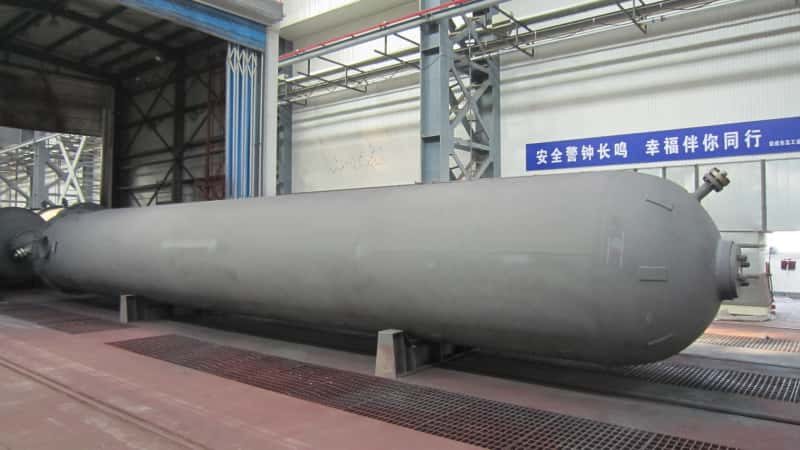

What Should EPC Buyers Confirm for High-Viscosity Chemical Heat Exchangers?
High-viscosity chemical streams can make heat exchanger procurement more difficult than it first appears. A fluid that moves easily at one temperature may become thick, slow, fouling-prone or difficult to clean under another operating condition. For EPC buyers, this means a high-viscosity chemical heat exchanger should not be specified only by heat duty. Flow behavior, pressure drop, material compatibility, cleaning access, fouling risk and fabrication requirements all need to be reviewed before quotation.
This article focuses on industrial shell and tube heat exchangers and custom heat exchanger equipment for chemical, petrochemical, resin, polymer, oil, solvent and wastewater concentration projects. It does not cover plate heat exchangers. The procurement focus is complete engineered equipment, not standalone small parts or accessories.
A high-viscosity heat exchanger can be specified accurately from heat duty alone.False
A reliable RFQ should also include viscosity across the operating range, flow rate, allowable pressure drop, fluid composition, fouling risk, cleaning method, material requirements and inspection scope.
For viscous fluids, pressure drop and cleaning access can be as important as heat transfer area.True
High-viscosity fluids may require more pumping energy, create uneven flow, foul more easily or drain slowly, so maintainability and hydraulic design should be reviewed before purchase.
What Is a High-Viscosity Chemical Heat Exchanger?
A high-viscosity chemical heat exchanger is used to heat, cool, condense or recover heat from fluids that resist flow more strongly than water-like liquids. Examples may include heavy oil, resin, polymer solution, viscous solvent mixtures, concentrated wastewater, syrup-like chemical intermediates or process liquids with suspended solids.
For these services, industrial heat exchangers must be evaluated for both thermal performance and hydraulic behavior. A design that meets heat duty on paper may still create excessive pressure drop, uneven flow, fouling or cleaning difficulty if viscosity is not properly considered.
Where Are High-Viscosity Heat Exchangers Used?
Chemical and Fine Chemical Plants
Chemical plants may use viscous heat exchangers for resin processing, solvent recovery, intermediate heating, cooling before storage or temperature control before reaction or separation. These duties often require careful material selection because the fluid may be corrosive, temperature-sensitive or prone to polymerization.
Petrochemical and Refinery Units
Petrochemical and refinery projects may involve heavy hydrocarbons, lube oil, wax-containing streams or high-boiling process liquids. In these cases, heat exchangers may connect with drums, reactors, separators and storage systems. EPC buyers should coordinate the exchanger with the wider petrochemical pressure vessels package.
Industrial Wastewater and Concentration Systems
In evaporation and wastewater concentration projects, viscosity may rise as water is removed. The exchanger or heater must be reviewed against the concentrated condition, not only the feed condition. Scaling, fouling, solids and cleaning access should be part of the RFQ.
High-Viscosity Heat Exchanger Procurement Focus
| Selection factor | Why it matters | What EPC buyers should provide |
|---|---|---|
| Viscosity range | Changes heat transfer, flow distribution and pumping demand | Viscosity at minimum, normal and maximum operating temperatures |
| Pressure drop | High viscosity can create excessive hydraulic resistance | Allowable pressure drop on both shell side and tube side |
| Fouling risk | Deposits can reduce duty and shorten cleaning intervals | Solids, polymers, salts, degradation risk and fouling allowance |
| Cleaning access | Viscous fluids may drain slowly and be difficult to remove | Mechanical cleaning, chemical cleaning, flushing or bundle-pull requirements |
| Material compatibility | Chemistry and cleaning fluids affect corrosion and service life | Fluid composition, pH, chlorides, solvents, sulfur compounds and material specification |
Key Selection Factors for EPC Buyers
1. Viscosity Across the Operating Range
Viscosity often changes with temperature, concentration and composition. EPC buyers should provide viscosity at normal, minimum and maximum operating temperatures. If the stream becomes more concentrated during operation, the viscosity range should reflect that change.
A single viscosity value is rarely enough for a reliable quotation. Start-up, shutdown and low-temperature conditions may create the highest pressure drop or cleaning difficulty.
2. Pressure Drop Limits
High-viscosity fluids can create high pressure drop through tubes, shells and connections. Excessive pressure drop may affect pumps, flow control, energy consumption and process stability.
The RFQ should define allowable pressure drop on both sides of the exchanger. The manufacturer can then review whether a shell and tube heat exchanger configuration is practical for the service.
3. Fouling and Cleaning Access
Viscous fluids are often associated with fouling, deposits or slow drainage. EPC buyers should state whether mechanical cleaning, chemical cleaning, flushing, steaming or periodic maintenance is expected.
Cleaning access should be considered during layout. If tube bundle removal or channel access is required, the plant arrangement must leave enough maintenance space.

4. Material Compatibility
Material selection depends on chemical composition, temperature, corrosion risk, chlorides, pH, solvents, sulfur compounds and cleaning chemicals. Depending on service, carbon steel, stainless steel, alloy materials or special corrosion protection may be required.
Material selection should follow project specifications and engineering review. A manufacturer can support fabrication feasibility, but final compatibility should not be guessed from a generic fluid name.
5. Temperature Sensitivity
Some viscous chemicals degrade, polymerize, crystallize or become difficult to pump if overheated or cooled too far. EPC buyers should define maximum allowable wall temperature, process temperature limits and start-up/shutdown conditions where relevant.
Manufacturing and Quality Control Considerations
High-viscosity chemical heat exchangers require careful manufacturing control because thermal performance, pressure containment and maintainability all matter. Depending on the project, requirements may include material traceability, welding procedure control, dimensional inspection, non-destructive examination, pressure testing and documentation review.
TEMA standards are widely used for shell and tube heat exchanger mechanical design, and ISO 16812:2019 covers shell and tube heat exchangers for petroleum, petrochemical and natural gas industries. If the exchanger is pressure-rated, ASME BPVC Section VIII, Division 1 may also apply depending on project requirements.
WSHI supports heat exchanger manufacturing and pressure vessel manufacturing based on drawings, datasheets, materials, inspection scope and delivery requirements.
Integration With Process Vessels and Storage Tanks
A high-viscosity heat exchanger rarely works alone. It may connect with reactors, receivers, flash drums, separators, evaporators, towers or large storage tanks above 1,000 liters. These interfaces affect nozzle orientation, drainage, supports, maintenance access and delivery planning.
For complete process packages, EPC buyers may also review custom pressure vessels, process towers and columns and industrial storage tanks together with the exchanger scope.

RFQ Checklist for High-Viscosity Heat Exchangers
Before requesting quotation, EPC buyers should prepare:
- Heat exchanger datasheet
- Process flow diagram or P&ID
- Fluid composition on both sides
- Viscosity at operating temperature range
- Flow rate and operating cases
- Inlet and outlet temperatures
- Heat duty
- Operating and design pressure
- Allowable pressure drop
- Fouling tendency and cleaning method
- Solids content if present
- Material and corrosion requirements
- Applicable codes and standards
- NDE, testing and inspection scope
- Nozzle orientation and layout constraints
- Delivery, packing and documentation requirements
A complete RFQ helps the supplier review the exchanger as engineered equipment, not just a heat transfer area calculation.
Common Procurement Mistakes
| Mistake | Why it creates risk | Better approach |
|---|---|---|
| Providing only heat duty | Viscosity, pressure drop and cleaning difficulty may be missed | Provide hydraulic, thermal and maintenance data together |
| Using clean-fluid assumptions | Solids, polymers or concentrated salts may cause fouling | Disclose solids, fouling risk and concentration changes |
| Ignoring low-temperature viscosity | Start-up or shutdown may become difficult | Provide viscosity across the full operating range |
| Forgetting maintenance space | Cleaning access may be impossible after installation | Confirm bundle pull space, channel access and drainage early |
| Separating nozzles and supports from the package | Interface gaps can create fabrication or site rework | Coordinate them inside the complete heat exchanger scope |
Conclusion
High-viscosity chemical heat exchangers require careful review of viscosity, pressure drop, fouling, cleaning access, material compatibility, temperature sensitivity, inspection and delivery conditions. For EPC buyers, the strongest RFQ connects process data with complete equipment requirements.
If you are planning a chemical, petrochemical, refinery, resin, polymer, wastewater concentration or energy project and need shell and tube heat exchangers, pressure vessels or related custom process equipment, you can share drawings, datasheets, operating conditions and maintenance requirements with WSHI. Our team can support early communication for fabrication feasibility, quality control planning and project delivery review. You can contact our engineering team to discuss your equipment scope.
FAQ
What makes a fluid high-viscosity for heat exchanger design?
A high-viscosity fluid resists flow strongly and may create higher pressure drop, lower heat transfer performance, fouling or cleaning difficulty. The exact impact depends on temperature, composition and flow conditions.
Are shell and tube heat exchangers suitable for viscous fluids?
They can be suitable for many industrial viscous services when properly engineered for pressure drop, cleaning access, materials and fouling risk. Final suitability depends on project data.
What information is most important for quotation?
Buyers should provide viscosity across the operating temperature range, heat duty, flow rate, pressure drop limits, fluid composition, fouling risk, material requirements and cleaning expectations.
Why is pressure drop important for viscous fluids?
High-viscosity fluids can require more pumping energy and may reduce flow if pressure drop is too high. Pressure drop limits should be confirmed before design review.
Does WSHI manufacture plate heat exchangers?
No. This article is focused on industrial shell and tube heat exchangers and related custom process equipment.