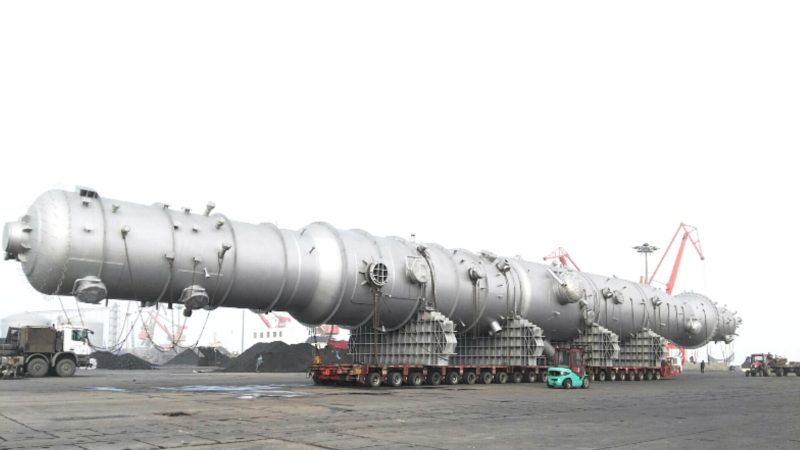

A shell-and-tube heat exchanger can meet its specified steady-state duty, design pressure and design temperature and still have unanswered questions about start-up, shutdown and repeated thermal cycling. Those conditions are not described by a single rated operating point. During a transient, the shell-side and tube-side fluids may arrive at different times, flow may be changing, and the metal may respond more slowly than either fluid.
For a complete industrial shell-and-tube heat exchanger, buyers should identify credible operating events and provide time-dependent temperature, flow and pressure conditions for both sides, together with the initial state, event duration, sequence and expected repetition. The process and mechanical design teams must then determine which cases govern, what additional analysis is necessary and which operating limits can be supported by the completed design. A nominal temperature difference or an assumed universal ramp rate cannot do that job.
This article is an EPC procurement guide for new and replacement heat exchangers in chemical, petrochemical and industrial service. It is not a plant start-up procedure, an equipment-specific operating limit or a fatigue-life calculation.
Why Is a Steady-State Datasheet Insufficient for Thermal Shock Review?
A normal exchanger datasheet typically reports the intended operating flows, fluid properties, inlet and outlet temperatures, heat duty, allowable pressure drops and pressure-vessel design conditions. Those values are essential, but they do not necessarily show how the equipment moves from one operating state to another.
Consider three questions that a steady-state rating cannot answer on its own:
- What is initially hot, cold, stagnant, drained or partly filled? The metal and fluid states immediately before an event may differ from the normal operating state.
- What changes first, and how does each side respond over time? A utility-side temperature change may precede the process flow, or one side may remain at low flow while the other changes rapidly.
- How often is the event expected to occur? A one-time commissioning event and a repeated operating cycle do not present the same history of load repetitions.
The resulting concerns are not limited to exceeding a vessel’s maximum design temperature. Different metal regions can warm or cool at different rates; the shell and tubes may try to expand by different amounts; and repeated thermal loading may require a separate assessment from one-time strength checks.
Both the API Heat Transfer / BASCO shell-and-tube installation guide and the Alfa Laval Pharma-line instruction manual identify abrupt temperature changes and differential expansion as equipment concerns. These manuals describe their respective manufacturers’ products. Their procedures and operating restrictions must not be adopted as universal instructions for an unrelated industrial exchanger.
The purchasing implication is straightforward: request an event schedule in addition to the normal thermal datasheet. A supplier cannot reliably assess unreported operating events simply because the specified steady-state duty is achievable.
A Rated Temperature Is Not a Time Profile
A design temperature is a condition used within the applicable design basis. A start-up profile describes how relevant fluid conditions evolve with time. They are different kinds of information.
For example, even if two proposed events reach the same final inlet temperature, they may differ in initial metal condition, order of fluid introduction, flow establishment, pressure history, duration and frequency. The design assessment may consequently be different. No numerical temperature or time values are assumed here because they must come from the actual process.
Which Start-Up, Shutdown and Restart Cases Belong in the Inquiry?
The owner and process-design team should create a list of credible, project-specific operating events. This is not a request to invent every imaginable scenario; it is a request to record normal transitions, planned alternate operations and reasonably foreseeable deviations that can materially change the thermal or mechanical loading.
Normal Cold Start-Up
Define the initial condition of the shell, tubes and contained fluids following a prolonged shutdown or initial commissioning. State whether either side is empty, stagnant, at ambient or another established temperature, or already circulating before the transition. Record how the inlet temperatures, flows and pressures are expected to develop on both sides and when a stable duty is expected.
The term cold start should be defined for the actual service. It should not be used as shorthand for a universally assumed initial metal temperature.
Planned Shutdown and Cool-Down
Define the operating state at the beginning of shutdown and the anticipated changes in each process and utility stream. Record whether one side is expected to remain flowing, stagnant, pressurized, warm or cold while the other changes, and how long the resulting conditions may persist.
The concern is not only cooling rate. The relative timing of changes on the shell and tube sides can affect differential thermal expansion. Shutdown also has to be assessed in relation to the actual plant configuration and pressure conditions.
Hot Restart After a Short Interruption
A hot restart can begin with residual metal temperature and different temperatures in the two fluid circuits. The equipment may not have reached a uniform condition after the preceding stop.
Buyers should identify the expected interruption duration or duration range, residual process and utility conditions, and the subsequent restart profile. A previously accepted cold-start case should not automatically be used as the hot-restart case.
Heating-to-Cooling or Cooling-to-Heating Changeover
Some exchangers experience alternate utility or process service, seasonal operating changes, or a planned switch between heating and cooling duties. In such cases, the process engineer should define both the preceding and succeeding operating states, any intermediate condition, the time history of both sides, and the expected number of changes.
A specific manufacturer’s guidance for dual-use equipment does not establish that every industrial exchanger must return to ambient temperature between modes. The allowable transition must be evaluated for the actual exchanger and its approved operating basis.
Part-Load, Load-Swing and Repeated Cycling Events
Normal operation may involve throughput changes, intermittent batches, fluctuating utility supply or repeated start-stop schedules. The relevant data include the load range, duration at intermediate states, frequency of transitions and projected total repetition over the intended design service period.
Steady-state performance at minimum and maximum load is useful, but it is not necessarily a complete description of the transitions between those loads.
Reasonably Foreseeable Abnormal Events
The process-safety and engineering teams should identify credible deviations that warrant inclusion in the design review—for example, a loss or interruption of one stream, an abnormal utility temperature, or a process trip. Define the expected boundary conditions and recovery assumptions as far as they are known.
Do not confuse assessment of a potential event with authorization to cause that event. Protective functions, emergency responses and operating actions belong in separately approved site-specific documents.
| Event | Initial state to identify | Time history needed | Repetition and unresolved questions |
|---|---|---|---|
| Cold start-up | Shell/tube metal condition, fluid presence and initial side conditions | Both sides’ inlet temperature, flow and pressure; relevant outlet conditions; relative timing | Expected starts, initial-state uncertainty, duration to established operation |
| Planned shutdown | Conditions immediately before the stop | Each side’s cooling, flow and pressure history; periods of unequal conditions | Routine frequency, hold periods, residual conditions |
| Hot restart | Residual metal and fluid state after the interruption | Restart profiles on both sides, including any delays | Expected interruption lengths and restart frequency |
| Heat/cool changeover | Pre-change mode and intermediate state | Temperature and flow transitions in both circuits | Changeover frequency; whether intermediate states are defined |
| Part-load cycling | Normal reference load and range | Load-related temperature, pressure and flow profiles | Number of repeated cycles, dwell times and design-period assumptions |
| Credible abnormal event | Pre-event conditions and assumed response state | Defined boundary changes and their duration; available recovery assumptions | Credibility, process-safety ownership, unresolved transient details |
This is an editorial scenario register for RFQ preparation. It contains no approved ramp rates, control sequences or safety limits.
How Should Both-Side Temperature, Flow and Pressure Profiles Be Documented?
A useful transient submission makes the time dependence and the sequence visible. Merely adding “thermal shock considered” to a datasheet does not disclose the conditions that were considered.
Record One Event on a Common Time Basis
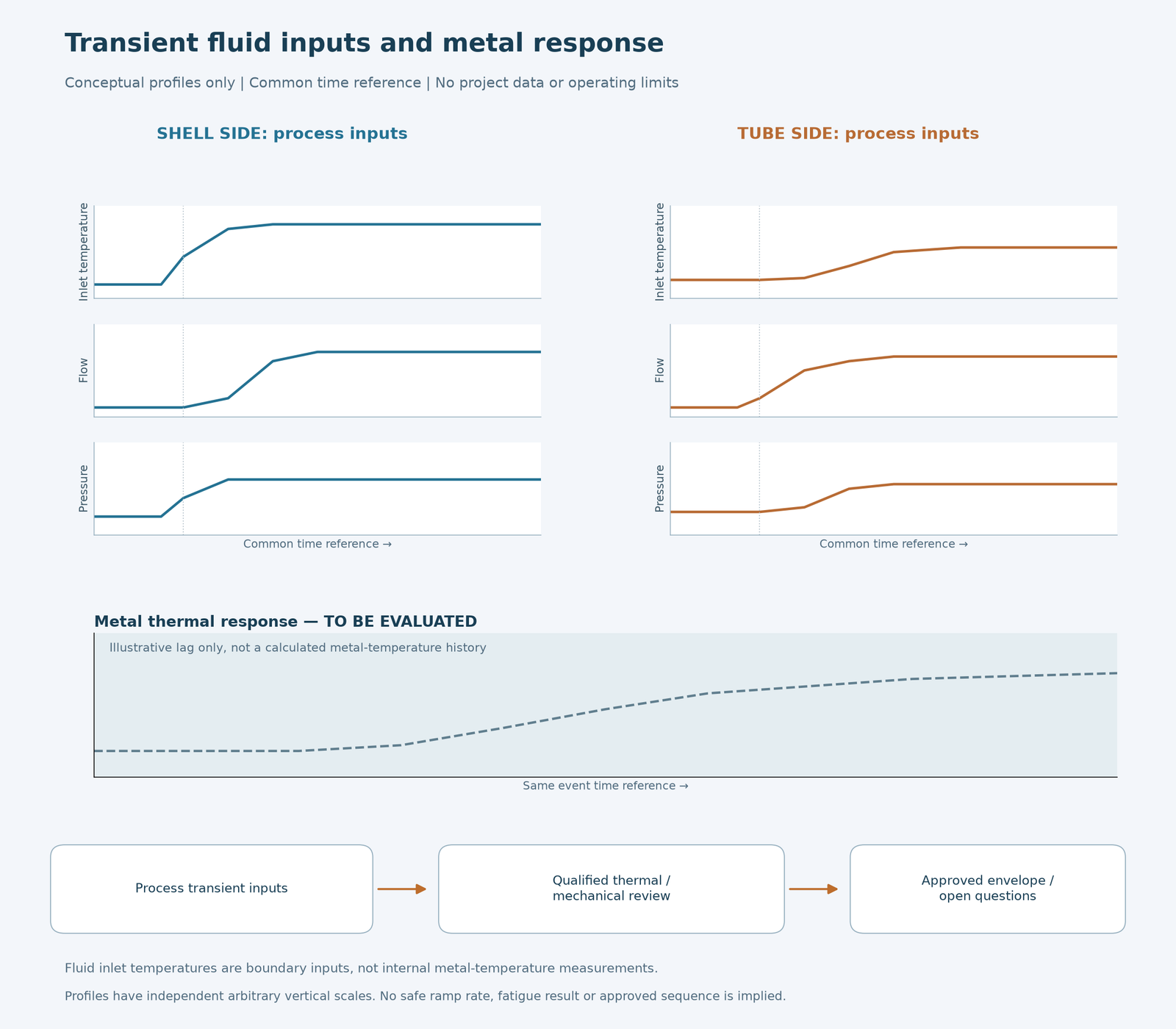
For each event, use the same time reference for the shell side, tube side and relevant utility or control changes. The time series can be recorded as an approved operating envelope, a process-simulation output, a trace from a comparable plant or an explicit engineering assumption—provided its origin and limitations are identified.
A scenario package should make the following clear:
- Starting conditions: Fluid inventory or flow state, fluid and estimated metal condition, pressure state, preceding operating mode, and any important residual heat.
- Hot-side and cold-side inlet temperatures: How each inlet changes with time and which event causes the change. Identify which physical stream uses the shell and tube sides, as the hotter stream may differ between operating modes.
- Both-side flow histories: Flow at the start, during the transition and at the intended final state; intervals of interrupted, low or changing flow, where credible.
- Both-side pressure histories: Expected pressures and pressure changes, including relevant differential-pressure conditions and any phase-change implications identified by the process team.
- Relevant outlet or local conditions: Known or modeled outlet conditions, phase behavior and other process boundaries that affect the thermal evaluation.
- Event timing: Order of changes, time spent at intermediate conditions, duration of the full event and any hold or dwell periods.
- Uncertainty: Which profiles are measured, predicted, preliminary or not yet defined.
The process owner should state whether quoted values are instantaneous, averaged, maximum/minimum envelopes or representative steady states. The applicable engineering method must determine which representation is suitable.
Use a Controlled Event-Data Register
| RFQ data field | What the buyer/process team supplies | Why the reviewer needs it |
|---|---|---|
| Event identifier and revision | Unique scenario name, basis and current document revision | Prevents different departments reviewing different assumptions |
| Initial shell/tube state | Pre-event fluid conditions and available metal-state information | Establishes starting thermal and pressure conditions |
| Time-stamped inlet temperature, each side | Curves, tables or approved envelopes | Defines the imposed fluid thermal changes |
| Time-stamped flow, each side | Expected flow history and uncertain low-flow intervals | Provides changing heat-transfer boundary conditions |
| Time-stamped pressure, each side | Pressure histories and relevant differential pressure | Supports mechanical and phase-condition review |
| Operating sequence and duration | Relative timing, hold periods and completion criteria | Distinguishes events that have identical endpoints but different histories |
| Cycling demand | Frequency, projected repetitions and design service period | Provides the basis for deciding whether cyclic assessment is warranted |
| Fluid and process characteristics | Composition, relevant properties, fouling state and phase behavior | Supports a suitable thermal model |
| Evidence classification | Plant trend, process study, estimate or open assumption | Identifies confidence level and gaps |
| Responsible approver | Owner/process/EPC authority and approval status | Keeps design inputs traceable |
TEMA provides public exchanger specification sheets for organizing purchaser-manufacturer information. These are useful starting documents, but an EPC should determine whether a supplementary transient-event schedule is needed for the project. Do not assume that filling in a normal-duty specification sheet automatically establishes all credible start-up and shutdown conditions.
Keep Fluid Temperatures Distinct From Metal Temperatures
A fluid inlet sensor describes a fluid condition at a measurement location. It does not directly give the instantaneous temperature of the tubes, tubesheet, shell or a local junction.
Metal response depends on heat transfer, geometry, thickness, thermal properties, flow conditions, local temperature fields, and the initial thermal state. Different metal components may respond at different rates. The relevant shell and tube metal temperatures and their distributions may need to be estimated or calculated by the responsible designer.
Consequently, purchasers should request two separate statements: what fluid-side history has been supplied and what method and assumptions are used to establish the metal response for mechanical assessment. When metal temperatures are unavailable, record that fact explicitly rather than presenting fluid temperatures as metal values.
How Are Thermal Shock, Differential Expansion and Thermal Cycling Related?
These terms are connected, but they describe different aspects of an engineering problem. A procurement specification should not use them as synonyms.
Thermal Shock: A Rapidly Changing Thermal Boundary
Thermal shock generally refers to stresses associated with abrupt or strongly nonuniform temperature changes. An exchanger exposed to rapidly changing fluid conditions may develop transient temperature gradients within or between metal parts.
The resulting stress depends on the actual temperature field, material properties, geometry, restraints and pressure conditions. A large inlet-fluid temperature difference alone does not prove that thermal shock damage will occur, nor does a small measured difference prove that the design is free of local thermal stress.
Differential Thermal Expansion: Unequal Thermal Growth
The shell and tube bundle may have different average metal temperatures, lengths, materials or restraint conditions. Their tendency to expand or contract differently can create forces and moments in tubesheets, tubes, shells, supports and connections.
Fixed-tubesheet arrangements constrain certain relative movements; floating-head and U-tube arrangements accommodate some differential movement in different ways. None is categorically immune to local thermal gradients, cyclic loads or other operating stresses.
For a comparison of construction arrangements and maintenance access, see fixed-tubesheet, U-tube and floating-head exchanger designs. The present article concerns the time histories and repetitions that the purchaser must disclose, not a ranking of exchanger types.
Thermal Cycling and Fatigue: Repeated Changes in Loading
An exchanger may repeatedly experience heating, cooling, load changes or pressure fluctuations over its intended service. Depending on the design and severity of these cycles, their repetition may be relevant to fatigue or other damage assessments.
A cycle count without the associated amplitude, sequence, duration, mean conditions and geometry is incomplete. Similarly, one temperature difference does not establish the number of safe cycles or the remaining fatigue life.
Whether a transient thermal assessment, cyclic assessment or more detailed fatigue evaluation is required—and how it should be performed—depends on the governing code, equipment design, service and qualified engineering judgment. This article specifies what the buyer should disclose, not a calculation method or universal exemption.
| Term | Main question for the reviewer | Why a single fluid temperature difference is insufficient |
|---|---|---|
| Thermal shock | What transient thermal gradients and resulting stresses may develop? | Timing, heat-transfer conditions and local metal response matter |
| Differential expansion | How differently do restrained components grow or contract? | Geometry, restraint, materials and metal temperatures matter |
| Thermal cycling/fatigue | How do repeated stress ranges affect the design over its intended duty? | Cycle history, stress ranges and applicable analysis basis matter |
Who Defines the Allowable Envelope and Decides Whether Analysis Is Required?
A transient operating profile is an engineering input. It is not itself a finding that a particular exchanger can safely experience the event.
The supply contract should identify the responsibility for defining credible cases, performing any necessary calculations, accepting the proposed design and preparing operating documents.
Separate the Responsibilities
Owner / plant operations: Supplies operational objectives, historical event records where available, planned operating modes, expected frequency of starts and trips, site constraints, and the process-safety information it controls. The owner is responsible for the plant’s approved operation and safeguarding arrangements.
Process engineer or licensor: Establishes the credible process cases, fluid properties, pressure and temperature histories, control assumptions and process restrictions, including what is known and what remains provisional.
EPC equipment engineering: Consolidates the event register, specifies governing codes and editions, coordinates interfaces, evaluates deviations and ensures that technical reviews refer to the same revision of the operating basis.
Heat exchanger mechanical/thermal designer: Assesses the proposed complete exchanger against the agreed cases within the contracted scope, identifies any additional data or analysis required, and reports assumptions, limitations and design findings.
Manufacturer: Confirms the manufacturing, design, inspection, documentation and performance-review services actually included in its offer. It should not be presumed to supply a plant-wide control strategy or specialist transient/fatigue study unless agreed and supported by appropriate capability.
Authorized operating and integrity personnel: Establish and approve the equipment-specific operating instructions, protective arrangements and decisions on service based on the completed equipment and site requirements. An EPC checklist cannot substitute for these approvals.
Define What “Reviewed” Means
A useful tender response should state whether the submitted scenarios have been:
- Received for information only;
- Checked against specified design/operating conditions;
- Evaluated using a stated thermal/mechanical method;
- Found to require additional assessment or information; or
- Accepted within explicitly defined conditions and assumptions by the responsible authority.
Do not equate “not separately analyzed” with “approved.” Equally, do not claim that every heat exchanger requires the same detailed transient simulation. The applicable code, severity of service, available evidence and responsible engineer determine the appropriate work.
The approved operating envelope should make clear which events and assumptions it covers, and what must be reviewed if the process changes. A manufacturer manual may contain relevant restrictions for the particular supplied equipment; it must not be replaced by general advice from an unrelated product manual.
Control Changes After the Design Basis Is Frozen
If an owner subsequently changes utility temperature, restart frequency, process sequence or expected load swings, the team should evaluate whether the change remains within the accepted basis. Document the change, the revised case and the required approval; do not silently continue using an earlier transient review as though nothing had changed.
What Should an EPC Send in a Complete Heat Exchanger RFQ?
A strong inquiry contains both the normal thermal/hydraulic specification and the event-specific transient design inputs. The deliverable is a clearly traceable set of requirements—not a numerical template filled with generic safety assumptions.
A Scenario-to-Responsibility Checklist
| Scenario / information | Buyer or process team to submit | Reviewer / proposed responsibility | Open decision to resolve |
|---|---|---|---|
| Normal cold start | Initial state; both-side T, P and flow histories; duration | Process team defines; exchanger designer evaluates agreed cases | Is the initial metal state adequately defined? |
| Routine shutdown | Pre-stop condition, both-side transitions, hold states | Process/operations define; mechanical designer reviews | Which conditions may govern differential expansion? |
| Hot restart | Residual heat assumptions; interruption lengths; restart histories | Operations and process team define; designer evaluates | Are distinct restart cases needed? |
| Heating/cooling switch | Both operating modes and intervening states | Process and EPC define; supplier confirms review scope | Are reversal conditions and repetitions included? |
| Part-load cycles | Expected load range, frequency and dwell periods | Process supplies; qualified designer screens cyclic significance | Is an additional cyclic/fatigue assessment required? |
| Credible upset | Identified event, boundary conditions, duration, recovery assumptions | Process safety/process team defines; responsible engineers assess | Which upset states must be design cases? |
| Governing standards | Code, edition, purchaser requirements, jurisdiction | EPC specifies; designer verifies applicability | Which design and documentation basis governs? |
| Approved limitations | Agreed acceptable range and conditions, plus exceptions | Responsible engineering/design authority | What is actually accepted, not merely assumed? |
Responsibilities are illustrative and must be aligned with the actual EPC and manufacturer contracts. No scenario in this table is automatically approved for operation.
Example of a Properly Documented Missing Input
Suppose the project datasheet provides the normal hot- and cold-side inlet/outlet conditions, but states only “frequent restart” in an operating note.
That phrase is not an adequate transient design case. The correct next step is to request the initial equipment state, estimated interruption durations, both-side inlet temperature/pressure/flow profiles, operating sequence, and expected restart repetitions. Record who will issue these data and which resulting assessment is included in the supplier’s quotation.
This is a qualitative documentation example, not an account of a completed project or an assertion that a particular exchanger will fail. No numerical ramp rate or cycle limit is inferred.
Request a Comparable Design Deliverables List
For bid evaluation, ask each supplier to identify:
- The revision of the thermal datasheet and transient-event register used.
- The applicable pressure-vessel and exchanger standards and editions.
- The exchanger configuration and material basis proposed for the reviewed service.
- The included thermal and mechanical checks, including any agreed transient/cyclic analysis.
- Explicit assumptions, exclusions, alternate cases and required owner inputs.
- The proposed operating limitations that require confirmation by the relevant design authority.
- The required design documents, review records and other contractual deliverables.
Do not assume identical results merely because two bids state the same heat duty. Compare the cases actually evaluated as well as the complete equipment scope.
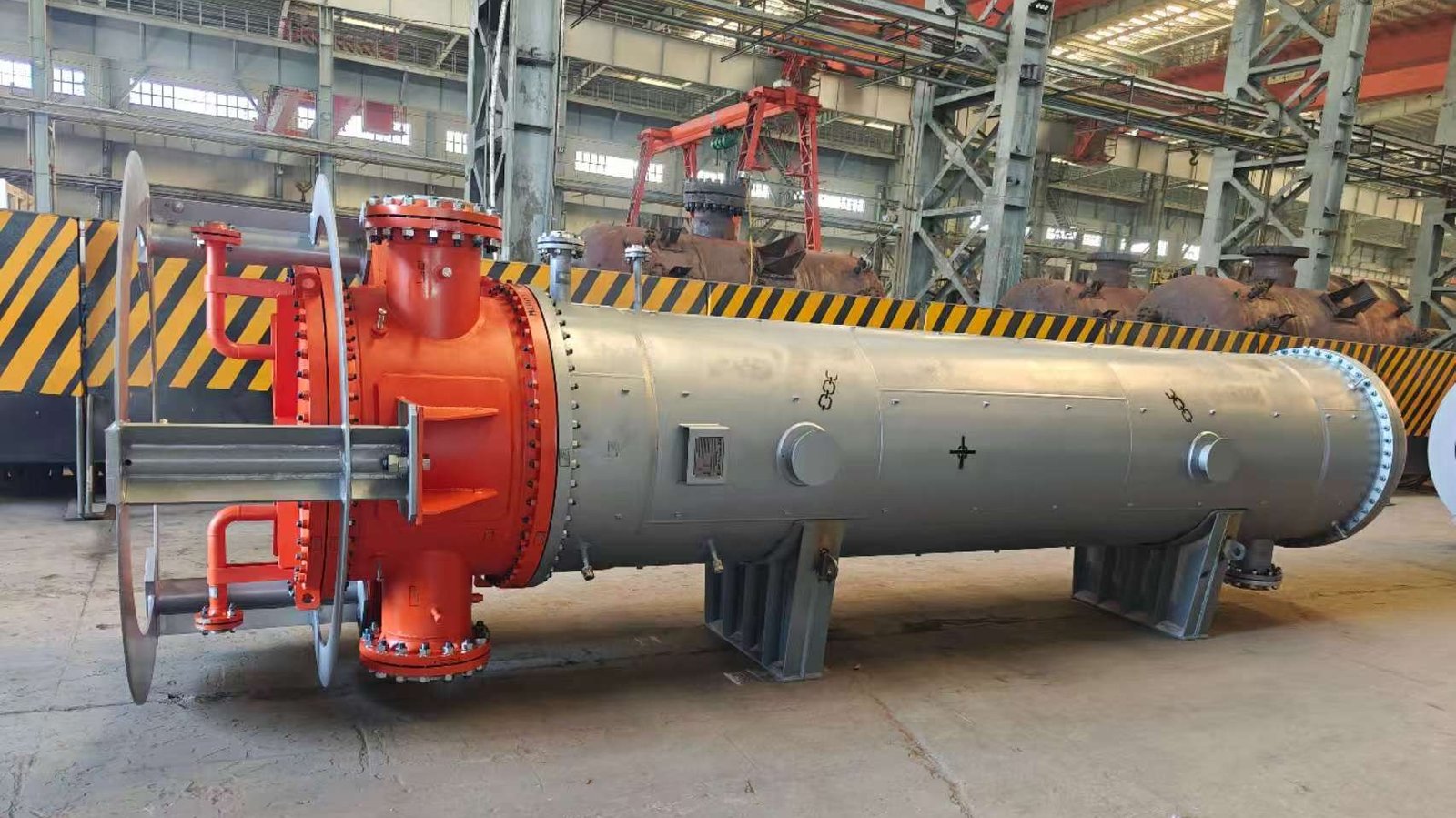
For a complete-equipment discussion, review the industrial shell-and-tube heat exchanger product page and submit the applicable steady-state data, start-up/shutdown event register, cyclic expectations, design requirements, project location and supply boundary through the contact page. The engineering and manufacturing scope must be confirmed for the particular inquiry.
Frequently Asked Questions
Is there a universal safe start-up temperature ramp rate for all shell-and-tube heat exchangers?
No. An allowable transition depends on the exchanger geometry, materials, pressure conditions, initial metal state, heat-transfer conditions, restraint, service and relevant engineering assessment. No general degrees-per-minute recommendation should be treated as an operating limit for an unreviewed exchanger.
Does a floating-head design eliminate thermal shock concerns?
No. Its construction accommodates certain relative movements, but that does not remove local temperature gradients, pressure transients, thermal cycling or all fatigue considerations. The actual design and operating cases still require appropriate review.
Are changes in inlet-fluid temperature the same as changes in shell or tube metal temperature?
No. Metal temperatures depend on transient heat transfer, the initial thermal state, component geometry and material properties, among other factors. Fluid histories are inputs for calculating or assessing the metal response, not a direct measurement of every metal component.
Does meeting normal design pressure and temperature prove that start-up is acceptable?
Not necessarily. Steady-state design conditions do not alone describe the sequence, duration and repetitions of a transient event. The responsible engineers must decide which additional cases and assessments are necessary under the applicable design basis.
What should buyers do if start-up cycle counts are not known at RFQ stage?
Mark the expected frequency and design-period repetition as to be confirmed, assign an owner, provide the currently available operational assumptions and define how the issue will be resolved before final acceptance. Do not invent a low count or treat missing information as a zero-cycle requirement.
Is clean-start-up thermal rating the same as a thermal shock assessment?
No. A clean-start-up thermal rating primarily examines heat-transfer behavior under defined fouling and operating assumptions, including any process-facing surface-temperature concerns. A thermal shock and cycling review examines time-dependent mechanical and thermal loading. See the separate clean-start-up reboiler thermal rating guide for that distinct topic.
Conclusion
The most useful start-up and shutdown specification is not a universal temperature-ramp number. It is a documented description of what happens to both fluid circuits, when it happens, how long it lasts and how often it recurs, together with clearly identified initial conditions and unresolved assumptions.
That information enables the EPC and qualified design teams to determine the relevant metal-response and mechanical questions, the scope of any needed transient or fatigue evaluation, and the design limitations that can actually be supported. A complete industrial heat exchanger should be procured against an approved and traceable operating basis—not just its normal heat duty or the highest temperature on a datasheet.
References
- API Heat Transfer / BASCO. Installation and Operational Procedures for BASCO Shell and Tube Heat Exchangers. Manufacturer’s installation and maintenance guide. Publicly accessible PDF; document issue date not independently established from the reviewed copy. Used for qualitative cautions concerning abrupt temperature changes, thermal shock and differential expansion—not as a generic plant operating procedure. https://www.apiheattransfer.com/wp-content/uploads/2021/01/BascoInstallationGuide_ShellandTube.pdf
- Alfa Laval. Instruction Manual: Pharma-line, document ESE02198-EN, marked 2012-05. Product-specific manual for hygienic pharmaceutical/biotechnology shell-and-tube equipment. Used solely as corroboration that the manufacturer’s start-up/shutdown precautions address abrupt temperature fluctuations and differential expansion; its procedures are not transferred to other exchanger types. https://www.alfalaval.my/globalassets/documents/products/heat-transfer/tubular-heat-exchangers/shell-and-tube-heat-exchangers/instruction-manual—alfa-laval-pharma-line–en.pdf
- Tubular Exchanger Manufacturers Association (TEMA). TEMA Support Page. Official specification-sheet and nomenclature resources and 2026 Standards edition information. The subscription-only technical standard was not reviewed or reproduced. https://support.tema.org/
- TEMA. TEMA Standards — 2026 Edition. Official public description of scope and updates, including the exchanger specification sheet. https://tema.org/standards/
- International Association of Oil & Gas Producers (IOGP). Supplementary Specification to API Standard 660: Shell-and-Tube Heat Exchangers, S-614, December 2018. Public procurement specification reference demonstrating the importance of defined conditions and purchaser information. It is not represented as a universally mandatory standard or as the currently governing edition for any project. https://idms.iogp.org/Documents/1764
These references support the engineering and procurement concepts discussed. They do not establish project-specific stress results, fatigue life, safe operating ramp rates or manufacturer authorization to perform every type of analysis. Actual equipment acceptance requires the appropriate project documents and qualified engineering review.