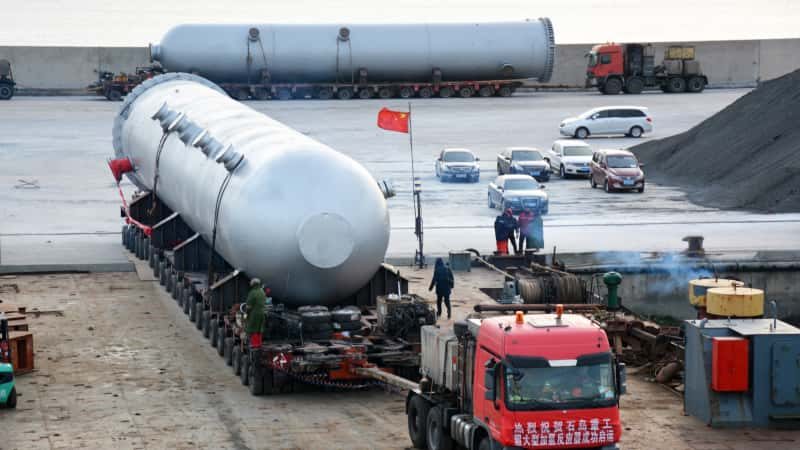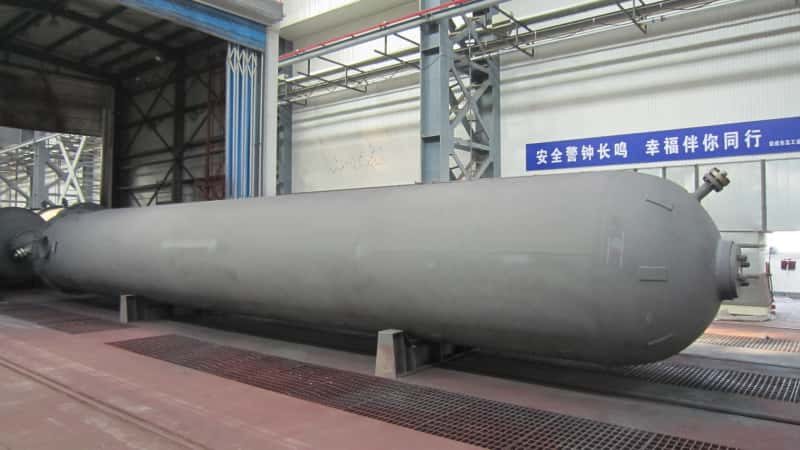

Artificial intelligence is rapidly transforming the global data center industry. As AI models become larger and more computationally intensive, modern GPU servers generate unprecedented amounts of heat. Traditional air-cooling systems are increasingly unable to meet the thermal demands of high-density AI computing environments. As a result, liquid cooling technologies are becoming essential for modern AI infrastructure.
At the center of these advanced cooling systems are heat exchangers, which play a critical role in transferring heat efficiently, maintaining stable operating temperatures, improving energy efficiency, and supporting the future growth of AI computing.
What Is AI Data Center Liquid Cooling?
AI data center liquid cooling refers to cooling systems that use liquids instead of air as the primary medium for removing heat from servers and IT equipment. Because liquids have much higher thermal conductivity than air, they can absorb and transport heat more efficiently.
The rapid growth of artificial intelligence, machine learning, and high-performance computing (HPC) has significantly increased rack power density in data centers. Many AI server racks now exceed 30kW, while some advanced AI clusters operate above 100kW per rack. Traditional air cooling struggles to handle these thermal loads efficiently.

Liquid cooling systems are designed to overcome these limitations by directly transferring heat away from processors, GPUs, and memory components using specially designed coolant loops.
Common liquid cooling methods include:
- Direct-to-chip cooling
- Immersion cooling
- Rear door heat exchangers
- Hybrid air-liquid cooling systems
Why Are Heat Exchangers Essential in AI Data Center Cooling?
Heat exchangers are one of the most important components in AI liquid cooling systems because they transfer thermal energy between separate cooling loops without mixing fluids.
In AI data centers, enormous amounts of heat are generated continuously during high-performance computing operations. Without efficient heat transfer equipment, servers would quickly overheat, reducing performance and damaging hardware.

Heat exchangers help AI data centers achieve several important goals:
- Efficient heat removal from GPUs and CPUs
- Reduced cooling energy consumption
- Support for high-density server racks
- Improved system reliability
- Lower operating costs
- Enhanced sustainability performance
Efficient heat exchangers also help improve Power Usage Effectiveness (PUE), which is a key measurement of data center energy efficiency.
What Types of Heat Exchangers Are Used in AI Data Centers?
Different types of heat exchangers are used depending on cooling architecture, thermal load, and facility design requirements.
Plate Heat Exchangers
Plate heat exchangers are widely used in AI liquid cooling systems because of their compact structure and high thermal efficiency.
They consist of multiple thin metal plates that maximize heat transfer surface area while minimizing footprint.
Advantages of Plate Heat Exchangers
- Compact size
- High heat transfer efficiency
- Modular scalability
- Lower installation space requirements
### Shell and Tube Heat Exchangers
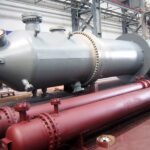
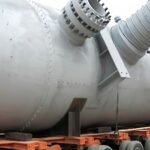
Shell and tube heat exchangers are commonly used in larger industrial cooling systems and central utility plants supporting AI facilities.
These heat exchangers are highly durable and suitable for high-pressure and high-flow applications.
Advantages of Shell and Tube Heat Exchangers
- Robust industrial construction
- High-pressure capability
- Long service life
- Suitable for large-scale cooling capacity

Rear Door Heat Exchangers
Rear door heat exchangers are installed directly behind server racks. They capture hot exhaust air and remove heat using circulating liquid before the air returns to the data center environment.
This technology allows facilities to increase rack density without completely redesigning existing infrastructure.

CDU Integrated Heat Exchangers
Coolant Distribution Units (CDUs) regulate coolant temperature, pressure, and flow within liquid cooling systems.
Integrated heat exchangers inside CDUs isolate facility water from sensitive IT cooling loops, ensuring safe and stable heat transfer.
How Does a Liquid Cooling System Work with Heat Exchangers?
Most AI liquid cooling systems operate using two separate cooling loops connected through heat exchangers.
Primary Cooling Loop
The primary loop circulates facility water through chillers, cooling towers, or dry coolers.
Secondary Cooling Loop
The secondary loop circulates coolant directly through IT equipment such as CPUs and GPUs.
The cooling process typically works as follows:
- AI servers generate heat during operation
- Coolant absorbs heat from processors and GPUs
- Heated coolant flows into a heat exchanger
- Heat transfers to facility water
- External cooling systems reject heat outdoors
This closed-loop design enables continuous thermal management with high efficiency and reliability.
What Materials Are Used in AI Data Center Heat Exchangers?
Material selection is critical for heat exchanger performance, durability, and corrosion resistance.
Stainless Steel
Stainless steel is widely used because of its excellent corrosion resistance and long-term durability.
Benefits
- Corrosion resistance
- Long service life
- High-pressure capability
- Suitable for closed-loop systems
Copper and Copper Alloys
Copper provides excellent thermal conductivity and is commonly used in compact cooling systems.
Benefits
- Superior heat transfer
- Fast thermal response
- Efficient compact cooling
Aluminum
Aluminum heat exchangers are lightweight and cost-effective for certain applications.
Benefits
- Reduced weight
- Lower manufacturing cost
- Good thermal conductivity

What Design Factors Affect Heat Exchanger Performance in AI Cooling?
Several design factors influence the efficiency and reliability of heat exchangers in AI data centers.
Heat Load Capacity
AI servers generate extremely high thermal loads that require advanced thermal management design.
Future AI infrastructure may require even greater cooling capacity as GPU power consumption increases.
Pressure Drop Optimization
Excessive pressure drop increases pump energy consumption and operating costs.
Optimized flow channel design helps improve system efficiency while maintaining adequate coolant flow.
Compact and Modular Design
Space efficiency is critical in modern data centers.
Modular heat exchanger systems allow flexible expansion and easier installation.

Water Quality and Corrosion Control
Improper coolant chemistry can lead to:
- Fouling
- Scaling
- Corrosion
- Reduced thermal performance
Proper filtration and water treatment are essential for long-term reliability.
How Do Heat Exchangers Improve Energy Efficiency in AI Data Centers?
Heat exchangers significantly improve cooling efficiency compared to traditional air cooling systems.
Lower Cooling Energy Consumption
Liquid cooling systems require less fan power and can operate with higher thermal efficiency.
Benefits include:
- Lower electricity consumption
- Reduced operating costs
- Improved PUE performance
Waste Heat Recovery
Some advanced AI data centers recover waste heat for:
- District heating
- Industrial applications
- Building heating systems
Heat exchangers safely transfer thermal energy for reuse.

Support for Free Cooling
In colder climates, heat exchangers can support free cooling systems that use ambient outdoor air temperatures instead of mechanical refrigeration.
This reduces both energy consumption and carbon emissions.
What Challenges Do AI Data Center Heat Exchangers Face?
As AI infrastructure continues evolving, heat exchangers face several engineering challenges.
Extremely High Heat Density
Next-generation GPUs continue to increase power consumption and thermal output.
Cooling systems must support higher heat loads within limited physical space.
Leakage Risks
Liquid cooling systems require highly reliable sealing technologies to protect sensitive electronics.
Leak detection systems and high-quality manufacturing are essential.
Corrosion and Fouling
Poor coolant management can reduce heat exchanger efficiency and increase maintenance requirements.
Scalability Requirements
AI infrastructure evolves rapidly, requiring flexible cooling architectures capable of future expansion.
How Are Manufacturers Innovating Heat Exchanger Technology for AI Cooling?
Manufacturers are developing new technologies to improve cooling performance, efficiency, and sustainability.
AI-Optimized Thermal Design
Advanced Computational Fluid Dynamics (CFD) simulations help optimize:
- Flow distribution
- Thermal efficiency
- Pressure loss
Smart Monitoring Systems
Modern heat exchangers may include:
- IoT sensors
- Real-time temperature monitoring
- Predictive maintenance systems
- AI-based thermal optimization
Sustainable Cooling Technologies
Manufacturers are also developing:
- Water-saving systems
- Low-carbon cooling technologies
- Energy recovery solutions
to support environmentally sustainable AI infrastructure.
How Should Data Centers Select Heat Exchangers for Liquid Cooling?
Selecting the right heat exchanger is critical for long-term cooling performance and operational reliability.
Evaluate Cooling Capacity Requirements
Operators should analyze:
- Rack density
- Heat load
- Future expansion plans
- Redundancy requirements
before selecting equipment.
Select Appropriate Materials and Standards
Heat exchangers should comply with international standards such as:
- ASME
- TEMA
- API
Material selection should consider:
- Pressure rating
- Corrosion resistance
- Coolant compatibility
Consider Maintenance and Serviceability
Easy inspection, cleaning, and maintenance access can significantly reduce downtime and lifecycle costs.

Partner with Experienced Manufacturers
Experienced heat exchanger manufacturers can provide:
- Thermal engineering support
- Custom cooling solutions
- Quality manufacturing
- Reliable after-sales service
Conclusion
Artificial intelligence is rapidly reshaping the cooling requirements of modern data centers. As computing density continues to increase, traditional air cooling systems are becoming insufficient for managing the enormous thermal loads generated by AI infrastructure.
Heat exchangers are at the core of modern liquid cooling systems, enabling efficient heat transfer, reduced energy consumption, improved reliability, and support for high-density AI server environments.
As the AI industry continues to grow, advanced heat exchanger technologies will play an increasingly important role in building sustainable, energy-efficient, and high-performance data centers for the future digital economy.

Contact Us
We supply a wide range of industrial heat exchangers, including:
* Shell and Tube Heat Exchangers
* Air-Cooled Heat Exchangers
* Customized Liquid Cooling Heat Transfer Systems
* High-Pressure and High-Temperature Heat Exchangers
Our products are widely used in:
- AI Data Centers
- High-Performance Computing (HPC)
- Industrial Cooling Systems
- Oil & Gas Projects
- Chemical Processing Plants
- Energy Infrastructure
With strong manufacturing capability, engineering support, and international project experience, we can help optimize your cooling system performance, energy efficiency, and operational reliability.
Slug
heat-exchangers-ai-data-center-liquid-cooling
SEO Title
How Heat Exchangers Power AI Data Center Liquid Cooling
SEO Description
Learn how heat exchangers improve AI data center liquid cooling by transferring heat efficiently, reducing energy use, and supporting high-density GPU workloads.
Keywords
- AI data center liquid cooling
- heat exchangers for data centers
- direct-to-chip cooling
- rear-door heat exchangers
- AI server thermal management
- liquid cooling systems for GPUs
FAQ
Q1: What role do heat exchangers play in AI data center liquid cooling?
A1:
Heat exchangers are one of the most critical components in AI data center liquid cooling systems because they transfer heat away from high-performance computing equipment without allowing different fluids to mix. AI workloads powered by GPUs and accelerators generate significantly more heat than traditional servers, making advanced cooling infrastructure essential for maintaining stable performance and uptime.
In a liquid cooling system, coolant circulates through cold plates, rear-door heat exchangers, or immersion tanks to absorb heat from processors and other hardware. The heated liquid then flows into a heat exchanger where the thermal energy is transferred to another cooling medium, such as chilled water or facility water. This process allows the coolant to be cooled and recirculated through the servers.
Heat exchangers help maintain safe operating temperatures for AI clusters, reduce thermal throttling, and improve overall energy efficiency. They also support higher rack densities, which are increasingly common in AI data centers where power demands can exceed 80–100 kW per rack.
There are several types of heat exchangers commonly used in AI facilities:
- Plate heat exchangers
- Shell-and-tube heat exchangers
- Rear-door heat exchangers (RDHx)
- Coolant distribution unit (CDU) heat exchangers
Plate heat exchangers are popular because they offer compact designs and efficient heat transfer. Rear-door heat exchangers attach directly to server racks and remove hot exhaust air before it enters the room, improving cooling performance without requiring major infrastructure redesigns.
Modern AI data centers increasingly rely on liquid cooling because air cooling alone struggles to manage the extreme thermal loads created by advanced AI chips. Heat exchangers make these liquid cooling architectures practical and scalable by efficiently removing and redistributing thermal energy.
Q2: Why are heat exchangers important for high-density AI GPU clusters?
A2:
High-density AI GPU clusters generate massive amounts of heat due to the intense computational requirements of machine learning training and inference workloads. As GPUs become more powerful, traditional air cooling systems are no longer sufficient to maintain reliable operating temperatures. Heat exchangers are essential because they enable liquid cooling systems to transfer heat efficiently and sustain high-density deployments.
Modern AI accelerators can consume over 1,000 watts per chip, while AI racks may exceed 100 kW in total power consumption. Without effective thermal management, excessive heat can lead to hardware degradation, reduced processing efficiency, system instability, and increased operational costs.
Heat exchangers support these environments by rapidly moving heat away from the cooling loop and rejecting it to facility water systems or external cooling infrastructure. This improves thermal stability and enables servers to maintain peak performance for extended periods.
Key benefits of heat exchangers in AI GPU clusters include:
- Improved energy efficiency
- Reduced cooling costs
- Higher server density support
- Better thermal reliability
- Lower risk of overheating
- Increased hardware lifespan
AI data centers commonly use direct-to-chip liquid cooling where coolant flows through cold plates attached to CPUs and GPUs. The heated coolant then passes through a heat exchanger inside a coolant distribution unit. This setup isolates the server cooling loop from the facility water loop while efficiently removing heat.
Rear-door heat exchangers are another popular solution for retrofitting existing data centers. These systems capture hot exhaust air directly behind server racks and transfer the heat to chilled water systems.
By improving heat transfer efficiency, heat exchangers allow data centers to scale AI workloads without dramatically increasing energy consumption. This makes them a key technology for hyperscale AI infrastructure and sustainable data center design.
Q3: How do heat exchangers improve energy efficiency in AI data centers?
A3:
Heat exchangers improve energy efficiency in AI data centers by enabling liquid cooling systems to transfer thermal energy far more effectively than traditional air-based cooling methods. Because liquids have much higher thermal conductivity than air, liquid cooling systems can absorb and transport heat using less energy.
In AI environments, servers equipped with GPUs and AI accelerators generate concentrated heat loads that require continuous thermal management. Heat exchangers remove this heat from the liquid cooling loop and transfer it to another system, such as chilled water or cooling towers. This process minimizes the need for power-intensive air conditioning systems and high-speed server fans.
One major advantage is the reduction in Power Usage Effectiveness (PUE), which measures how efficiently a data center uses energy. Lower PUE values indicate better efficiency. Liquid-cooled AI facilities often achieve significantly lower PUE compared to traditional air-cooled facilities.
Heat exchangers also support warm-water cooling systems. Since liquid cooling can operate effectively at higher temperatures, some AI data centers reduce or eliminate mechanical chillers entirely. This lowers electricity consumption and operating costs.
Additional energy-saving benefits include:
- Reduced HVAC demand
- Lower fan power consumption
- Improved heat recovery opportunities
- Better cooling precision
- Reduced thermal hotspots
Some facilities even reuse waste heat generated by AI clusters for district heating or industrial applications. Heat exchangers make this possible by transferring thermal energy into secondary water loops.
Another efficiency advantage comes from improved airflow management. Rear-door heat exchangers remove heat before it spreads into the data center environment, reducing the burden on room-level cooling systems.
As AI workloads continue growing, energy-efficient thermal management becomes increasingly important. Heat exchangers help operators reduce operational costs while supporting higher compute densities and sustainability goals.
Q4: What types of heat exchangers are commonly used in AI data centers?
A4:
AI data centers use several types of heat exchangers depending on cooling architecture, rack density, energy efficiency goals, and facility design. Each type serves a specific purpose in transferring heat away from high-performance computing systems.
The most common heat exchanger types include:
- Plate Heat Exchangers
- Shell-and-Tube Heat Exchangers
- Rear-Door Heat Exchangers (RDHx)
- Coolant Distribution Unit (CDU) Heat Exchangers
- Immersion Cooling Heat Exchangers
Plate heat exchangers are widely used because they provide highly efficient heat transfer in compact footprints. These systems use thin metal plates to maximize surface area between fluid channels. They are commonly installed inside coolant distribution units for direct-to-chip cooling systems.
Shell-and-tube heat exchangers are larger systems designed for industrial-scale cooling applications. They are durable and suitable for large facilities handling substantial heat loads.
Rear-door heat exchangers are mounted directly behind server racks. They capture hot exhaust air and transfer the heat to liquid cooling loops before the warm air enters the data hall. This approach is especially useful for retrofitting existing air-cooled data centers.
Coolant distribution units contain integrated heat exchangers that separate facility water from server coolant loops. This isolation improves reliability and reduces contamination risks.
Immersion cooling systems also use heat exchangers to cool dielectric fluids that surround servers submerged in specialized cooling tanks. The fluid absorbs heat directly from hardware and transfers it through a heat exchanger before recirculation.
The choice of heat exchanger depends on several factors:
- Rack density
- Cooling capacity requirements
- Space limitations
- Water quality considerations
- Existing infrastructure
- Maintenance requirements
As AI hardware becomes more power intensive, advanced heat exchanger technologies are becoming increasingly important for achieving scalable and energy-efficient thermal management.
Q5: Are heat exchangers the future of AI data center cooling?
A5:
Heat exchangers are expected to remain a foundational technology in the future of AI data center cooling because they enable efficient thermal management for increasingly powerful computing systems. As AI chips continue evolving, power densities are rising rapidly, making traditional air cooling less effective for large-scale AI deployments.
Many next-generation AI servers already require liquid cooling architectures that depend heavily on heat exchangers for transferring and dissipating thermal energy. Without efficient heat exchange systems, hyperscale AI facilities would struggle to maintain safe operating temperatures and sustainable energy consumption.
Future trends shaping heat exchanger adoption include:
- Higher GPU power densities
- Increased rack-level heat loads
- Greater demand for sustainable infrastructure
- Expansion of direct-to-chip cooling
- Growth of immersion cooling systems
- AI-driven thermal optimization
Innovations in microfluidics and advanced cold plate design are also improving heat exchanger performance. Some emerging technologies use microscopic cooling channels etched directly into chip surfaces, dramatically improving thermal transfer efficiency.
AI data centers are also moving toward closed-loop liquid cooling systems that recycle coolant and reduce water consumption. Heat exchangers play a central role in these systems by enabling heat transfer without contaminating sensitive server cooling loops.
Another emerging trend is waste heat recovery. Instead of discarding thermal energy, future AI facilities may use heat exchangers to redirect heat into nearby buildings, industrial processes, or district heating networks.
Heat exchangers also support modular and scalable cooling designs, allowing operators to expand AI capacity more efficiently. This flexibility is especially important as demand for generative AI and machine learning infrastructure accelerates worldwide.
Although air cooling will still be used for certain systems, liquid cooling supported by advanced heat exchangers is increasingly becoming the preferred solution for high-density AI environments. Their ability to improve energy efficiency, thermal reliability, and operational scalability makes them essential for the next generation of AI infrastructure.
References
The Basics of Liquid Cooling in AI Data Centers
https://flex.com/resources/the-basics-of-liquid-cooling-in-ai-data-centers
Source: FlexLiquid Cooling Solutions for AI and High-Density Data Centers
https://www.se.com/us/en/work/solutions/data-centers-and-networks/liquid-cooling/
Source: Schneider ElectricLiquid Cooling Options for Data Centers
https://www.vertiv.com/en-us/solutions/learn-about/liquid-cooling-options-for-data-centers/
Source: VertivData Center Cooling for Hyperscale and AI Workloads
https://www.bloomenergy.com/blog/data-center-cooling-for-hyperscale-and-ai-workloads/
Source: Bloom EnergyGuide to Data Center Cooling Technologies
https://www.digitalrealty.com/resources/blog/future-of-data-center-cooling
Source: Digital RealtyAI Chips Are Getting Hotter: A Microfluidics Breakthrough
https://news.microsoft.com/source/features/innovation/microfluidics-liquid-cooling-ai-chips/
Source: MicrosoftData Center Liquid Cooling: The AI Heat Solution
https://spectrum.ieee.org/data-center-liquid-cooling
Source: IEEE SpectrumHigh-Density Cooling for AI and ML Workloads
https://www.vertiv.com/en-us/about/news-and-insights/articles/educational-articles/high–density-cooling-a-guide-to-advanced-thermal-solutions-for-ai-and-ml-workloads-in-data-centers/
Source: VertivData Center Cooling Technologies and Sustainability
https://www.alfalaval.nl/industries/hvac/data-center-cooling/
Source: Alfa LavalGenerative Design for Direct-to-Chip Liquid Cooling for Data Centers
https://arxiv.org