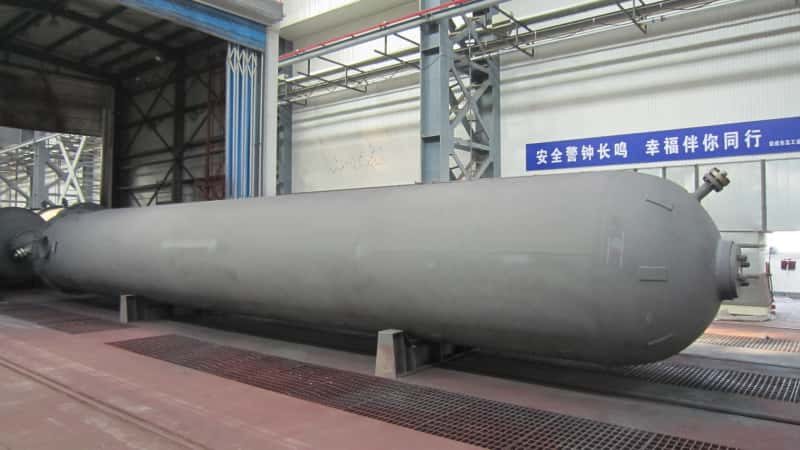

Selecting the wrong breech lock type heat exchanger can cause poor heat transfer, sealing failure, frequent shutdowns, and costly maintenance in high-pressure process units. For industries such as refining, petrochemical processing, hydrogen service, and heavy-duty thermal operations, these risks can directly affect safety, productivity, and long-term profitability. The right selection starts with understanding your process conditions, mechanical requirements, material compatibility, and maintenance expectations.
To select the right breech lock type heat exchanger for your process, evaluate operating pressure and temperature, fluid properties, heat duty, fouling tendency, corrosion risk, material selection, sealing structure, code requirements, maintenance access, and lifecycle cost. A properly selected breech lock heat exchanger should provide safe high-pressure performance, efficient heat transfer, reliable sealing, and convenient bundle removal for inspection or cleaning.

Because breech lock type heat exchangers are often used in severe-service environments, selection should not be based only on price or size. The following outline highlights the key technical and commercial questions buyers should answer before making a decision.
How Do Your Process Conditions Affect Breech Lock Type Heat Exchanger Selection?
Selecting the wrong heat exchanger for demanding industrial processes can create serious operational problems, including pressure failure, thermal stress cracking, excessive fouling, energy inefficiency, product contamination, and expensive maintenance shutdowns. In high-pressure and high-temperature industries such as oil and gas, petrochemicals, chemical processing, power generation, and specialty manufacturing, process conditions directly determine whether a heat exchanger can operate safely and efficiently over the long term. Breech lock type heat exchangers are specifically engineered for severe-service applications where conventional exchanger closures may struggle with pressure containment, maintenance accessibility, or thermal cycling. However, choosing the correct breech lock exchanger configuration requires a deep understanding of actual process conditions and operating parameters.
Process conditions affect breech lock type heat exchanger selection by determining the required pressure rating, temperature resistance, material compatibility, thermal expansion capability, fouling resistance, maintenance accessibility, and sealing performance. Factors such as fluid properties, operating pressure, temperature range, corrosion potential, flow rate, and cleaning requirements all influence the optimal breech lock heat exchanger design for safe, reliable, and energy-efficient operation.
Engineers evaluate multiple process variables before selecting a breech lock heat exchanger because every industrial application imposes unique thermal and mechanical demands. Understanding how these operating conditions affect exchanger design helps improve safety, reliability, maintenance efficiency, and total lifecycle performance.
Operating pressure is one of the most important factors in selecting a breech lock heat exchanger.True
Breech lock closures are commonly used in high-pressure applications because they provide strong sealing performance and rapid access for maintenance.
All breech lock heat exchangers are suitable for any chemical process regardless of fluid compatibility.False
Material selection and corrosion resistance must be matched carefully to process fluids to ensure safe and reliable operation.
What Is a Breech Lock Type Heat Exchanger?
A breech lock type heat exchanger is a specialized exchanger design that uses a breech lock closure mechanism instead of conventional bolted channel covers. The breech lock system allows quick opening and secure sealing under high-pressure conditions.
This design is commonly used in:
- High-pressure process systems
- Frequent maintenance applications
- Severe thermal cycling environments
- Fouling-prone services
- Hazardous process industries
Main Components of a Breech Lock Heat Exchanger
| Component | Function | Typical Materials |
|---|---|---|
| Shell | Contains process fluid | Carbon steel, alloy steel |
| Tube Bundle | Heat transfer surface | Stainless steel, titanium |
| Breech Lock Closure | Rapid pressure sealing | Forged alloy steel |
| Gasket/Seal System | Leak prevention | Graphite, metal seals |
| Channel Head | Fluid distribution | Pressure-rated alloys |
| Support Structure | Mechanical stability | Structural steel |
The breech lock closure is the defining feature because it enables both high-pressure containment and easier maintenance access.
Why Process Conditions Matter in Heat Exchanger Selection
Every industrial process has unique operating characteristics that directly influence heat exchanger performance and reliability.
Key Process Variables
| Process Condition | Engineering Impact |
|---|---|
| Operating pressure | Mechanical strength requirements |
| Temperature range | Thermal expansion stress |
| Fluid chemistry | Corrosion resistance |
| Flow rate | Heat transfer performance |
| Fouling tendency | Cleaning frequency |
| Viscosity | Pressure drop considerations |
| Thermal cycling | Fatigue resistance |
Improper matching between process conditions and exchanger design can lead to:
- Premature failure
- Reduced efficiency
- Leakage
- High maintenance costs
- Safety risks
Operating Pressure Determines Mechanical Design
Pressure is often the most critical factor in breech lock heat exchanger selection.
High-pressure systems require:
- Stronger closure mechanisms
- Thicker pressure boundaries
- Enhanced sealing reliability
- Reduced stress concentration
Typical High-Pressure Applications
| Industry | Pressure Conditions |
|---|---|
| Oil & Gas | Extremely high |
| Hydrogen processing | Severe pressure |
| Petrochemicals | High pressure |
| Ammonia production | Elevated pressure |
Breech lock closures are especially suitable because they provide:
- Uniform pressure distribution
- Strong mechanical locking
- Reduced bolting requirements
- Improved sealing integrity
Hoop Stress and Pressure Considerations
Pressure vessel design is governed by stress calculations.
sigma_h = frac{Pr}{t}
Where:
- ( sigma_h ) = hoop stress
- ( P ) = internal pressure
- ( r ) = vessel radius
- ( t ) = wall thickness
Higher pressures require stronger materials and optimized exchanger geometry.
Temperature Conditions Influence Thermal Design
High operating temperatures create:
- Thermal expansion
- Material creep
- Fatigue stress
- Seal degradation
Rapid thermal cycling further increases mechanical stress.
Temperature-Related Design Factors
| Thermal Condition | Design Requirement |
|---|---|
| High temperature | Heat-resistant alloys |
| Thermal cycling | Expansion flexibility |
| Cryogenic operation | Low-temperature toughness |
| Large temperature differentials | Stress reduction features |
Breech lock exchangers often include thermal flexibility features to handle severe temperature fluctuations safely.
Fluid Corrosiveness Determines Material Selection
Fluid chemistry directly affects exchanger durability.
Aggressive process fluids may include:
- Acids
- Chlorides
- Sulfur compounds
- Hydrogen sulfide
- Solvents
- Caustics
Common Construction Materials
| Material | Suitable Service |
|---|---|
| Carbon steel | Mild service |
| 316 stainless steel | Moderate corrosion |
| Duplex stainless steel | Chloride environments |
| Hastelloy | Strong acids |
| Titanium | Seawater and oxidizers |
| Inconel | High-temperature corrosion |
Incorrect material selection can result in:
- Corrosion failure
- Product contamination
- Leakage
- Reduced service life
Fouling Tendency Affects Maintenance Requirements
Some industrial fluids create significant fouling due to:
- Scale deposition
- Polymer buildup
- Coke formation
- Biological growth
- Suspended solids
Why Breech Lock Closures Help Fouling Services
| Advantage | Operational Benefit |
|---|---|
| Quick opening | Faster cleaning |
| Easier tube access | Reduced downtime |
| Simplified maintenance | Lower labor cost |
| Rapid inspection | Improved reliability |
This makes breech lock exchangers highly valuable in fouling-prone applications.
Flow Rate Influences Thermal Performance
Flow conditions determine:
- Heat transfer efficiency
- Pressure drop
- Turbulence
- Fouling resistance
Flow Design Considerations
| Parameter | Importance |
|---|---|
| Fluid velocity | Heat transfer coefficient |
| Reynolds number | Turbulence behavior |
| Pressure drop | Pumping energy |
| Residence time | Thermal effectiveness |
Optimizing flow geometry improves both efficiency and operational stability.
Viscosity Impacts Exchanger Configuration
Highly viscous fluids behave differently from low-viscosity fluids.
Examples include:
- Heavy crude oil
- Syrups
- Polymer solutions
- Lubricants
- Slurries
Viscosity Challenges
| Challenge | Operational Effect |
|---|---|
| Reduced turbulence | Lower heat transfer |
| Increased pressure drop | Higher pumping cost |
| Fouling tendency | Reduced efficiency |
Breech lock exchangers can be customized with specific tube configurations to improve viscous fluid handling.
Thermal Expansion Must Be Managed Carefully
Large temperature differences create thermal growth within exchanger components.
If expansion is restricted, the system may experience:
- Cracking
- Seal failure
- Tube distortion
- Fatigue damage
Thermal Expansion Management
| Design Feature | Benefit |
|---|---|
| Flexible tube systems | Reduced stress |
| Expansion joints | Thermal compensation |
| Floating heads | Improved movement allowance |
| Compact geometry | Better stress distribution |
Proper thermal design extends exchanger lifespan significantly.
Maintenance Frequency Affects Closure Selection
Industries requiring frequent cleaning or inspection benefit greatly from breech lock closures.
Industries with Frequent Maintenance Needs
| Industry | Reason |
|---|---|
| Refining | Fouling and coke buildup |
| Chemical processing | Product changes |
| Food processing | Sanitary cleaning |
| Pharmaceuticals | Validation requirements |
Traditional bolted closures may require:
- Extensive disassembly time
- Large labor crews
- Long shutdown periods
Breech lock systems dramatically reduce maintenance downtime.
Safety Requirements Influence Exchanger Design
Hazardous industrial systems demand strict containment reliability.
Applications involving:
- Toxic chemicals
- Hydrogen
- Flammable hydrocarbons
- High-pressure steam
require advanced sealing and structural integrity.
Safety Considerations
| Risk Factor | Required Protection |
|---|---|
| Leakage | Reliable sealing |
| Pressure spikes | Mechanical strength |
| Thermal shock | Stress management |
| Corrosive attack | Material durability |
Breech lock closures provide highly secure pressure containment for critical services.
Energy Efficiency Depends on Process Matching
Efficient exchanger selection improves:
- Heat recovery
- Utility consumption
- Fuel savings
- Process optimization
Heat Transfer Performance Equation
Q = U A Delta T_m
Where:
- (Q) = heat transfer rate
- (U) = overall heat transfer coefficient
- (A) = heat transfer area
- (Delta T_m) = mean temperature difference
Correct process matching ensures optimal thermal efficiency.
Typical Industrial Applications for Breech Lock Heat Exchangers
| Industry | Common Application |
|---|---|
| Oil & Gas | High-pressure gas cooling |
| Petrochemicals | Reactor effluent exchange |
| Chemical Processing | Corrosive fluid handling |
| Power Generation | Steam systems |
| Food Processing | Sanitary heating systems |
Their flexibility supports a broad range of severe-service applications.
Comparison with Conventional Bolted Closures
| Parameter | Breech Lock | Bolted Closure |
|---|---|---|
| Maintenance speed | Very fast | Slower |
| High-pressure suitability | Excellent | Good |
| Labor requirements | Lower | Higher |
| Seal reliability | Excellent | Good |
| Downtime reduction | Significant | Moderate |
Breech lock systems are especially advantageous when frequent maintenance is expected.
Future Trends in Breech Lock Heat Exchanger Technology
Industrial heat exchanger technology continues evolving toward:
- Higher operating pressures
- Smart monitoring systems
- Advanced metallurgy
- Predictive maintenance
- Compact modular systems
Emerging innovations include:
- Digital pressure monitoring
- AI-driven maintenance prediction
- Enhanced sealing systems
- Corrosion-resistant advanced alloys
These developments improve operational safety and efficiency even further.
Conclusion
Process conditions play a decisive role in selecting the correct breech lock type heat exchanger because factors such as pressure, temperature, fluid chemistry, fouling tendency, viscosity, maintenance frequency, and thermal cycling directly influence exchanger reliability and performance. Breech lock heat exchangers are particularly valuable in severe-service industrial applications where high-pressure containment, rapid maintenance access, thermal durability, and operational safety are essential.
By carefully matching exchanger design to actual process requirements, industries can improve thermal efficiency, reduce maintenance downtime, enhance safety, extend equipment lifespan, and lower total lifecycle costs. Their robust construction and maintenance advantages make breech lock heat exchangers one of the most effective solutions for demanding industrial heat transfer systems.
What Heat Duty and Thermal Design Factors Matter When Selecting a Breech Lock Type Heat Exchanger?
Selecting a breech lock type heat exchanger without fully understanding the required heat duty and thermal design conditions can lead to severe operational inefficiencies, excessive pressure drop, poor temperature control, accelerated fouling, thermal fatigue, and unnecessary energy consumption. In industries such as oil and gas, petrochemicals, chemical processing, power generation, pharmaceuticals, and specialty manufacturing, heat exchangers must operate reliably under demanding thermal loads while maintaining process stability and energy efficiency. Breech lock type heat exchangers are specifically engineered for severe-service conditions, but their performance depends heavily on proper thermal sizing and accurate evaluation of heat transfer requirements.
Heat duty and thermal design factors matter when selecting a breech lock type heat exchanger because they determine the exchanger’s required heat transfer capacity, surface area, flow arrangement, temperature profile, pressure drop, thermal stress resistance, and energy efficiency. Factors such as process temperatures, fluid properties, flow rates, fouling tendencies, heat transfer coefficients, and thermal expansion conditions directly influence exchanger performance, reliability, and long-term operating cost.
Industrial engineers evaluate multiple thermal parameters before selecting a breech lock heat exchanger because thermal design affects everything from operational efficiency to equipment lifespan and maintenance frequency. Understanding these factors is essential for selecting the correct exchanger configuration for demanding process environments.
Accurate heat duty calculation is essential for proper breech lock heat exchanger selection.True
Heat duty determines the required heat transfer area, exchanger size, and thermal performance needed to meet process requirements.
Pressure drop is unrelated to thermal design in heat exchanger selection.False
Pressure drop directly affects flow behavior, heat transfer efficiency, pumping power, and overall exchanger performance.
What Is Heat Duty in a Heat Exchanger?
Heat duty refers to the total amount of thermal energy transferred between fluids inside a heat exchanger over a specific period of time. It is one of the most critical parameters in exchanger design because it defines how much heating or cooling the process requires.
Heat duty determines:
- Exchanger size
- Surface area requirements
- Flow arrangement
- Thermal performance
- Energy efficiency
Basic Heat Duty Equation
Q = m c_p Delta T
Where:
- (Q) = heat duty
- (m) = mass flow rate
- (c_p) = specific heat capacity
- (Delta T) = temperature change
This equation forms the foundation of thermal exchanger design.
Why Heat Duty Matters in Breech Lock Heat Exchangers
Breech lock heat exchangers are often used in:
- High-pressure systems
- High-temperature services
- Fouling applications
- Severe thermal cycling environments
In these applications, incorrect heat duty sizing can create:
- Insufficient process heating or cooling
- Excessive energy consumption
- Thermal stress
- Reduced equipment lifespan
- Poor process control
Consequences of Incorrect Heat Duty Sizing
| Design Error | Operational Impact |
|---|---|
| Undersized exchanger | Inadequate heat transfer |
| Oversized exchanger | Higher capital cost |
| Incorrect thermal balance | Process instability |
| Poor flow design | Increased fouling |
Proper thermal calculations ensure stable and efficient operation.
Temperature Profiles Strongly Influence Design
The inlet and outlet temperatures of both fluids determine:
- Heat transfer driving force
- Thermal efficiency
- Surface area requirements
Important Temperature Variables
| Temperature Parameter | Importance |
|---|---|
| Hot fluid inlet temperature | Heat source definition |
| Hot fluid outlet temperature | Cooling requirement |
| Cold fluid inlet temperature | Heat sink condition |
| Cold fluid outlet temperature | Heating target |
These temperatures affect exchanger sizing directly.
Log Mean Temperature Difference (LMTD)
Thermal performance is commonly evaluated using the LMTD method.
Delta T_m = frac{Delta T_1 – Delta T_2}{ln(Delta T_1/Delta T_2)}
Where:
- (Delta T_m) = log mean temperature difference
- (Delta T_1) and (Delta T_2) = terminal temperature differences
Higher LMTD values improve heat transfer effectiveness.
Flow Arrangement Impacts Thermal Efficiency
Flow configuration is one of the most important thermal design choices.
Common Flow Arrangements
| Flow Type | Efficiency |
|---|---|
| Parallel flow | Lower |
| Counterflow | Higher |
| Crossflow | Moderate |
Breech lock heat exchangers frequently use counterflow designs because they maximize thermal efficiency.
Why Counterflow Is Preferred
Counterflow systems:
- Maintain higher temperature gradients
- Improve energy recovery
- Reduce required heat transfer area
- Increase process efficiency
This improves both operational performance and energy savings.
Fluid Properties Affect Heat Transfer Performance
Every process fluid behaves differently thermally and hydraulically.
Important fluid properties include:
- Specific heat
- Thermal conductivity
- Density
- Viscosity
- Phase behavior
Fluid Property Effects
| Fluid Property | Design Impact |
|---|---|
| High viscosity | Reduced heat transfer |
| Low conductivity | Larger exchanger area |
| Density variation | Flow distribution changes |
| Phase change | Complex thermal design |
Accurate fluid property analysis is essential for exchanger optimization.
Viscosity Significantly Influences Thermal Design
High-viscosity fluids create unique heat transfer challenges.
Examples include:
- Heavy crude oil
- Syrups
- Polymer melts
- Lubricants
- Slurries
Viscosity Challenges
| Problem | Effect |
|---|---|
| Reduced turbulence | Lower heat transfer coefficient |
| Higher pressure drop | Increased pumping energy |
| Fouling tendency | Reduced efficiency |
Thermal designers often optimize tube diameter and flow velocity to compensate.
Overall Heat Transfer Coefficient (U Value)
The overall heat transfer coefficient combines all thermal resistances within the exchanger system.
Q = U A Delta T_m
Where:
- (Q) = heat transfer rate
- (U) = overall heat transfer coefficient
- (A) = heat transfer area
- (Delta T_m) = mean temperature difference
The U value depends on:
- Fluid turbulence
- Material conductivity
- Fouling
- Tube geometry
Factors Affecting U Value
| Factor | Influence |
|---|---|
| Fouling deposits | Lower U value |
| High turbulence | Higher U value |
| Material conductivity | Improved transfer |
| Thick walls | Reduced transfer |
Higher U values generally improve exchanger efficiency.
Heat Transfer Area Determines Exchanger Size
Heat transfer area directly influences thermal capacity.
Larger surface area allows:
- Greater heat transfer
- Lower temperature differences
- Improved thermal efficiency
Surface Area Design Considerations
| Variable | Impact |
|---|---|
| Tube length | Increased transfer area |
| Tube count | More heat transfer |
| Tube diameter | Flow and velocity effects |
| Surface enhancement | Improved efficiency |
Breech lock exchangers are often customized for specific thermal duties.
Pressure Drop Must Be Balanced Carefully
Pressure drop is a critical thermal-hydraulic consideration.
Excessive pressure drop increases:
- Pumping costs
- Compressor load
- Energy consumption
Pressure Drop Factors
| Design Variable | Pressure Drop Impact |
|---|---|
| High velocity | Increased pressure drop |
| Small tube diameter | Higher resistance |
| Long flow paths | Increased losses |
| Fouling buildup | Additional restriction |
Thermal designers must balance:
- Heat transfer efficiency
- Pressure drop limitations
- Energy usage
Fouling Factors Affect Long-Term Thermal Performance
Industrial fluids frequently create deposits on heat transfer surfaces.
Common Fouling Sources
| Industry | Fouling Type |
|---|---|
| Refining | Coke and hydrocarbons |
| Water systems | Scale |
| Food processing | Organic deposits |
| Chemical plants | Polymer buildup |
Fouling reduces:
- Heat transfer efficiency
- Flow area
- Process stability
Why Breech Lock Designs Help Fouling Applications
Breech lock closures provide:
- Faster exchanger opening
- Easier tube inspection
- Rapid cleaning access
- Reduced maintenance downtime
This makes them highly valuable in dirty-service applications.
Thermal Expansion and Stress Must Be Managed
Large temperature differences create mechanical expansion within exchanger components.
If expansion is restricted:
- Tubes may crack
- Seals may fail
- Fatigue damage may occur
Thermal Stress Management Features
| Design Feature | Benefit |
|---|---|
| Expansion joints | Thermal flexibility |
| Floating heads | Stress reduction |
| Flexible tube systems | Improved durability |
| Compact geometry | Better stress distribution |
Proper thermal stress management improves reliability significantly.
Phase Change Applications Require Specialized Design
Some exchangers involve:
- Condensation
- Evaporation
- Boiling
- Vapor cooling
Phase Change Design Challenges
| Process | Thermal Challenge |
|---|---|
| Condensation | Film resistance |
| Boiling | Heat flux control |
| Vapor cooling | Flow instability |
These applications require advanced thermal calculations and flow optimization.
Thermal Cycling Influences Equipment Lifespan
Many industrial systems experience:
- Frequent startups
- Shutdowns
- Load changes
- Temperature fluctuations
Thermal Cycling Effects
| Problem | Result |
|---|---|
| Expansion fatigue | Cracking |
| Seal degradation | Leakage |
| Material stress | Reduced lifespan |
Breech lock exchangers are often selected because they tolerate thermal cycling effectively.
Material Conductivity Impacts Thermal Efficiency
Different materials transfer heat at different rates.
Common Material Conductivities
| Material | Relative Thermal Conductivity |
|---|---|
| Copper | Very high |
| Aluminum | High |
| Stainless steel | Moderate |
| Titanium | Lower |
Material selection balances:
- Thermal efficiency
- Corrosion resistance
- Mechanical strength
Typical Industrial Applications Requiring Precise Thermal Design
| Industry | Application |
|---|---|
| Oil & Gas | High-pressure cooling |
| Petrochemicals | Reactor effluent exchange |
| Chemical Processing | Corrosive heating systems |
| Pharmaceuticals | Temperature-sensitive processing |
| Food Manufacturing | Sanitary thermal control |
Each application requires customized thermal engineering.
Energy Recovery Considerations
Efficient heat exchangers improve:
- Waste heat recovery
- Utility reduction
- Fuel savings
- Sustainability
Energy Recovery Benefits
| Efficiency Improvement | Operational Result |
|---|---|
| Reduced fuel use | Lower operating cost |
| Heat integration | Improved process efficiency |
| Utility optimization | Energy savings |
Thermal optimization directly impacts plant profitability.
Comparison with Conventional Heat Exchanger Designs
| Parameter | Breech Lock | Conventional Bolted |
|---|---|---|
| High-pressure capability | Excellent | Good |
| Maintenance speed | Very fast | Slower |
| Fouling service suitability | Excellent | Moderate |
| Thermal cycling durability | Excellent | Moderate |
Breech lock designs are especially effective in severe thermal service environments.
Future Trends in Thermal Design Optimization
Modern exchanger technology is evolving toward:
- AI-driven thermal modeling
- Smart heat monitoring
- Advanced CFD simulation
- Predictive fouling analysis
- Compact high-efficiency designs
Emerging technologies improve:
- Heat recovery
- Energy efficiency
- Reliability
- Maintenance planning
These innovations are reshaping industrial thermal system design.
Conclusion
Heat duty and thermal design factors are fundamental when selecting a breech lock type heat exchanger because they determine thermal performance, pressure drop, energy efficiency, equipment reliability, and operational lifespan. Variables such as temperature profiles, fluid properties, flow arrangement, heat transfer coefficients, fouling tendencies, thermal expansion, and pressure limitations all influence exchanger sizing and effectiveness.
By carefully analyzing these thermal design parameters, industries can optimize heat recovery, reduce energy consumption, improve process stability, minimize maintenance downtime, and extend exchanger service life. Breech lock heat exchangers provide exceptional performance in demanding thermal environments where high pressure, severe fouling, rapid maintenance access, and efficient heat transfer are essential.
How Should You Choose Materials for a Breech Lock Type Heat Exchanger in Corrosive or High-Pressure Service?
Material selection is one of the most critical engineering decisions when designing or purchasing a breech lock type heat exchanger for corrosive or high-pressure applications. Choosing unsuitable materials can result in rapid corrosion, stress cracking, seal failure, thermal fatigue, pressure rupture, contamination, and catastrophic equipment failure. Industrial sectors such as oil and gas, petrochemicals, chemical processing, offshore production, power generation, pharmaceuticals, and specialty manufacturing often expose heat exchangers to highly aggressive chemicals, elevated temperatures, severe pressures, and continuous thermal cycling. In these demanding environments, the structural integrity and corrosion resistance of every exchanger component directly determine operational safety, equipment lifespan, maintenance frequency, and process reliability.
Materials for a breech lock type heat exchanger in corrosive or high-pressure service should be selected based on process fluid chemistry, operating pressure, temperature range, corrosion mechanisms, thermal stress conditions, mechanical strength requirements, and regulatory standards. Engineers must evaluate corrosion resistance, pressure containment capability, thermal durability, fabrication compatibility, and lifecycle cost when choosing materials such as carbon steel, stainless steel, duplex alloys, titanium, Hastelloy, Inconel, or specialized clad materials.
Because breech lock heat exchangers are commonly used in severe-service applications, proper metallurgy selection is essential for maintaining long-term safety and thermal performance. Understanding how process conditions influence material selection helps industries optimize exchanger reliability while minimizing corrosion damage and maintenance costs.
Material selection is essential for preventing corrosion and pressure-related failures in breech lock heat exchangers.True
Proper material selection ensures mechanical integrity, corrosion resistance, thermal stability, and long-term operational reliability under severe service conditions.
Carbon steel is suitable for all corrosive chemical services.False
Carbon steel has limited corrosion resistance and may fail rapidly in aggressive chemical or chloride-rich environments without proper protection or alloy selection.
Why Material Selection Matters in Breech Lock Heat Exchangers
Breech lock heat exchangers are often installed in some of the harshest industrial environments, including:
- High-pressure hydrocarbon systems
- Corrosive chemical processing
- Offshore production platforms
- High-temperature steam systems
- Hydrogen service
- Acid processing plants
Under these conditions, materials must withstand:
- Internal pressure
- Thermal expansion
- Corrosive attack
- Mechanical fatigue
- Erosion
- Thermal cycling
Consequences of Poor Material Selection
| Failure Mode | Operational Impact |
|---|---|
| General corrosion | Wall thinning |
| Stress corrosion cracking | Sudden failure |
| Pitting corrosion | Leakage |
| Erosion-corrosion | Accelerated wear |
| Hydrogen embrittlement | Structural weakness |
| Thermal fatigue | Cracking |
Improper metallurgy can significantly shorten exchanger lifespan and increase safety risks.
What Makes Breech Lock Heat Exchangers Different?
Breech lock exchangers use a specialized quick-opening closure mechanism designed for:
- High-pressure containment
- Rapid maintenance access
- Frequent cleaning
- Severe-service operation
Because these exchangers are commonly used in demanding environments, their materials must provide both:
- Structural strength
- Corrosion resistance
Main Components Requiring Careful Material Selection
| Component | Critical Requirement |
|---|---|
| Shell | Pressure containment |
| Tube bundle | Heat transfer and corrosion resistance |
| Breech lock closure | Mechanical strength |
| Gaskets and seals | Chemical compatibility |
| Channel heads | Thermal durability |
Each component may require different metallurgy depending on process conditions.
Process Fluid Chemistry Is the First Selection Factor
The chemical composition of process fluids strongly influences corrosion behavior.
Common Corrosive Process Fluids
| Fluid Type | Corrosion Risk |
|---|---|
| Chlorides | Pitting corrosion |
| Sulfur compounds | Sulfidation |
| Acids | General corrosion |
| Caustics | Stress cracking |
| Hydrogen service | Embrittlement |
| Seawater | Chloride attack |
Material compatibility must always match the actual fluid chemistry.
Carbon Steel: Economical but Limited Corrosion Resistance
Carbon steel is widely used because it offers:
- High mechanical strength
- Good pressure resistance
- Low material cost
- Easy fabrication
However, its corrosion resistance is limited.
Suitable Carbon Steel Applications
| Service Type | Suitability |
|---|---|
| Non-corrosive hydrocarbons | Good |
| Moderate temperature service | Good |
| Dry gas systems | Acceptable |
Carbon Steel Limitations
| Problem | Risk |
|---|---|
| Acid exposure | Rapid corrosion |
| Wet H₂S service | Sulfide cracking |
| Chloride exposure | Severe attack |
Protective coatings or corrosion allowances are often required.
Stainless Steel Improves Corrosion Resistance
Stainless steels are among the most commonly used exchanger materials because they provide:
- Corrosion resistance
- Good thermal durability
- Hygienic properties
- Mechanical strength
Common Stainless Steel Grades
| Grade | Main Advantage |
|---|---|
| 304 | General corrosion resistance |
| 316/316L | Improved chloride resistance |
| 321 | High-temperature stability |
| 904L | Enhanced acid resistance |
316L stainless steel is especially common in:
- Chemical processing
- Food manufacturing
- Pharmaceutical systems
Duplex Stainless Steel for Severe Service
Duplex stainless steels combine:
- Austenitic corrosion resistance
- Ferritic mechanical strength
Advantages of Duplex Alloys
| Property | Benefit |
|---|---|
| High chloride resistance | Reduced pitting |
| Excellent strength | Better pressure capability |
| Stress corrosion resistance | Improved reliability |
| Good thermal conductivity | Efficient heat transfer |
Duplex materials are widely used in:
- Offshore oil and gas
- Seawater systems
- Chloride-rich environments
Super Duplex Alloys for Extreme Conditions
Super duplex materials provide even greater:
- Corrosion resistance
- Mechanical strength
- Pitting resistance
Typical Super Duplex Applications
| Industry | Service |
|---|---|
| Offshore production | Seawater cooling |
| Desalination | Brine systems |
| Petrochemicals | Chloride-rich fluids |
They are highly effective in aggressive marine environments.
Titanium for Seawater and Oxidizing Chemicals
Titanium offers exceptional resistance to:
- Seawater corrosion
- Chlorides
- Oxidizing acids
Titanium Advantages
| Property | Benefit |
|---|---|
| Excellent corrosion resistance | Long service life |
| Lightweight | Reduced structural load |
| Biofouling resistance | Cleaner operation |
Titanium Limitations
| Limitation | Impact |
|---|---|
| High material cost | Increased capital expense |
| Specialized fabrication | Higher manufacturing complexity |
Titanium is often justified where corrosion failure risks are severe.
Nickel Alloys for Aggressive Chemical Service
Nickel-based alloys such as:
- Hastelloy
- Inconel
- Monel
are used in extremely corrosive environments.
Common Nickel Alloy Applications
| Alloy | Typical Service |
|---|---|
| Hastelloy | Strong acids |
| Inconel | High-temperature oxidation |
| Monel | Hydrofluoric acid service |
These materials provide exceptional durability under severe conditions.
High Pressure Requires High Mechanical Strength
Pressure rating strongly affects material selection.
High-pressure exchangers require:
- High yield strength
- Fatigue resistance
- Toughness
- Creep resistance
Pressure Vessel Stress Equation
sigma_h = frac{Pr}{t}
Where:
- ( sigma_h ) = hoop stress
- ( P ) = internal pressure
- ( r ) = vessel radius
- ( t ) = wall thickness
Higher pressure increases stress on exchanger materials significantly.
Temperature Conditions Affect Material Performance
Elevated temperatures can cause:
- Creep deformation
- Oxidation
- Thermal fatigue
- Reduced strength
High-Temperature Material Requirements
| Requirement | Importance |
|---|---|
| Creep resistance | Structural integrity |
| Thermal stability | Long-term reliability |
| Oxidation resistance | Surface protection |
Materials must maintain strength across the entire operating temperature range.
Thermal Expansion Compatibility Matters
Different metals expand at different rates under heating.
If mismatched materials are combined improperly:
- Weld stress may increase
- Cracking may occur
- Seal failures may develop
Thermal Expansion Considerations
| Material Combination | Potential Risk |
|---|---|
| Stainless steel + carbon steel | Differential expansion |
| Titanium + steel | Thermal mismatch |
Thermal compatibility is essential in severe thermal cycling systems.
Corrosion Mechanisms Must Be Evaluated Carefully
Different process environments create different corrosion risks.
Common Corrosion Mechanisms
| Corrosion Type | Cause |
|---|---|
| Uniform corrosion | General chemical attack |
| Pitting corrosion | Chlorides |
| Crevice corrosion | Stagnant zones |
| Galvanic corrosion | Dissimilar metals |
| Stress corrosion cracking | Tensile stress + corrosive fluid |
Understanding the specific corrosion mechanism is critical for correct alloy selection.
Erosion Resistance Is Important in High-Velocity Service
High-velocity fluids containing:
- Sand
- Catalysts
- Slurries
- Particulates
can erode exchanger surfaces.
Erosion-Resistant Materials
| Material | Erosion Resistance |
|---|---|
| Duplex stainless steel | Excellent |
| Titanium | Very good |
| Nickel alloys | Excellent |
These materials improve exchanger durability in abrasive service.
Cladding and Lining Can Reduce Cost
Solid exotic alloys are expensive.
To reduce cost, many exchangers use:
- Cladding
- Weld overlays
- Internal linings
Clad Material Benefits
| Benefit | Result |
|---|---|
| Lower capital cost | Economic savings |
| Corrosion protection | Improved lifespan |
| Structural strength | Pressure capability |
This approach combines:
- Carbon steel strength
- Alloy corrosion resistance
Seal and Gasket Materials Are Equally Important
Breech lock closures require highly reliable sealing systems.
Common Seal Materials
| Material | Suitable Service |
|---|---|
| Graphite | High temperature |
| PTFE | Chemical resistance |
| Metal seals | Extreme pressure |
Seal compatibility is essential for leak prevention.
Regulatory and Industry Standards Influence Material Selection
Heat exchanger materials must comply with:
- ASME standards
- API specifications
- NACE requirements
- FDA regulations
- PED directives
Important Material Standards
| Standard | Purpose |
|---|---|
| ASME VIII | Pressure vessel safety |
| NACE MR0175 | Sour service protection |
| ASTM standards | Material specification |
Compliance ensures safe industrial operation.
Lifecycle Cost Should Be Considered
Cheaper materials may increase:
- Maintenance cost
- Downtime
- Failure risk
- Replacement frequency
Lifecycle Cost Factors
| Factor | Long-Term Impact |
|---|---|
| Corrosion resistance | Longer service life |
| Maintenance frequency | Operating cost |
| Reliability | Production continuity |
Higher initial alloy cost often reduces total lifecycle expense.
Typical Material Selection by Industry
| Industry | Common Material Choice |
|---|---|
| Oil & Gas | Duplex stainless steel |
| Chemical Processing | Hastelloy |
| Offshore Systems | Titanium |
| Pharmaceuticals | 316L stainless steel |
| Refining | Carbon steel with cladding |
Each application requires customized metallurgy evaluation.
Future Trends in Heat Exchanger Materials
Modern industries increasingly demand:
- Higher pressure capability
- Greater corrosion resistance
- Longer service life
- Lower maintenance
Emerging developments include:
- Advanced superalloys
- Nano-engineered coatings
- Corrosion-monitoring sensors
- Improved weld technologies
These innovations continue improving exchanger reliability and efficiency.
Conclusion
Choosing materials for a breech lock type heat exchanger in corrosive or high-pressure service requires careful evaluation of process chemistry, operating pressure, temperature conditions, corrosion mechanisms, thermal cycling, and mechanical stress. Proper material selection is essential for maintaining structural integrity, thermal performance, operational safety, and long-term reliability in demanding industrial environments.
Materials such as stainless steel, duplex alloys, titanium, nickel-based alloys, and clad constructions provide different balances of corrosion resistance, pressure strength, thermal durability, and economic performance. By selecting the correct metallurgy for each process condition, industries can minimize maintenance costs, extend equipment lifespan, improve safety, and optimize overall process efficiency.
Why Is Sealing Design Critical When Selecting a Breech Lock Type Heat Exchanger?
Sealing failure is one of the most serious risks in high-pressure and high-temperature heat exchanger systems. Even a minor leak in a breech lock type heat exchanger can lead to dangerous pressure release, product contamination, energy loss, environmental hazards, equipment shutdowns, and catastrophic safety incidents. In industries such as oil and gas, petrochemicals, chemical processing, power generation, pharmaceuticals, and offshore production, heat exchangers frequently handle corrosive fluids, toxic chemicals, hydrogen gas, steam, and flammable hydrocarbons under severe operating conditions. Because breech lock heat exchangers are commonly selected for these demanding services, sealing design becomes a critical engineering factor directly affecting safety, reliability, efficiency, and long-term operational performance.
Sealing design is critical when selecting a breech lock type heat exchanger because it determines the exchanger’s ability to safely contain pressure, prevent fluid leakage, maintain thermal efficiency, resist corrosive attack, tolerate thermal expansion, and ensure long-term operational reliability. Proper seal selection, gasket material compatibility, sealing geometry, closure integrity, and pressure management are essential for safe and efficient performance in severe-service industrial applications.
Engineers place enormous emphasis on sealing systems because the breech lock closure mechanism depends heavily on precise sealing performance under fluctuating pressure and temperature conditions. Understanding the importance of sealing design helps industries reduce operational risk while improving exchanger durability and maintenance efficiency.
A properly engineered sealing system is essential for safe operation of breech lock heat exchangers.True
Effective sealing prevents leakage, maintains pressure containment, and protects equipment reliability under severe industrial operating conditions.
Any gasket material can be used in a breech lock heat exchanger regardless of process conditions.False
Seal and gasket materials must be carefully matched to temperature, pressure, and chemical exposure conditions to prevent premature failure and leakage.
What Is a Breech Lock Type Heat Exchanger?
A breech lock type heat exchanger is a specialized exchanger design that uses a breech lock closure mechanism instead of traditional bolted channel covers. The breech lock system allows:
- Rapid opening and closing
- Easier maintenance access
- Strong high-pressure sealing
- Reduced downtime
These exchangers are commonly used in:
- High-pressure process systems
- Fouling-prone applications
- Severe thermal environments
- Hazardous fluid service
Main Components of a Breech Lock Heat Exchanger
| Component | Function |
|---|---|
| Shell | Pressure containment |
| Tube bundle | Heat transfer |
| Breech lock closure | Mechanical locking |
| Sealing system | Leak prevention |
| Channel head | Fluid distribution |
Among these components, the sealing system is one of the most safety-critical elements.
Why Sealing Design Is So Important
Industrial heat exchangers often handle:
- High-pressure fluids
- Toxic chemicals
- Hydrogen gas
- Steam
- Flammable hydrocarbons
- Corrosive media
Any sealing failure can cause:
- Fluid leakage
- Pressure loss
- Fire hazards
- Environmental contamination
- Production shutdowns
- Personnel injury
Consequences of Seal Failure
| Failure Result | Operational Impact |
|---|---|
| Process leakage | Product loss |
| Pressure release | Safety hazards |
| Fluid contamination | Product quality issues |
| Thermal inefficiency | Energy loss |
| Corrosion acceleration | Equipment damage |
Proper sealing design is therefore essential for safe industrial operation.
Breech Lock Closures Operate Under Severe Conditions
Unlike simple low-pressure exchangers, breech lock systems are frequently exposed to:
- Extreme pressure
- High temperature
- Thermal cycling
- Vibration
- Corrosive chemicals
Severe-Service Conditions
| Operating Factor | Sealing Challenge |
|---|---|
| High pressure | Seal compression stress |
| Thermal expansion | Seal movement |
| Corrosive fluids | Material degradation |
| Pressure cycling | Fatigue damage |
Sealing systems must maintain integrity under all these conditions simultaneously.
Pressure Containment Is the Primary Sealing Function
The most important role of the sealing system is pressure containment.
High-pressure process systems require:
- Reliable gasket compression
- Uniform sealing surfaces
- Structural closure integrity
- Leak-tight performance
Pressure Stress Equation
sigma_h = frac{Pr}{t}
Where:
- ( sigma_h ) = hoop stress
- ( P ) = internal pressure
- ( r ) = vessel radius
- ( t ) = wall thickness
As operating pressure increases, sealing reliability becomes increasingly critical.
Thermal Expansion Creates Sealing Challenges
Temperature changes cause metal components to expand and contract.
If thermal expansion is not managed correctly:
- Gasket compression may change
- Sealing surfaces may distort
- Leakage paths may develop
Thermal Expansion Effects
| Thermal Condition | Sealing Risk |
|---|---|
| Rapid heating | Uneven expansion |
| Cooling cycles | Seal relaxation |
| Temperature gradients | Surface distortion |
Breech lock systems must accommodate thermal movement without compromising sealing performance.
Seal Material Selection Is Extremely Important
Different process conditions require different sealing materials.
Common Gasket and Seal Materials
| Material | Main Advantage |
|---|---|
| Graphite | High-temperature resistance |
| PTFE | Chemical resistance |
| Spiral wound metal gaskets | Pressure durability |
| Metal ring seals | Extreme pressure capability |
| Elastomers | Flexible sealing |
Each material has limitations depending on:
- Temperature
- Pressure
- Fluid chemistry
- Mechanical stress
Graphite Seals for High-Temperature Service
Graphite gaskets are widely used because they tolerate:
- Elevated temperatures
- Thermal cycling
- Chemical exposure
Graphite Advantages
| Property | Benefit |
|---|---|
| High thermal stability | Reliable sealing |
| Chemical resistance | Corrosion protection |
| Compressibility | Improved sealing contact |
However, graphite may not be suitable for certain oxidizing environments.
PTFE Seals for Corrosive Chemical Service
PTFE provides excellent resistance to:
- Acids
- Solvents
- Aggressive chemicals
PTFE Advantages
| Property | Benefit |
|---|---|
| Chemical inertness | Corrosion resistance |
| Non-stick surface | Reduced fouling |
| Low permeability | Better containment |
However, PTFE has temperature and pressure limitations compared to metal-based seals.
Metal Seals for Extreme Pressure Applications
Some severe-service systems require:
- Metal ring gaskets
- Spiral wound metal seals
- Precision-machined sealing surfaces
Metal Seal Benefits
| Feature | Advantage |
|---|---|
| High pressure tolerance | Excellent containment |
| Thermal durability | Long service life |
| Reduced creep | Stable compression |
These seals are commonly used in:
- Hydrogen service
- High-pressure steam
- Petrochemical systems
Chemical Compatibility Prevents Seal Degradation
Seal materials must resist chemical attack from process fluids.
Common Chemical Compatibility Risks
| Chemical Exposure | Possible Failure |
|---|---|
| Strong acids | Material degradation |
| Aromatic solvents | Swelling |
| Chlorides | Corrosion attack |
| Hydrogen | Embrittlement |
Incorrect seal material selection may cause:
- Leakage
- Rapid deterioration
- Pressure loss
Surface Finish and Machining Quality Affect Sealing
Even the best gasket cannot compensate for poor sealing surfaces.
Critical sealing surfaces require:
- Precision machining
- Proper flatness
- Controlled roughness
- Dimensional accuracy
Surface Finish Importance
| Surface Condition | Sealing Result |
|---|---|
| Smooth and uniform | Improved seal integrity |
| Rough or damaged | Leakage risk |
| Uneven compression | Premature failure |
Machining tolerances are especially critical in breech lock systems.
Uniform Gasket Compression Is Essential
Uneven compression creates localized stress and leakage points.
Breech lock closures are engineered to provide:
- Balanced sealing pressure
- Uniform contact force
- Controlled mechanical loading
Compression Design Benefits
| Benefit | Operational Result |
|---|---|
| Uniform seal loading | Better leak prevention |
| Reduced gasket stress | Longer seal life |
| Improved closure stability | Enhanced safety |
Proper mechanical design improves sealing reliability significantly.
Pressure Cycling Causes Seal Fatigue
Many industrial systems experience:
- Startup and shutdown cycles
- Pressure fluctuations
- Thermal transients
Repeated cycling can damage seals through:
- Fatigue cracking
- Compression relaxation
- Mechanical wear
Pressure Cycling Effects
| Cycling Issue | Seal Impact |
|---|---|
| Repeated loading | Fatigue damage |
| Thermal shock | Seal distortion |
| Vibration | Wear and loosening |
High-quality sealing systems reduce fatigue-related failures.
Leakage Prevention Supports Energy Efficiency
Even small leaks can reduce thermal efficiency.
Leakage causes:
- Heat loss
- Pressure loss
- Reduced process performance
- Increased utility consumption
Energy Impact of Poor Sealing
| Problem | Result |
|---|---|
| Steam leakage | Energy waste |
| Process fluid loss | Reduced efficiency |
| Pressure reduction | Lower heat transfer |
Effective sealing improves both safety and operational efficiency.
Sealing Design Affects Maintenance Frequency
Poor sealing systems increase:
- Unplanned shutdowns
- Gasket replacement frequency
- Maintenance cost
- Downtime
Why Breech Lock Systems Improve Maintenance
| Feature | Maintenance Benefit |
|---|---|
| Quick-opening closure | Faster access |
| Simplified seal replacement | Reduced downtime |
| Easier inspection | Improved reliability |
Efficient sealing systems reduce operational disruption significantly.
Corrosion Around Sealing Areas Is a Major Concern
Seal interfaces are vulnerable to:
- Crevice corrosion
- Galvanic attack
- Chemical accumulation
Corrosion Risks Near Seals
| Corrosion Type | Cause |
|---|---|
| Crevice corrosion | Stagnant fluid zones |
| Galvanic corrosion | Dissimilar metals |
| Chemical attack | Aggressive process fluids |
Proper material selection and seal geometry help minimize these risks.
Regulatory Standards Influence Sealing Design
Industrial sealing systems must comply with:
- ASME pressure vessel standards
- API requirements
- NACE sour service guidelines
- Environmental emission regulations
Important Standards
| Standard | Purpose |
|---|---|
| ASME VIII | Pressure containment safety |
| API 660 | Heat exchanger design |
| NACE MR0175 | Sour gas protection |
Compliance improves operational safety and legal conformity.
High-Purity Industries Require Advanced Sealing
Pharmaceutical and food industries require:
- Sanitary sealing systems
- Non-contaminating materials
- Hygienic gasket design
Hygienic Sealing Requirements
| Requirement | Purpose |
|---|---|
| Smooth surfaces | Cleanability |
| FDA-approved materials | Product safety |
| Minimal dead zones | Contamination prevention |
Sealing quality directly affects product integrity.
Advanced Seal Monitoring Technologies
Modern exchanger systems increasingly use:
- Leak detection sensors
- Pressure monitoring
- Predictive maintenance systems
- Thermal monitoring
These technologies improve:
- Reliability
- Safety
- Maintenance planning
Future Trends in Heat Exchanger Sealing Technology
Emerging sealing innovations include:
- Advanced composite gaskets
- Smart sealing systems
- Nano-engineered coatings
- High-temperature metal alloys
Future systems aim to improve:
- Pressure capability
- Corrosion resistance
- Seal lifespan
- Maintenance efficiency
Conclusion
Sealing design is one of the most critical considerations when selecting a breech lock type heat exchanger because it directly affects pressure containment, operational safety, thermal efficiency, corrosion resistance, maintenance requirements, and long-term reliability. Proper gasket selection, sealing geometry, material compatibility, compression control, and thermal stress management are essential for preventing leakage and ensuring stable performance in severe industrial service environments.
Breech lock heat exchangers are commonly used in high-pressure, high-temperature, corrosive, and hazardous applications where sealing integrity cannot be compromised. By selecting the correct sealing system for specific process conditions, industries can reduce downtime, improve safety, extend equipment lifespan, and optimize operational efficiency.
How Do Maintenance, Inspection, and Bundle Removal Influence Breech Lock Type Heat Exchanger Selection?
Maintenance accessibility, inspection efficiency, and tube bundle removal capability are among the most important operational considerations when selecting a breech lock type heat exchanger. In demanding industrial facilities, heat exchangers are continuously exposed to fouling, scaling, corrosion, thermal cycling, vibration, pressure stress, and process contamination. Over time, these conditions reduce heat transfer efficiency and increase the risk of equipment failure. If a heat exchanger is difficult to open, inspect, clean, or repair, maintenance downtime can become extremely expensive and disruptive to production. Breech lock type heat exchangers are specifically designed to simplify maintenance operations while maintaining safe high-pressure containment, making them highly valuable in severe-service industries where reliability and rapid servicing are essential.
Maintenance, inspection, and bundle removal strongly influence breech lock type heat exchanger selection because they affect equipment downtime, cleaning efficiency, maintenance labor requirements, inspection accessibility, operational safety, lifecycle cost, and long-term reliability. Breech lock closures enable rapid opening, simplified tube bundle access, faster inspection procedures, and more efficient maintenance compared to conventional bolted exchanger designs, making them ideal for fouling-prone and high-maintenance industrial applications.
Engineers often prioritize maintainability when selecting heat exchangers because maintenance-related downtime can cost far more than the exchanger itself over its operating lifespan. Understanding how maintenance and bundle accessibility affect exchanger selection helps industries improve operational efficiency, reliability, and total lifecycle performance.
Breech lock type heat exchangers are widely used in applications requiring frequent maintenance and inspection.True
Their quick-opening closure system allows faster access for cleaning, inspection, and tube bundle removal compared to traditional bolted exchangers.
Tube bundle accessibility has little impact on long-term heat exchanger operating costs.False
Poor accessibility increases maintenance time, labor requirements, downtime, and lifecycle operating expenses significantly.
What Is a Breech Lock Type Heat Exchanger?
A breech lock type heat exchanger is a specialized shell-and-tube exchanger that uses a breech lock closure mechanism instead of conventional bolted channel covers. This design enables:
- Rapid opening and closing
- Easier internal access
- Faster maintenance
- Improved inspection capability
- High-pressure sealing integrity
Breech lock exchangers are commonly used in:
- Oil and gas facilities
- Petrochemical plants
- Refineries
- Chemical processing systems
- Power generation plants
These industries frequently require rapid maintenance access under severe operating conditions.
Main Components Relevant to Maintenance
| Component | Maintenance Importance |
|---|---|
| Tube bundle | Cleaning and inspection |
| Breech lock closure | Quick access |
| Shell | Structural inspection |
| Gaskets and seals | Leak prevention |
| Channel heads | Internal flow inspection |
Among these, tube bundle accessibility is one of the most critical maintenance considerations.
Why Maintenance Accessibility Matters
Industrial heat exchangers gradually accumulate:
- Scale
- Coke deposits
- Biological fouling
- Corrosion products
- Polymer buildup
- Sludge and particulates
These deposits reduce:
- Heat transfer efficiency
- Flow capacity
- Process stability
Without proper maintenance access, cleaning and inspection become slow, expensive, and operationally disruptive.
Consequences of Poor Maintainability
| Maintenance Problem | Operational Impact |
|---|---|
| Long shutdown duration | Production losses |
| Difficult bundle access | Higher labor costs |
| Delayed inspections | Increased failure risk |
| Limited cleaning access | Reduced thermal efficiency |
Maintainability directly affects plant profitability and reliability.
Breech Lock Closures Significantly Reduce Downtime
Traditional shell-and-tube exchangers often require:
- Removal of dozens or hundreds of bolts
- Heavy manual labor
- Extended disassembly time
Breech lock systems simplify this process dramatically.
Breech Lock Maintenance Advantages
| Feature | Benefit |
|---|---|
| Quick-opening closure | Faster access |
| Reduced bolting | Lower labor requirement |
| Simplified disassembly | Shorter shutdowns |
| Easier reassembly | Faster restart |
This is one of the primary reasons breech lock exchangers are selected for severe-service applications.
Tube Bundle Removal Is Critical in Fouling Applications
Many industrial services experience severe fouling.
Common Fouling Sources
| Industry | Fouling Type |
|---|---|
| Refining | Coke and hydrocarbons |
| Chemical processing | Polymer deposits |
| Power generation | Scale |
| Food processing | Organic buildup |
| Offshore systems | Marine fouling |
When fouling becomes significant, tube bundles often require:
- Mechanical cleaning
- Hydroblasting
- Chemical cleaning
- Inspection
- Tube repair or replacement
Easy bundle removal dramatically improves maintenance efficiency.
Why Tube Bundle Accessibility Matters
Tube bundles are the core heat transfer component of shell-and-tube exchangers.
Restricted access can make:
- Cleaning difficult
- Inspection incomplete
- Repairs expensive
Bundle Accessibility Benefits
| Maintenance Task | Benefit of Easy Access |
|---|---|
| Mechanical cleaning | Faster turnaround |
| Tube inspection | Better reliability |
| Tube plugging | Easier repair |
| Bundle replacement | Reduced downtime |
Efficient access reduces both planned and unplanned outage duration.
Inspection Requirements Influence Exchanger Design
Industrial facilities must regularly inspect exchangers for:
- Corrosion
- Cracking
- Erosion
- Tube thinning
- Fouling
- Seal degradation
Common Inspection Methods
| Inspection Technique | Purpose |
|---|---|
| Visual inspection | Surface evaluation |
| Eddy current testing | Tube integrity |
| Ultrasonic testing | Wall thickness |
| Dye penetrant testing | Crack detection |
Breech lock closures simplify access for these inspection procedures.
Frequent Inspection Is Essential in Severe-Service Industries
Industries such as:
- Oil and gas
- Petrochemicals
- Hydrogen processing
- Chemical manufacturing
operate under conditions involving:
- High pressure
- High temperature
- Corrosive fluids
- Thermal cycling
Severe-Service Risks
| Risk Factor | Potential Damage |
|---|---|
| Corrosion | Wall thinning |
| Thermal fatigue | Cracking |
| Erosion | Tube wear |
| Pressure cycling | Structural fatigue |
Frequent inspection helps prevent catastrophic failure.
Faster Maintenance Improves Plant Availability
Plant availability directly affects profitability.
Every hour of exchanger downtime may result in:
- Production losses
- Utility inefficiency
- Delayed operations
Downtime Cost Factors
| Downtime Cause | Financial Impact |
|---|---|
| Long maintenance shutdown | Lost production |
| Delayed startup | Reduced output |
| Emergency repairs | Higher labor cost |
Breech lock exchangers improve plant availability by reducing service time.
Maintenance Labor Requirements Affect Lifecycle Cost
Traditional bolted exchanger maintenance often requires:
- Large crews
- Specialized lifting
- Extended manual work
Breech lock systems reduce labor requirements substantially.
Labor Efficiency Benefits
| Maintenance Activity | Breech Lock Advantage |
|---|---|
| Opening exchanger | Faster operation |
| Gasket replacement | Simplified process |
| Bundle extraction | Easier access |
Reduced labor directly lowers operational expenses.
Bundle Weight and Removal Space Must Be Considered
Tube bundles can be extremely large and heavy.
Bundle Removal Design Factors
| Factor | Importance |
|---|---|
| Bundle length | Maintenance clearance |
| Weight | Crane capacity |
| Orientation | Accessibility |
| Removal path | Shutdown planning |
Poor maintenance space planning can complicate servicing significantly.
Horizontal vs Vertical Installation Affects Accessibility
Heat exchanger orientation influences maintenance procedures.
Orientation Comparison
| Configuration | Maintenance Impact |
|---|---|
| Horizontal exchanger | Easier bundle removal |
| Vertical exchanger | Smaller footprint |
Selection depends on:
- Available space
- Crane access
- Process layout
- Maintenance philosophy
Seal Replacement Frequency Influences Closure Design
Gaskets and seals experience wear from:
- Pressure cycling
- Thermal expansion
- Chemical attack
- Mechanical stress
Seal Maintenance Requirements
| Seal Issue | Maintenance Need |
|---|---|
| Compression relaxation | Retightening |
| Chemical degradation | Replacement |
| Thermal fatigue | Inspection |
Breech lock closures simplify seal replacement significantly.
Cleaning Method Influences Exchanger Selection
Different processes require different cleaning strategies.
Common Cleaning Methods
| Cleaning Method | Application |
|---|---|
| Hydroblasting | Heavy fouling |
| Chemical cleaning | Scale removal |
| Mechanical brushing | Tube cleaning |
| Pigging systems | Pipeline-associated exchangers |
The exchanger must allow sufficient cleaning access.
Fouling Severity Determines Maintenance Frequency
Some applications require extremely frequent servicing.
High-Fouling Industries
| Industry | Typical Fouling Severity |
|---|---|
| Crude oil refining | Very high |
| Polymer processing | High |
| Food manufacturing | Moderate |
| Wastewater systems | High |
Breech lock systems are especially valuable where frequent cleaning is unavoidable.
Inspection Accessibility Improves Operational Safety
Inaccessible exchangers increase the risk of:
- Undetected corrosion
- Hidden cracking
- Seal failure
- Tube rupture
Safety Benefits of Easy Inspection
| Inspection Advantage | Safety Result |
|---|---|
| Faster internal access | Earlier defect detection |
| Better visibility | Improved maintenance quality |
| Reduced confined-space exposure | Worker safety improvement |
Maintenance-friendly designs improve both reliability and safety.
Pressure Testing and Leak Testing Require Access
After maintenance, exchangers typically undergo:
- Hydrostatic testing
- Pneumatic testing
- Leak detection procedures
Testing Importance
| Test Type | Purpose |
|---|---|
| Hydrotest | Pressure integrity |
| Leak test | Seal verification |
| Vacuum test | Tightness confirmation |
Breech lock systems simplify post-maintenance testing procedures.
Lifecycle Cost Depends Heavily on Maintainability
The purchase price of a heat exchanger is only part of total ownership cost.
Lifecycle Cost Factors
| Cost Element | Long-Term Impact |
|---|---|
| Maintenance downtime | Production loss |
| Labor requirements | Operating expense |
| Cleaning frequency | Maintenance cost |
| Inspection accessibility | Reliability improvement |
Well-designed maintainability often delivers substantial long-term savings.
Heat Transfer Efficiency Declines Without Maintenance
Fouling creates thermal resistance that reduces exchanger performance.
Heat Transfer Equation
Q = U A Delta T_m
Where:
- (Q) = heat transfer rate
- (U) = overall heat transfer coefficient
- (A) = heat transfer area
- (Delta T_m) = mean temperature difference
Fouling reduces the overall heat transfer coefficient (U), decreasing exchanger efficiency.
Regulatory Compliance Requires Routine Inspection
Many industries must comply with:
- ASME inspection standards
- API requirements
- OSHA safety regulations
- Environmental compliance rules
Compliance Benefits
| Requirement | Purpose |
|---|---|
| Routine inspection | Safety assurance |
| Documented maintenance | Regulatory compliance |
| Pressure testing | Equipment certification |
Easy inspection access simplifies compliance management.
Typical Applications Requiring Frequent Bundle Maintenance
| Industry | Maintenance Need |
|---|---|
| Refining | Coke removal |
| Petrochemicals | Polymer fouling cleaning |
| Offshore production | Corrosion inspection |
| Power generation | Scale cleaning |
These applications commonly favor breech lock exchanger designs.
Comparison with Conventional Bolted Exchangers
| Parameter | Breech Lock | Conventional Bolted |
|---|---|---|
| Opening speed | Very fast | Slower |
| Maintenance labor | Lower | Higher |
| Bundle accessibility | Excellent | Moderate |
| Downtime reduction | Significant | Limited |
| Frequent inspection suitability | Excellent | Moderate |
Breech lock systems are often preferred where maintenance speed is critical.
Future Trends in Heat Exchanger Maintenance Technology
Modern exchanger maintenance is evolving toward:
- Predictive maintenance
- Online monitoring
- AI-assisted inspection
- Robotic tube cleaning
- Smart corrosion monitoring
Emerging innovations include:
- Digital inspection systems
- Automated bundle handling
- Remote leak detection
- Advanced fouling sensors
These technologies further improve exchanger reliability and maintenance efficiency.
Conclusion
Maintenance accessibility, inspection capability, and tube bundle removal efficiency play a major role in selecting a breech lock type heat exchanger because they directly affect downtime, labor cost, reliability, operational safety, and total lifecycle expense. Breech lock closures provide rapid opening, easier internal access, simplified cleaning, and faster inspection compared to conventional bolted exchanger designs, making them highly effective in severe-service industrial applications.
Industries experiencing heavy fouling, frequent shutdowns, aggressive operating conditions, or strict inspection requirements benefit significantly from maintenance-friendly exchanger designs. By selecting a breech lock heat exchanger optimized for inspection and bundle accessibility, facilities can reduce maintenance downtime, improve process reliability, extend equipment lifespan, and lower long-term operating costs.
What Supplier Qualifications Should You Check Before Buying a Breech Lock Type Heat Exchanger?
Purchasing a breech lock type heat exchanger is a major engineering and financial decision, especially for industries operating under high pressure, high temperature, corrosive service, or strict safety regulations. Choosing an unqualified supplier can lead to serious consequences such as poor fabrication quality, sealing failure, pressure vessel defects, delayed project schedules, non-compliance with international standards, excessive maintenance costs, and even catastrophic operational failures. Because breech lock heat exchangers are commonly used in critical applications such as oil and gas, petrochemicals, power generation, chemical processing, offshore production, and specialty manufacturing, supplier capability is just as important as exchanger design itself.
Before buying a breech lock type heat exchanger, you should carefully evaluate supplier qualifications including pressure vessel certifications, manufacturing experience, engineering capability, quality control systems, welding certifications, material traceability, thermal design expertise, inspection procedures, testing capability, after-sales support, and compliance with international industry standards such as ASME, API, TEMA, PED, and NACE.
A qualified supplier does far more than manufacture equipment. They provide engineering reliability, regulatory compliance, long-term technical support, and confidence that the exchanger will operate safely and efficiently throughout its service life. Understanding which supplier qualifications matter most helps buyers reduce project risk while improving equipment reliability and operational performance.
ASME certification is one of the most important qualifications for breech lock heat exchanger suppliers.True
ASME certification demonstrates that the manufacturer follows recognized pressure vessel design, fabrication, inspection, and quality control standards.
Price should be the only factor considered when selecting a breech lock heat exchanger supplier.False
Supplier experience, engineering capability, certifications, quality assurance, and after-sales support are critical for long-term reliability and operational safety.
Why Supplier Qualification Matters for Breech Lock Heat Exchangers
Breech lock type heat exchangers are highly specialized pressure-containing systems commonly used in severe industrial environments involving:
- High pressure
- High temperature
- Corrosive fluids
- Thermal cycling
- Hazardous chemicals
- Fouling service
Unlike standard low-pressure equipment, these exchangers require:
- Advanced engineering
- Precision fabrication
- Strict quality control
- Specialized sealing systems
- Certified welding procedures
An inexperienced supplier may produce equipment that fails prematurely or does not meet regulatory requirements.
Risks of Choosing an Unqualified Supplier
| Risk | Possible Consequence |
|---|---|
| Poor welding quality | Pressure failure |
| Inadequate testing | Hidden defects |
| Incorrect material selection | Corrosion damage |
| Weak sealing design | Leakage |
| Non-compliance | Legal and safety issues |
| Poor thermal design | Reduced efficiency |
Supplier evaluation is therefore essential for both safety and operational reliability.
ASME Certification Is One of the Most Important Qualifications
ASME certification is often the first qualification buyers verify.
Why ASME Matters
The American Society of Mechanical Engineers (ASME) establishes internationally recognized standards for:
- Pressure vessel design
- Fabrication
- Inspection
- Testing
- Material control
Important ASME Certifications
| Certification | Purpose |
|---|---|
| ASME U Stamp | Pressure vessel fabrication |
| ASME Section VIII | Pressure vessel design rules |
| ASME IX | Welding qualification |
ASME-certified manufacturers must follow strict quality and documentation requirements.
TEMA Standards Demonstrate Heat Exchanger Expertise
TEMA (Tubular Exchanger Manufacturers Association) standards are widely recognized in heat exchanger manufacturing.
TEMA Benefits
| TEMA Requirement | Importance |
|---|---|
| Mechanical design standards | Reliability |
| Thermal design guidelines | Efficiency |
| Fabrication practices | Durability |
Suppliers familiar with TEMA standards generally have stronger heat exchanger engineering capability.
API Compliance Is Critical in Oil and Gas Industries
For refinery and petrochemical applications, API compliance is often mandatory.
Common API Standards
| API Standard | Application |
|---|---|
| API 660 | Shell-and-tube heat exchangers |
| API 661 | Air-cooled exchangers |
| API 510 | Pressure vessel inspection |
API compliance demonstrates industry-specific design knowledge.
NACE Certification Is Important for Corrosive Service
Sour gas and corrosive environments require specialized material selection and fabrication practices.
NACE Requirements
| Standard | Purpose |
|---|---|
| NACE MR0175 | Sour service material compatibility |
| NACE corrosion guidelines | Corrosion prevention |
Suppliers without NACE expertise may select unsuitable materials for corrosive environments.
Manufacturing Experience Should Match Your Industry
Experience matters significantly in breech lock exchanger manufacturing.
A supplier experienced in:
- Refining
- Offshore systems
- Hydrogen service
- Chemical processing
- Pharmaceutical systems
is more likely to understand your operational challenges.
Why Industry Experience Matters
| Experience Area | Operational Benefit |
|---|---|
| High-pressure systems | Better mechanical reliability |
| Corrosive service | Improved material selection |
| Fouling applications | Easier maintenance design |
| Thermal cycling | Better fatigue resistance |
Practical application knowledge improves exchanger performance substantially.
Engineering Capability Is Essential
A qualified supplier should provide strong engineering support rather than simply manufacturing equipment.
Important Engineering Services
| Engineering Capability | Importance |
|---|---|
| Thermal design | Heat transfer performance |
| Mechanical analysis | Structural safety |
| CFD simulation | Flow optimization |
| Material selection | Corrosion resistance |
| Sealing design | Leak prevention |
Strong engineering capability reduces operational risk significantly.
Thermal Design Expertise Directly Affects Performance
Improper thermal design may lead to:
- Inadequate heat transfer
- Excessive pressure drop
- Fouling
- Energy inefficiency
Important Thermal Design Parameters
| Design Parameter | Impact |
|---|---|
| Heat duty | Exchanger sizing |
| Flow velocity | Heat transfer coefficient |
| Pressure drop | Energy consumption |
| Temperature profile | Thermal efficiency |
Qualified suppliers perform detailed thermal calculations before fabrication.
Heat Transfer Equation Used in Design
Q = U A Delta T_m
Where:
- (Q) = heat transfer rate
- (U) = overall heat transfer coefficient
- (A) = heat transfer surface area
- (Delta T_m) = mean temperature difference
Accurate engineering calculations are essential for reliable performance.
Welding Qualifications Are Extremely Important
Weld quality is critical in pressure-containing equipment.
Poor welding may cause:
- Cracking
- Leakage
- Fatigue failure
- Pressure rupture
Important Welding Qualifications
| Qualification | Purpose |
|---|---|
| ASME IX | Welder certification |
| WPS/PQR documentation | Welding procedure validation |
| NDT inspection | Defect detection |
Qualified welding procedures improve structural integrity significantly.
Non-Destructive Testing (NDT) Capability Should Be Verified
Professional suppliers should perform:
- Radiographic testing (RT)
- Ultrasonic testing (UT)
- Dye penetrant testing (PT)
- Magnetic particle inspection (MT)
NDT Importance
| Inspection Type | Purpose |
|---|---|
| RT | Internal weld inspection |
| UT | Thickness measurement |
| PT | Surface crack detection |
NDT ensures fabrication quality before delivery.
Material Traceability Is Critical
Every pressure-containing component should have:
- Material certificates
- Heat numbers
- Traceability documentation
Why Traceability Matters
| Traceability Benefit | Operational Importance |
|---|---|
| Material verification | Safety assurance |
| Regulatory compliance | Certification support |
| Failure investigation | Root cause analysis |
Full traceability improves long-term quality control.
Manufacturing Equipment and Facility Capability Matter
Suppliers should possess:
- CNC machining capability
- Heavy fabrication equipment
- Certified welding stations
- Pressure testing systems
Manufacturing Facility Evaluation
| Capability | Importance |
|---|---|
| Precision machining | Sealing quality |
| Heavy lifting systems | Large exchanger fabrication |
| Heat treatment capability | Material stability |
Advanced manufacturing capability improves consistency and reliability.
Pressure Testing Capability Must Be Confirmed
All pressure exchangers require testing before shipment.
Common Testing Procedures
| Test Type | Purpose |
|---|---|
| Hydrostatic testing | Pressure integrity |
| Pneumatic testing | Leak detection |
| Helium leak testing | High-sensitivity sealing verification |
Testing validates exchanger safety and sealing performance.
Quality Control Systems Should Be Comprehensive
Reliable suppliers maintain strict QA/QC programs.
Important Quality Control Elements
| QC Element | Benefit |
|---|---|
| Inspection checkpoints | Defect prevention |
| Dimensional verification | Assembly accuracy |
| Documentation control | Traceability |
ISO-certified quality systems are often preferred.
ISO Certification Demonstrates Quality Management
Important ISO Certifications
| Certification | Purpose |
|---|---|
| ISO 9001 | Quality management |
| ISO 14001 | Environmental management |
| ISO 45001 | Occupational safety |
These certifications indicate structured operational management.
Sealing System Expertise Is Especially Important
Breech lock exchangers rely heavily on advanced sealing systems.
Suppliers should understand:
- Gasket selection
- Seal compression
- Thermal expansion effects
- Leak prevention
Sealing Expertise Benefits
| Sealing Factor | Importance |
|---|---|
| Pressure containment | Safety |
| Thermal durability | Long-term reliability |
| Chemical compatibility | Corrosion prevention |
Improper sealing design can cause catastrophic leakage.
After-Sales Support Is Often Overlooked
Long-term technical support is extremely valuable.
Important Support Services
| Service | Benefit |
|---|---|
| Spare parts availability | Reduced downtime |
| Technical troubleshooting | Faster problem resolution |
| Maintenance guidance | Improved reliability |
| Field service support | Operational continuity |
Strong after-sales service reduces operational risk.
Delivery Capability and Project Management Matter
Late equipment delivery can delay:
- Plant startup
- Shutdown schedules
- Expansion projects
Supplier Project Capabilities
| Capability | Importance |
|---|---|
| Project scheduling | Timely delivery |
| Documentation management | Compliance support |
| International logistics | Global project execution |
Reliable project management improves procurement success.
Global References and Case Histories Provide Confidence
Experienced suppliers should provide:
- Project references
- Industry case studies
- Customer testimonials
Why References Matter
| Reference Type | Buyer Benefit |
|---|---|
| Similar industry projects | Proven experience |
| High-pressure applications | Reliability evidence |
| Corrosive service examples | Material expertise |
Past performance is often the best indicator of future reliability.
Digital Engineering and Modern Design Tools Are Increasingly Important
Advanced suppliers now use:
- CFD simulation
- Finite element analysis (FEA)
- 3D modeling
- Digital manufacturing systems
Advanced Engineering Benefits
| Technology | Operational Advantage |
|---|---|
| CFD | Better flow optimization |
| FEA | Improved stress analysis |
| Digital modeling | Reduced fabrication error |
Modern engineering tools improve exchanger quality significantly.
Lifecycle Cost Is More Important Than Initial Price
The cheapest exchanger may become the most expensive over time.
Lifecycle Cost Factors
| Cost Element | Long-Term Impact |
|---|---|
| Maintenance frequency | Operating expense |
| Downtime | Production loss |
| Energy efficiency | Utility cost |
| Equipment lifespan | Replacement frequency |
High-quality suppliers often provide lower total ownership cost.
Comparison Between Qualified and Low-Quality Suppliers
| Factor | Qualified Supplier | Low-Quality Supplier |
|---|---|---|
| Certifications | Comprehensive | Limited |
| Engineering support | Strong | Minimal |
| Quality control | Advanced | Inconsistent |
| Material traceability | Complete | Weak |
| Testing capability | Full | Limited |
| Reliability | High | Uncertain |
The difference often becomes evident during long-term operation.
Future Trends in Heat Exchanger Supplier Qualification
Modern industrial buyers increasingly evaluate:
- Digital manufacturing capability
- ESG compliance
- Smart monitoring integration
- Predictive maintenance support
- Advanced materials expertise
Future supplier qualification standards will likely become even stricter.
Conclusion
Selecting the right supplier is one of the most important decisions when purchasing a breech lock type heat exchanger because supplier qualifications directly influence equipment safety, thermal performance, reliability, maintainability, and operational lifespan. Buyers should carefully evaluate certifications, engineering expertise, manufacturing capability, welding qualifications, testing procedures, quality systems, material traceability, sealing expertise, and after-sales support before making a purchasing decision.
Qualified suppliers provide far more than equipment fabrication — they deliver engineering confidence, compliance assurance, long-term technical support, and reduced operational risk. In critical industrial applications involving high pressure, corrosive fluids, severe thermal conditions, and demanding maintenance requirements, supplier quality is essential for safe and efficient long-term operation.
Selecting the right breech lock type heat exchanger requires a balance of thermal performance, mechanical strength, sealing reliability, material durability, and maintainability. When each factor is reviewed carefully, the equipment can operate safely and efficiently in demanding process conditions while reducing downtime and total ownership cost.
FAQ
Q1: What factors should you consider when selecting a breech lock type heat exchanger?
Selecting the right breech lock type heat exchanger requires evaluating several important process and operational factors. These heat exchangers are commonly used in industries that require quick access for cleaning and maintenance while handling high-pressure and high-temperature fluids. Understanding your process requirements is the first step toward choosing the most efficient and reliable unit.
One of the most critical factors is operating pressure and temperature. Breech lock heat exchangers are specifically designed for demanding environments, so engineers must verify that the exchanger can safely withstand maximum system conditions. Pressure ratings, thermal expansion capabilities, and material strength all play major roles in ensuring safe operation.
Fluid characteristics are equally important. You should evaluate whether the process fluid is corrosive, viscous, abrasive, or prone to fouling. Materials such as stainless steel, titanium, duplex steel, or nickel alloys may be necessary depending on chemical compatibility and environmental conditions. Proper material selection helps extend equipment lifespan and reduce maintenance costs.
Heat transfer requirements must also be analyzed carefully. This includes flow rates, inlet and outlet temperatures, heat duty, and thermal efficiency targets. Accurate thermal calculations ensure the exchanger can achieve the desired process performance without excessive energy consumption.
Maintenance accessibility is another major advantage of breech lock designs. Facilities with frequent cleaning requirements benefit from the quick-opening closure mechanism, which minimizes downtime and improves maintenance efficiency. Industries such as chemical processing, food production, and petrochemicals often prioritize this feature.
Space limitations, installation orientation, and future scalability should also be considered. Modular exchanger designs can support future production expansion without replacing the entire system. Selecting a trusted manufacturer with industry certifications and technical support is equally essential for long-term reliability.
By evaluating these technical and operational factors, businesses can choose a breech lock type heat exchanger that delivers safe, efficient, and cost-effective performance.
Q2: Why are breech lock type heat exchangers ideal for high-pressure applications?
Breech lock type heat exchangers are highly suitable for high-pressure applications because of their robust closure mechanism and durable mechanical design. Unlike conventional bolted systems, breech lock closures provide a secure sealing method that can safely withstand extreme operating pressures and thermal cycling.
The breech lock mechanism allows rapid opening and closing while maintaining structural integrity under pressure. This is particularly beneficial in industries such as oil and gas, petrochemicals, power generation, and chemical processing, where systems often operate under harsh conditions.
One key advantage is reduced maintenance downtime. Traditional flange systems may require extensive bolt removal and reassembly, increasing labor costs and operational delays. Breech lock systems simplify maintenance procedures by allowing technicians to access internal components quickly and safely.
These exchangers are also designed to handle high thermal stress. Rapid temperature changes can cause expansion and contraction in industrial systems, but breech lock designs accommodate these fluctuations effectively, reducing the risk of leaks and mechanical fatigue.
Another important benefit is enhanced safety. The locking mechanism creates uniform sealing pressure across the exchanger closure, minimizing the possibility of gasket failure or pressure leakage. This is especially critical when processing hazardous, flammable, or corrosive fluids.
Breech lock heat exchangers are often customized with heavy-duty materials such as stainless steel, Inconel, or titanium to improve resistance against corrosion and high-temperature degradation. Their rugged construction enables reliable long-term operation in severe industrial environments.
Additionally, these exchangers support efficient heat transfer performance while maintaining compact installation dimensions. This makes them suitable for offshore platforms, refineries, and industrial facilities where space optimization is important.
Because of their pressure resistance, safety advantages, and maintenance efficiency, breech lock type heat exchangers remain a preferred solution for critical industrial operations.
Q3: How do material choices affect breech lock heat exchanger performance?
Material selection has a significant impact on the performance, durability, and safety of a breech lock type heat exchanger. Since these exchangers often operate in extreme industrial conditions, choosing the correct construction material is essential for long-term reliability and process efficiency.
The first consideration is corrosion resistance. Different process fluids can aggressively attack metal surfaces, especially in chemical processing, marine applications, and oil refining. Stainless steel is commonly used because it provides good corrosion resistance and mechanical strength. However, more aggressive environments may require specialized alloys such as titanium, Hastelloy, Inconel, or duplex stainless steel.
Temperature resistance is another important factor. High-temperature operations can weaken certain materials over time, causing thermal fatigue or structural degradation. Heat-resistant alloys help maintain exchanger integrity and improve operational lifespan under continuous thermal stress.
Pressure handling capability also depends on material strength. Breech lock exchangers designed for high-pressure applications require materials with excellent tensile strength and structural stability. Stronger alloys reduce the risk of cracking, deformation, or mechanical failure.
Material choice also influences maintenance frequency and operational costs. Corrosion-resistant materials may have a higher initial investment, but they reduce long-term repair expenses and downtime. In industries where contamination control is essential, such as pharmaceuticals and food processing, sanitary-grade stainless steel is often preferred for easier cleaning and compliance with hygiene standards.
Thermal conductivity is another consideration. Materials with better heat transfer properties can improve exchanger efficiency and reduce energy consumption. Engineers must balance conductivity, strength, corrosion resistance, and budget requirements when selecting materials.
Environmental conditions such as humidity, salt exposure, and chemical vapors further influence material performance. Choosing the wrong material can result in premature failure, reduced efficiency, and increased safety risks.
Proper material selection ensures that a breech lock type heat exchanger operates safely, efficiently, and reliably throughout its service life.
Q4: What industries benefit most from breech lock type heat exchangers?
Many industries benefit from breech lock type heat exchangers because these systems provide efficient heat transfer, fast maintenance access, and strong pressure-handling capabilities. Their design is especially valuable in operations where downtime reduction and process reliability are critical.
The oil and gas industry is one of the largest users of breech lock heat exchangers. These exchangers are used in refining, natural gas processing, offshore drilling platforms, and petrochemical operations where high pressures and extreme temperatures are common. Their quick-opening closure system simplifies maintenance in remote or hazardous environments.
Chemical processing plants also rely heavily on breech lock exchangers. Chemical manufacturing often involves corrosive fluids, aggressive solvents, and continuous production cycles. The exchanger’s durable design supports safe operation while allowing easier inspection and cleaning.
Power generation facilities use breech lock heat exchangers for steam systems, turbine cooling, and heat recovery applications. Their ability to withstand thermal cycling and pressure fluctuations improves operational stability in energy production environments.
Food and beverage manufacturers benefit from the sanitary maintenance advantages of these exchangers. Quick disassembly supports routine cleaning procedures and helps maintain hygiene standards in pasteurization and thermal processing systems.
Pharmaceutical companies use breech lock exchangers for temperature-sensitive production processes that require sterile operating conditions and reliable thermal control. Their easy-access design improves maintenance efficiency and contamination prevention.
Marine and offshore industries also favor these exchangers because of their compact footprint and durability in corrosive saltwater environments. HVAC and industrial refrigeration systems may use them for specialized high-pressure cooling operations as well.
Because of their versatility, durability, and maintenance efficiency, breech lock type heat exchangers continue to serve a wide range of demanding industrial sectors.
Q5: How can you improve the efficiency of a breech lock type heat exchanger?
Improving the efficiency of a breech lock type heat exchanger involves optimizing thermal performance, maintaining clean heat transfer surfaces, and ensuring proper operational control. Efficient heat exchangers reduce energy consumption, improve production quality, and lower overall operating costs.
One of the most important steps is selecting the correct exchanger size and configuration. Oversized or undersized equipment can reduce thermal efficiency and increase energy waste. Accurate thermal design calculations help ensure optimal heat transfer performance for the specific application.
Regular maintenance is also essential. Fouling, scaling, and residue buildup on heat transfer surfaces reduce thermal conductivity and restrict fluid flow. Breech lock exchangers simplify cleaning procedures because their quick-opening mechanism allows fast access to internal components. Routine inspections help maintain peak efficiency and prevent unexpected downtime.
Fluid flow optimization significantly impacts performance. Proper flow velocity ensures effective turbulence, which improves heat transfer rates while minimizing pressure drops. Engineers should monitor pumps, valves, and piping systems to maintain balanced flow conditions.
Using high-quality materials can also improve efficiency. Materials with strong thermal conductivity support faster energy transfer and better temperature control. Corrosion-resistant alloys reduce surface degradation that could otherwise decrease performance over time.
Temperature monitoring and automation systems help operators maintain stable process conditions. Smart control systems can adjust flow rates, pressures, and temperatures automatically to optimize exchanger operation and reduce energy loss.
Insulation is another important factor. Properly insulated exchanger systems minimize external heat loss and improve energy retention, especially in high-temperature industrial environments.
Finally, periodic performance testing helps identify declining efficiency before serious operational problems occur. Monitoring pressure drops, outlet temperatures, and energy usage provides valuable insight into exchanger condition and maintenance needs.
With proper design, maintenance, and operational control, businesses can maximize the efficiency and lifespan of their breech lock type heat exchangers.
References
- Heat Exchanger Design Handbook — https://www.heattransferdesign.com — Heat Transfer Design
- Breech Lock Heat Exchanger Systems — https://www.apiheattransfer.com — API Heat Transfer
- Industrial Heat Transfer Solutions — https://www.alfalaval.com — Alfa Laval
- High Pressure Heat Exchanger Engineering — https://www.thermopedia.com — Thermopedia
- Chemical Processing Equipment Guide — https://www.chemicalprocessing.com — Chemical Processing
- Heat Exchanger Material Selection — https://www.sciencedirect.com — ScienceDirect
- Process Heat Transfer Fundamentals — https://www.engineeringtoolbox.com — Engineering Toolbox
- HVAC and Industrial Heat Exchange Applications — https://www.ashrae.org — ASHRAE
- Thermal Design Best Practices — https://www.energy.gov — U.S. Department of Energy
- Industrial Maintenance and Heat Transfer Systems — https://www.process-heating.com — Process Heating