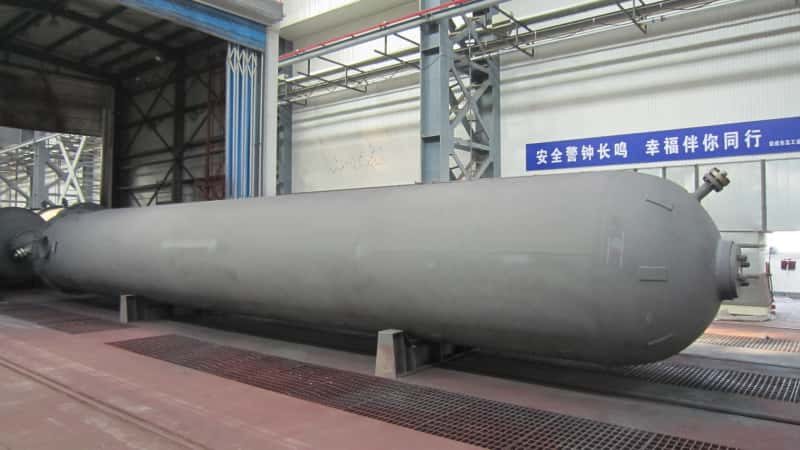

Industrial heat electrification is not simply a matter of replacing a gas boiler, furnace, or burner with electrical equipment. The new heat source must still transfer energy into process water, steam, thermal oil, air, chemicals, food products, cleaning systems, dryers, reactors, and storage loops at the required temperature and flow rate. This is where heat exchangers in industrial heat electrification become essential.
Heat exchangers connect industrial heat pumps, electric boilers, waste heat recovery systems, thermal energy storage, and existing process equipment without mixing incompatible fluids. They can reduce the temperature lift required from a heat pump, recover heat that would otherwise be rejected, protect product quality, and allow plants to electrify selected heat loads without replacing every part of the existing thermal system.
What Is Industrial Heat Electrification?
Industrial heat electrification means using electricity to provide some or all of the thermal energy required by manufacturing processes. Depending on the temperature level and process duty, the technology may include industrial heat pumps, electric boilers, resistance heating, induction, infrared heating, microwave or radio-frequency systems, electrode boilers, mechanical vapor recompression, or electrically charged thermal storage.
The U.S. Department of Energy describes process heating electrification as the use of electricity rather than fossil-fuel combustion to drive industrial and manufacturing processes. The correct solution depends on temperature, production schedule, grid capacity, electricity price, waste heat availability, process integration, and product requirements.
Heat exchangers are especially relevant where the electrical technology heats an intermediate fluid rather than the product directly. They provide the controlled thermal interface between the new electric system and the existing plant.
How Do Heat Exchangers Support Industrial Heat Electrification?
Heat exchangers perform several roles within an electrified heat system:
- Recover heat from cooling water, condensate, wastewater, refrigeration, compressors, exhaust air, or hot products
- Transfer low-temperature waste heat into the source side of an industrial heat pump
- Deliver upgraded heat from a heat pump to hot-water, steam, drying, washing, or process loops
- Separate refrigerants, thermal oil, glycol, steam, or storage media from sensitive process fluids
- Charge and discharge thermal energy storage systems
- Preheat boiler feedwater or process feed to reduce electric boiler duty
- Stabilize process temperature during variable production or electricity availability
- Protect hygienic or hazardous processes through double-wall or intermediate-loop designs
The central idea is system integration. An electric heating technology may be efficient on its own, but its real performance depends on source temperature, delivery temperature, return temperature, pressure drop, fouling, controls, and the heat exchanger network around it.
Why Are Heat Exchangers Important for Industrial Heat Pumps?
An industrial heat pump collects heat from a lower-temperature source and delivers it at a higher temperature. Heat exchangers perform both sides of this cycle: they collect heat from the source and transfer upgraded heat into the process.
Potential heat sources include cooling water, warm wastewater, refrigeration condensers, compressor cooling, exhaust air, drying systems, condensate, and product cooling. The source-side exchanger may transfer heat directly to the refrigerant or to a clean intermediate loop. On the sink side, another exchanger may supply hot water, steam generation, cleaning systems, dryers, evaporators, or process heating.
Lawrence Berkeley National Laboratory identifies electrically driven industrial heat pumps as a cross-cutting option for supplying process heat while improving overall energy efficiency. However, heat pump performance depends heavily on the temperature lift between the heat source and heat sink.
Temperature Approach and COP
The heat exchanger’s approach temperature affects the heat pump coefficient of performance, or COP. A tight approach can let the heat pump operate with a lower supply temperature or a warmer source temperature. This reduces compressor work and may lower electricity use. Achieving a tighter approach normally requires more heat-transfer area, better flow distribution, or a more effective exchanger geometry.
A lower-price exchanger with a wide temperature approach may increase the electrical demand of the heat pump for many years. EPC buyers should therefore compare lifecycle energy cost, not only exchanger purchase price.
Return Temperature
High return temperatures can also reduce heat pump efficiency. Existing steam-heated processes may have been designed without concern for low return temperature. During electrification, heat exchanger area, flow rate, control valves, and process sequencing may need adjustment to extract more useful heat before the fluid returns to the heat pump.
How Do Heat Exchangers Improve Waste Heat Recovery?
Industrial sites frequently reject usable heat through exhaust gases, cooling systems, wastewater, refrigeration, compressed air, product cooling, condensate, and ventilation. A heat exchanger can transfer this heat directly to another process, route it into a plant hot-water loop, charge thermal storage, or provide the source for a heat pump.
The U.S. Department of Energy notes that about one-third of energy consumed in process heating is ultimately lost as waste heat. Its process heat efficiency resources identify waste heat management and industrial heat pumps among the technologies that can reduce energy use and emissions.
The DOE-supported industrial waste heat recovery report also evaluates waste heat quantity, quality, recovery practices, and technology barriers across major manufacturing processes.
Direct Heat Recovery
Direct recovery is often the first option to review. A hot outgoing stream preheats a cold incoming stream through a heat exchanger. Examples include preheating wash water with warm wastewater, preheating boiler feedwater with condensate, recovering heat from hot product cooling, or using exhaust heat to warm combustion air or process air.
Heat Pump Upgrade
If waste heat is available below the required process temperature, a heat pump can upgrade it. The source exchanger must be designed for the real waste stream, which may contain solids, fibers, oils, biological material, corrosive compounds, or scaling minerals. An intermediate loop can isolate a dirty stream from the heat pump refrigerant circuit.
Thermal Energy Storage
Thermal storage can help separate electricity availability from production demand. Heat exchangers may charge storage when electricity is inexpensive or renewable generation is abundant, then discharge heat to the process later. The exchanger must account for changing storage temperature, thermal expansion, pressure protection, control response, and partial-load operation.
Where Are Electrification Heat Exchangers Used?
Heat electrification opportunities are particularly relevant in industries with continuous low- and medium-temperature loads:
- Food and beverage: pasteurization, cleaning, cooking, washing, evaporation, and hot-water systems
- Pulp and paper: water heating, drying support, condensate recovery, and process heat integration
- Chemicals and pharmaceuticals: reactor temperature control, solvent recovery, evaporation, and purified-water systems
- Textiles: washing, dyeing, drying, and hot-water loops
- Wastewater treatment: sludge heating, warm effluent recovery, and heat pump source loops
- Refining and petrochemicals: feed preheating, utility loops, product cooling, and low-temperature heat recovery
- District and campus energy systems: industrial waste heat export and hot-water networks
The IEA reported in December 2025 that approximately 75% of heat demand in less energy-intensive industries such as food processing, textiles, and machinery production is below 200°C. Its analysis of low-temperature industrial heat electrification highlights heat pumps, electric boilers, and thermal storage as practical options under suitable conditions.
Which Heat Exchanger Types Are Used?
| Heat Exchanger Type | Typical Electrification Application | Main Consideration |
|---|---|---|
| Gasketed plate | Clean hot-water loops, heat recovery, CIP, water-side heat pump duties | Tight approach and compact size, but gasket and fouling limits must be reviewed |
| Brazed plate | Small packaged heat pumps and clean utility loops | Compact and economical, but difficult to mechanically clean |
| Welded plate or plate-and-shell | Refrigerants, high-temperature heat pumps, steam, or thermal oil | High performance with fewer gasket limitations |
| Shell and tube | Steam, chemicals, thermal oil, high pressure, and large duties | Robust, inspectable, and material-flexible |
| Spiral or wide-gap | Wastewater, sludge, fibers, and fouling streams | Better fouling tolerance for selected services |
| Tubular | Viscous fluids, food particulates, wastewater, and chemicals | Cleanable and tolerant of particles |
| Scraped-surface | Sticky, crystallizing, freezing, or highly viscous products | Maintains heat transfer under severe fouling |
| Finned-tube coil | Dryer exhaust, ventilation air, and air-source heat recovery | Dust, corrosion, condensate, and fan power require attention |
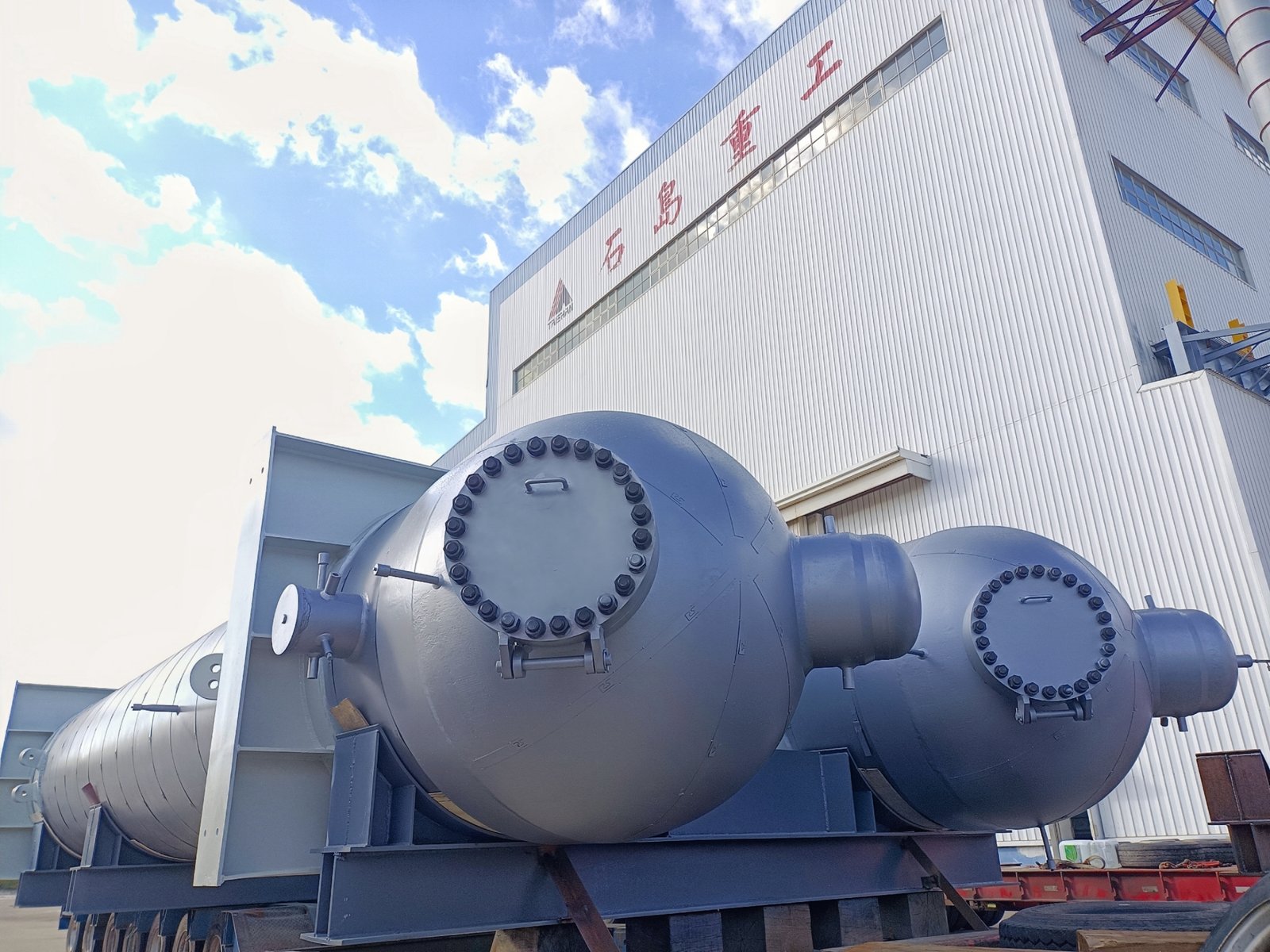
For heavy industrial service, buyers may evaluate industrial heat exchangers and a customized shell and tube heat exchanger as part of the electrification package.
Key Design Factors
Process Temperatures and Heat Duty
Buyers should define source inlet and outlet temperatures, sink inlet and outlet temperatures, flow rates, operating schedule, heat duty, allowable pressure drop, turndown, and startup conditions. The lowest practical process supply temperature should be identified because unnecessary temperature lift increases electrical consumption.
Fluid Properties and Materials
Material selection depends on fluid chemistry, pressure, temperature, chlorides, acids, oils, refrigerants, cleaning chemicals, corrosion allowance, and contamination risk. Carbon steel, stainless steel, duplex stainless steel, titanium, nickel alloys, clad materials, or specialized gaskets may be required.
Fouling and Cleanability
Fouling increases approach temperature and pressure drop, reducing heat recovery and heat pump efficiency. Design should account for solids, fibers, scaling, oil, biological growth, crystallization, viscosity, and product changeover. Cleaning options may include CIP, backflushing, removable bundles, access covers, mechanical cleaning, or redundant units.
Pressure Drop and Auxiliary Power
A thermally effective exchanger can still be inefficient if it causes excessive pumping or fan power. Pressure drop should be evaluated on both sides at normal, peak, and fouled conditions. Auxiliary electricity must be included in the system energy calculation.
Fluid Isolation and Safety
Food, beverage, pharmaceutical, potable-water, hazardous chemical, and refrigerant services may require double-wall exchangers or intermediate loops. Designers should evaluate leakage direction, pressure hierarchy, detection, relief protection, blocked-in thermal expansion, and safe control positions.
Can Existing Heat Exchangers Be Reused?
Industrial heat electrification does not always require replacing every existing exchanger. A phased retrofit begins by mapping heat users, waste heat sources, supply and return temperatures, pressure, flow, operating schedules, and maintenance history.
An existing exchanger may be reusable if it can meet the new duty under electrified conditions. However, electrification may change supply temperature, flow rate, temperature approach, pressure drop, and control strategy. A unit originally heated by steam may need more surface area when converted to a lower-temperature hot-water loop.
Each exchanger should be checked for:
- Available thermal area and achievable outlet temperature
- Pressure and temperature rating on both sides
- Material and gasket compatibility
- Fouling history and cleaning access
- Pressure drop at the new flow rate
- Nozzle size, support, piping loads, and installation space
- Part-load performance and control stability
Manufacturing and Quality Control
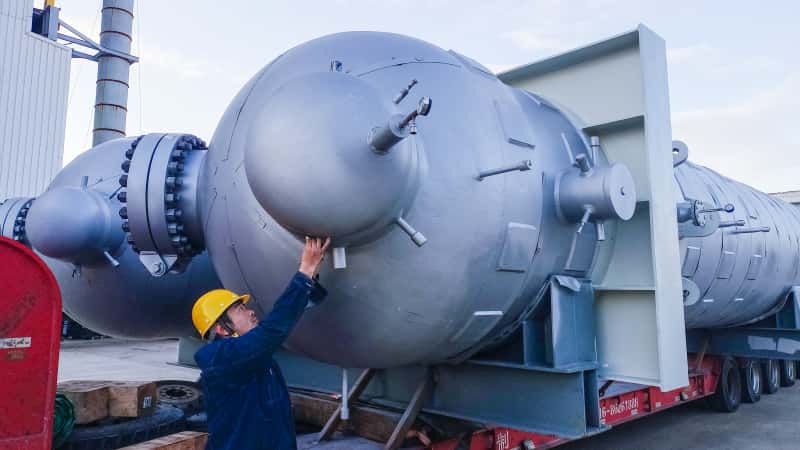
Custom industrial exchangers require coordination between thermal design, mechanical design, fabrication, inspection, and delivery. Before production, the manufacturer should review process datasheets, thermal rating, drawings, materials, tube or plate specifications, welding requirements, inspection scope, pressure testing, coating, packing, and site constraints.
A large-scale pressure vessel manufacturer can support shell fabrication, tubesheet machining, tube bundle assembly, tube-to-tubesheet joints, welding, NDT, pressure testing, dimensional inspection, documentation, and export delivery for large custom equipment.
What Should EPC Buyers Prepare?
Before requesting a quotation, prepare:
- Process description and electrification objective
- Heat source and heat sink profiles
- Fluid names, composition, and properties
- Flow rates and operating schedule
- Inlet and outlet temperatures
- Operating and design pressure
- Heat duty and allowable pressure drop
- Fouling factor and cleaning method
- Material and gasket requirements
- Heat pump, electric boiler, or storage interface data
- Applicable design code and project standard
- Inspection, NDT, and testing requirements
- Site layout, maintenance access, and delivery limits
- Documentation and performance verification requirements
Common Project Mistakes
Buying the Heat Pump Before Completing Heat Integration
Selecting a heat pump before mapping source and sink temperatures can lock the project into poor temperature lift and higher electricity use. Heat exchangers and process temperatures should be studied together.
Selecting a Compact Exchanger for a Dirty Stream
A compact plate exchanger may perform well with clean water but fail rapidly with wastewater, fibers, sludge, oil, or crystallizing fluids. Annual reliability matters more than clean-design efficiency.
Ignoring Return Temperature
High return temperature can reduce heat pump COP and waste recovery potential. Exchanger sizing and process controls should support the lowest practical return temperature.
Comparing Suppliers Only by Purchase Price
A lower-price exchanger may require more compressor power, larger electric boiler capacity, frequent cleaning, or more downtime. Compare thermal performance, pumping power, fouling strategy, maintenance, documentation, and lifecycle cost.
FAQ
How do heat exchangers support industrial heat electrification?
They transfer heat between electric heat sources, recovered heat streams, storage systems, and industrial processes while keeping fluids separate. This enables heat pumps, electric boilers, and thermal storage to integrate with existing equipment.
Why are heat exchangers important for industrial heat pumps?
They collect low-temperature heat on the source side and deliver upgraded heat on the process side. Their temperature approach, pressure drop, and fouling performance directly affect heat pump efficiency.
Can heat exchangers reduce the electrical load of an electrification project?
Yes. Direct waste heat recovery and effective heat integration reduce the amount of new electric heat that must be generated, potentially lowering heat pump, electric boiler, transformer, and grid connection requirements.
Which heat exchanger is best for industrial electrification?
There is no universal best type. Plate exchangers suit many clean hot-water duties, shell-and-tube units suit robust pressure and chemical services, while spiral, tubular, or wide-gap units may be better for fouling streams.
Can existing heat exchangers be reused?
Often, yes, but each unit must be checked for the new temperature approach, flow, pressure drop, materials, fouling, thermal area, and control conditions.
Conclusion
Heat exchangers are the practical bridge between electric heat generation and usable industrial process heat. They recover waste heat, improve heat pump performance, integrate electric boilers and thermal storage, protect products and equipment, and allow existing plants to electrify heat with less disruption.
If you are sourcing heat exchangers, pressure vessels, separators, thermal storage vessels, or other custom process equipment for industrial heat electrification, waste heat recovery, heat pump, chemical, food, refining, or EPC projects, you can discuss your project requirements with an engineering and manufacturing team. Sharing temperature profiles, flow rates, fluid properties, materials, fouling conditions, inspection needs, and delivery terms will support technical communication and fabrication evaluation.