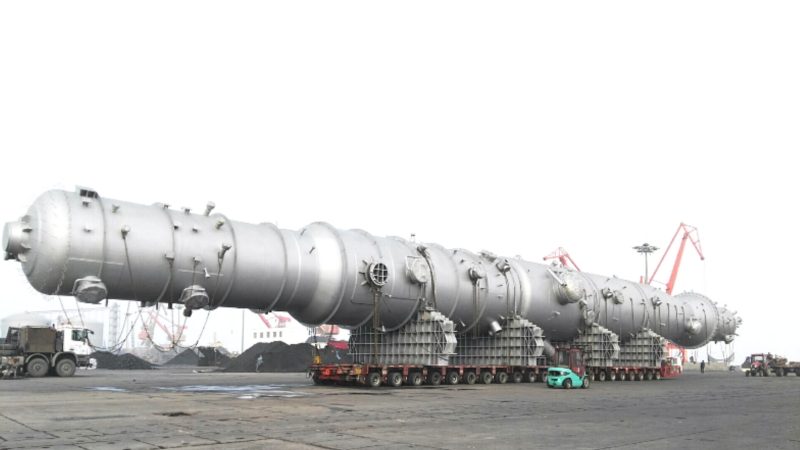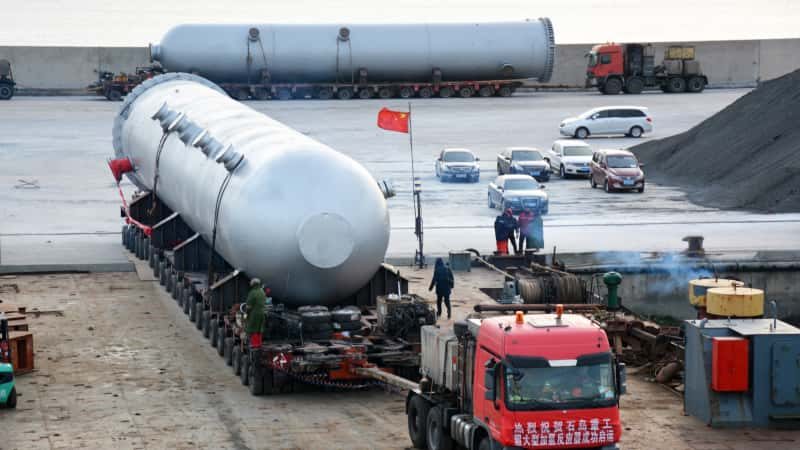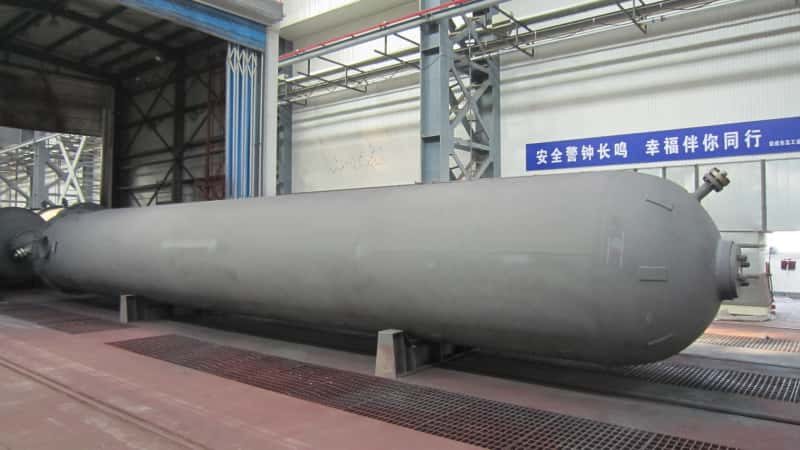

Heat exchangers for slurry service must be evaluated against more than heat duty and operating pressure. Suspended solids can introduce deposition, blockage, erosion, and cleaning challenges that a quotation based on liquid flow alone may overlook. For EPC buyers and plant engineers, the priority is to define the actual slurry and its operating range before selecting a complete exchanger.
This applies to heating and cooling duties in chemical processing, coal chemical production, mineral processing, and industrial wastewater treatment. A suitable specification connects thermal performance with solids handling, mechanical integrity, maintenance access, and delivery requirements.
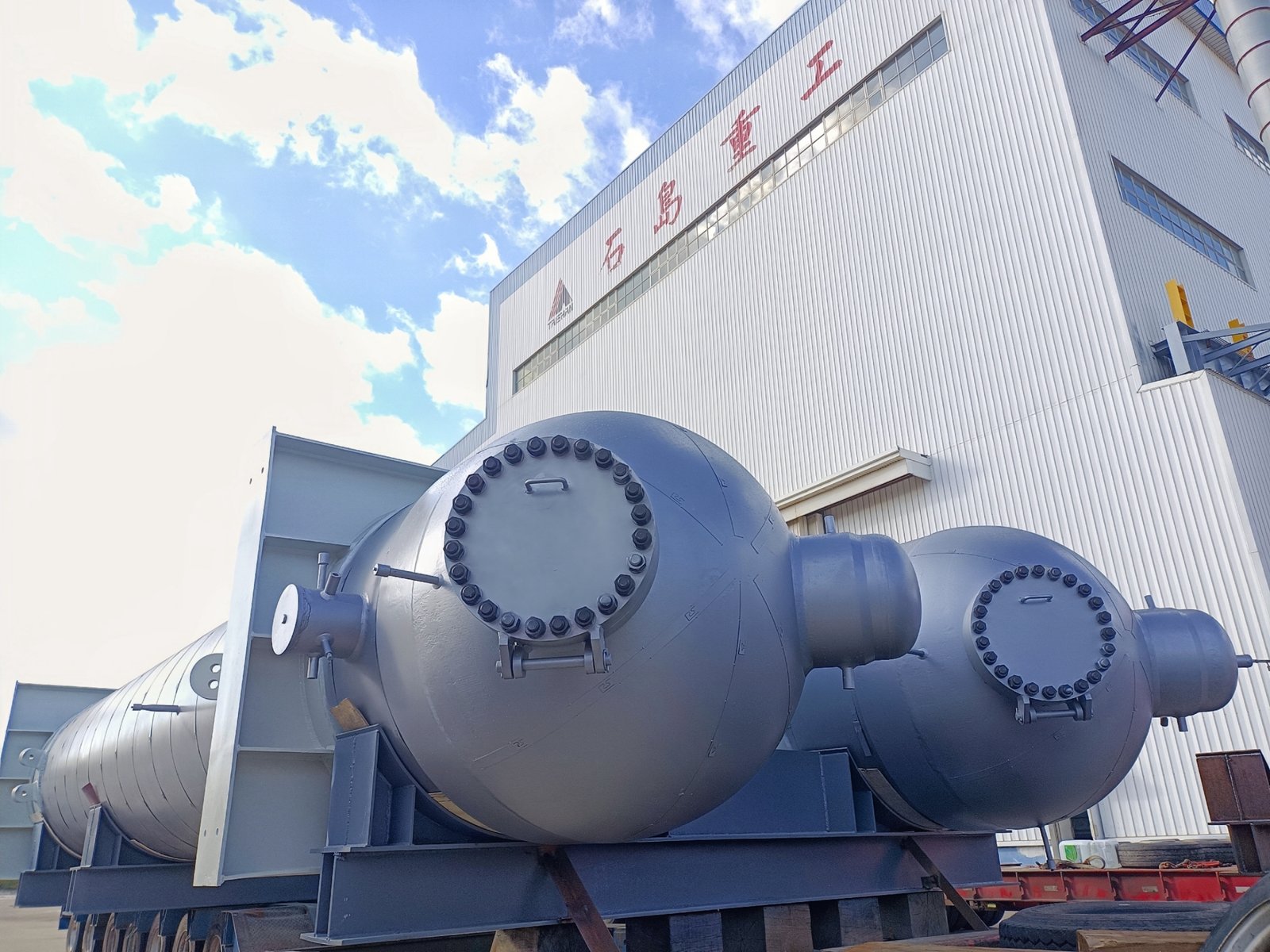
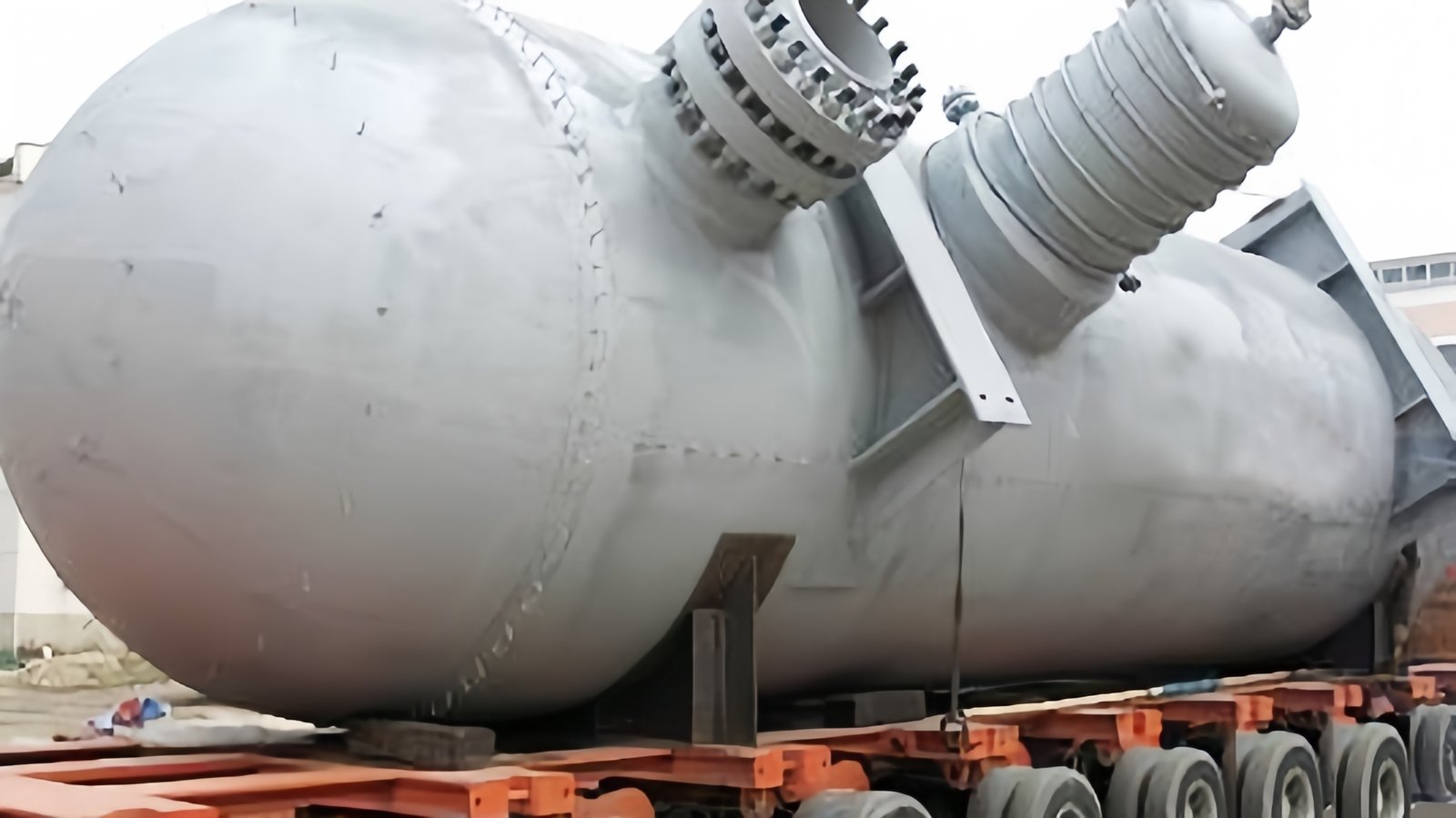
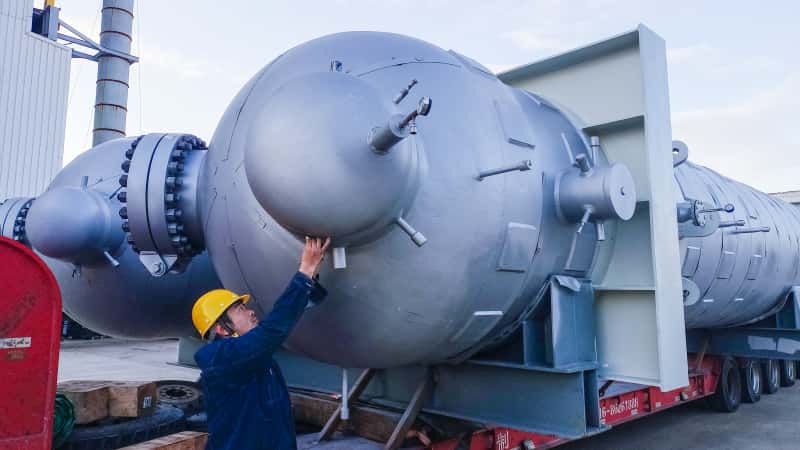
Representative industrial heat exchanger photograph. Suitability for slurry service requires project-specific engineering review.
What Makes Slurry Service Different?
A slurry contains solid particles suspended in a liquid. Its behavior depends on the liquid properties, particle characteristics, solids concentration, and operating conditions. Two streams with the same flow rate and solids percentage may behave differently if their particles differ in size, shape, density, or tendency to agglomerate.
Dissolved material should also be distinguished from suspended solids. A clear solution may develop crystals during cooling or concentration, creating a solids-handling problem inside equipment that initially receives little suspended material. Buyers should describe what happens through the exchanger, not just what enters it.
For custom shell-and-tube heat exchangers, the engineering question is whether the proposed arrangement can meet the duty while providing appropriate flow passages, materials, and maintenance access. No standard configuration should be assumed suitable for every slurry.
Start With a Representative Slurry Datasheet
Describe the Solids
Provide the particle-size distribution, expected maximum particle size, solids concentration, and the basis of that concentration: mass or volume. Include available information about particle density, hardness, shape, and whether particles are sticky, fibrous, fragile, or prone to forming larger agglomerates.
Describe variability between batches and during process disturbances. An average particle size alone may conceal occasional larger particles that influence passage requirements. If upstream separation or screening is assumed, identify its operating limits and clarify who is responsible for that equipment.
Describe the Liquid and Flow Behavior
Supply composition, density, heat capacity, thermal conductivity, and viscosity information across the relevant temperature and concentration range. If the slurry exhibits non-Newtonian behavior, a single viscosity measured under unspecified conditions may be insufficient. Ask the process team what rheological data the thermal and hydraulic designer requires.
Also identify corrosive constituents, dissolved gases, settling behavior, and any tendency to crystallize, polymerize, or solidify. Where reliable data are unavailable, representative testing may be necessary before performance commitments can be finalized. Missing data should remain visible in the quotation assumptions.
Define Thermal Duty Across the Operating Range
Specify minimum, normal, and maximum operating cases, with the corresponding flow rates, temperatures, compositions, and solids loadings. Avoid combining unrelated maximum values into a hypothetical case unless the process engineer confirms that the combination is relevant.
The utility side needs equal attention. Provide available heating or cooling medium conditions, seasonal variations, and allowable pressure drops on both sides. Clarify whether phase change is intended or must be avoided. A thermal calculation using an assumed utility temperature can produce an attractive quotation that does not match site conditions.
Ask the supplier to state its fouling assumptions and distinguish clean-condition performance from the specified operating condition. Adding surface area does not, by itself, resolve blockage or solids deposition. HSE identifies fouling, solidification, leakage, and tube vibration among the concerns relevant to heat exchanger design.
Balance Deposition, Pressure Drop, and Erosion
Why There Is No Universal Slurry Velocity
Increasing flow velocity may help transport some particles, but it can also increase hydraulic losses and, depending on the slurry and material, erosion risk. Lower velocity can reduce certain wear mechanisms while allowing particles to settle. The appropriate range therefore depends on the complete duty.
The Nickel Institute’s technical publication on sedimentation in condensers and heat exchangers discusses how sedimentation and debris affect exchanger performance. Its water-service examples illustrate the issue; they should not be converted into universal velocity limits for industrial slurries.
Request an engineering explanation of the proposed hydraulic arrangement. Where the duty is uncertain, ask what operating experience or testing supports the design and which conditions fall outside the proposed performance envelope.
Review Low-Flow and Interrupted Operation
An exchanger may operate acceptably at normal production yet encounter problems during turndown, shutdown, or restart. Buyers should describe credible interruptions, standby periods, and whether solids can settle or harden while the equipment is idle.
The project team should establish any necessary draining, flushing, or temperature-maintenance requirements and assign responsibility for them. These are operating and equipment-interface questions, not instructions to apply a generic flushing procedure. Required utility connections and waste-handling capacity should be included in the overall scope.
Select an Arrangement That Can Be Maintained
Tube-side or shell-side assignment should be justified rather than selected by habit. Relevant considerations include pressure, corrosion, particle behavior, flow distribution, passage dimensions, and access to the surfaces that may foul. A configuration that offers convenient access on one side may provide limited access on the other.
Where mechanical cleaning is required, ask how the proposed geometry permits it and what plant space is needed. Straight-tube access, removable assemblies, bends, and external clearances can influence maintenance feasibility. Evaluate these features as part of the complete exchanger, not as standalone replacement-component purchases.
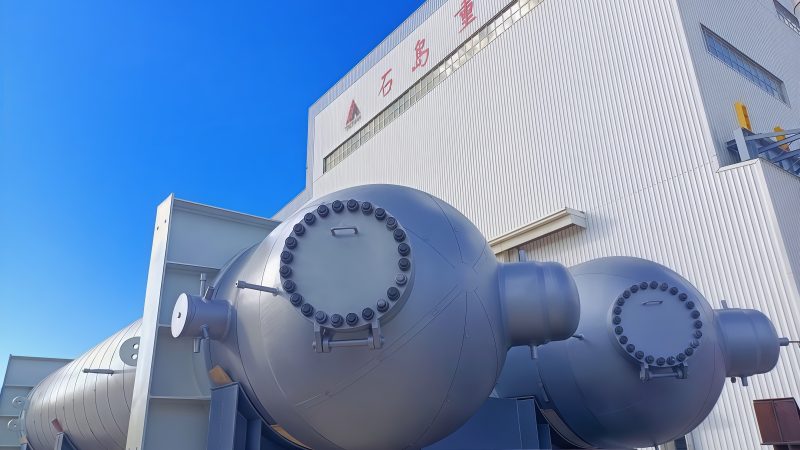
Representative hairpin heat exchanger photograph. Configuration, bend access, and cleaning suitability must be assessed for the specified slurry.
Cleaning methods should be compatible with the construction material and expected deposits. Define whether cleaning will occur in place or after opening the equipment, how residues will be removed, and whether suitable site facilities exist. Do not assume that chemical cleaning will remove every deposit or that mechanical cleaning is practical for every geometry.
Evaluate Corrosion and Wear Together
Material selection must consider both the liquid chemistry and the particles. Temperature, concentration, contaminants, and cleaning chemicals can change the corrosion environment, while particle characteristics and local flow conditions influence wear.
A higher alloy grade is not automatically the best answer, and increasing corrosion allowance does not substitute for selecting a suitable material and design. Request the materials basis and identify where specialist review or testing is needed. Materials guidance can inform the discussion, but it cannot approve a specific alloy for an uncharacterized slurry.
Put Manufacturing and Acceptance Requirements in the RFQ
The purchase specification should establish the applicable design requirements, material documentation, welding qualifications, required examinations, dimensional checks, and pressure or leak testing as appropriate. The responsible engineering team should determine any additional requirements arising from the service or installation location.
Separate mechanical acceptance from process-performance acceptance. A successful pressure test does not demonstrate resistance to plugging, acceptable erosion over time, or sustained thermal performance with the customer’s slurry. If performance testing is included, agree on feed properties, utilities, operating conditions, measurements, duration, and acceptance criteria before contract award.
For industrial heat exchanger manufacturing, traceability and document control matter throughout fabrication. Approved revisions and agreed inspection points should be clear before affected work proceeds. Unsupported claims such as “maintenance-free” or “non-clogging” should not replace measurable requirements.
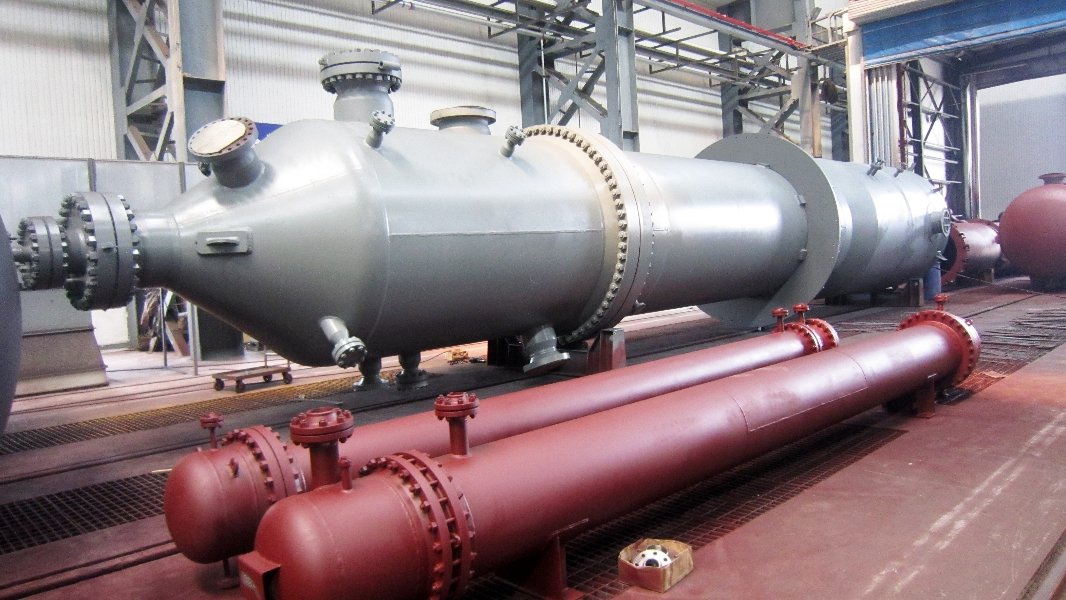
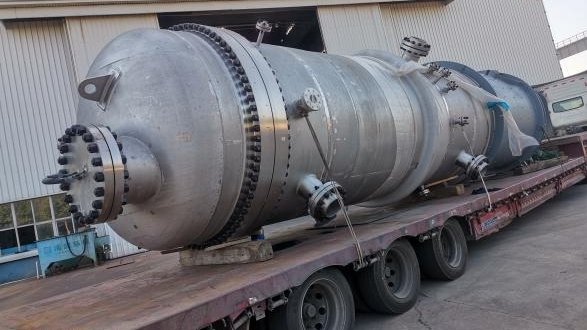
Representative manufacturing photograph. Final inspection and testing requirements depend on the contracted equipment specification.
Compare Complete Supply and Delivery Boundaries
Ask each bidder to identify whether its offer includes thermal design, mechanical design, fabrication, inspection, coating, packing, and transport. Clarify responsibility for circulation equipment, site connections, operating controls, installation, and commissioning. An exchanger manufacturer should not be assumed to provide the entire slurry-processing system.
WSHI’s stated capabilities include drawing coordination, material procurement, welding, nondestructive examination, pressure testing, coating, and heavy-equipment delivery. Confirm the services included in the project quotation, together with shipping dimensions, lifting requirements, preservation, documentation, and the delivery endpoint.
A useful comparison considers purchase cost alongside cleaning access, expected operating availability, and maintenance requirements. However, cleaning intervals and service life should not be invented to complete a cost calculation; uncertain assumptions should be identified and reviewed.
FAQ
Can a shell-and-tube heat exchanger handle every slurry?
No. Suitability depends on the slurry properties, thermal duty, hydraulic arrangement, materials, and cleaning requirements. Some duties require specialized equipment outside a manufacturer’s standard scope.
Should slurry always flow through the tubes?
Not necessarily. Tube-side access may be useful for some duties, but fluid assignment must also account for pressure, particle behavior, corrosion, and the proposed configuration.
Is increasing velocity enough to prevent blockage?
No. It may help particle transport in some cases, but it can also increase pressure drop and wear. The design needs a justified operating range rather than a universal velocity target.
What information is most useful for an initial quotation?
Provide operating cases, particle-size data, solids loading, liquid properties, settling observations, thermal duty, utility conditions, cleaning expectations, and site constraints. Clearly identify preliminary or unverified information.
Discuss Your Slurry Heat Exchanger Requirements
Specifying heat exchangers for slurry service begins with representative process data and a realistic operating envelope. For a project requiring a complete custom exchanger, discuss your requirements with our engineering team. Share slurry analyses, operating conditions, drawings, cleaning requirements, and delivery constraints for equipment-scope coordination and manufacturing assessment.