
Jacketed Reactor or External Heat Exchanger: Which Cooling Arrangement Should Buyers Choose?
Choosing between jacketed reactor cooling and an external heat exchanger depends on the required heat removal, the behavior of the reaction mixture and the available utilities. Reactor volume alone does not establish which arrangement will work.
For EPC buyers, the decision affects the complete equipment package: the reaction vessel, heat-transfer equipment, circulation arrangement, controls and installation interfaces. A useful comparison therefore starts with an agreed process basis and clearly assigned engineering responsibilities.
An external heat exchanger is always better for a large reactor.False
Selection depends on the time-based heat load, fluid properties, mixing, circulation, utilities, fouling, cleaning and complete system integration rather than reactor size alone.
Normal reactor cooling capacity is sufficient proof of reaction safety.False
Cooling performance is only one input. Abnormal scenarios such as cooling failure, loss of agitation and reactant-addition deviations require a separate reaction-hazard assessment.
How Do the Two Cooling Arrangements Work?
Jacketed Reactor Cooling
A jacket transfers heat through the reactor wall using a circulating heating or cooling medium. Its performance depends on the effective heat-transfer area, utility conditions and heat transfer on both sides of the wall.
The wetted area changes with the liquid inventory, while mixing and fluid properties influence heat transfer within the vessel. Buyers should therefore define the operating fill range as well as the nominal reactor capacity.
A jacket is part of the complete reactor construction. Its design should be coordinated with the vessel’s pressure, temperature and mechanical requirements.
External Heat Exchanger Cooling
In a process recirculation arrangement, reaction liquid leaves the vessel, passes through an external exchanger and returns to the reactor. The system may provide additional heat-transfer area, but it also introduces piping, circulation equipment and additional process inventory.
This differs from an external utility-conditioning unit that supplies cooled fluid to a jacket. The inquiry should state which arrangement is intended.
ISPE’s technical discussion of heat-transfer design addresses jacket systems and external heat exchange as options for reactor temperature control. The appropriate configuration follows the duty and process characteristics.
Compare Complete Systems Rather Than Individual Equipment Prices
| Selection factor | Jacketed reactor cooling | External process cooling loop |
|---|---|---|
| Heat-transfer area | Linked to vessel geometry and wetted jacket area | Can provide additional exchanger area |
| Process circulation | Heat transfer depends on conditions inside the reactor | Requires a suitable process circulation arrangement |
| Additional process inventory | No external process loop is required for jacket heat exchange | Includes liquid held in piping and exchanger |
| Fluid suitability | Assess viscosity, mixing and wall deposition | Also assess pumpability, shear, plugging and loop residence time |
| Maintenance | Access depends on complete vessel construction | Access depends on exchanger design and installation |
| Integration | Vessel, jacket and utility system must be coordinated | Reactor, exchanger, circulation and controls must be coordinated |
The options can also be combined. Using both may be appropriate where an engineering assessment supports their respective duties.
Start with the Heat-Removal Profile
Distinguish Reaction Heat from Batch Cooldown
Removing heat during a reaction and cooling a completed batch are different duties. They may involve different temperatures, fluid properties and rates of heat release.
A specification based only on the final cooldown time can miss the governing reaction duty. Conversely, equipment selected for one peak condition may need additional review to achieve the required batch cycle.
Provide the expected heat load over time, supported by appropriate process data. Identify the operating stages and assumptions used to establish the requirement.
Assess the Available Temperature Difference
Cooling performance depends on the temperature difference between the process and cooling medium. A colder utility may increase the available driving force, but local temperatures and product behavior still need assessment.
The project team should identify allowable process temperatures and any concerns about crystallization, deposition or product quality near cooled surfaces. Increasing area or specifying colder coolant does not automatically resolve these issues.
Use Realistic Utility Conditions
Specify cooling-medium supply temperature, available flow, return limits and pressure conditions. Include seasonal or operating variations that could affect performance.
A supplier’s calculation based on favorable utility conditions should not be compared directly with a proposal evaluated against the plant’s limiting case.
Match the Arrangement to the Reaction Mixture
Viscosity and Mixing
The reaction mixture may become more viscous as a batch progresses. This can affect heat transfer at the vessel wall and circulation through an external loop.
For jacketed cooling, the assessment should account for mixing performance over the relevant fill and viscosity range. For an external loop, evaluate whether the process fluid can circulate at the required rate within acceptable hydraulic and mechanical limits.
Neither arrangement should be selected using dilute-feed properties when the demanding duty occurs later in the batch.
Solids, Fouling and Product Sensitivity
Suspended solids, precipitation and deposition can affect both arrangements. Buyers should provide particle information and known fouling behavior where relevant.
An external loop also requires assessment of plugging risk, shear sensitivity and residence time outside the reactor. A fluid that can be pumped is not necessarily suitable for every exchanger configuration.
Cleaning methods should be considered during selection. They influence the complete vessel and exchanger design, maintenance access and the time needed to return equipment to service.
Process Containment
An external loop adds process-containing equipment and connections. Their materials, pressure requirements and operating conditions should match the approved service.
For custom pressure vessels, the reactor specification should remain consistent with the connected equipment. The plant design must also address how the complete system is drained, cleaned and prepared for maintenance.
When Might Each Arrangement Be Appropriate?
Jacketed reactor cooling may be a suitable starting point when the available wall area and heat-transfer conditions can satisfy the duty across the operating range. It can also avoid routing the reaction mixture through an external process circuit.
An external exchanger may merit evaluation when additional heat-transfer area is needed and the mixture can be circulated reliably. It may provide maintenance options that differ from those of a vessel jacket, depending on the selected construction.
For a proposed shell and tube heat exchanger, review thermal performance together with pressure drop, fouling, cleaning access and the intended circulation conditions.
A combined system should have an agreed allocation of duties and coordinated controls. Adding two cooling paths does not automatically provide independent backup if they depend on the same utility or other common equipment.
Separate Normal Temperature Control from Reaction Safety
Normal cooling capacity is one part of the process design. It does not, by itself, establish that a reaction will remain safe under abnormal conditions.
The UK HSE’s guidance on reaction testing identifies cooling failure, loss of agitation and reactant-addition conditions among the scenarios considered in reaction-hazard assessment.
The responsible process team should define the basis of safe operation and any required protective measures. Procurement should then translate approved equipment requirements into the supply specification.
A larger exchanger cannot substitute for that assessment. Equally, two normal cooling arrangements should not be described as a verified safety system without supporting engineering.
Define Materials and Mechanical Design Conditions
Material selection should consider the reaction mixture, contaminants, cooling medium and cleaning chemicals. Different exposure conditions may require different materials within the complete equipment package.
For a jacketed vessel, the inner vessel and jacket need clearly stated design conditions and relevant pressure combinations. Where the process side can experience vacuum, the designer should evaluate the applicable differential-pressure cases.
External exchangers similarly require a defined basis for both pressure chambers. Expected heating and cooling cycles should be communicated to the mechanical designer where relevant.
Applicable construction rules must be established for the order. ASME BPVC Section VIII, Division 1 may form part of that basis where specified and applicable. Referencing the code does not establish a supplier’s certification.
Specify the Complete Procurement Scope
A reactor cooling inquiry should identify who owns the process data, thermal design, mechanical design and system integration. It should also assign any performance commitments explicitly.
If a manufacturer supplies the vessel and exchanger while another contractor supplies circulation equipment and controls, the interfaces still require coordinated review. Utility availability and site piping cannot remain unspecified assumptions in a thermal guarantee.
For industrial heat exchanger procurement, bidders should state the operating cases they have evaluated and the work included in their offer. A fabrication quotation and an integrated cooling-system proposal should not be treated as equivalent.
Manufacturing, Inspection and Delivery
The inspection plan should cover material traceability, welding documentation, dimensional checks, required examination and testing. Acceptance criteria should follow the approved equipment specifications.
Mechanical testing and thermal-performance verification answer different questions. A pressure test does not confirm that the installed system will remove the required reaction heat.
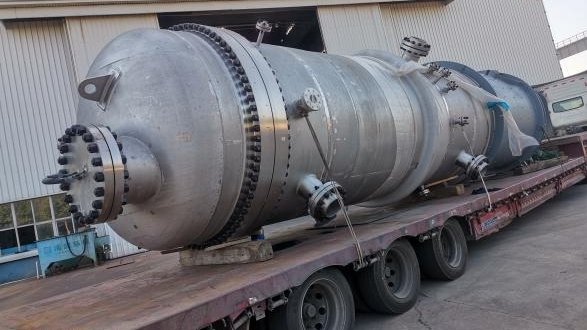
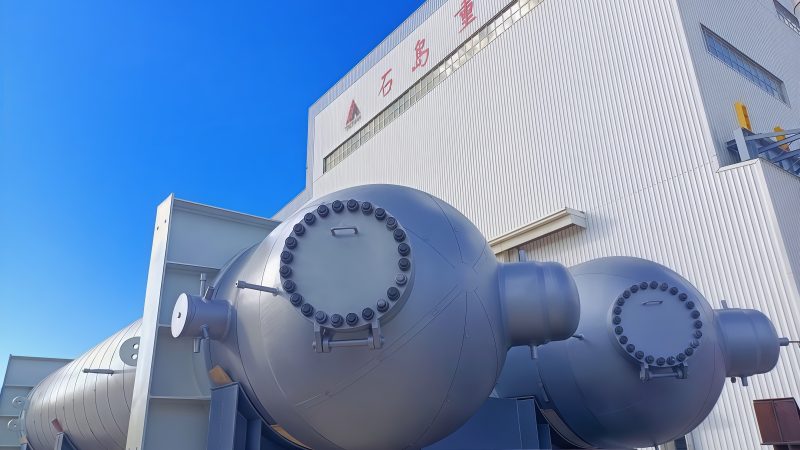
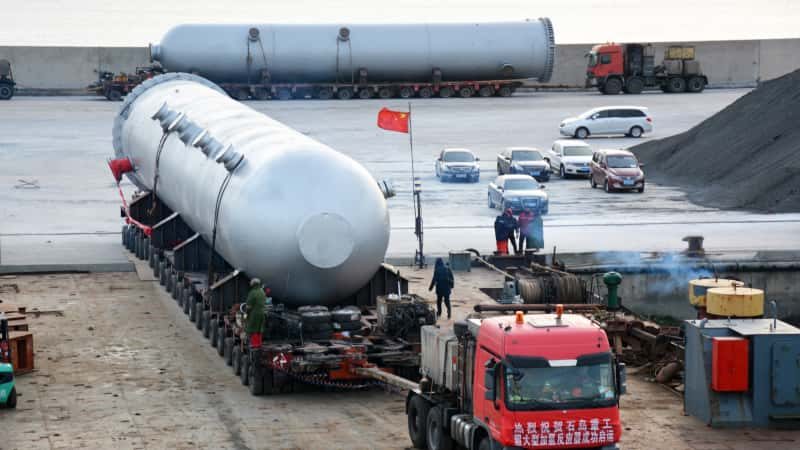
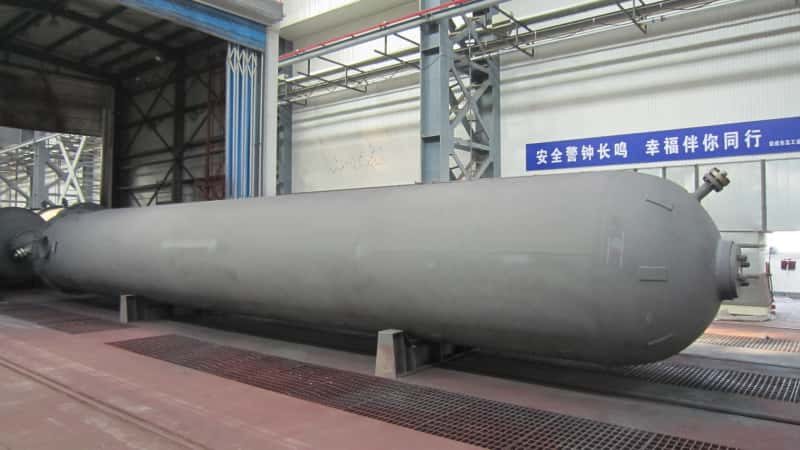
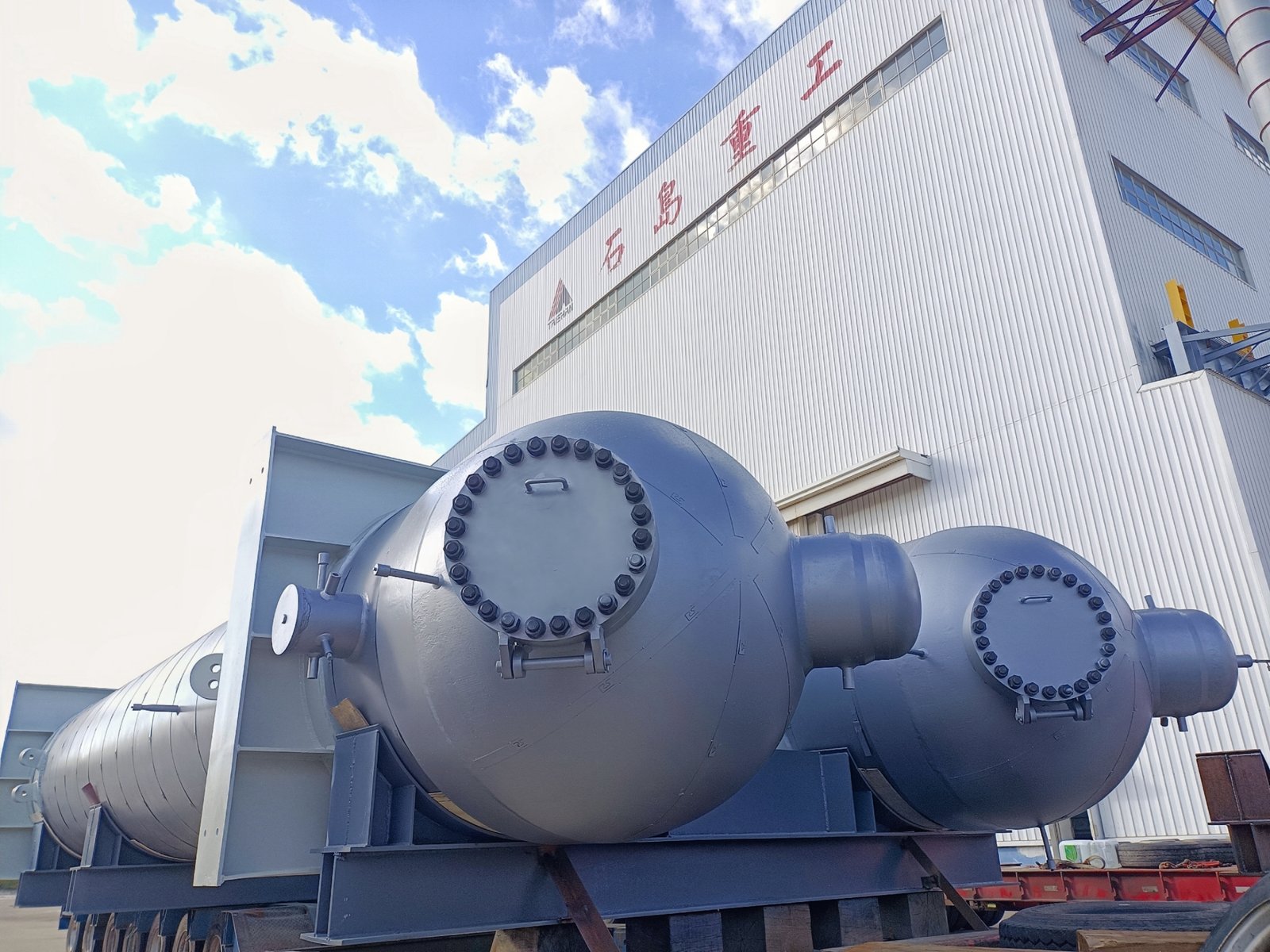
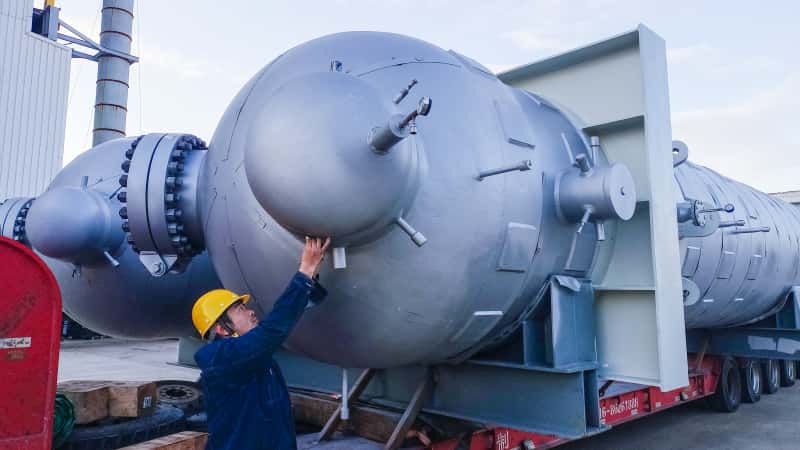
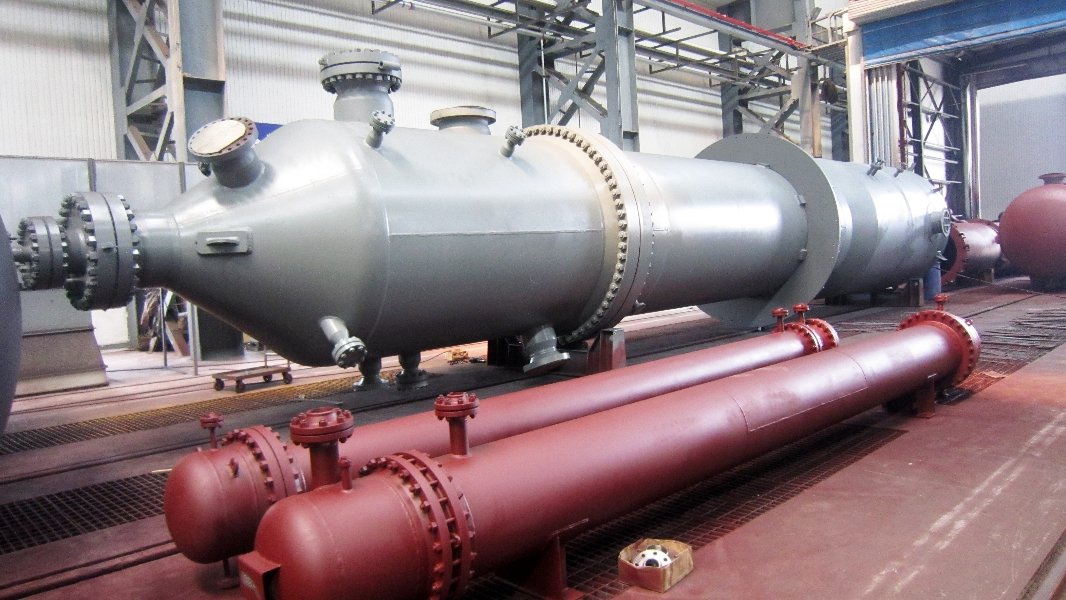
WSHI’s manufacturing capability includes engineering coordination, material procurement, welding fabrication, nondestructive examination, pressure testing, coating and heavy-equipment delivery activities. The applicable vessel and exchanger scope should be confirmed for each project.
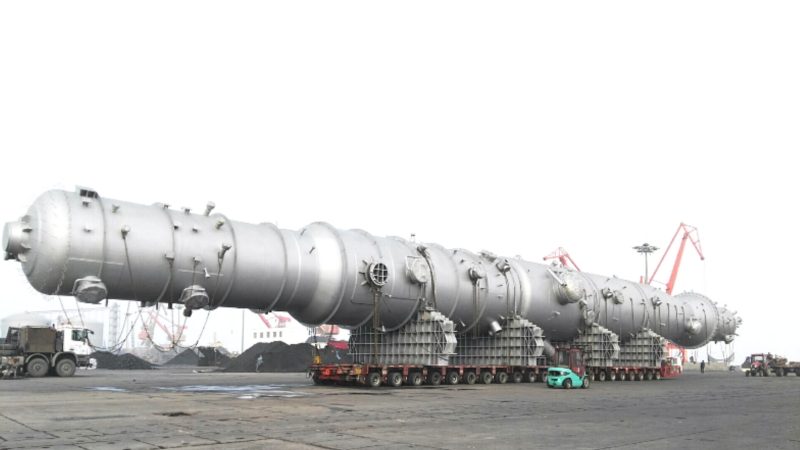
Delivery planning should consider complete equipment dimensions, transport supports, lifting requirements and site access. For an external exchanger, maintenance space should be reviewed before the installation layout is fixed.
FAQ
Is an external heat exchanger always better for a large reactor?
No. Reactor size is only one consideration. Heat load, fluid properties, available utilities, mixing and circulation conditions determine whether the arrangement is suitable.
Can a reactor use both a jacket and an external exchanger?
Yes. The two can serve complementary duties when the process design supports the arrangement. Their controls, utility demands and responsibilities should be coordinated.
What information is most useful for an initial quotation?
Provide the operating volume range, temperature profile, heat-removal requirement, fluid properties, utility conditions and cleaning expectations. Identify preliminary data and assign responsibility for completing the design basis.
Does sufficient normal cooling capacity prove reaction safety?
No. Abnormal conditions require a separate reaction-hazard assessment and an approved basis of safe operation. Normal cooling performance is only one input.
Discuss Your Reactor Cooling Equipment
Choosing jacketed reactor cooling or an external heat exchanger should follow the complete operating duty and material behavior. Clear engineering responsibilities help buyers compare equipment proposals and coordinate manufacturing with plant requirements.
For a chemical processing project, contact our engineering team with your reactor datasheet, heat-removal requirements, fluid properties and utility conditions. WSHI can review the proposed complete vessel and exchanger scope and discuss manufacturing feasibility, inspection and delivery.