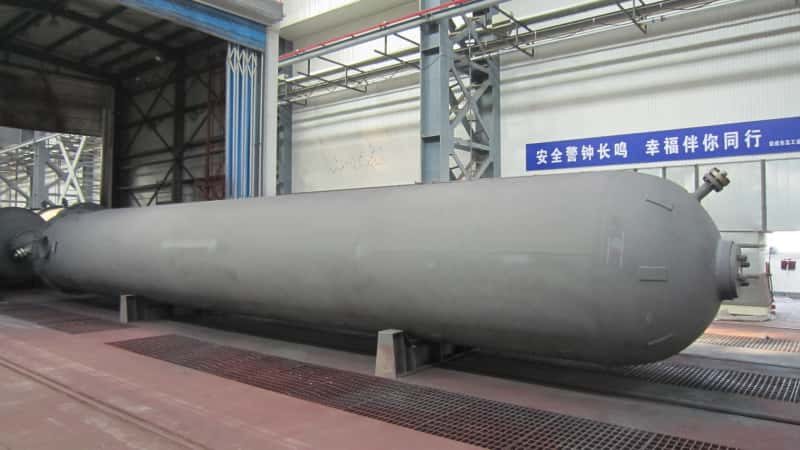

Purchasing a hydrocracking reactor on initial price alone can be an expensive decision. A lower-cost vessel may save capital at award but lose far more through short catalyst cycles, rising pressure drop, high hydrogen consumption, difficult catalyst unloading, long turnarounds, limited inspection access, internals failures, overlay repairs, or unplanned shutdowns.
For refinery owners, EPC contractors, maintenance teams, and procurement managers, the reactor should be evaluated as a lifecycle asset. The best-value reactor is the one that safely protects production, catalyst performance, maintainability, inspection efficiency, and future operating flexibility over decades of high-pressure hydrogen service.

Quick Answer: What Lifecycle Factors Matter Before Purchase?
Before purchasing a hydrocracking reactor, buyers should evaluate catalyst cycle length, hydrogen and energy consumption, pressure-drop growth, conversion stability, planned turnaround duration, catalyst handling access, inspection requirements, spare internals, metallurgy, weld-overlay repairability, quench reliability, thermowell coverage, documentation quality, supplier field support, future revamp margin, and unplanned shutdown risk.
Maintenance planning should address in-service inspection, risk-based inspection compatibility, baseline NDT, catalyst loading and unloading, manways, removable internals, flange and relief-device access, cleaning, drying, preservation, repair procedures, spare parts, and long-term traceability of the manufacturing data book.
The lowest purchase price is not necessarily the lowest lifecycle cost for a hydrocracking reactor because catalyst life, pressure drop, turnaround duration, inspection access, repairability, documentation, and production availability can dominate long-term economic value.True
Hydrocracking reactors operate in severe high-pressure hydrogen service. Small weaknesses in internals, metallurgy, access, or documentation can create large costs through lost production, catalyst replacement, higher utilities, repairs, and unplanned shutdowns.
This article builds on the process and mechanical principles explained in Hydrocracking Reactor Fundamentals and Design Basics. Lifecycle evaluation should begin only after the process route, feed envelope, hydrogen balance, catalyst plan, and governing mechanical requirements are understood.
What Does Lifecycle Cost Mean for a Hydrocracking Reactor?
Lifecycle cost is the total economic impact of the reactor from specification through design, fabrication, transport, installation, commissioning, operation, catalyst changeout, inspection, maintenance, repair, revamp, and eventual retirement. It includes direct spending and the value of production lost when the reactor limits throughput or availability.
ASME BPVC Section VIII Division 1 provides one widely used framework for pressure-vessel construction. Code compliance is essential, but it does not by itself optimize catalyst performance, maintenance access, turnaround duration, future revamp capacity, or total cost of ownership.
| Lifecycle cost category | What it includes | Why it matters before purchase |
|---|---|---|
| Initial capital cost | Shell, forgings, internals, metallurgy, overlay, fabrication, inspection, transport, and installation | A lower initial cost can shift expense into maintenance, downtime, or early replacement |
| Catalyst and media | Catalyst inventory, grading, support media, loading, unloading, regeneration, and disposal | Short cycles can dominate the reactor’s economic performance |
| Hydrogen and energy | Hydrogen consumption, recycle compression, heaters, quench gas, cooling, and pressure-drop losses | Weak distribution or catalyst performance increases utility cost every operating day |
| Production availability | Planned turnaround time, throughput limitations, conversion stability, and unplanned outages | Lost production may exceed the original equipment price difference |
| Inspection and maintenance | NDT, internal access, repairs, thermowells, internals, flange work, relief devices, and documentation | Maintainability and inspectability must be built into the vessel |
| Future flexibility | Feed changes, higher severity, new catalyst systems, renewable co-processing, and rerating | Insufficient margin can create an early bottleneck or require replacement |
1. Catalyst Cycle Length and Conversion Stability
The catalyst inventory in a hydrocracking reactor is expensive, and catalyst replacement normally requires a major shutdown. Lifecycle economics improve when the reactor can maintain target conversion and product quality without excessive temperature increase, pressure drop, or catalyst deactivation.
Cycle length is affected by feed nitrogen, sulfur, metals, asphaltenes, solids, endpoint, cracked-stock stability, hydrogen partial pressure, catalyst volume, bed grading, liquid distribution, quench mixing, and pretreatment performance. Buyers should specify the realistic feed envelope and target cycle rather than relying on average feed data.
Catalyst Volume and Grading Margin
A smaller reactor may reduce initial cost, but insufficient catalyst volume or grading space can force higher severity, shorten the cycle, or limit future feed flexibility. The technical bid should show usable catalyst volume, support-media volume, guard or grading layers, bed density, and the design basis for start-of-run and end-of-run conditions.
Internals Protect Catalyst Value
Distributors, support grids, quench mixers, thermowells, scale baskets, and outlet collectors are not minor accessories. They protect the catalyst inventory by maintaining uniform flow, temperature, and pressure drop. Buyers can review the role of hydrocracking catalyst support systems when comparing internals scope.
2. Pressure Drop, Fouling, and Throughput
Pressure drop creates both energy and availability cost. As catalyst beds accumulate particulates, coke, corrosion products, metals, or fines, the recycle compressor and feed pumps must overcome greater resistance. The unit may lose throughput or reach its operating limit before the catalyst has exhausted its chemical activity.
Buyers should define allowable pressure drop by bed and for the full reactor at start and end of run. Differential-pressure taps should support reliable monitoring of the inlet section, grading layers, individual catalyst beds, and outlet system.
| Pressure-drop control feature | Lifecycle value | Pre-purchase check |
|---|---|---|
| Feed filtration and upstream corrosion control | Reduces solids entering the reactor | Confirm maximum particle loading and upset cases |
| Scale baskets or filtering trays | Capture deposits before they blind the active catalyst | Check capacity, cleanability, removal, and replacement |
| Grading layers | Distribute fouling and protect expensive catalyst | Define volume, particle-size progression, and support screens |
| Bed differential-pressure taps | Identify where fouling is developing | Confirm location, impulse-line protection, and maintainability |
| Uniform inlet distribution | Prevents localized deposition and channeling | Request distribution basis, tolerances, and reference performance |
Pressure-drop protection can extend useful catalyst life and preserve refinery throughput even when catalyst activity remains acceptable.True
A hydrocracker may need to shut down because of hydraulic limitation rather than chemical deactivation. Feed filtration, scale baskets, grading layers, uniform distribution, and bed-level differential-pressure monitoring help prevent premature end of run.
3. Hydrogen and Energy Consumption
Hydrogen supports cracking stability, aromatic saturation, sulfur and nitrogen removal, and coke suppression. Recycle gas also carries heat and supplies interbed quench. Poor catalyst performance, low hydrogen partial pressure, high pressure drop, feed contamination, or maldistribution can increase hydrogen use and compressor power.
The reactor should be evaluated with the complete high-pressure loop, including feed-effluent exchangers, charge heater, recycle compressor, separators, gas treatment, and fractionation. A small reactor-price saving can be overwhelmed by decades of additional utility consumption.
| Operating factor | Lifecycle cost effect | Required bid information |
|---|---|---|
| Hydrogen partial pressure | Affects catalyst stability, coke suppression, and product quality | Start- and end-of-run inlet and outlet conditions |
| Recycle gas rate and purity | Affects quench, heat capacity, and compressor power | Normal, minimum, maximum, turndown, and impurity cases |
| Reactor pressure drop | Increases compression and pumping duty | Guaranteed or calculated pressure drop by bed and total |
| Catalyst deactivation rate | Drives temperature increase and cycle length | Feed envelope, catalyst basis, temperature margin, and cycle target |
| Heat recovery | Reduces heater and downstream cooling duty | Reactor outlet conditions and exchanger-integration basis |
4. Turnaround Duration and Catalyst Handling
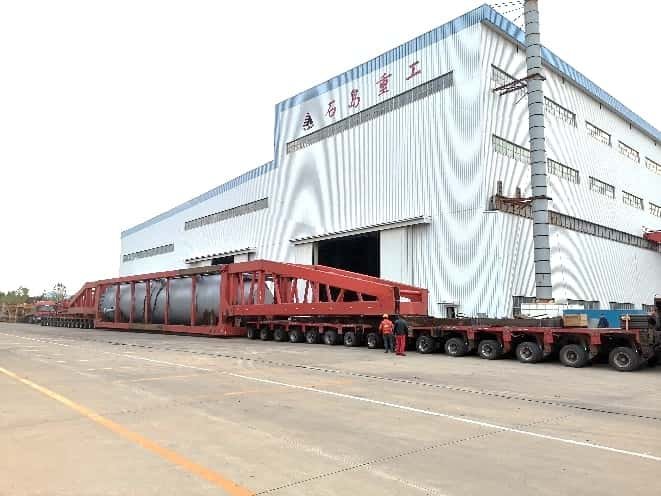
A hydrocracking reactor will eventually be opened for catalyst replacement, internal inspection, thermowell work, repairs, or revamp. Maintainability should therefore be reviewed before nozzle orientation and vessel geometry are frozen.
Important features include appropriately sized and located manways, catalyst loading and unloading nozzles, purge connections, vents, drains, access platforms, lifting points, removable internals, safe temporary support locations, and clearances for catalyst-handling equipment.
Catalyst Unloading Safety
Spent hydroprocessing catalyst can retain hydrocarbons and sulfur compounds and may be pyrophoric. The owner’s turnaround philosophy should address isolation, depressuring, draining, nitrogen purging, inert unloading, dust control, confined-space entry, temporary ventilation, and spent-catalyst containment.
Internal Removal and Replacement
Distributors, mixer trays, support grids, screens, scale baskets, outlet collectors, thermowells, and internal bolting may need repair or replacement. The supplier should provide removal sequence, component weights, lifting points, tolerances, recommended spares, and field-service requirements.
5. Inspection Access and Baseline Records
Inspection is less costly and more reliable when designed into the vessel. API’s official announcement for the latest API 510 pressure-vessel inspection code explains its role in in-service inspection, repair, alteration, and rerating. Owners should confirm the applicable edition and their jurisdictional requirements.
Before purchase, the inspection team should review weld maps, corrosion-monitoring locations, cladding or overlay zones, baseline thickness points, insulation-removal needs, nozzle access, internal lighting and entry, relief-device platforms, and the availability of advanced NDT surfaces.
| Inspection feature | Lifecycle benefit | Pre-purchase question |
|---|---|---|
| Manways and internal access | Reduce entry time and enable internals inspection | Are size, location, and obstructions suitable for personnel and equipment? |
| Baseline NDT maps | Provide comparison data for future integrity assessments | Will weld, UT, hardness, and overlay records be digitally traceable? |
| Corrosion-monitoring locations | Support consistent thickness trending | Are monitoring points defined before insulation and platforms? |
| Cladding and overlay records | Support localized repair and remaining-life assessment | Are chemistry, thickness, ferrite, PT, and repair maps included? |
| Relief-device access | Reduces recurring inspection and removal effort | Are lifting, isolation, platforms, and removal paths practical? |
| External NDT access | Improves examination quality without excessive dismantling | Can insulation and obstructions be removed locally and safely? |
6. Metallurgy, Repairability, and Remaining Life
Material selection influences future inspection intervals, operating limits, repair complexity, and remaining-life assessments. Hydrocracking reactors may use Cr-Mo or Cr-Mo-V steels, heavy forgings, stainless cladding or weld overlay, post-weld heat treatment, and extensive examination.
High-temperature hydrogen attack, temper embrittlement, hydrogen effects, creep or fatigue where applicable, overlay degradation, and process corrosion must be assessed using the actual service conditions and current project standards.
Repair Procedures Should Be Considered Before Failure
Buyers should request qualified or preplanned approaches for base-metal repairs, overlay repairs, local excavation, heat treatment, hardness control, NDT, and dimensional restoration. Some future repairs may be difficult because of vessel thickness, field heat-treatment limits, internal access, or adjacent attachments.
Reasonable Design Margin
Additional margin is not automatically valuable, and excessive thickness can increase fabrication and thermal-stress challenges. However, a justified allowance for future feed severity, corrosion, pressure, temperature, nozzle requirements, or catalyst changes can preserve options for revamp and rerating.
7. Spare Parts and Proprietary Internals
Internals can be proprietary and may have long manufacturing lead times. The purchase package should identify commissioning spares, operating spares, turnaround spares, special tools, consumables, replacement lead times, drawing access, licensing restrictions, and field supervision.
| Potential spare | Why it may be needed | Procurement decision |
|---|---|---|
| Distributor or mixer components | Erosion, distortion, cracking, or accidental damage | Store complete assembly or critical replaceable sections |
| Support screens and grids | Wear, damage during catalyst handling, or plugging | Define replacement modules and load certification |
| Thermowells and fittings | Vibration, damage, or measurement upgrades | Keep compatible spares with material and dimensional records |
| Internal bolting and gaskets | Replacement during every opening or after damage | Specify material, traceability, quantity, and storage conditions |
| Manway and nozzle closure components | Turnaround replacement and flange integrity | Confirm gasket, stud, nut, and tensioning requirements |
| Special lifting and installation tools | Safe removal of heavy internals | Include drawings, certification, preservation, and storage plan |
8. Documentation as an Asset
A complete manufacturing data book reduces future inspection, repair, alteration, and rerating cost. ASME’s Boiler and Pressure Vessel Certification program addresses certified quality-control systems, while the purchase specification should still define the exact records required for the owner.
Required documentation may include design calculations, drawings, material certificates, material and heat maps, weld maps, WPS and PQR records, welder qualifications, PWHT charts, NDT reports, PMI and hardness results, overlay records, pressure-test reports, nonconformance and repair records, code forms, internals drawings, installation procedures, spare-parts lists, and preservation records.
A complete, searchable manufacturing data book reduces future inspection and repair cost because engineers can evaluate materials, welds, heat treatment, overlay, NDT, and alterations without recreating missing baseline information.True
Documentation gaps force field verification, repeat examination, conservative assumptions, or restricted rerating. For a high-consequence reactor, data quality preserves asset value throughout its operating life.
9. Planned Versus Unplanned Maintenance
Planned turnarounds are expensive, but unplanned outages are usually much more damaging. Reactor procurement should reduce the likelihood and duration of credible failures.
| Issue | Possible cause | Lifecycle impact | Purchase-stage mitigation |
|---|---|---|---|
| Early catalyst changeout | Poor feed protection, maldistribution, inadequate hydrogen, or insufficient catalyst volume | Catalyst expense, outage, and lost production | Define feed envelope, grading, distribution, hydrogen cases, and cycle target |
| High pressure drop | Solids, coke, corrosion products, poor grading, or screen plugging | Throughput loss and higher compressor duty | Provide filtration, scale capacity, DP monitoring, and suitable supports |
| Hot spots | Weak distribution, quench mixing, damaged internals, or bed fouling | Catalyst damage, product loss, and safety risk | Use proven internals, temperature coverage, and inspection access |
| Overlay repair | Fabrication defect, corrosion, or service damage | Specialist repair, NDT, and extended outage | Specify overlay quality, records, acceptance, and repair procedures |
| Thermowell failure | Vibration, material problem, support issue, or poor location | Loss of temperature visibility and possible shutdown | Review design, support, replacement route, and spare strategy |
| Documentation gap | Incomplete vendor turnover | Conservative inspection, repeat NDT, and rerating difficulty | Make the indexed final data book a payment milestone |
10. Future Revamp Flexibility
A hydrocracking reactor may operate for decades while crude slate, feed blending, catalyst technology, hydrogen supply, product demand, and environmental requirements change. Future scenarios may include heavier feeds, more cracked stocks, higher conversion, renewable co-processing, longer run-length targets, or new catalyst systems.
Buyers should assess whether design pressure and temperature, metallurgy, catalyst volume, support loads, quench capacity, thermowell count, nozzle sizes, internals attachments, relief connections, and plot access provide reasonable flexibility. The goal is not unnecessary overdesign but avoiding obvious future constraints.
Total Cost of Ownership Bid Matrix
| Bid factor | Low-price risk | Better lifecycle criterion |
|---|---|---|
| Pressure shell and metallurgy | Minimal margin, limited repairability, or restricted future severity | Fit-for-service metallurgy with documented damage-mechanism review |
| Internals | Maldistribution, hot spots, pressure-drop growth, or proprietary delays | Proven performance, inspectability, replaceability, and spare availability |
| Catalyst access | Longer turnaround and difficult unloading | Practical nozzles, manways, purge, drains, platforms, and removal route |
| Inspection access | Higher recurring cost and longer outage | Defined internal and external NDT access with baseline records |
| Documentation | Field verification and conservative future assessment | Complete indexed, traceable, and searchable data book |
| Supplier support | Slow startup, turnaround, or repair response | Named field services, repair capability, spares, and response commitments |
| Transport and installation | Damage, route conflict, crane delay, or preservation failure | Verified route, lifting plan, shipping supports, and preservation procedure |
| Future flexibility | Early bottleneck or replacement | Documented revamp cases and justified design margins |
Questions to Ask Suppliers Before Award
- What comparable high-pressure hydrogen reactor references can be audited?
- How are catalyst cycle, bed pressure drop, quench mixing, and temperature coverage reflected in the design?
- Which internals are proprietary, and what are their replacement lead times?
- Can catalyst and all maintainable internals be removed using the proposed access and lifting plan?
- What baseline NDT, overlay, hardness, PWHT, and dimensional records will be delivered?
- Which repairs can the supplier support at site, and what specialist procedures are available?
- What commissioning, catalyst loading, turnaround, and inspection field services are included?
- Which operating or revamp cases have no design margin?
- What recommended spares should be purchased with the reactor?
- How will the final data book be indexed, reviewed, corrected, and delivered?
A capable hydrocracking reactor manufacturer should support this review with materials, fabrication, internals, inspection, documentation, logistics, and field-service evidence rather than a bare vessel price.
FAQ
What is the largest lifecycle cost for a hydrocracking reactor?
It depends on the refinery, but lost production, catalyst changeout, hydrogen and energy use, premature end of run, and unplanned repairs can outweigh the initial vessel price difference.
How can reactor design shorten a turnaround?
Appropriate manways, catalyst unloading nozzles, removable internals, lifting points, platforms, purge and drain connections, spare parts, and clear removal procedures reduce the critical path.
Why does pressure drop matter to lifecycle cost?
Rising pressure drop increases compression and pumping duty, reduces throughput, and may force shutdown before the catalyst has lost chemical activity.
Why is the manufacturing data book important?
It provides the baseline for future inspection, repair, alteration, rerating, and remaining-life assessment. Missing records can require repeat NDT or conservative operating limits.
Should buyers pay for future revamp margin?
Only when justified by credible future cases. Reasonable margin in metallurgy, pressure, temperature, nozzles, catalyst volume, internals, or access may avoid a costly bottleneck, but unnecessary overdesign can also increase cost and fabrication complexity.
What should be included in a lifecycle bid comparison?
Compare initial cost, catalyst-cycle basis, pressure drop, hydrogen and energy effects, turnaround access, inspection, spares, proprietary internals, documentation, supplier support, logistics, repairability, and future flexibility on the same technical scope.
Conclusion
Hydrocracking reactor procurement should treat lifecycle cost and maintenance as design inputs, not as concerns left for the operating team after installation. Catalyst cycle length, pressure drop, hydrogen efficiency, turnaround duration, inspection access, internals replacement, metallurgy, spare parts, documentation, repairability, and revamp flexibility determine the reactor’s real economic value.
The best-value reactor is maintainable, inspectable, catalyst-efficient, repairable, and supported throughout its service life. It protects production through reliable internals, adequate instrumentation, practical access, robust fabrication, complete baseline records, and a supplier capable of supporting installation, turnaround, and repair.
If you are sourcing hydrocracking reactors, pretreating reactors, guard beds, hot separators, heat exchangers, or other custom pressure vessels for refinery and EPC projects, you can discuss your project requirements with an engineering and manufacturing team. Sharing the feed envelope, catalyst plan, hydrogen conditions, turnaround philosophy, inspection requirements, and future revamp cases will support a more useful lifecycle evaluation.