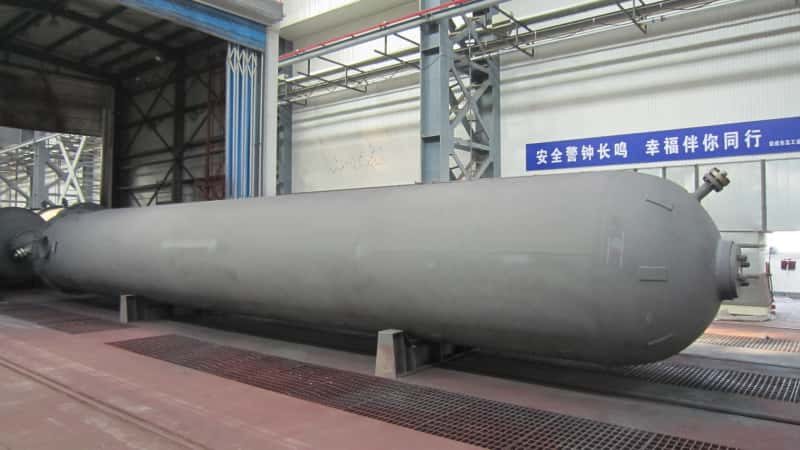

For EPC contractors and industrial project buyers, pressure vessel procurement does not end when fabrication is complete. Before shipment, the Factory Acceptance Test, or FAT, helps confirm whether the vessel matches approved drawings, project specifications, inspection requirements, documentation scope, and delivery expectations.
A clear pressure vessel FAT checklist can reduce rework, documentation gaps, delayed shipment, and site acceptance problems. It also helps buyers compare what was ordered with what is actually ready to leave the workshop.

For technical context, ASME BPVC Section VIII Division 1 is a common reference for pressure vessel construction requirements, depending on project code and jurisdiction. The U.S. EPA’s pressure vessel rupture hazard alert also reinforces why proper design, inspection, testing, repair, and documentation matter for pressure equipment safety.
Pressure vessel FAT is only a final visual inspection before shipment.False
A practical FAT should review drawings, nameplate data, materials, welding records, NDT reports, pressure test records, dimensions, coating, packing, and final documentation.
The FAT checklist should be agreed before fabrication begins.True
Inspection hold points, witness points, documentation scope, NDT requirements, pressure testing, and third-party inspection should be defined before manufacturing starts, not discovered at shipment time.
What Is Pressure Vessel FAT?
Pressure vessel FAT is a pre-delivery inspection and review process carried out at the manufacturer’s facility. It may involve the buyer, EPC contractor, owner representative, third-party inspector, authorized inspection body, and manufacturer. The exact scope depends on the purchase order, design code, project specification, inspection and test plan, and local regulatory requirements.
For custom pressure vessels, FAT usually focuses on whether the vessel has been manufactured according to approved drawings, material requirements, welding procedures, inspection procedures, test records, coating requirements, packing instructions, and final document requirements.
Why FAT Matters for EPC Procurement
A pressure vessel may look complete from the outside, but FAT helps verify the details that affect site installation, registration, commissioning, and owner acceptance. For overseas projects, FAT is especially important because correcting a problem after shipment can be expensive and slow.
EPC buyers should use FAT to check drawing data, nameplate information, material traceability, welding records, NDT reports, dimensional inspection, pressure test records, coating, nozzle protection, packing, loading preparation, and the final documentation package.
| FAT Area | What to Check | Why It Matters |
|---|---|---|
| Drawings | Approved revision, tag number, dimensions, nozzles, supports, and orientation | Prevents site fit-up problems and wrong-interface delivery |
| Nameplate | Design pressure, temperature, material, code marking, serial number, and project data | Supports registration, traceability, and owner acceptance |
| Materials | Material certificates, heat numbers, pressure-retaining parts, forgings, flanges, nozzles | Confirms material compliance and traceability |
| Welding and NDT | WPS, PQR, welder qualification, RT, UT, MT, PT, visual inspection reports | Confirms weld quality and inspection completion |
| Pressure testing | Test medium, test pressure, holding time, gauge calibration, result, and procedure | Verifies pressure test record before delivery |
| Coating and packing | Surface preparation, dry film thickness, flange protection, preservation, shipping marks | Reduces corrosion, transport damage, and site storage issues |
| Documentation | Final data book, inspection reports, test records, certificates, as-built drawings | Supports handover, audit, future inspection, and maintenance |
1. Drawing and Nameplate Review
The approved drawing should be compared with the completed vessel. EPC buyers should check equipment tag number, design pressure, design temperature, material grade, nozzle orientation, support type, overall dimensions, lifting points, internal components, coating notes, and project revision status.
The nameplate should match the required project information. If a specific code stamp, marking, serial number, inspection body, or certification requirement is included in the purchase order, it should be confirmed before fabrication and reviewed during FAT.
2. Material Traceability
Material traceability is one of the most important FAT items. Buyers should confirm that pressure-retaining parts match the specified material certificates. This may include shell plates, heads, nozzles, flanges, reinforcement pads, forgings, manways, supports attached to the pressure boundary, and welding consumables where required.
A reliable custom pressure vessel manufacturer should maintain traceability from material receiving to final fabrication records. If alloy materials are used, the buyer may also request positive material identification according to the inspection plan.
3. Welding and NDT Records
Welding quality should be reviewed through welding procedure specifications, procedure qualification records, welder qualification records, weld maps, heat treatment records if applicable, and NDT reports. Depending on the project, NDT may include radiographic testing, ultrasonic testing, magnetic particle testing, liquid penetrant testing, or other approved methods.
The FAT checklist should not assume one fixed NDT percentage for every vessel. The required NDT scope should be based on the applicable code, joint category, material, thickness, service condition, and project specification.

4. Pressure Test Review
Hydrostatic testing is commonly used for many pressure vessels, while pneumatic testing may be used only when appropriate and approved by the project requirements. Pneumatic testing can involve higher stored energy risk and should be controlled carefully by qualified personnel under approved procedures.
During FAT, buyers should confirm the test medium, test pressure, holding time, gauge range, gauge calibration, test procedure, ambient conditions where relevant, inspection record, and acceptance result. The final test requirement should follow the applicable code and approved project documents.
5. Dimensional and Nozzle Inspection
Even when pressure testing is acceptable, incorrect nozzle orientation or support dimensions can cause site installation problems. EPC buyers should check overall length, diameter, nozzle position, nozzle projection, flange rating, flange facing, bolt-hole orientation, support saddle or skirt dimensions, lifting lug position, manway orientation, instrument connections, and shipping dimensions.
This is especially important for large vessels, industrial storage tanks, modular packages, replacement vessels, and export projects where field modification is difficult.
| Dimensional Item | FAT Review Point |
|---|---|
| Overall size | Length, diameter, height, tangent line dimensions, transport envelope |
| Nozzle orientation | Angle, elevation, projection, flange facing, bolt-hole orientation, service tag |
| Supports | Saddle spacing, skirt diameter, base plate, anchor bolt holes, lifting attachments |
| Manways and internals | Access clearance, cover swing, demister, baffles, trays, distributors, or internal fittings |
| Shipping readiness | Lifting points, center of gravity if required, transport supports, flange protection |
6. Surface Treatment and Coating
Surface preparation and coating should be checked before shipment. Buyers should review blasting grade, primer, topcoat, dry film thickness, coating repair areas, color, coating reports, and protection of machined surfaces. For insulated vessels, offshore service, chemical plants, petrochemical plants, and corrosive environments, coating requirements may vary significantly by site condition and owner specification.
If the vessel has internal lining, rubber lining, glass-flake lining, stainless overlay, pickling, passivation, or special cleanliness requirements, FAT should confirm that inspection records and acceptance criteria are complete.
7. Packing, Loading, and Shipping Readiness
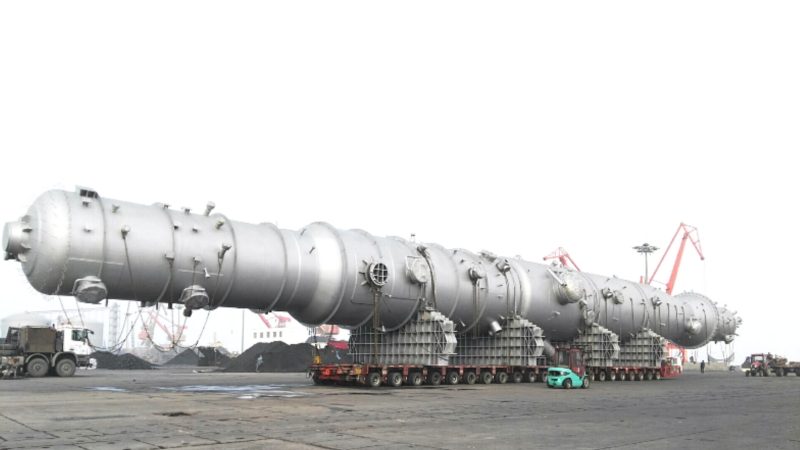
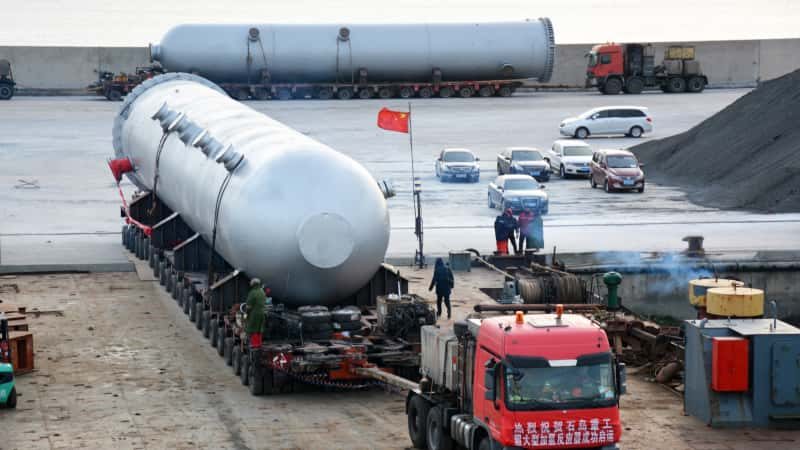
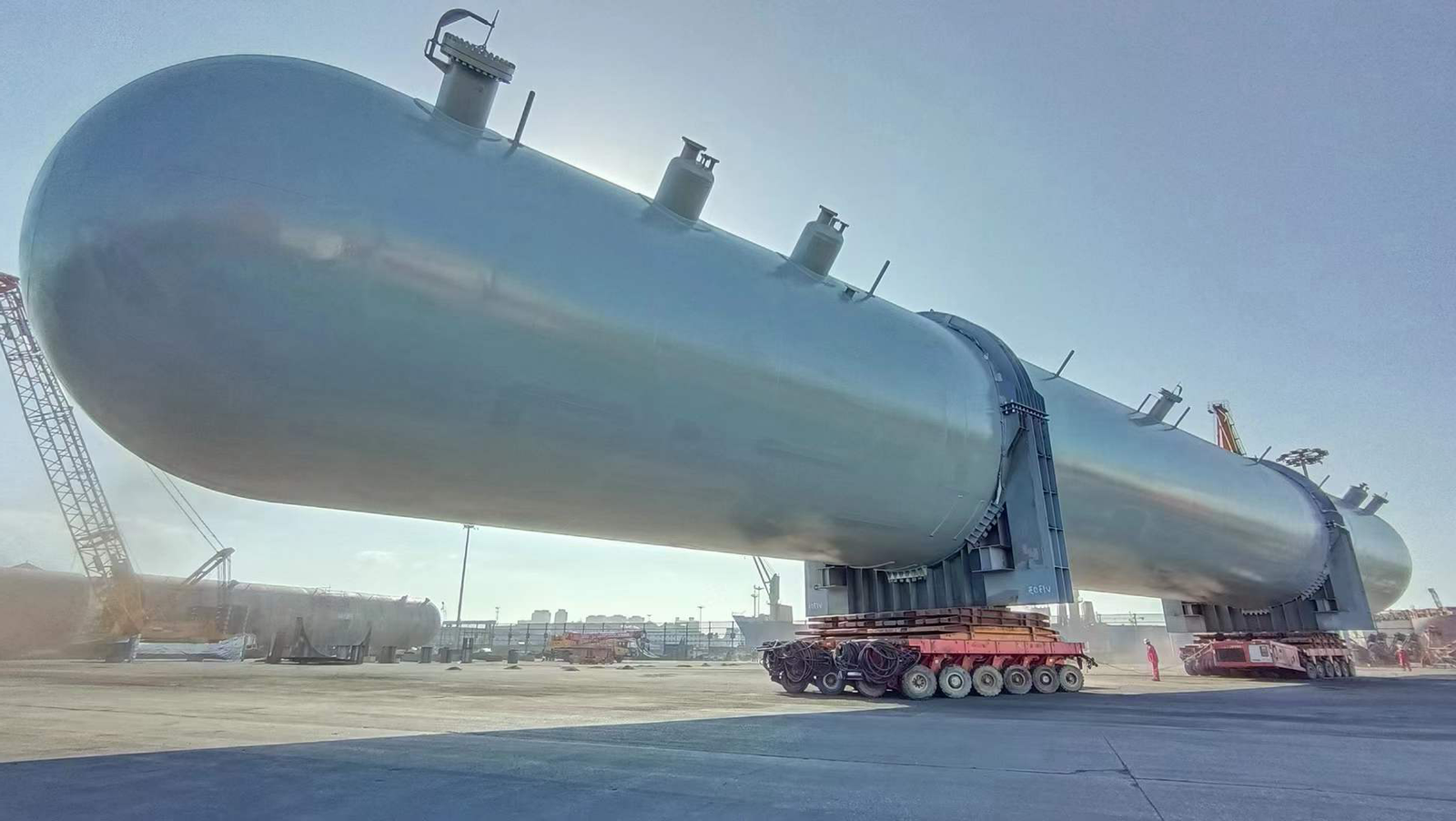
Large pressure vessels require careful delivery planning. FAT should confirm nozzle covers, flange protection, internal cleanliness, preservation, lifting points, shipping saddles, packing marks, loose part list, export documentation, and loading method.
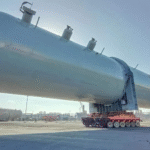
A large-scale pressure vessel manufacturer should be able to coordinate manufacturing, inspection, coating, loading, and export delivery as part of the project workflow. For EPC buyers, the final FAT should connect workshop acceptance with actual site delivery requirements.
Common FAT Mistakes
One common mistake is treating FAT as a simple visual inspection. For pressure vessels, the document package is as important as the physical vessel. Missing material certificates, incomplete NDT reports, wrong drawing revisions, or absent test records can delay site acceptance even if the vessel looks complete.
Another mistake is reviewing FAT too late. Inspection hold points, witness points, and third-party inspection requirements should be agreed before fabrication begins. A third mistake is not checking nozzle orientation carefully. A small orientation error can create major installation issues at site.
Practical FAT Checklist for EPC Buyers
| Checklist Item | Buyer Action | Evidence to Request |
|---|---|---|
| Drawing review | Compare vessel with approved drawing and revision | Approved GA drawing and as-built drawing |
| Material traceability | Check pressure-retaining parts against certificates | MTCs, material list, heat number records, PMI if required |
| Welding records | Confirm qualified procedures and welders | WPS, PQR, welder qualification, weld map |
| NDT | Review required test reports and acceptance | RT, UT, MT, PT, visual inspection reports |
| Pressure test | Confirm procedure, test pressure, gauges, holding time, and result | Hydrostatic or pneumatic test record |
| Coating | Check surface preparation, DFT, repairs, and protection | Coating inspection report and photos if required |
| Final documents | Confirm handover package is complete before release | Final data book, certificates, reports, packing list |
Why Manufacturer Capability Matters
FAT quality depends on the manufacturer’s internal process control. For EPC buyers, it is useful to work with a supplier that can support drawing review, material procurement, welding fabrication, NDT coordination, pressure testing, coating, heavy loading, and export delivery.
WSHI supports project-based manufacturing for pressure vessels for petrochemical plants, chemical plants, oil and gas projects, and new energy applications. Buyers can also download the pressure vessel catalog when preparing preliminary procurement documents.
FAQ
What does FAT mean for pressure vessels?
FAT means Factory Acceptance Test. It is a pre-delivery inspection process used to confirm whether the vessel meets drawings, specifications, inspection records, testing requirements, packing requirements, and documentation requirements.
Is hydrostatic testing always required?
Hydrostatic testing is common for many pressure vessels, but the final test method should follow the applicable code, project specification, and approved inspection plan. Pneumatic testing should be used only when approved and properly controlled.
What documents should buyers check during FAT?
Buyers should review drawings, material certificates, welding records, NDT reports, pressure test records, dimensional inspection reports, coating records, packing documents, certificates, and the final data book.
Who should attend the FAT?
Depending on the project, FAT may involve the buyer, EPC contractor, owner representative, manufacturer, third-party inspector, or authorized inspection body.
When should the FAT checklist be agreed?
The FAT checklist should be agreed before fabrication begins, ideally through the inspection and test plan. This helps define hold points, witness points, documentation scope, and acceptance criteria early.
Conclusion
A practical pressure vessel FAT checklist helps EPC buyers confirm fabrication quality before shipment. The checklist should cover drawings, materials, welding, NDT, pressure testing, dimensions, coating, documentation, packing, and delivery preparation.
If you are preparing a pressure vessel procurement package, you can discuss your project requirements with an engineering team and share drawings, specifications, inspection requirements, FAT expectations, and delivery terms for manufacturing feasibility review.