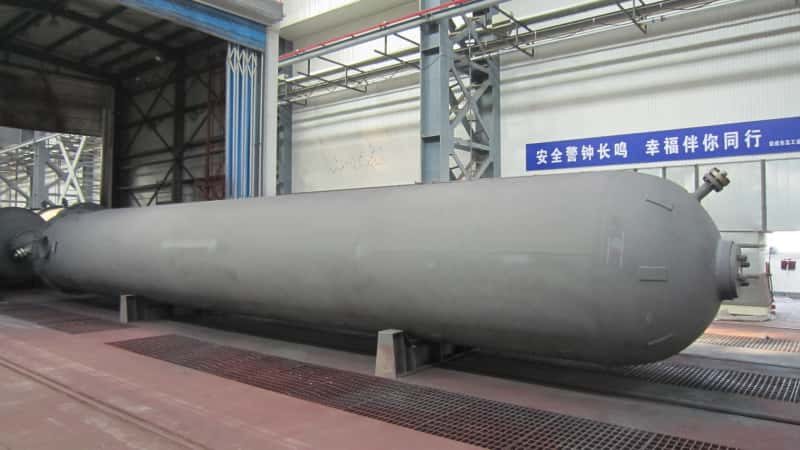

How Do EPC Buyers Specify Vacuum Conditions for Process Columns and Pressure Vessels?
Vacuum conditions can change the way process columns, evaporator vessels, separators, and pressure vessels are designed and fabricated. For EPC buyers, the risk is assuming that a vessel designed for internal pressure can automatically handle vacuum or external pressure. In reality, vacuum pressure vessel design may affect shell thickness, stiffening, head design, nozzle reinforcement, testing method, inspection scope, material selection, and delivery documentation. Clear RFQ information helps avoid late design changes, fabrication delays, and site installation problems.
WSHI focuses on complete project-based equipment, including custom pressure vessels, process columns, evaporator-related vessels, industrial heat exchangers, separators, and large storage tanks above 1,000 liters. For vacuum service, the complete vessel boundary should be reviewed before fabrication, including pressure rating, external pressure case, material, supports, nozzles, inspection, testing, coating, packing, and delivery.

A vessel that is safe for internal pressure is automatically safe for vacuum service.False
Vacuum service creates external pressure and buckling risk, so shell geometry, stiffening rings, nozzle openings, supports, testing, and code checks must be reviewed for the actual vacuum case.
Vacuum pressure vessel procurement should define external pressure, testing, inspection, and documentation before fabrication.True
Late changes to vacuum rating, stiffening, leak testing, or NDE scope can affect shell design, welding, inspection, coating, delivery, and site acceptance.
What Is a Vacuum Pressure Vessel?
A vacuum pressure vessel is a vessel designed to operate below atmospheric pressure, or to withstand external pressure when the inside of the vessel is under vacuum while atmospheric or process pressure acts outside the shell. Vacuum service can appear in distillation columns, evaporators, condensers, receivers, drying systems, solvent recovery units, petrochemical process vessels, and environmental treatment equipment.
In procurement, “vacuum” should not be treated as a casual operating note. It should be specified as a design condition. A vessel may see vacuum during normal operation, steam-out, cooling after cleaning, pump-down, emergency shutdown, condensation, or process upset. If this condition is not included in the datasheet, the vessel may be under-specified.
Why Vacuum Conditions Matter in EPC Procurement
Vacuum service creates a different mechanical challenge from internal pressure. Internal pressure tends to place the shell in tension, while external pressure can create shell instability or buckling risk. Large-diameter, thin-wall vessels and tall columns can be especially sensitive to external pressure.
The official ASME BPVC Section VIII Division 1 page describes requirements for pressure vessel construction, including design, fabrication, inspection, testing, and certification. External pressure design should always follow the applicable project code, owner specification, and qualified engineering review. For technical background, PVEng’s external pressure calculation overview also explains why vacuum and external pressure cases need careful checking.
For procurement, this means vacuum service must be communicated early. It can influence material thickness, stiffening rings, fabrication sequence, dimensional tolerance, inspection planning, pressure testing, and shipment readiness.
Where Vacuum Vessels Are Used
| Application | Typical equipment | Buyer review focus |
|---|---|---|
| Vacuum distillation | Vacuum columns, receivers, condensers | External pressure, column height, nozzle loads, internals, supports, transport |
| Evaporation and concentration | Evaporator bodies, vapor-liquid separators, condensate vessels | Vacuum level, temperature, corrosion, fouling, heat transfer interface |
| Solvent recovery | Receivers, condensers, recovery vessels | Leak tightness, material compatibility, vapor handling, cleaning method |
| Chemical processing | Drying, degassing, stripping, reaction support vessels | Operating cases, vacuum protection, nozzles, inspection and documentation |
Vacuum Distillation Columns
Vacuum distillation columns are used when separation must occur at lower boiling temperatures. They may appear in refinery vacuum units, chemical purification, solvent recovery, and heat-sensitive product processing.
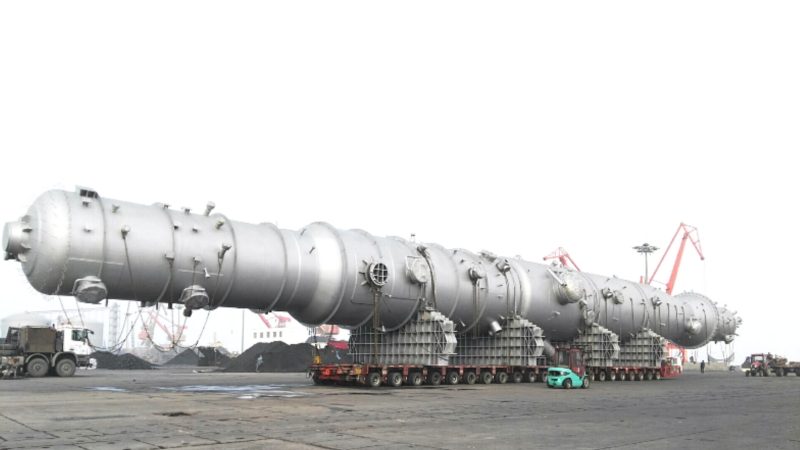
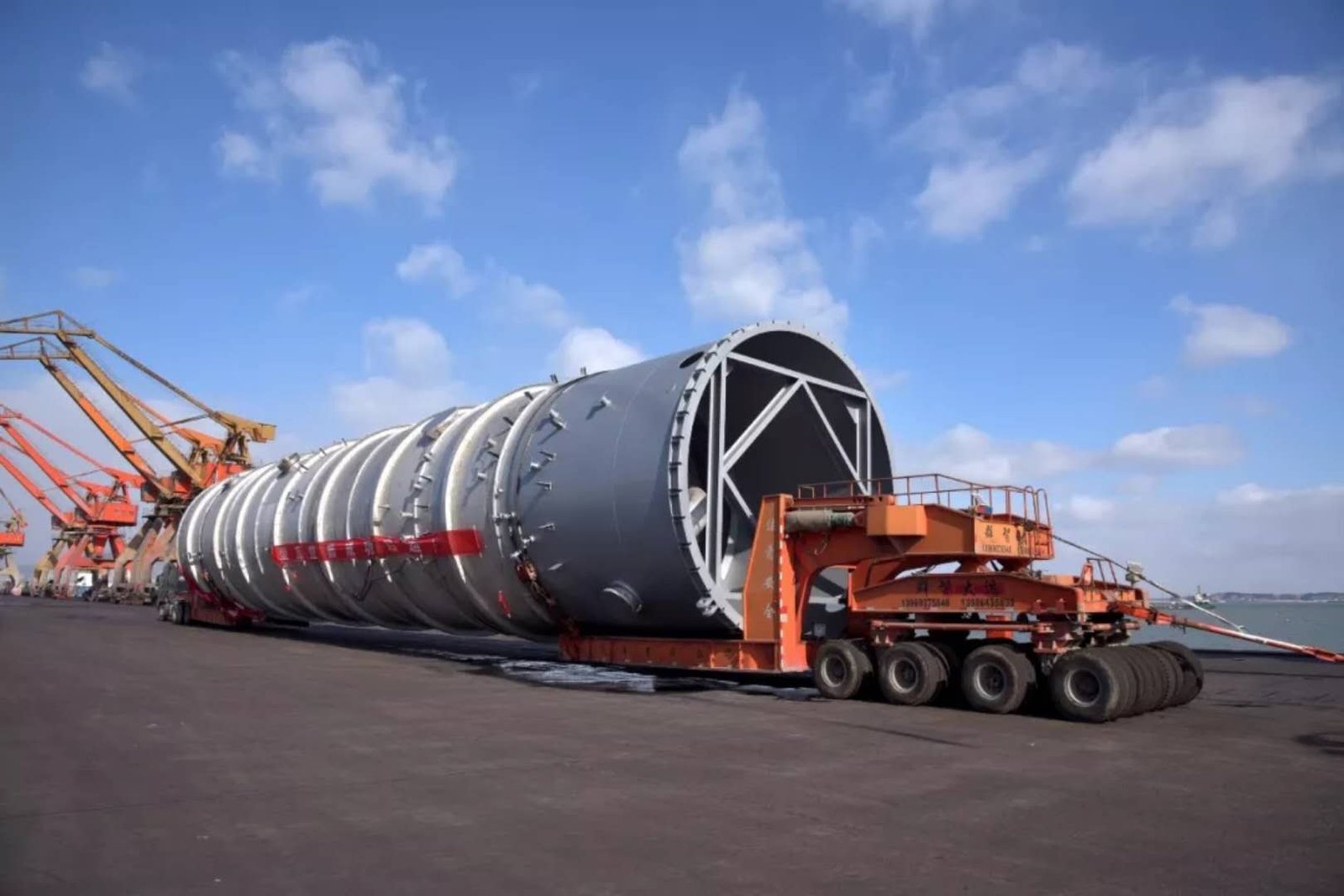
A custom distillation column operating under vacuum should be reviewed for external pressure, shell stability, nozzle loads, support design, transport length, lifting points, and site installation constraints.
Evaporator Vessels
Evaporators may operate under vacuum to reduce boiling temperature, improve thermal efficiency, or protect heat-sensitive fluids. In industrial wastewater, chemical concentration, brine treatment, and solvent recovery projects, vacuum conditions may apply to evaporation bodies, vapor-liquid separation vessels, condensers, and condensate systems.
When evaporation projects also require fabricated heat transfer equipment, buyers can review industrial heat exchangers and shell and tube heat exchangers as part of the complete system boundary.
Condensers and Receivers
Condensers and receivers may see vacuum during operation or shutdown. If hot vapor condenses inside a closed vessel, internal pressure can fall quickly. EPC buyers should confirm vacuum relief philosophy and design basis with the process design party before releasing equipment for fabrication.
Chemical Process Vessels
Vacuum may be used for drying, degassing, solvent removal, stripping, reaction support, or process stabilization. These vessels should be specified as complete engineered pressure equipment, including pressure boundary, materials, nozzles, supports, inspection, testing, coating, documentation, and delivery.
Key Information Buyers Should Provide
Vacuum Level and Design Case
The RFQ should state the expected operating vacuum and the design vacuum. Terms such as “slight vacuum,” “full vacuum,” or “vacuum service” should be clarified with numerical values. Buyers should also state whether vacuum occurs during normal operation, startup, shutdown, steam-out, cleaning, or emergency conditions.
Useful inputs include operating pressure range, design pressure, design external pressure or design vacuum, minimum operating pressure, temperature during vacuum condition, duration of vacuum exposure, startup and shutdown cases, cleaning or steam-out conditions, and the vacuum relief or protection philosophy.
Temperature During Vacuum
Vacuum and temperature should be reviewed together. A vessel may see vacuum at ambient temperature, elevated temperature, or low temperature depending on the process. Temperature affects material properties, allowable stress, thermal expansion, corrosion behavior, and testing requirements.
Vessel Geometry
External pressure sensitivity depends on vessel diameter, length, wall thickness, head type, unsupported shell length, openings, and stiffening arrangement. Tall columns, large evaporator bodies, and wide vessels may require more careful external pressure review than compact pressure vessels.
For process towers and columns, buyers should provide column height, diameter, support type, nozzle orientation, platform interface, lifting requirements, and transportation limits.
Material and Corrosion Allowance
Material selection should consider process medium, temperature, pressure, vacuum condition, corrosion allowance, cleaning method, and owner specifications. Carbon steel, stainless steel, duplex stainless steel, or other materials may be considered depending on the service, but the final material choice should follow project engineering review.
Corrosion allowance matters because external pressure strength can be affected by remaining wall thickness. Buyers should define corrosion allowance, lining or coating requirements, and inspection expectations before quotation.
Design Factors That Affect Fabrication
External Pressure and Buckling Risk
The external pressure case should be included in the mechanical design basis. The manufacturer and design party should review whether the vessel is intended for full vacuum, partial vacuum, temporary vacuum during cleaning, or another defined case. This is especially important for large-diameter vessels, long shells, tall columns, and thin-wall equipment.
Stiffening Rings and Structural Reinforcement
Stiffening rings may be required when shell geometry and external pressure conditions demand additional resistance to buckling. Their size, spacing, weld details, inspection access, and coating interface should be considered before fabrication begins.
Stiffeners should be treated as part of the complete vessel design, not as small accessory items. Their placement can affect nozzles, insulation, supports, lifting, transport saddles, and maintenance access.
Nozzle and Opening Reinforcement
Nozzles, manways, vents, drains, instrument connections, and large openings can affect local vessel strength. EPC buyers should confirm nozzle orientation, projection, reinforcement details, flange rating, and access needs with the piping and maintenance teams before drawings are released for fabrication.
Welding, NDE, and Dimensional Control
Vacuum pressure vessel manufacturing requires careful dimensional control and fabrication discipline. Shell roundness, weld quality, stiffener fit-up, nozzle reinforcement, support alignment, and final dimensions may affect acceptance.
General pressure vessel standards references, such as the OSHA pressure vessel standards page, can help buyers identify broader regulatory context, but the actual inspection plan should follow the applicable project code and owner requirements.
Manufacturing and Quality Control Considerations
A typical quality plan may include material traceability, welding procedure qualification, welder qualification, fit-up inspection, dimensional inspection, nondestructive examination where specified, pressure or leak testing where applicable, surface treatment inspection, and final documentation.
As a large-scale pressure vessel manufacturer, WSHI supports project-based manufacturing for complete industrial equipment, including custom pressure vessels, process columns, heat exchangers, evaporator-related vessels, and large industrial storage tanks above 1,000 liters.
| Quality item | What EPC buyers should confirm | Why it matters |
|---|---|---|
| Approved drawings | Latest revision, vacuum condition, nozzle orientation, supports | Prevents fabrication based on outdated information |
| Material control | Material certificates, traceability, corrosion allowance | Supports code compliance and service compatibility |
| Welding control | WPS, PQR, welder qualifications, repair procedure | Reduces pressure-boundary and leak risk |
| NDE and inspection | RT, UT, MT, PT, visual and dimensional checks where specified | Confirms fabrication quality against the ITP |
| Testing | Hydrostatic, pneumatic, leak, or vacuum test scope as specified | Supports acceptance before shipment |
| Final data book | Drawings, certificates, test reports, inspection records | Supports commissioning, audit, and future maintenance |
Testing and Inspection Questions
Vacuum-related testing should be specified by the project code, owner requirements, and engineering design. Hydrostatic testing, pneumatic testing, leak testing, or other verification methods may be required depending on the vessel and project requirements.
EPC buyers should ask whether the vessel is designed for full vacuum or partial vacuum, what code and edition apply, what NDE scope is required, whether leak testing is required, what pressure or vacuum test method is specified, who witnesses the test, what documents are needed before shipment, and whether vacuum relief or protection devices are handled by the EPC package.
The manufacturer should not replace the process safety authority. Vacuum protection, relief devices, interlocks, and operating procedures should be confirmed by the process designer, EPC contractor, owner, and applicable authority.
Common Procurement Mistakes
One common mistake is writing “vacuum service” without a numerical design basis. This creates uncertainty for mechanical design and quotation comparison.
Another mistake is focusing only on operating pressure. A vessel may normally operate at mild vacuum but experience more severe vacuum during startup, shutdown, cooling, or cleaning.
A third mistake is ignoring external loads. Nozzle loads, wind, seismic, platforms, insulation, and transport loads can interact with vessel design, especially for tall columns and large vessels.
A fourth mistake is treating internals or accessories as separate small purchases. For WSHI’s equipment scope, these items should only be discussed as part of the complete vessel, column, evaporator, or process equipment package.
What Should EPC Buyers Prepare Before RFQ?
| RFQ information | Recommended detail |
|---|---|
| Process datasheet | Service description, medium, operating cases, required equipment duty |
| Pressure conditions | Operating pressure, design pressure, design vacuum or external pressure |
| Temperature conditions | Operating and design temperature, steam-out, cleaning, shutdown cases |
| Vessel geometry | Diameter, length, height, head type, support type, lifting requirements |
| Materials | Material grade, corrosion allowance, coating, lining, insulation allowance |
| Nozzles and interfaces | Nozzle schedule, orientation, projection, instrument and piping interfaces |
| Inspection and testing | NDE scope, hydrotest, leak test, vacuum test, third-party inspection |
| Delivery scope | Packing, preservation, transport limits, destination, documentation package |
If the project is still in FEED or early design, preliminary data is still useful. Early discussion can help identify external pressure risks, large-diameter fabrication issues, transport constraints, and documentation requirements.
Conclusion
Vacuum conditions should be specified clearly when ordering process columns, evaporator vessels, separators, and custom pressure vessels. External pressure, temperature, geometry, material, corrosion allowance, testing, inspection, and delivery boundary all influence the final equipment design and procurement schedule.
If you are preparing a vacuum distillation, evaporation, solvent recovery, chemical processing, petrochemical, or environmental engineering project, you can share your datasheets, drawings, vacuum conditions, operating pressure, temperature, medium composition, material requirements, inspection scope, and delivery terms with WSHI. Our engineering and manufacturing team can help discuss the feasibility of custom pressure vessels, vacuum process columns, evaporator-related vessels, heat exchangers, and large industrial storage tanks for your project requirements. You can also download the pressure vessel catalog before preparing your RFQ, or contact our engineering team to discuss your equipment scope.
FAQ
What is a vacuum pressure vessel?
A vacuum pressure vessel is designed to withstand external pressure when the internal pressure is below atmospheric pressure. It may be used in distillation, evaporation, condensation, drying, degassing, solvent recovery, or chemical processing.
Is vacuum design different from internal pressure design?
Yes. Internal pressure and external pressure create different mechanical conditions. External pressure can create buckling risk, so vessel geometry, wall thickness, stiffening, temperature, and code requirements must be reviewed carefully.
What information should buyers provide for a vacuum vessel quotation?
Buyers should provide operating vacuum, design vacuum, temperature, medium composition, vessel dimensions, material requirements, corrosion allowance, drawings, applicable standards, NDE scope, testing requirements, and delivery terms.
Can a pressure vessel automatically withstand full vacuum?
Not necessarily. A vessel designed for internal pressure should not be assumed suitable for full vacuum unless external pressure or vacuum design has been included and verified according to the applicable project code.
What equipment commonly uses vacuum conditions?
Vacuum conditions may apply to vacuum distillation columns, evaporator vessels, condensers, receivers, solvent recovery vessels, dryers, separators, and certain chemical process vessels.