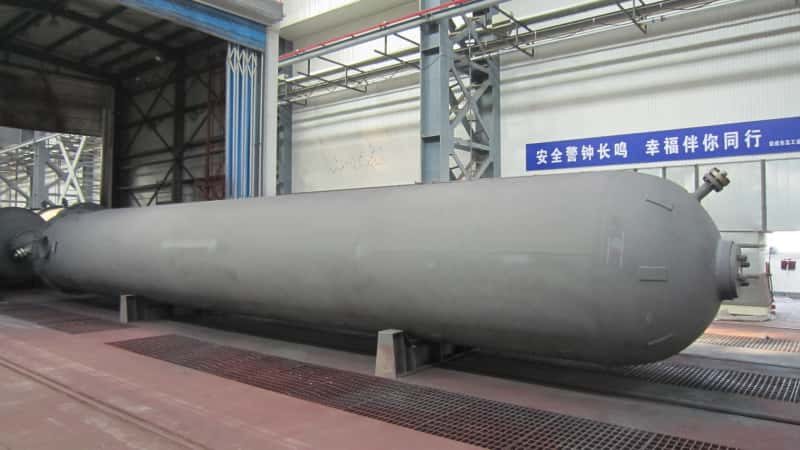

Yes, one industrial reactor can sometimes manufacture several chemical products in separate production campaigns. However, shared capacity is only practical when the complete reactor system can meet each product’s process, material, cleaning, and safety requirements. Matching the largest batch volume and highest operating temperature is not enough.
For chemical manufacturers and EPC buyers, a multipurpose chemical reactor should be specified against a defined product portfolio. The purchasing decision is not simply whether several recipes fit inside one vessel. It is whether each approved process can operate reliably, whether changeovers are manageable, and whether shared equipment remains commercially sensible after cleaning and scheduling losses are considered.
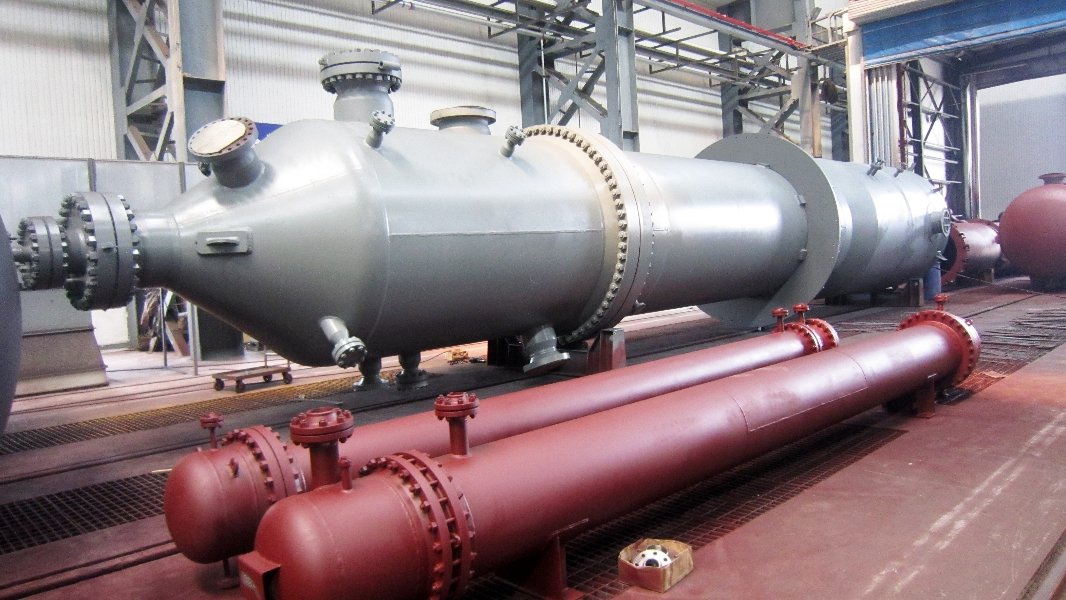
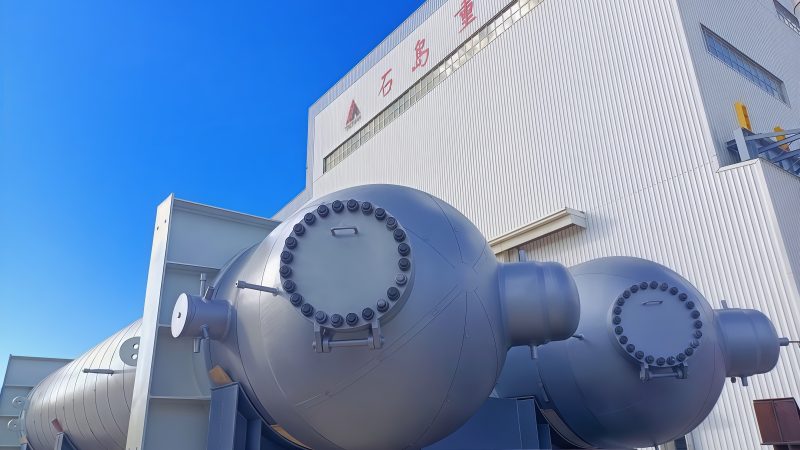
Representative manufacturing photograph from WSHI’s image library, not evidence of a particular multiproduct reactor installation.
What Is a Multipurpose Chemical Reactor?
A multipurpose chemical reactor is a reaction vessel intended for more than one defined process or product campaign. It may serve a specialty-chemical facility producing different grades, a fine-chemical plant running seasonal campaigns, or a manufacturing operation with a changing but controlled product mix.
“Multipurpose” does not mean universally compatible. The approved operating envelope still has boundaries. Different products may require different batch sizes, heating and cooling profiles, mixing performance, vapor handling, and cleaning methods. These requirements must be assessed together before the vessel and its associated equipment are specified.
Buyers considering custom pressure vessels should distinguish mechanical flexibility from process suitability. A vessel’s pressure and temperature ratings do not establish that it can safely carry out a new reaction.
Start With a Product-by-Product Requirements Matrix
Instead of submitting one combined datasheet containing only maximum values, prepare a separate operating case for every proposed product. Describe the reaction stages, materials present, batch quantity, operating conditions, and relevant physical properties. Identify which information is confirmed and which remains under development.
The matrix should cover charging, reaction, heating, cooling, any solvent removal, discharge, and cleaning. Where composition, viscosity, or phase distribution changes during a batch, provide the available range rather than only the starting condition. This helps prevent a quotation from being based on an easy operating stage while overlooking the stage that determines equipment suitability.
Ask the process team to identify the limiting case for each function. One product may determine corrosion resistance, another peak cooling demand, and another minimum workable batch volume. These cases do not necessarily occur together, so the equipment specification should preserve their actual combinations rather than construct an unrealistic “maximum everything” operating case.
Check the Main Limits on Shared Equipment
Material Compatibility Across All Campaigns
The selected construction material must be reviewed against reactants, solvents, catalysts, intermediates, products, impurities, and cleaning agents. Compatibility should reflect concentration and temperature throughout the process, including credible residual mixtures during changeover.
A stainless-steel designation alone is not a compatibility assessment. Where corrosion data are incomplete, the buyer should obtain specialist materials advice and determine whether testing is necessary. If a lining or other corrosion-resistant construction is proposed, its suitability for the operating and cleaning conditions also needs confirmation. Do not assume that the manufacturer offers a particular lining technology without checking.
Minimum and Maximum Working Volume
Total vessel volume is different from usable batch volume. A smaller batch may not provide the liquid coverage needed for the intended mixing or heat-transfer arrangement. A larger batch may leave insufficient space for expansion, foaming, vapor disengagement, or process additions.
Request a justified working-volume range for each product rather than a universal filling percentage. A vessel selected for the largest campaign can be an inefficient or unsuitable choice for substantially smaller campaigns. Buyers should compare the actual product mix with the proposed operating range before treating one large reactor as a replacement for several differently sized units.
Mixing and Process Performance
Changes in viscosity, solids loading, or gas-liquid behavior can alter the mixing duty. A configuration suitable for a readily mixed liquid may not provide the same performance for a viscous product or a suspension.
Specify the required process outcomes and available supporting data. Mixing equipment, where included, should be assessed as part of the complete reactor package. Responsibility for its selection and performance should be explicit; purchasing a fabricated vessel does not automatically include verification of every mixing-dependent process result.
Heating and Cooling Must Be Reviewed for Every Recipe
A multipurpose reactor needs more than enough heating capacity to reach a set temperature. Each product may have a different heat-release profile, cooling requirement, temperature sensitivity, and acceptable batch duration. The available utility conditions also matter, particularly when other equipment competes for the same cooling supply.
HSE’s reaction and product testing guidance explains that literature reviews and calculations do not replace appropriate chemical hazard testing. It also identifies cooling failure, loss of agitation, and reactant-addition conditions among the scenarios considered in batch-reaction hazard assessment.
For procurement, request process-approved heating and cooling duties with their assumptions. Where an external circuit is proposed, define the associated shell-and-tube heat exchanger, circulation responsibilities, cleaning requirements, and interfaces. Greater exchanger area alone does not demonstrate adequate reaction control.
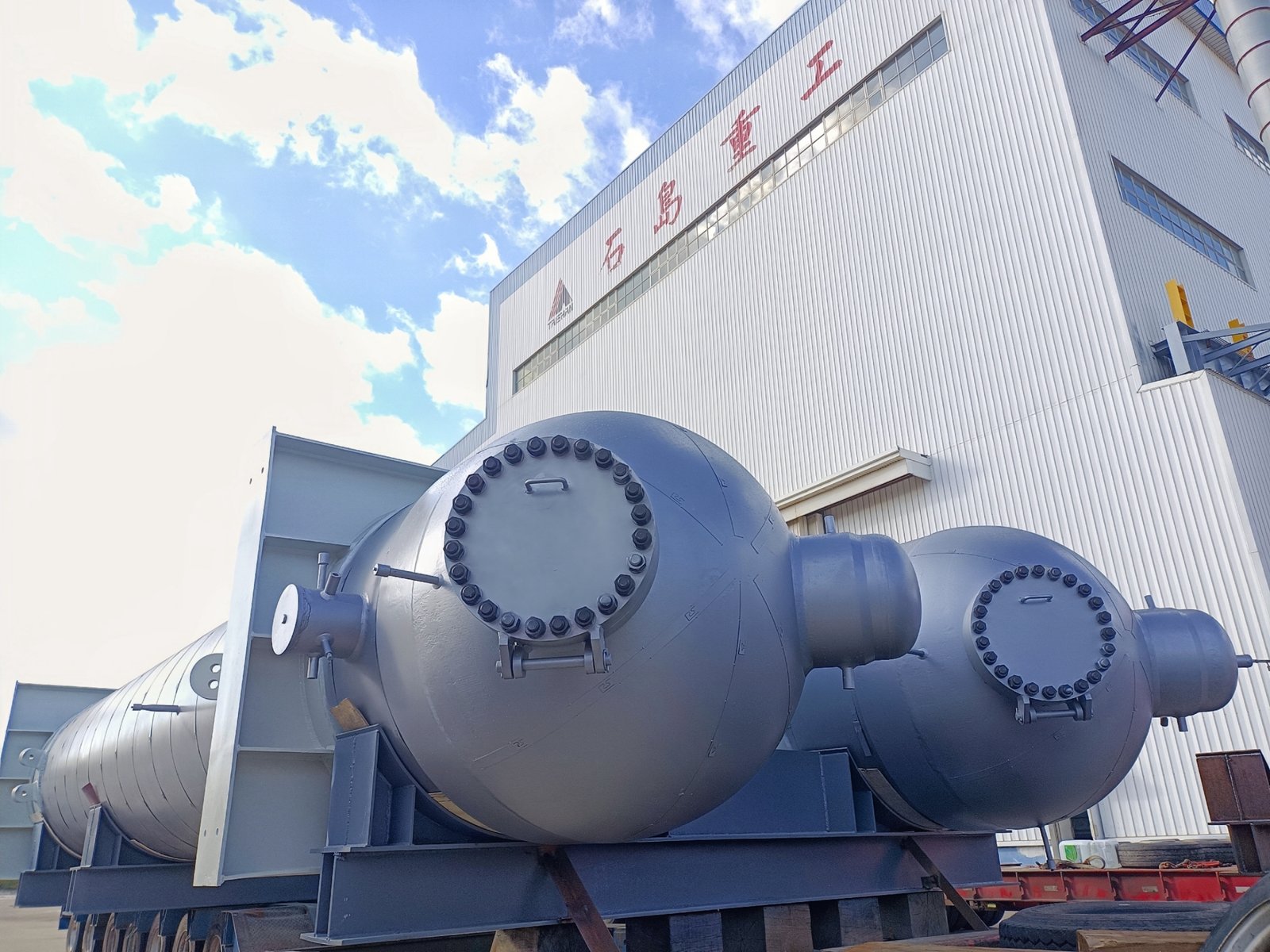
Representative heat-transfer equipment photograph. A reactor heating or cooling duty requires a separate project-specific assessment.
Cleaning and Changeover Can Determine the Business Case
Define What “Clean Enough” Means
Product carryover can affect the next campaign’s quality or introduce chemical incompatibility. The buyer should establish acceptable residual limits and a suitable verification method with the process and quality teams. Visual cleanliness alone may not establish readiness for a different product.
The cleaning assessment should consider the full wetted equipment boundary, including connected circulation and condensation equipment where applicable. Drainability, access, surface condition, and residue behavior should inform the design. Any requirement for validated cleaning must be stated explicitly rather than inferred from a general promise of easy maintenance.
Include Changeover Time and Waste
Shared equipment can reduce the number of vessels purchased, but each product switch may require draining, cleaning, inspection, drying, verification, and preparation. These activities consume production time and can generate solvent or wastewater treatment demands.
Compare realistic campaign schedules, not only vessel purchase prices. Long campaigns of compatible products may support shared equipment, while frequent switches between difficult-to-clean products may weaken the case. HSE’s COSHH risk-assessment guidance also highlights cleaning as an activity that can create exposure risks. Its UK regulatory context should not be presented as a universal compliance requirement.
When Is a Dedicated Reactor the Better Choice?
Dedicated equipment deserves consideration when the proposed products have incompatible materials requirements, difficult residual-contamination limits, substantially different batch sizes, or conflicting production schedules. It may also be preferable when a process needs specialized containment, heat removal, or operating arrangements that compromise the other campaigns.
A dedicated reactor is not automatically safer or more economical; that conclusion requires assessment. The useful comparison is between two defined production arrangements, including auxiliary equipment, staffing, cleaning, downtime, and quality controls. Avoid assuming that fewer vessels always means lower total cost.
HSE’s Designing and Operating Safe Chemical Reaction Processes provides background on assessing batch and semi-batch reaction hazards and selecting a basis of safety. The assessment belongs with qualified process and safety personnel, not solely with the mechanical-equipment vendor.
What Should Buyers Confirm With the Manufacturer?
The inquiry should identify the approved process cases, equipment design conditions, materials basis, cleaning requirements, and expected operating cycles. It should also define the applicable construction requirements, documentation, inspection, and acceptance criteria. Required welding qualifications, nondestructive examination, and pressure testing must follow the agreed design and project requirements.
WSHI’s stated manufacturing scope includes drawing coordination, material procurement, welding, nondestructive examination, pressure testing, coating, and heavy-equipment delivery. Buyers should confirm the contracted scope for their particular reactor. Fabrication capability and successful shop testing do not, by themselves, establish chemical-process performance or cleaning effectiveness.
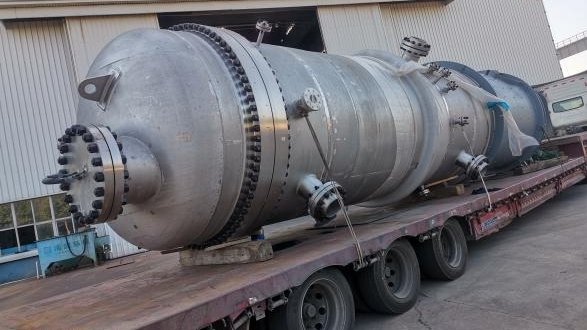
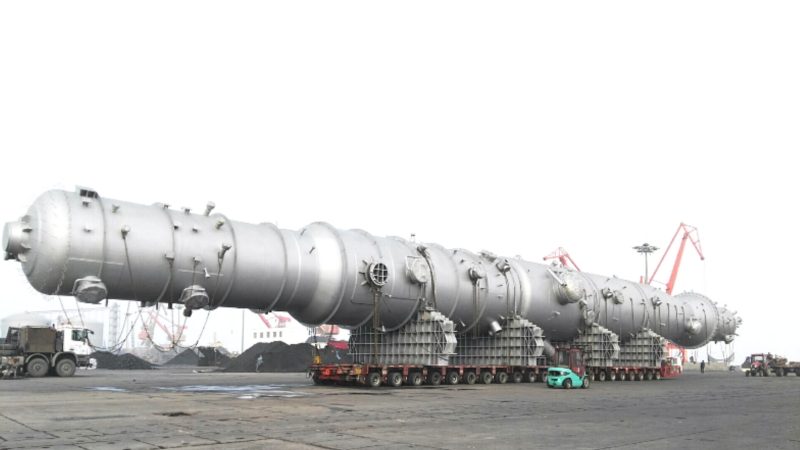
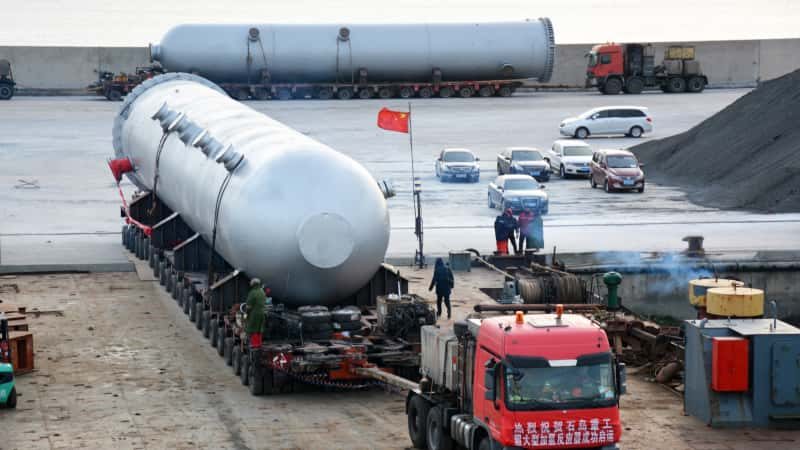
Representative reactor photograph. The image does not establish suitability for multiple products or any particular reaction.
For chemical-plant pressure vessel projects, separate the vessel supply from any broader package obligations. Identify who owns process design, mixing selection, automation, protective-system assessment, installation, and commissioning. Delivery planning should cover transport dimensions, lifting, preservation, port or site delivery, and assembly interfaces.
A future recipe should not be accepted merely because it fits within the vessel’s nameplate limits. Before introducing it, the owner’s change-management process should review process hazards, compatibility, utilities, cleaning, and connected equipment. Procurement documents can support that review by clearly recording the original design assumptions and approved service limits.
FAQ
Can the same reactor produce different chemical grades?
Sometimes. Shared service depends on the differences between the grades, acceptable carryover, operating conditions, and cleaning requirements. Similar product names do not prove that a common reactor arrangement is suitable.
Is choosing the highest pressure and temperature sufficient?
No. Mechanical ratings are only part of the assessment. Reaction behavior, materials, working volume, mixing, cooling, contamination, and auxiliary-equipment capacity can independently limit the proposed service.
Does multipurpose equipment always reduce costs?
No. Savings in initial equipment purchases may be offset by cleaning, verification, production delays, waste treatment, and scheduling constraints. The comparison should use the expected campaign plan and complete installed scope.
What information is needed for an initial quotation?
Provide product-specific process cases, batch quantities, operating and design conditions, material requirements, utility information, cleaning expectations, drawings, and delivery constraints. Mark unresolved items so that quotation assumptions remain visible.
Discuss Your Complete Reactor Requirements
A multipurpose chemical reactor is most useful when flexibility is defined and verified, rather than assumed. For projects requiring a custom reactor vessel and associated fabricated equipment, discuss your project requirements with our engineering team. Share your product-duty matrix, drawings, material requirements, heating and cooling duties, and delivery needs for manufacturing assessment and scope coordination.