
Yes, a gas-liquid separator can operate effectively at low flow rates, provided its complete design and control arrangement are suitable for those conditions. However, a vessel selected for maximum throughput does not automatically deliver the required separation performance at every lower load.
For EPC buyers, chemical manufacturers, and gas-processing operators, gas-liquid separator turndown should be a defined procurement requirement. The inquiry must explain the expected gas and liquid loads, operating pressures, fluid properties, and outlet-quality requirements across the operating range. A single maximum-flow figure is not enough to establish suitability for phased commissioning, reduced production, or variable feed.
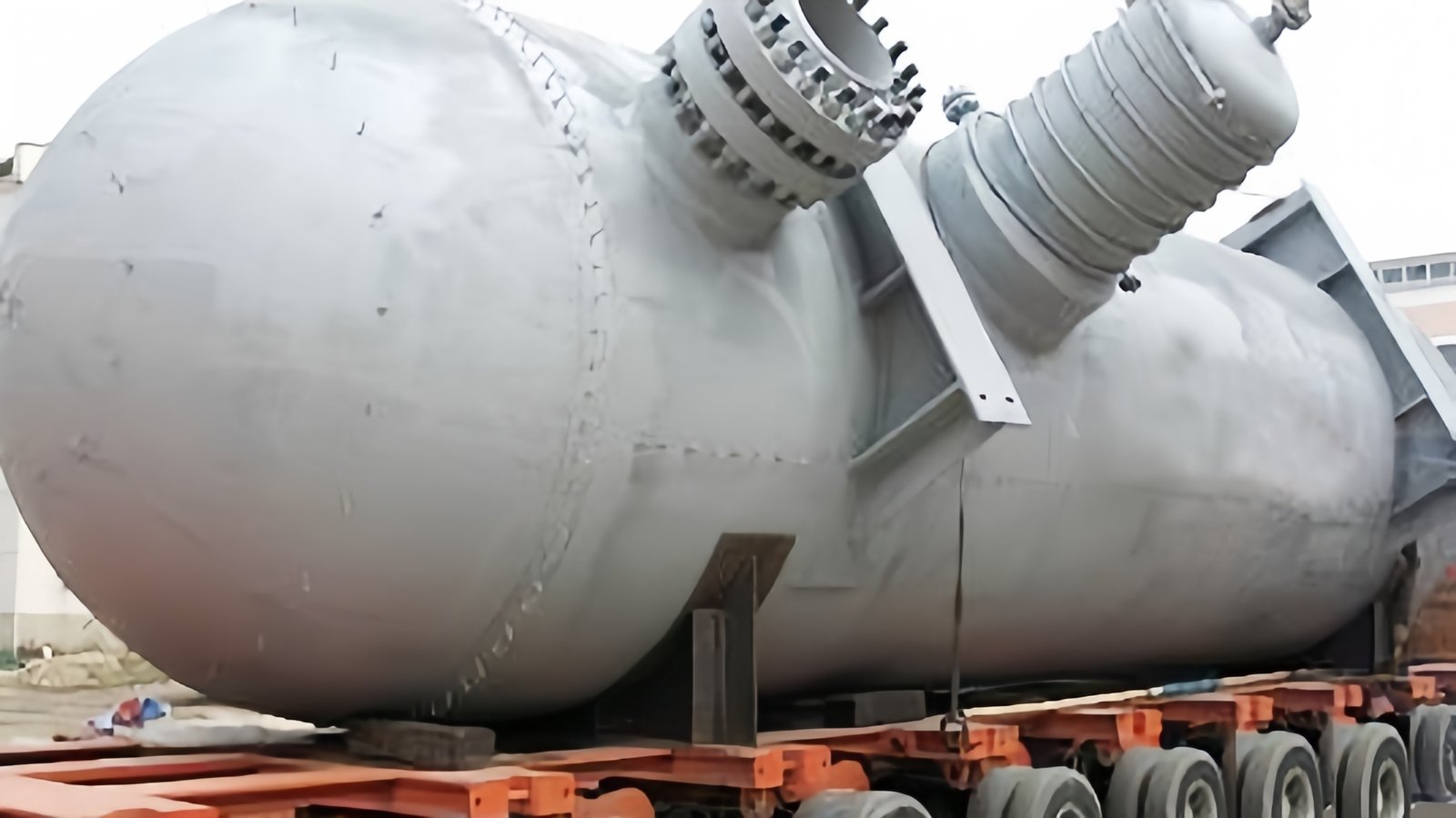
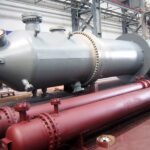
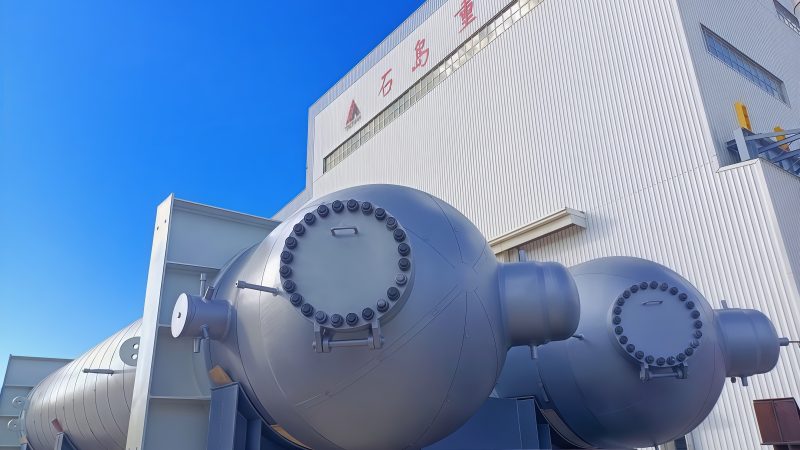
Representative separator photograph. The image does not establish a particular operating range or verified low-flow performance.
What Does Gas-Liquid Separator Turndown Mean?
Turndown describes the relationship between a specified upper throughput and the minimum throughput at which the equipment meets defined requirements. The basis matters: a quoted ratio should identify the flow quantity, reference conditions, fluid properties, and performance criteria to which it applies.
For a separator, gas and liquid throughput do not necessarily decline together. The gas rate may decrease while intermittent liquid arrivals remain significant. Alternatively, a gas stream may contain very little liquid during normal operation but experience a different loading during startup.
Buyers should therefore request an operating envelope rather than rely on a single turndown ratio. That envelope should identify acceptable combinations of gas rate, liquid rate, pressure, temperature, and outlet quality.
Why Lower Flow Does Not Always Mean Better Separation
Lower gas velocity can give droplets more opportunity to settle in a gravity-separation region. Nevertheless, the complete separator may also depend on separation mechanisms whose performance varies with velocity, loading, and flow distribution. Lower throughput cannot be assumed to improve every stage.
SPE’s discussion of gas-liquid separation performance explains that inlet conditions, entrained droplets, flow distribution, and liquid handling all influence the quality of the separated streams. Evaluating only vessel diameter overlooks these interacting factors.
The practical question is not whether low flow is inherently good or bad. It is whether the proposed complete vessel meets the required outlet specifications at the buyer’s defined low-load conditions.
Where Should Buyers Expect Low-Load Operation?
Low-load assessment is particularly relevant when a plant starts with only part of its planned production capacity. It also matters for facilities with seasonal demand, batch-related gas generation, changing upstream feed, or equipment that operates below design capacity for extended periods.
Different operating periods should be distinguished. Sustained reduced production is not the same as a short startup transient. A separator may need to meet normal product-quality requirements in one case, while another case requires an approved temporary operating arrangement.
For pressure vessels used in oil and gas applications, these distinctions should be established by the process team before the equipment specification is issued. The fabricator should not be expected to infer them from the maximum production rate.
Define the Operating Cases Before Requesting a Quotation
Specify Gas Flow on a Clear Basis
State whether gas flow is expressed as mass flow, standard volumetric flow, or actual volumetric flow. If standard conditions are used, define them. Provide the corresponding operating pressure, temperature, gas composition, and relevant physical properties for each case.
A reduction in standard volumetric throughput does not necessarily produce the same proportional reduction in actual gas volume inside the vessel when pressure, temperature, or composition changes. Comparisons should therefore use consistent flow definitions and process conditions.
Request separate cases for minimum sustained operation, normal production, maximum production, and any additional conditions identified by the process assessment. Avoid combining unrelated extremes unless that combination is credible.
Specify Liquid Loading Independently
Describe continuous liquid flow, entrained liquid loading, and any expected intermittent arrivals. Include relevant density, viscosity, surface tension, foaming tendency, and contamination information where available. If droplet-size information is uncertain, identify the uncertainty and ask how the proposed performance assessment addresses it.
An average daily liquid quantity may not describe the load arriving during a short event. Where upstream operations can generate slugs, the process team should define the appropriate event basis and required response. Low gas throughput should not be interpreted as proof that liquid handling is undemanding.
Review Liquid Handling and Control at Low Load
At reduced liquid inflow, drainage may become intermittent and the selected level-control arrangement may operate differently from its normal-load behavior. The complete package should be reviewed for liquid retention, discharge behavior, gas carry-under where relevant, and interfaces with downstream liquid handling.
The procurement discussion should cover normal operating levels, required response to changing inflow, and responsibility for control-system selection and integration. These are complete-equipment requirements, not an invitation to purchase individual instruments or internal components separately.
Where the manufacturer supplies only the fabricated vessel, the EPC contractor or package integrator should retain clearly defined responsibility for control performance. Vessel fabrication approval does not establish that the connected control system will operate satisfactorily across the specified range.
Consider Inlet Conditions and Downstream Requirements
The separator should be assessed within its connected system. Upstream piping arrangements and changes in flow conditions can influence how the mixture enters the vessel. SPE’s article on flow conditioning discusses the relationship between inlet piping and distribution within separators.
Provide the available inlet-piping information and identify unresolved layout decisions. If a supplier’s performance assessment assumes particular inlet conditions, those assumptions should be included in the technical proposal rather than left implicit.
Downstream requirements also determine what “effective separation” means. A compressor, process heater, or subsequent treatment stage may require different gas-quality limits. Define the allowable liquid carryover in an agreed form and, where relevant, the permissible gas remaining in the liquid outlet.
Is a Larger Separator the Best Way to Provide Flexibility?
Not automatically. Additional vessel volume may help certain separation or liquid-handling duties, but it does not independently establish low-flow performance. The complete arrangement still needs to be evaluated against the required operating cases.
Oversizing can also affect cost, installation space, liquid inventory, and control response. Buyers should ask suppliers to explain how the selected dimensions support the specified operating envelope rather than request an arbitrary size increase.
Where future expansion is planned, compare credible equipment strategies with the process team. A single vessel covering current and future service may be suitable, but the assessment should identify what performance is available during each phase and whether later modifications are anticipated. No future capability should be assumed without a documented basis.
Make Performance Commitments Measurable
A statement such as “high separation efficiency over a wide range” is not an adequate acceptance criterion. Define the required outlet quality and the inlet conditions under which that requirement applies. Percentage removal figures also need a stated basis; they are difficult to interpret without information about incoming liquid and droplet characteristics.
Ask the supplier to identify the basis of its proposed performance: calculations, relevant operating experience, testing, or a combination. Where modeling is used, its assumptions and limitations should be understood. A model result is not automatically equivalent to demonstrated field performance.
Agree on the verification method, measurement locations, test conditions, responsibilities, and treatment of off-design operation. If commissioning tests cannot cover every operating case, document how the remaining cases will be assessed rather than imply that one test proves the entire range.
Separate Process Performance From Manufacturing Acceptance
The mechanical specification for custom pressure vessels should address applicable design requirements, materials, pressure and temperature conditions, relevant load cases, inspection, and testing. HSE’s plant design guidance emphasizes compatibility with process conditions and consideration of operating excursions.
These mechanical requirements remain important at low production rates. Reduced throughput does not necessarily mean reduced pressure or a less demanding corrosion environment.
Material verification, weld examination, dimensional inspection, and pressure testing establish specified aspects of manufacturing quality. They do not, by themselves, demonstrate droplet-removal performance at minimum gas flow. Keep the manufacturing inspection plan and process-performance acceptance plan distinct but coordinated.
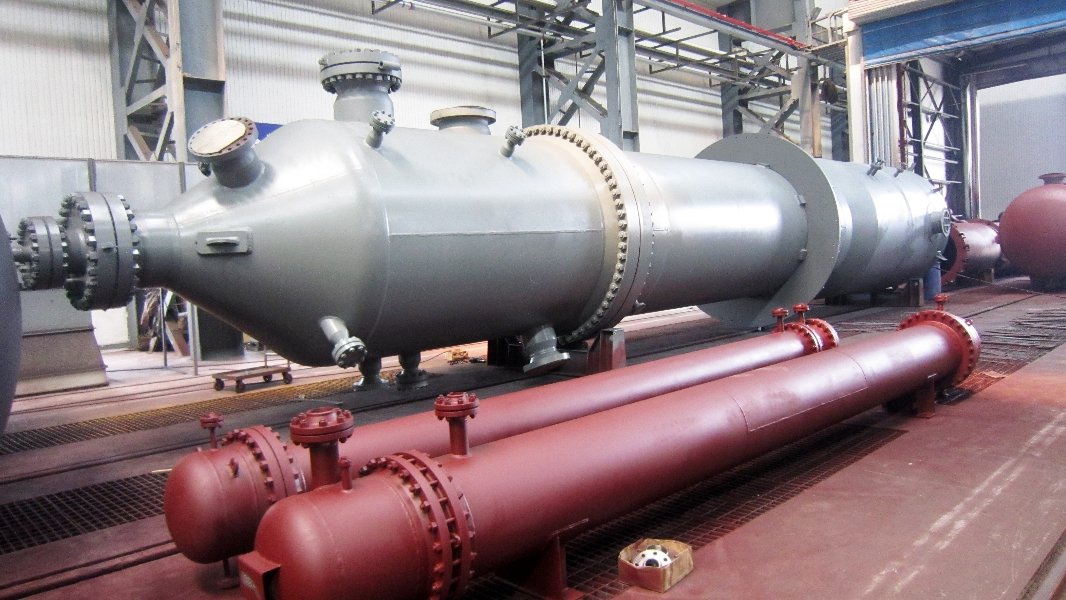
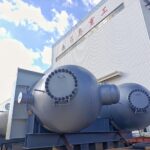
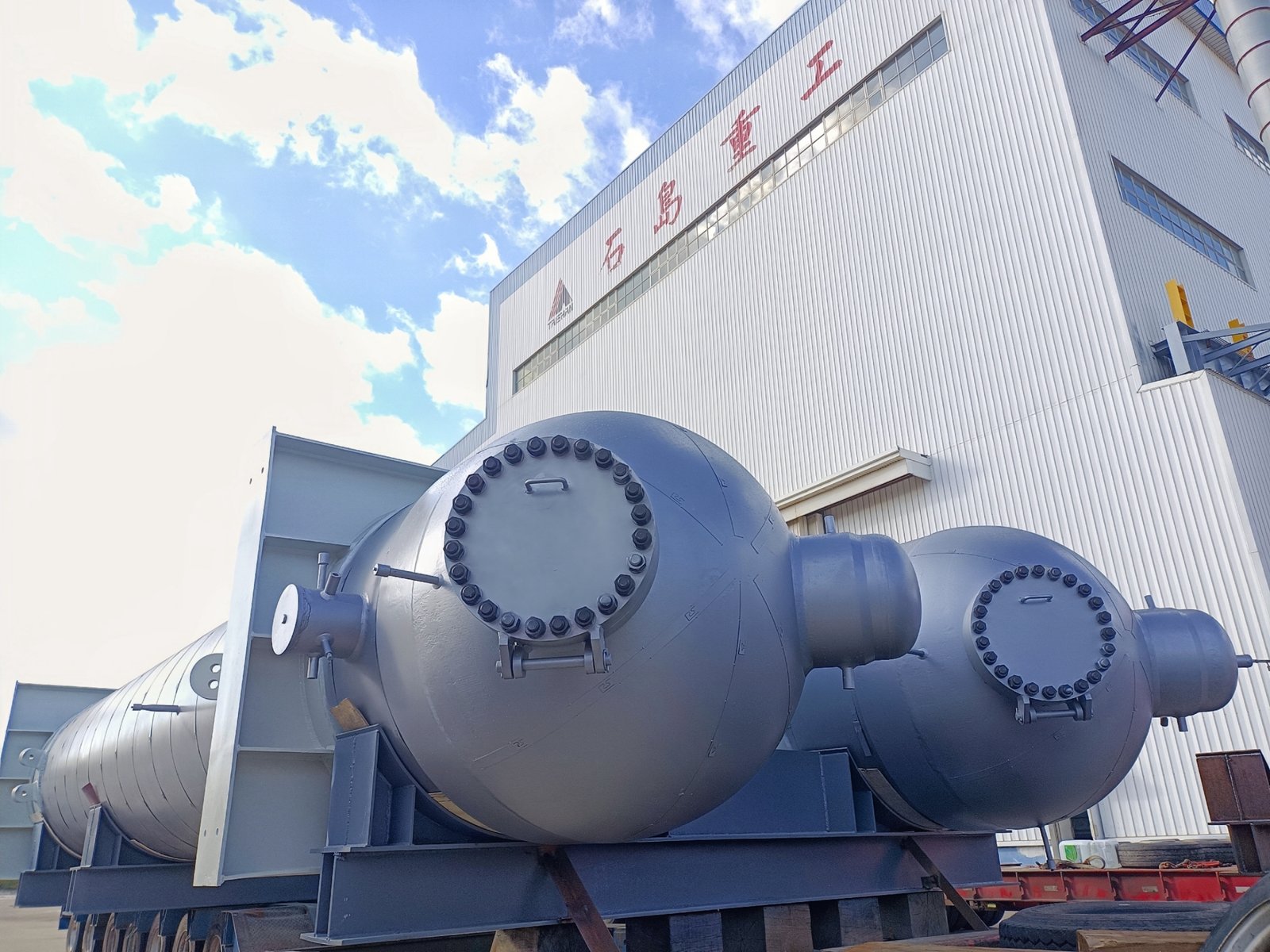
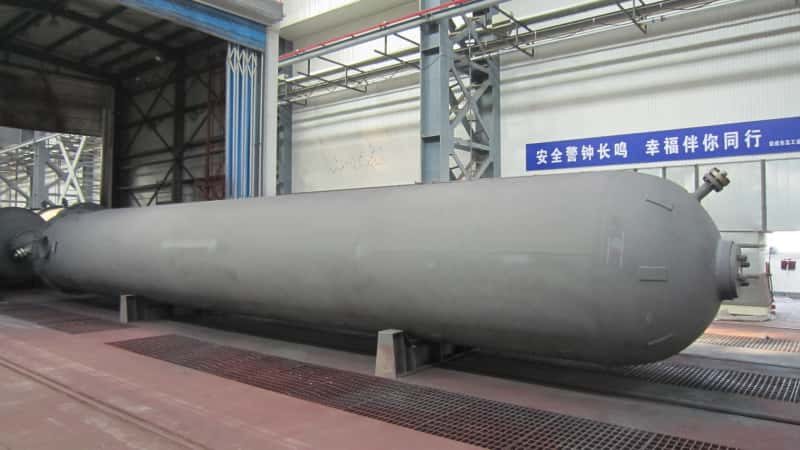
Representative workshop photograph. Manufacturing inspection and low-flow separation verification are separate acceptance activities.
Confirm the Complete Supply and Delivery Scope
For a variable-flow separator inquiry, clarify whether the quotation covers a complete fabricated vessel or a broader integrated package. Identify responsibility for process sizing, mechanical design, instrumentation, controls, installation, commissioning, and performance verification.
WSHI’s stated manufacturing capabilities include drawing coordination, material procurement, welding, nondestructive examination, pressure testing, coating, and heavy-equipment delivery. The project quotation should confirm which services are included and which remain with the EPC contractor or process-design partner.
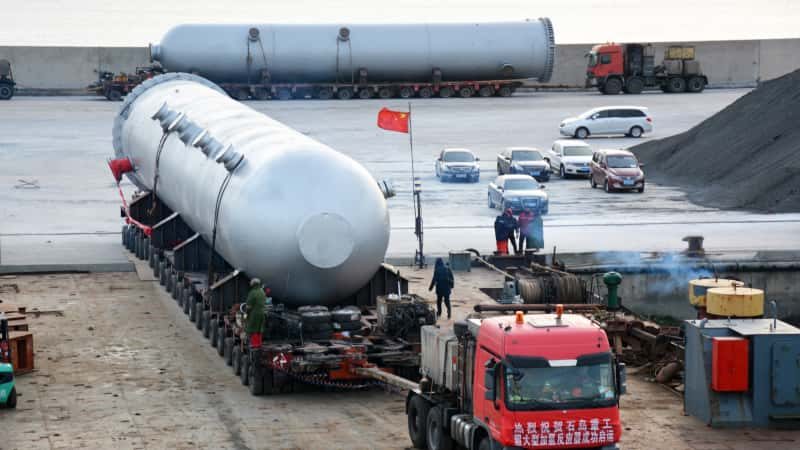
Delivery planning should address shipping dimensions, lifting arrangements, preservation, documentation, and site access. If supply is split across several parties, confirm the physical and technical interfaces before fabrication.

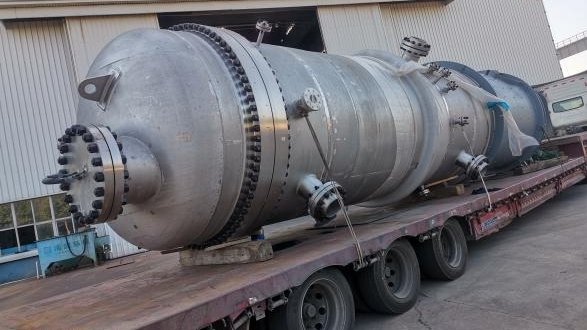
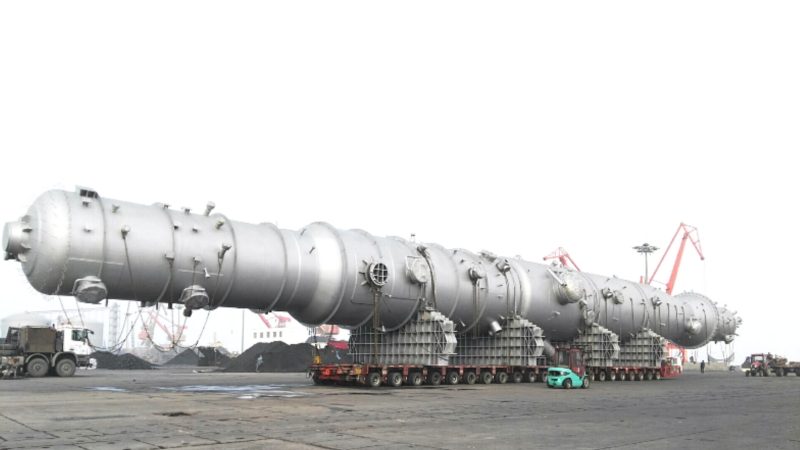
Representative industrial process-vessel photograph; not a demonstration of the low-flow service discussed in this article.
FAQ
Does low flow always reduce separator efficiency?
No. The outcome depends on the separation mechanisms, fluid properties, inlet conditions, and complete equipment arrangement. Performance must be assessed for the specific operating case.
Can one turndown ratio describe both gas and liquid capacity?
Not reliably without further definition. Gas and liquid loads may vary independently, so buyers should provide separate rates and their credible operating combinations.
Is the maximum-flow datasheet enough for phased startup?
No. Include the expected initial operating conditions and the requirements that apply during that phase. Distinguish temporary startup operation from sustained low-load production.
Does a successful pressure test confirm low-flow performance?
No. Pressure testing addresses specified mechanical requirements. Separation performance requires a separate assessment or verification method tied to the agreed process conditions.
Discuss Your Separator Operating Range
A suitable gas-liquid separator turndown specification connects minimum and maximum loads with clear outlet-quality requirements. For a project requiring a complete custom separator vessel, discuss your operating conditions with our engineering team. Share the gas and liquid flow ranges, pressure and temperature cases, fluid properties, drawings, and delivery requirements for manufacturing assessment and scope coordination.