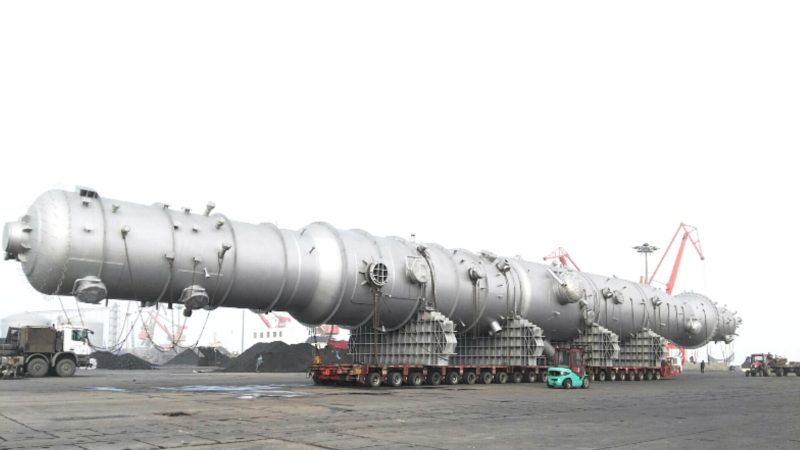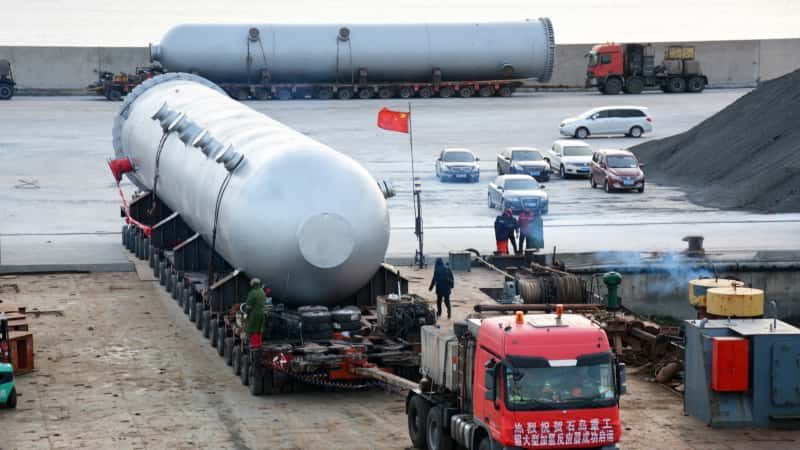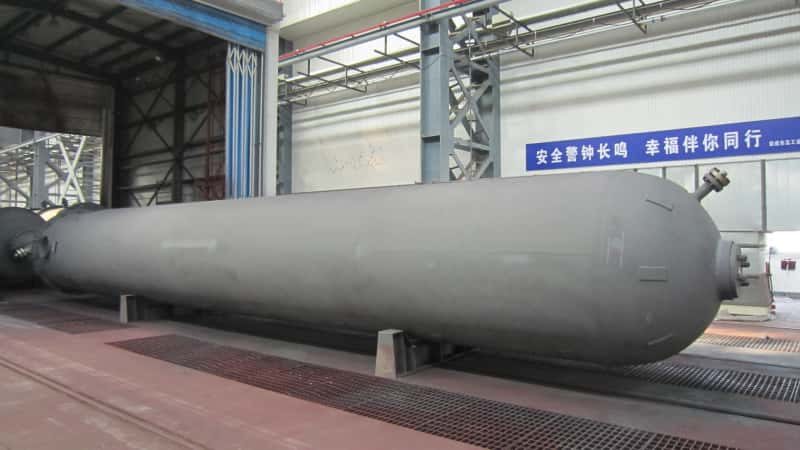

A steam-heated exchanger may meet its rated heating duty while leaving an important procurement question unanswered: will condensate still drain when the process needs less heat or the return pressure rises?
Buyers should address steam heat exchanger condensate stall by checking drainage across the required operating range, not only at rated duty. Provide process loads, steam and condensate-return conditions, installation elevations and the control concept. Ask the responsible designers to verify drainage pressure and capacity, resolve equipment interfaces, and define how the agreed operating cases will be demonstrated.
The discussion focuses on shell-and-tube exchangers heated indirectly by saturated steam, with modulating steam-inlet control and a condensate drainage arrangement. Steam may occupy the shell or tube side, depending on the design. Purpose-designed flooded control requires a different assessment. Spirax Sarco: Heat Exchangers and Stall
Identify Stall Before Treating It as an Equipment Fault
Condensate stall is a drainage problem caused by insufficient driving pressure. Flow can diminish or stop when the available pressure cannot overcome the backpressure acting on the drainage arrangement. Assess steam-space pressure together with the available static head. Waterlogging describes the resulting accumulation; it does not, by itself, identify the cause. An unsuitable drainage device can also hold condensate back. Spirax Sarco: Heat Exchangers and Stall
Intentional flooded control is different. Some exchangers regulate heat transfer by changing the condensate level. That approach requires an exchanger specifically designed for flooding; it should not be used to explain away unexpected accumulation in a unit intended to drain freely. Spirax Sarco: Heat Exchangers and Stall
For a replacement enquiry, describe what was observed before assigning a cause. Ask the plant team for time-aligned records of process flow, inlet and outlet temperatures, steam-space pressure and condensate-return pressure. Add the control arrangement and actual piping layout. Temperature fluctuation alone is not enough to diagnose stall or justify buying a larger exchanger.
Review the Operating Range, Not Just Rated Duty
Low heat demand can be the difficult drainage condition. With modulating steam-inlet control, a falling load can cause the valve to throttle and the pressure inside the exchanger to decrease. The return system may remain pressurized. Less condensate is being produced, but less pressure is available to discharge it. TLV: What is Stall?
Use an operating-case schedule rather than one maximum-duty line. The following is a suggested review template, not a prediction of which case will govern your project.
| Operating case | Information to supply | Question for the responsible designer |
|---|---|---|
| Maximum duty | Process flow, inlet condition, required outlet condition and available steam conditions | Can the proposed system meet both heating and drainage requirements? |
| Normal operation | Typical duty, control target and concurrent return conditions | What steam-space pressure and drainage conditions are expected? |
| Minimum continuous load | Lowest required duty, process flow and control target | Can condensate still leave at the predicted operating pressure? |
| Warmer incoming process fluid | Changed inlet temperature at the relevant flow and outlet target | Does this create a lower heating demand than the nominal minimum-flow case? |
| High return backpressure | Return-pressure range and which operating cases can coincide with its upper end | Does an otherwise acceptable case lose its drainage capability? |
| Startup or batch transitions, if applicable | Required operating sequence and time-dependent load information | What separate assessment is needed beyond steady-state ratings? |
On small screens, scroll the table horizontally to view all columns.
Ask the designer to identify credible combinations. Combining unrelated extremes without explanation can produce an unrealistic basis; ignoring simultaneous low load and high backpressure can omit the condition that matters.
Common misconception: more heat-transfer area guarantees better drainage. For the same duty and corresponding thermal conditions, additional area can allow operation at a lower steam temperature and pressure. Area allowance therefore does not establish drainage capability. Ask for the clean and specified fouled operating cases, with the allowances identified, rather than adding an unexplained area margin. Spirax Sarco: Oversized Heat Exchangers
Define Pressure Boundaries and Installation Levels
Specify pressure at the relevant locations. Steam-header pressure upstream of the control valve does not establish the pressure available for condensate drainage downstream of it. Keep the mechanical design pressure separately identified; it is not the predicted steam-space pressure at a particular load.
For a conventional pressure-driven drainage device, the local pressure difference is its inlet pressure minus its outlet pressure, expressed on the same basis. A positive difference is necessary, but capacity at that difference must also be sufficient. A return-line lift or restriction can increase backpressure. Spirax Sarco: Oversized Heat Exchangers
Mark these boundaries on the project drawing:
- Steam space: identify the pressure location downstream of the steam control valve.
- Drainage-device inlet: show its elevation relative to the exchanger condensate outlet.
- Drainage-device outlet: identify the start of the downstream discharge path.
- Return connection: identify the destination, pressure basis and elevation.
A downward liquid column before the drainage device can provide static head; a lift after it imposes a different requirement. These heights should be shown separately. Their usefulness depends on the actual arrangement, so a generic mounting height is not a design basis. Spirax Sarco: Practical Methods of Preventing Stall
In the calculation request, distinguish measured local outlet pressure from a backpressure estimate built up from the return destination. Ask the designer to state which elevation and line-loss effects are already included, avoiding double counting. Label pressures as gauge or absolute and use one elevation datum. Request a calculation appropriate to the expected liquid and vapor conditions, rather than treating a return-header reading as the complete answer.
Put Drainage Inputs and Responsibilities in the RFQ
A useful request for quotation connects the exchanger duty to the installed drainage system. Provide the operating cases and interface data together, then ask each bidder to identify assumptions, exclusions and the party responsible for closing missing inputs.
The following matrix is a suggested procurement checklist. Responsibility must be agreed for the project; it is not a statement of any manufacturer’s standard supply scope.
| Input package | Buyer or EPC information | Confirmation to request |
|---|---|---|
| Process duty | Fluid identity and properties, flow range, inlet temperatures, outlet targets and operating schedule | Thermal designer identifies the governing cases and predicted steam-space conditions |
| Steam supply | Pressure and temperature range at the stated supply boundary, steam condition and supply constraints | Responsible system designer distinguishes supply conditions from exchanger operating pressure |
| Condensate return | Destination, pressure range, temperature information, concurrent users and known fluctuations | Return-system designer confirms the backpressure basis for each relevant case |
| Installation | Exchanger orientation, condensate outlet elevation, proposed drainage location, pipe route and return elevation | Layout and drainage designers confirm the available head and required space |
| Control interfaces | Control philosophy, controlled variable, sensor location and required operating range | Controls designer checks compatibility with the thermal and drainage concept |
| Equipment boundaries | Proposed scope drawing, connection details and separately purchased systems | Each supplier identifies included equipment, connection limits and excluded design work |
| Verification | Required operating cases, proposed measurements and acceptance responsibilities | Named parties agree on the evidence needed before design approval and final acceptance |
On small screens, scroll the table horizontally to view all columns.
Request three coordinated outputs: a thermal assessment, a drainage assessment and an interface drawing. They should use the same case names and revision of the input data. The exchanger fabricator may work to another party’s thermal design; assign responsibility explicitly rather than assuming that purchasing a complete exchanger includes the entire steam and condensate system.
Hypothetical procurement scenario: an existing exchanger is replaced while its elevated condensate-return connection is retained. The proposed exchanger has a different condensate-outlet elevation. Even if the quoted duty is unchanged, the buyer should request an updated layout and drainage assessment before accepting the replacement arrangement. This is a review example, not a reported installation or a calculated performance result.
Compare Drainage Concepts at System Level
Choose a drainage concept against the operating range and layout. A device change alone does not resolve a system that cannot provide the required driving pressure.
| Concept | When it merits assessment | Main trade-off or constraint | Interface to resolve |
|---|---|---|---|
| Gravity drainage to a suitably low-pressure destination | Available head and downstream conditions can support drainage throughout the required range | A pressurized or elevated return may require a different collection and return arrangement | Exchanger elevation, receiver pressure and onward return route |
| Pump-assisted condensate removal | Exchanger pressure can fall below return backpressure | Requires a properly engineered filling and pumping arrangement, with its own utility and space needs | Filling head, discharge conditions and motive or electrical supply, as applicable |
| Revised temperature-control arrangement | The process permits a control concept that maintains adequate steam-space pressure | Changes process-side control behavior and must suit the fluid and temperature requirements | Thermal design, process flow arrangement and controls responsibility |
On small screens, scroll the table horizontally to view all columns.
These concepts require different designs. A vented destination alone does not establish drainage from a steam space under vacuum; the pressure and head conditions still need assessment. Control changes must also suit the process. Spirax Sarco: Practical Methods of Preventing Stall
Pump-assisted arrangements also differ. A closed pump/trap arrangement and a receiver followed by a return pump impose different connections and operating requirements. TLV describes mechanical and motorized approaches, including the need to consider cavitation with hot-condensate centrifugal pumping. The system designer should establish the suitable arrangement before procurement fixes its interfaces. TLV: Methods of Preventing Stall
For the wider collection and recovery scope, see condensate recovery system planning. In the exchanger enquiry, ask bidders to identify which interfaces their offer covers and which require another party’s design.
Agree on Evidence for Review and Acceptance
A hydrostatic test cannot demonstrate condensate drainage in service: it does not reproduce steam condensation, modulating control and the operating return system. Buyers therefore need separate evidence for construction acceptance and operating performance. ASME’s introductory explanation of performance test codes describes performance testing as an evaluation of how equipment performs its function, supported by appropriate measurements and agreed criteria. ASME: What Are Performance Test Codes?
Use the following suggested review sequence when preparing the purchase requirements:
- Approve the design basis. Request the thermal and drainage assessments for the agreed cases, together with the layout and control assumptions. Record who approves each assessment and which unresolved inputs prevent design release.
- Verify the manufactured configuration. Confirm that the delivered equipment and documented interfaces match the approved arrangement. Keep the specified inspection and pressure-test records distinct from calculations and operating-test reports.
- Verify the agreed operating cases. Establish where performance will be checked, who provides the utilities and instruments, and how results will be judged. Include the required low-load case and its relevant return conditions rather than relying solely on a rated-duty demonstration.
For the operating-test plan, request synchronized pressure, temperature and flow records at the agreed boundaries, together with relevant control and drainage observations. Define the recording period, acceptable variation, measurement uncertainty and criteria for interpreting drainage behavior before testing. These are project-specific acceptance items; this article does not supply universal limits.
If a required case cannot be reproduced, record that limitation and agree on an engineering review or later test. A calculation should remain identified as a calculation, and an untested case should not be reported as demonstrated performance. Select any test standard and edition for the actual condensing-steam service; a generic reference to heat-exchanger testing is insufficient.
For the broader contractual framework, see the heat exchanger performance guarantee guide. Keep this article’s drainage cases and interfaces attached to that framework.
FAQ
Does every steam-heated exchanger experience stall?
No. An installation may retain sufficient driving pressure and drainage capacity throughout its required operating range. Assess the actual conditions rather than assuming stall is inevitable. Spirax Sarco: Heat Exchangers and Stall
Will a larger conventional steam trap solve a negative pressure differential?
No. A conventional steam trap cannot pump condensate against an adverse pressure difference. Increasing its nominal capacity does not remove that pressure condition; the drainage arrangement needs assessment. TLV: What is Stall?
Does higher steam-supply pressure prove the exchanger will drain at low load?
No. With steam-inlet modulation, the pressure downstream of the control valve can fall as heat demand decreases. The assessment needs the exchanger’s operating pressure and the drainage conditions, not just the supply-header rating. TLV: What is Stall?
Prepare a Complete Exchanger Enquiry
Address condensate stall before the equipment arrangement is fixed. Bring the operating-case schedule, steam and return conditions, elevation drawing and responsibility matrix into the same review.
If you are sourcing complete shell and tube heat exchangers, use that package to discuss the project requirements. Ask the proposed supplier to confirm manufacturing feasibility, design responsibility and the interfaces included in its offer. Any drainage-system scope or performance commitment should be agreed against the project data.
References
- Heat Exchangers and Stall — Spirax Sarco, Learn About Steam. Publication date/version not stated. Read the tutorial.
- Oversized Heat Exchangers — Spirax Sarco, Learn About Steam. Publication date/version not stated. Read the tutorial.
- What is Stall? — TLV, Steam Theory. Publication date/version not stated. Read the explanation.
- Practical Methods of Preventing Stall — Spirax Sarco, Learn About Steam. Publication date/version not stated. Read the tutorial.
- Methods of Preventing Stall — TLV, Steam Theory. Publication date/version not stated. Read the explanation.
- What Are Performance Test Codes? — ASME, in Examples of Use of Codes and Standards for Students in Mechanical Engineering and Other Fields, printed pages 6–7. Publication year not confirmed. General explanatory material, not a service-specific testing standard. Read the ASME booklet.
Sources reviewed on October 10, 2026. Manufacturer tutorials explain general principles; project calculations and the applicable contractual requirements establish the equipment-specific design and acceptance basis.