
A tall process column may meet its pressure-vessel construction requirements yet still lack a usable seismic design basis for its installed location. For EPC buyers, process column seismic design inputs must be more than a seismic-zone label or an unapproved value copied into a datasheet. The package should establish the adopted project criteria, the source and status of site information, the column’s actual installed configuration, the relevant operating masses, and the responsibility for each equipment–civil interface.
Before a supplier finalizes the design of a distillation, absorption, stripping, or similar process column, the project team should be able to answer three questions: Where did each seismic input come from? Who approved it for the intended design activity? What equipment and civil deliverables must be revisited if it changes? The checks below focus on that handover. They are not an earthquake calculation method or a substitute for the responsible structural engineer’s judgment.
Why Are “ASME Design” and a Seismic Zone Insufficient?
The pressure boundary and the installed structural system have related but different requirements. ASME BPVC Section VIII, Division 1 provides a construction framework for pressure vessels within its scope, including design, fabrication, examination, testing, and certification. It does not, by the words “ASME design” alone, identify the site’s ground-motion data, the seismic loading standard adopted by the project, or the response of the structure supporting a tall column.
A large vertical vessel must be reviewed as an installed system. Depending on the applicable project requirements, this may involve seismic inertia and displacement effects, the shell and integral support, permanent attachments, the connection to the foundation or supporting frame, and interactions with piping and adjacent structures. A successful shop pressure test is not proof of seismic adequacy.
Likewise, a description such as “high seismic area” or a legacy seismic-zone label is not a complete design input. The appropriate site and analysis parameters depend on the applicable code, installation arrangement, ground conditions, and project-approved design method. The buyer should not ask an equipment supplier to infer missing site information from the country, column height, or an informal hazard category.
Which Site and Code Information Must Be Approved?
Confirm the project-adopted editions, not just the latest published edition
For a U.S. project, the authority having jurisdiction and applicable building code may establish a particular edition of ASCE/SEI 7, with local amendments. ASCE’s current standards overview identifies ASCE/SEI 7-22 and its published supplements and errata; that does not mean ASCE 7-22 is automatically the edition adopted for every project. The equipment construction code, site-loading code, owner specification, and their governing editions should be listed separately.
For projects outside the United States, the adopted national or local structural framework may be different. The EPC structural authority must confirm which site-loading rules apply rather than transplanting U.S. seismic parameters into a different jurisdiction.
Link site parameters to their originating reports
| Input to confirm | Traceable evidence buyers should request | Originating or approving discipline |
|---|---|---|
| Project location | Site identifier and coordinates, with project datum if relevant | Owner / EPC |
| Governing design basis | Adopted code editions, amendments, owner criteria and document revision | Owner / designated structural authority |
| Ground conditions | Relevant approved geotechnical investigation and applicable soil classification | Geotechnical and structural engineers |
| Seismic hazard | Approved hazard parameters, spectrum or site-specific study, as required by the chosen method | Designated seismic / structural engineer |
| Risk or importance basis | Applicable project classification and reason for its selection | Owner and authorized structural engineer |
| Analysis and combinations | Project-required design method, applicable action combinations and review responsibility | Structural and equipment design authorities |
| Data status | Source file, date, revision, review status and limitations on use | EPC document control / engineering lead |
This is an editorial input-verification matrix, not a mandatory form reproduced from ASCE 7 or another code.
The ASCE Hazard Tool and USGS Design Ground Motions Portal help illustrate that ground-motion resources depend on location and the design standard being used. Their outputs are technical inputs to be interpreted under the project basis; downloading a report is not the same as project approval. Site class, risk classification, and any special study must be established by the appointed engineers rather than selected by sales staff.
If the geotechnical report or seismic study is preliminary, label the affected values accordingly. A budget-stage assumption may be acceptable for a clearly qualified quotation, but it must not be silently presented later as approved for final design.
How Does the Installed Support Arrangement Change the Handover?
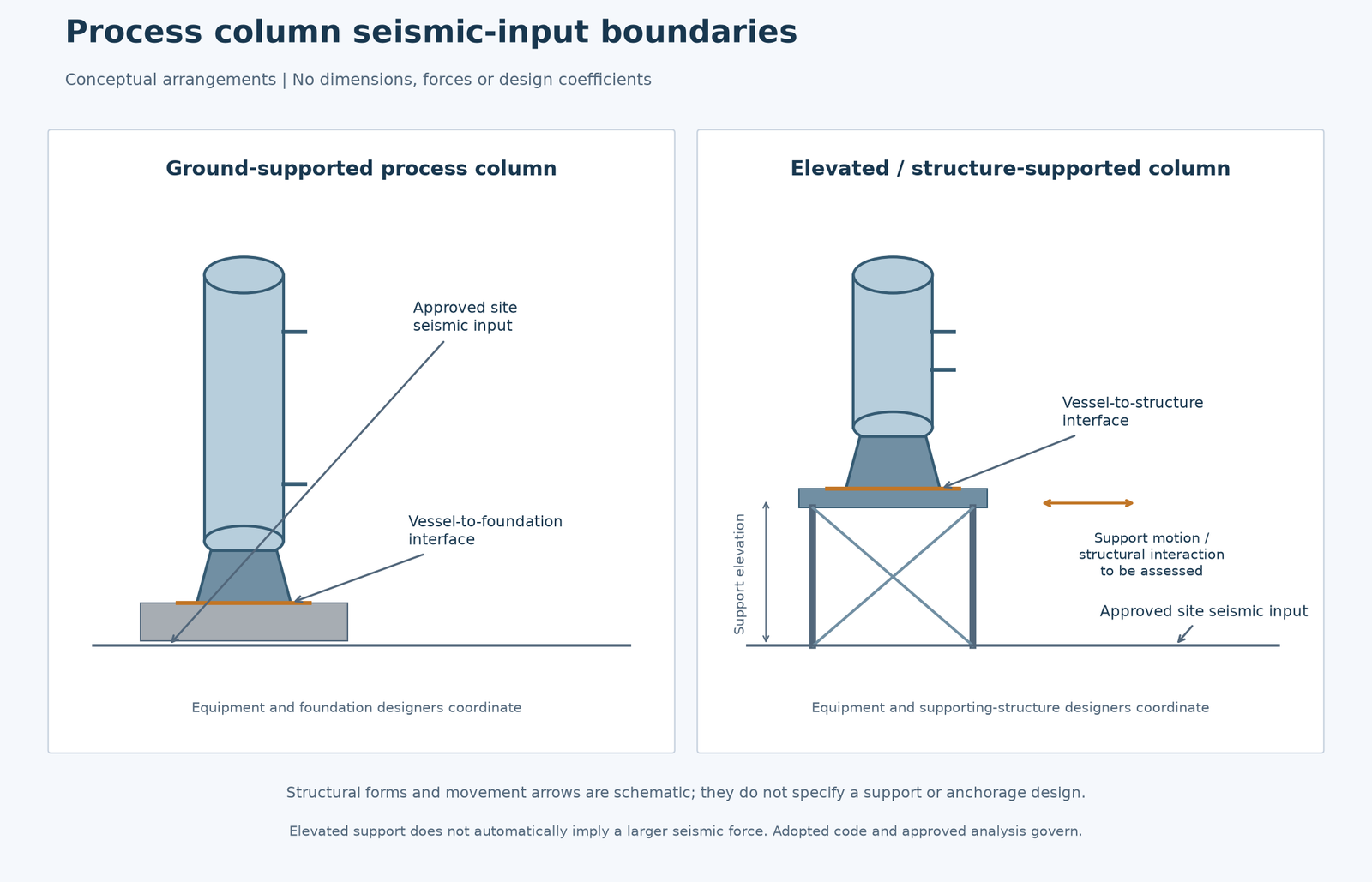
Ground-supported columns
A column installed directly on its permanent civil works may transfer equipment actions through a skirt, legs, or another integral support. The EPC should define the support datum, approximate arrangement, connection boundary, and applicable site-loading basis. The equipment designer reviews the column and its contracted integral support; the civil/structural team evaluates the foundation and ground-related design within its scope. A conceptual skirt detail from the supplier does not establish foundation suitability.
Elevated or structurally supported columns
A similar vessel placed on a tall steel or concrete frame may be affected by movements and dynamic characteristics of that supporting structure. The project structural engineer must establish the relevant equipment-interface requirements and determine whether support motion, stiffness, displacement compatibility, or a more detailed coupled response assessment is needed. Ground-level parameters should not be assumed to be the complete input at an elevated attachment point.
| Interface question | Directly supported column | Elevated or structure-supported column |
|---|---|---|
| Location reference | Foundation / support elevation and datum | Support elevation and participating support points |
| Motion input | Project-approved ground-related basis and governing method | Approved equipment-interface response or criteria, as applicable |
| Support definition | Vessel-to-foundation connection and boundaries | Vessel-to-structure connection and support characteristics |
| Coordination | Equipment designer ↔ foundation designer | Equipment designer ↔ supporting-structure designer |
The contract should identify who models the support, who provides the seismic action at the equipment interface, and who checks connection compatibility. Relevant piping, access platforms, and adjacent structures may introduce movement or loading constraints. These interfaces must be coordinated as part of the complete tower rather than treated as independent purchases of anchors or accessories.
Which Column Geometry and Mass Conditions Need a Defined Basis?
The seismic review needs an equipment configuration that represents the intended installed condition—not just a shipping weight. The EPC process and mechanical teams should specify the relevant process inventories, permanently installed equipment, and preliminary geometry assumptions. The supplier can then develop the detailed column mass model within its agreed scope.
Items that may affect mass or its distribution include the shell and heads, integral support, trays or packing, liquid hold-up, insulation and cladding, attached platforms, ladders, permanent components, and the location of major appurtenances. Avoid double counting a platform or piping item where it is independently supported or already included in another mass estimate.
| Equipment state | Input needed | Control point |
|---|---|---|
| Installed empty | Permanent equipment included and definition of the empty condition | Not interchangeable with shipping weight |
| Normal operation | Approved liquid levels, densities and installed internals | Process input and mass basis must agree |
| Alternative operation | Credible changed inventory or configuration | State whether the project requires seismic assessment |
| Maintenance or shutdown | Relevant changed equipment or inventory | Assess only where the project basis requires it |
| Field testing, if applicable | Test location, inventory and supports | Do not assume a shop test loads the permanent foundation |
These are possible information categories, not a statement that every condition must be combined with earthquake loading. The structural engineer must determine the actual applicable combinations.
For an early enquiry, indicative column height, diameter, support elevation and platform arrangement may be sufficient for a qualified assessment. For detailed design, identify which dimensions and mass estimates are approved, which are provisional, and the consequences of changes. Two columns with identical total weight can have different response characteristics when their mass is distributed differently along the height.
How Should EPC Buyers Record the Source and Approval Status of Seismic Inputs?
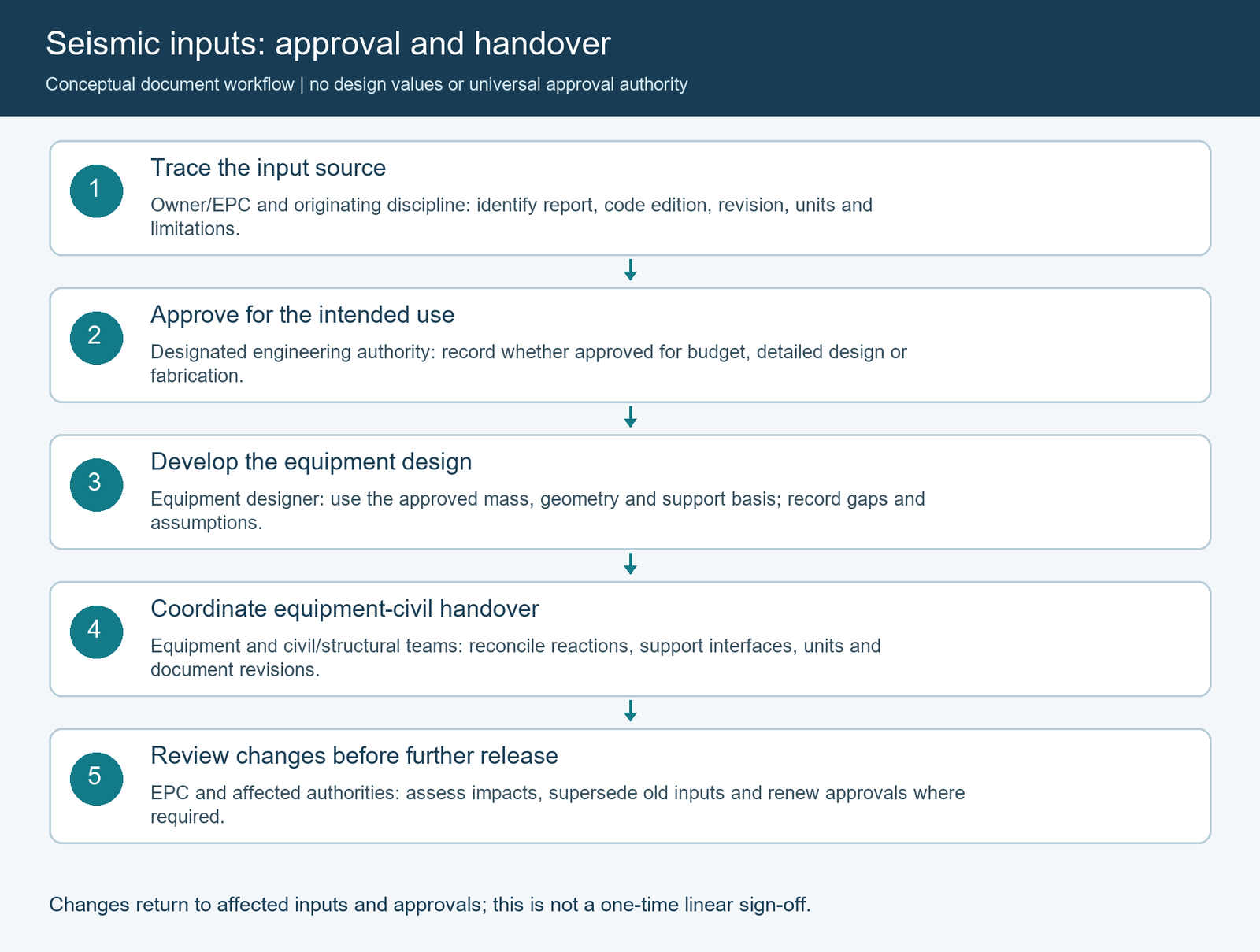
A simple list of values is not enough once mechanical, process, geotechnical and civil design progress at different rates. Maintain a controlled Seismic Design Input Register or an equivalent project document. Each engineering input should be connected to a specific source, its permitted use and an accountable approver.
Recommended approval and traceability matrix
| Register field | What to record | Why it matters for the buyer |
|---|---|---|
| Unique input ID | A stable reference for the parameter or interface condition | Enables cross-reference across disciplines |
| Value and units | The approved numerical value or clearly defined qualitative condition | Avoids ambiguous transcriptions |
| Source and edition | Report / calculation / code document number, revision, date and applicable edition | Establishes provenance rather than hearsay |
| Originator | Owner, process, geotechnical, structural or other responsible party | Assigns responsibility for producing the input |
| Approver and scope | Named role, approval date and activity permitted (budget, detailed design, fabrication) | Prevents “reviewed” from being mistaken for unrestricted approval |
| Design assumption | Any substituted or provisional value and its technical consequence | Makes incomplete information visible |
| Equipment interface | Datasheet, nozzle/piping interface, column support or geometry affected | Shows which design deliverables rely on the input |
| Civil interface | Support reactions, supporting structure or foundation coordination affected | Enables controlled downstream handover |
| Status and change link | Open / approved for specified use / superseded, plus change-request ID | Prevents mixed revision bases |
Editorial document-control model; exact status labels and approval routes must follow the project contract and quality system.
Do not confuse issued for review, reviewed with comments, approved for a specified design stage, and authorized for fabrication. They are not universally interchangeable. If the owner’s structural team has approved the site hazard data but the support elevation remains provisional, the supplier should identify the resulting design hold or qualified assumption rather than treating the entire package as frozen.
An example without invented design numbers
Suppose the site seismic basis is approved, while the process team is still revising column liquid hold-up and the civil team is considering a higher support elevation. The register should show three different statuses, not one blanket “approved” stamp. The column supplier can identify which preliminary tasks may proceed under written authorization and which final calculations or drawings depend on the open inputs. This is an illustrative document-control scenario, not a company project record.
What Must Change When the Seismic Design Basis Is Revised?
A changed input should trigger an impact assessment before it quietly propagates into downstream documents. The EPC should agree how revisions are issued, acknowledged, reviewed and closed across the process, mechanical, structural and supplier teams.
| Change trigger | Possible affected equipment work | Possible civil / interface effect | Required coordination question |
|---|---|---|---|
| New site report or ground-motion criteria | Seismic evaluation and design assumptions | Foundation / supporting-structure basis | Has the revised source been approved and transmitted? |
| Code edition or owner criterion changes | Analysis requirements and design documentation | Design combinations and interface criteria | Which revision governs the purchase order? |
| Support elevation or support type changes | Integral support and attached-component response | Supporting-structure movement and connection boundary | Is a new interface assessment required? |
| Height, diameter or mass distribution changes | Equipment response, support design and related details | Reactions and support coordination | Which issued weights and drawings are superseded? |
| Process liquid inventory or internals change | Operating mass model | Design-basis reactions if affected | Is the new operating state approved? |
| Nozzle, piping or platform interface changes | Local attachments and movement compatibility | Connected piping or adjacent-structure interfaces | Who closes the interdisciplinary review? |
The table describes impact-screening questions, not an automatic requirement to repeat every analysis for every change.
At minimum, the change record should identify the superseded document, revised input, technical reviewer, impacted deliverables, approval decision and intended design or fabrication hold point. If a final seismic-sensitive detail could change, the project should not authorize that work solely on an unresolved assumption. Conversely, an early design activity may be permitted under an explicit, limited assumption when the contract allows it and the relevant engineering authority agrees.
What Should the Supplier Return to the Equipment–Civil Interface?
The buyer provides the authorized site-loading inputs, process inventory basis and installation conditions. The column supplier reviews those inputs, identifies gaps and prepares the agreed equipment design and interface outputs. The structural team then uses the accepted equipment outputs within its own supporting-structure assessment.
Depending on scope, equipment outputs may include a defined installed mass breakdown, centers of gravity, support locations, relevant reactions and moments, and the revisions of calculations and drawings on which they depend. They should identify load-case names, coordinate directions, units, combination assumptions and whether values are preliminary or released for downstream use. They are not interchangeable with unqualified weights in a quotation.
For a more detailed examination of reaction tables and the downstream civil package, see the separate pressure vessel weights and foundation loads guide. This article focuses instead on the upstream approval chain needed to produce those outputs reliably.
A supplier experienced in complete process towers and columns can discuss the equipment design against the supplied basis. That capability should not be confused with authorization to perform site-specific geotechnical studies or to select local seismic criteria on behalf of the owner.

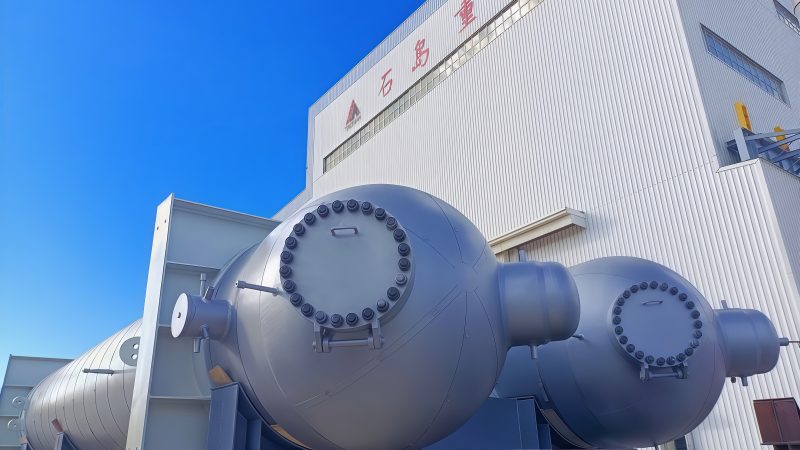
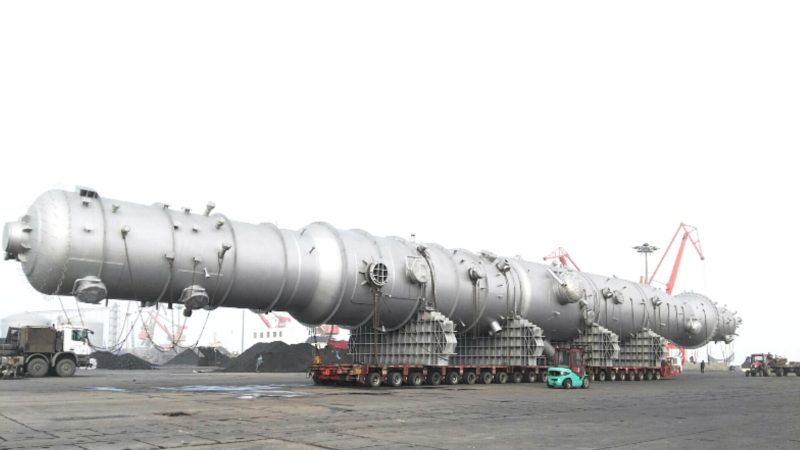
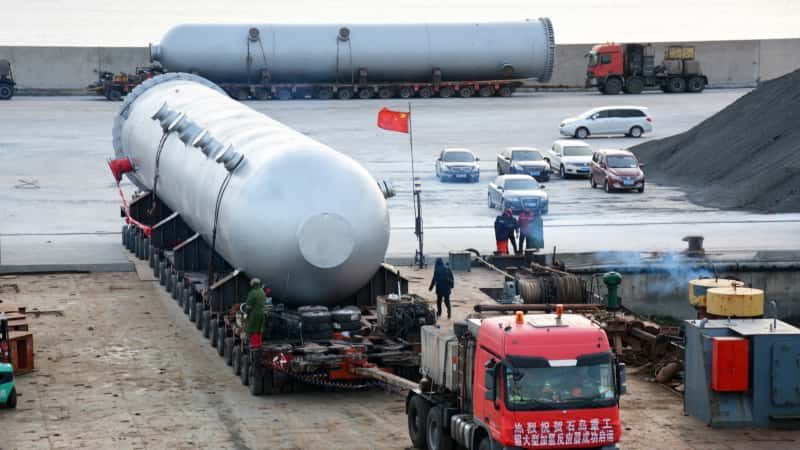
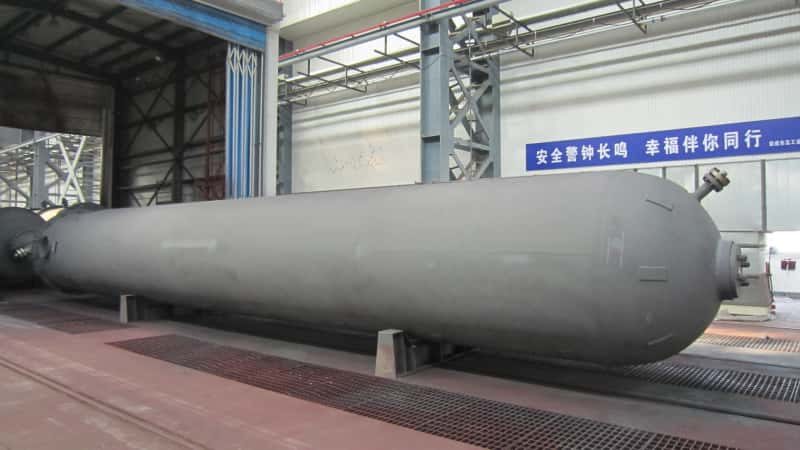
Industrial process columns in an existing WSHI website photograph. Equipment imagery does not establish the project’s seismic code, approved inputs, foundation design or seismic qualification.
What Should Buyers Check Before Releasing Detailed Design or Fabrication?
Before requesting a firm technical proposal or authorizing seismic-sensitive design work, buyers should verify that the project package is internally consistent and that the approvals apply to the intended activity.
- Code basis: Is the construction code distinct from the adopted site-loading criteria? Are editions and local amendments recorded?
- Approved provenance: Are the seismic hazard, geotechnical and classification inputs tied to traceable source documents and authorized reviewers?
- Installed configuration: Are support elevations, participating supports, mass states, process inventories, major internals and preliminary geometry defined?
- Clear interface responsibility: Does each party know who determines site inputs, who assesses the supporting structure and who provides equipment outputs?
- Controlled exceptions: Are provisional values, supplier deviations and unresolved interfaces recorded with owners and closure dates?
- Revision alignment: Do the equipment datasheet, design basis, supplier drawings and civil interface documents use compatible revisions?
- Release decision: Are holds and any limited preliminary-work authorizations explicit? Has a responsible engineer evaluated changes affecting final equipment design?
The project-specific approved documents and contractual quality plan govern the actual release decision; this editorial checklist is not a universal mandatory fabrication authorization form. Buyers should retain the sign-off and technical basis rather than relying on an undocumented email stating that the seismic input is “acceptable.”
Frequently Asked Questions
Can the equipment manufacturer choose a site class from the project address?
No. Site class or an equivalent site-ground parameter must be established under the applicable design method by the responsible geotechnical and structural engineers. A location-based tool can provide useful hazard information but does not by itself approve soil conditions or the complete equipment design basis.
Is the latest ASCE 7 edition automatically required for a new column?
No. Confirm the version adopted by the authority having jurisdiction and the project’s contract, including applicable amendments. ASCE’s published 7-22 information is a reference, not automatic proof that every site uses that edition.
Can an equipment supplier use preliminary seismic inputs for a firm fabrication release?
Not without resolving the relevant design and contractual approval requirements. Preliminary inputs may support limited early work when expressly authorized, but the owner and responsible engineers should define which activities remain on hold and assess any design changes before fabrication affected by those inputs.
Why are operating liquid inventories important to seismic design inputs?
Inventory changes can change installed mass and its distribution. The process team should supply the applicable operating cases, while the structural and equipment design authorities determine which cases and combinations need evaluation. One shipping weight does not represent every installed condition.
Who approves the equipment-to-foundation seismic interface?
The project contract must allocate responsibilities. Typically, the equipment designer develops its agreed support and equipment outputs, while the designated civil/structural engineer reviews the supporting works and required interface conditions. The EPC or owner coordinates the approved basis and change-control process.
Conclusion
A reliable seismic design handover starts with approved source data, not a guessed seismic zone. EPC buyers should confirm the adopted code edition, site investigation, installation and support arrangement, process inventory, geometry, and the origin and approval status of each design input. The supplier’s weight and reaction outputs must then be coordinated with the civil team using matching revisions.
For a large custom process column, submit the equipment datasheet, project seismic design basis, geotechnical information, support configuration, mass-condition register and outstanding-interface log. Clearly state who approves each input and which changes require renewed review. That creates a more defensible basis for technical quotation, detailed design and fabrication release without implying that any checklist replaces engineering assessment.
References
- American Society of Civil Engineers (ASCE) — ASCE 7 and published edition/supplement information. Official standard overview; verify the project-adopted edition separately.
- ASCE — About the ASCE Hazard Tool. Official explanation of location- and edition-specific hazard lookup.
- U.S. Geological Survey (USGS) — Design Ground Motions Portal. Official seismic design data resources by design document.
- American Society of Mechanical Engineers (ASME) — BPVC Section VIII, Division 1. Official public product scope; not a substitute for contract-applicable proprietary provisions.
- ASCE — ASCE/SEI 7-22 Overview. Public overview of general structural loads, including supported and interconnected nonbuilding structures.