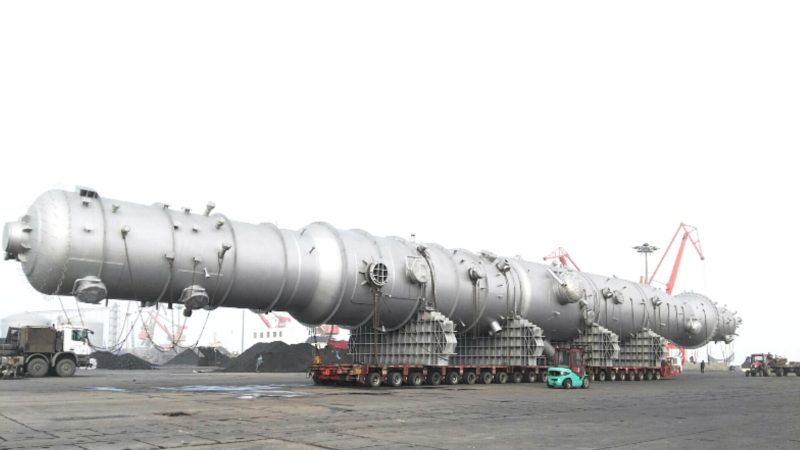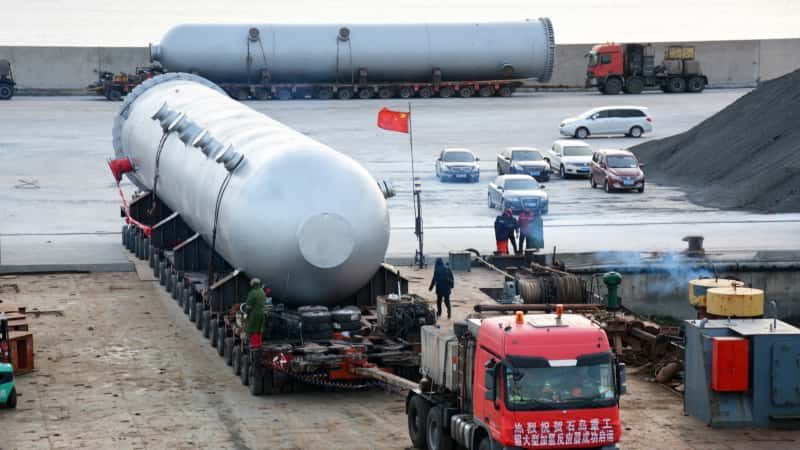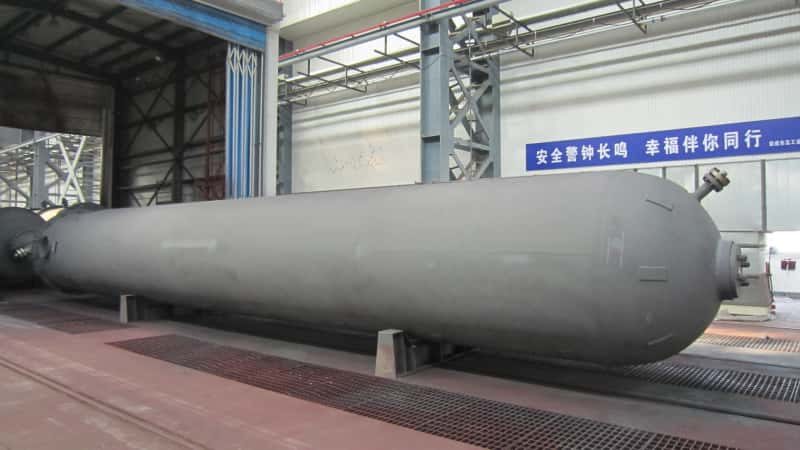

A pressure vessel designed for a specified maximum pressure and temperature is not automatically suitable for every high-temperature hydrogen service. The risk of high-temperature hydrogen attack (HTHA) depends on the actual hydrogen exposure, the temperature experienced by the metal, the metallurgy, fabrication condition, and relevant exposure history.
Before selecting materials for a high-temperature hydrogen pressure vessel, EPC buyers should provide the hydrogen partial pressure and metal-temperature conditions that occur together, identify normal and credible non-normal operating cases, document the intended exposure period, and establish the material, welding, and heat-treatment requirements for specialist review. Design pressure and maximum process temperature alone do not provide a complete HTHA material-selection basis.
This information is especially relevant to refinery and petrochemical equipment such as hydrogenation reactors, hydroprocessing vessels, and high-pressure process separators.
The purpose of this guide is to help buyers prepare a traceable technical package for the owner, process engineer, materials specialist, and complete-equipment manufacturer. It does not prescribe universal safe operating limits or replace the professional assessment required for the actual process and materials.
Why Are Design Pressure and Maximum Temperature Not Enough?
High-temperature hydrogen attack is a metallurgical damage mechanism associated with hydrogen exposure at elevated temperatures.
Hydrogen can enter susceptible steels and react with carbon-containing constituents, leading to decarburization and the formation of methane within the metal. Over time, internal cavities and fissures can develop and impair the integrity of the pressure boundary.
The UK Health and Safety Executive’s HTHA safety alert explains this mechanism and highlights concerns involving carbon steel, welds, heat treatment, and actual service conditions.
Mechanical Design Conditions and HTHA Exposure Conditions Serve Different Purposes
Pressure-vessel design pressure and design temperature are needed for mechanical construction and the applicable design calculations.
However, the conditions relevant to HTHA assessment are not necessarily identical to the maximum values on the mechanical datasheet.
| Parameter | Mechanical design purpose | HTHA material-review question |
|---|---|---|
| Design pressure | Establishes the mechanical pressure design basis | What hydrogen partial pressure actually or credibly occurs under relevant service conditions? |
| Design temperature | Supports mechanical material and allowable-stress calculations | What temperatures can the susceptible metal experience, and for how long? |
| Normal operating pressure | Describes a representative operating state | What are the coincident hydrogen concentration and absolute pressure? |
| Normal operating temperature | Describes a representative process condition | How does the process temperature relate to actual local metal temperature? |
| Maximum or upset conditions | Identifies credible departures requiring design review | Which temperature, hydrogen exposure, and duration combinations require specialist assessment? |
| Intended service life | Establishes project lifecycle requirements | What exposure history or projected operating duty is relevant to the selected assessment method? |
Editorial comparison for procurement. It is not a substitute for the governing vessel construction code or API RP 941.
A vessel may experience high total pressure when its hydrogen concentration is relatively low. In another operating state, a different gas composition may create a more significant hydrogen partial pressure.
Similarly, a maximum process temperature may not describe every metal location affected by heating, cooling, insulation, or other operating conditions.
The purchasing team therefore needs more than the two highest numbers shown on a datasheet.
HTHA Is Not the Same as Every Form of Hydrogen Damage
HTHA should be distinguished from hydrogen embrittlement, hydrogen-induced cracking, sulfide stress cracking, and other hydrogen-related damage mechanisms.
Different mechanisms can involve different combinations of metallurgy, hydrogen source, temperature, water or corrosive species, stress, and fabrication condition.
For example, hydrogen charging associated with an aqueous corrosive environment should not automatically be evaluated using the same criteria as HTHA in elevated-temperature hydrogen service.
A professional materials assessment may need to consider multiple mechanisms simultaneously.
For broader discussion of process corrosion and material specifications, see the site’s chemical pressure-vessel corrosion and material selection guide. This article concentrates on the additional information needed for high-temperature hydrogen service.
How Should Hydrogen Partial Pressure and Metal Temperature Be Documented?
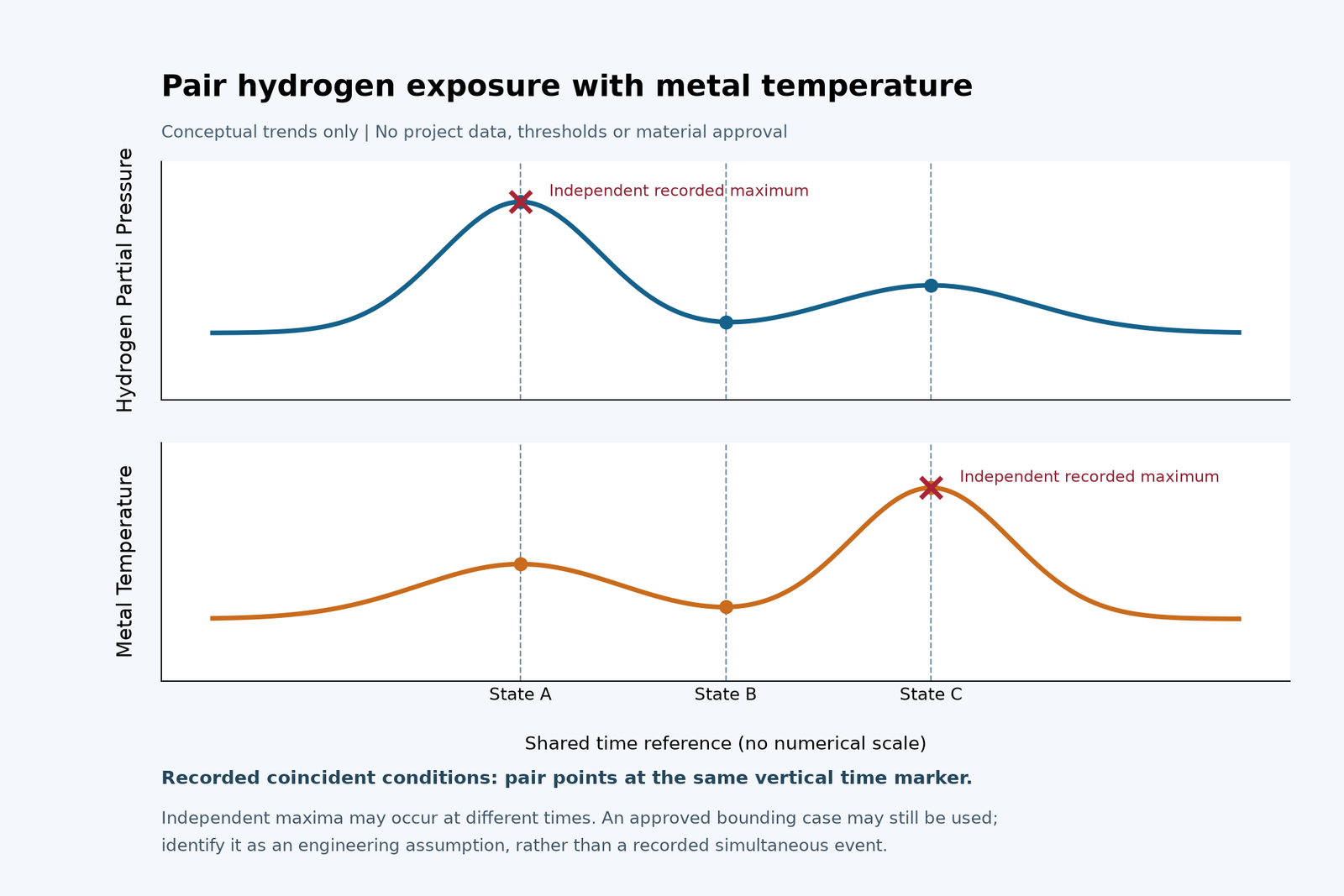
Hydrogen partial pressure and metal temperature should be described as conditions occurring together at a defined location and operating state.
Independent maximum values are useful information, but they must not be misrepresented as a measured operating point if they occurred under different conditions.
Distinguish Total Pressure From Hydrogen Partial Pressure
For a gas mixture under an appropriate ideal-gas approximation:
pH₂ = yH₂ × Pabsolute
where:
- pH₂ is the hydrogen partial pressure;
- yH₂ is the hydrogen mole fraction in the relevant gas mixture; and
- Pabsolute is the absolute total pressure.
This relationship is a simplified expression for an applicable gas-phase case. Actual engineering assessment may require consideration of non-ideal behavior, phase equilibrium, and the appropriate treatment of hydrogen in a liquid-containing or multiphase service.
The process engineer should approve the hydrogen-exposure calculation method used for the actual system.
A gauge-pressure reading must not be inserted into an absolute-pressure calculation without the appropriate conversion.
For gas-liquid or liquid hydrogen-containing process duties, the project should state how the relevant hydrogen exposure has been determined and which technical method supports that assessment.
Record Conditions as Paired Data
A useful HTHA input register should distinguish the following information.
| Required field | What should be recorded | Why the distinction matters |
|---|---|---|
| Equipment and location | Vessel tag, compartment, zone, and relevant exposed metal location | Conditions may not be uniform across the equipment |
| Operating state | Normal, startup, shutdown, upset, cleaning, or another defined condition | Different states can create different exposure combinations |
| Time reference | Date, timestamp, duration, or defined design scenario | Relates the values to the same event or condition |
| Total pressure | Value, unit, and absolute or gauge basis | Supports correct hydrogen partial-pressure determination |
| Hydrogen composition | Mole fraction or another clearly documented analytical basis | Total pressure alone is insufficient |
| Hydrogen partial pressure | Calculated or specified value, unit, method, and source | Central HTHA exposure input |
| Bulk fluid temperature | Relevant stream temperature and measurement point | Does not automatically equal metal temperature |
| Metal temperature | Measured, calculated, or conservatively established metal condition | Must represent relevant material exposure |
| Data status | Measured, calculated, estimated, bounded, or unverified | Prevents assumptions being presented as observed facts |
| Technical owner | Engineer responsible for the information | Enables clarification and approval |
Editorial data-collection template, not an API-prescribed form.
Pressure and temperature should be recorded in consistent units and with a traceable reference basis.
A material reviewer should be able to identify exactly where each value originated and whether a suitable model, instrument record, or engineering assumption supports it.
Do Not Artificially Combine Unrelated Maxima
Suppose the highest recorded hydrogen partial pressure occurs during one operating state, while the highest metal temperature occurs during another.
Presenting those values as though they occurred together creates a hypothetical combination rather than a verified historical observation.
The distinction matters because the materials review should understand actual or credible exposure conditions.
A deliberately conservative design-envelope combination may still be selected by the responsible engineering team. If so, it should be explicitly identified as an approved bounding assumption, not falsely described as a measured simultaneous event.
Identify Hot Spots and Location Differences
The metal temperature of a complete vessel may not be uniform.
The project should consider whether the selected bulk-fluid temperature adequately represents potentially critical metal locations.
Depending on the equipment and service, additional attention may be required for local heating, mixing, thermal gradients, internal flow patterns, and other mechanisms capable of changing local metal temperature.
The HSE safety alert explicitly identifies hot spots and the accuracy of recorded process conditions as concerns in HTHA assessment.
The necessary temperature-estimation method, required conservatism, and critical locations must be established by the responsible engineering specialists.
Which Operating Histories and Transient Conditions Matter?
A materials review for high-temperature hydrogen service should identify not only the intended steady operating condition but also relevant transient exposure and the expected operating history.
HTHA is affected by exposure severity and time. A single nominal operating point can therefore conceal important information.
Include Normal, Startup, Shutdown, and Credible Upset Conditions
The process data package should identify the conditions requiring assessment.
| Operating case | Data needed | Review question |
|---|---|---|
| Normal steady operation | Coincident hydrogen partial pressure, metal temperature, and representative duration | What exposure defines routine operation? |
| Startup and heating | Sequence of pressure, gas composition, and temperature changes | Can relevant hydrogen exposure occur before the equipment reaches normal steady state? |
| Shutdown and cooling | Changes in pressure, temperature, and process composition | Are important non-steady exposure combinations represented? |
| Process upset or trip | Credible excursions, duration, and recovery basis | Does a departure from routine operation require separate materials review? |
| Alternative feed or operating mode | Composition and operating-condition changes | Does the proposed material basis cover each specified service? |
| Stripping, regeneration, or cleaning | Relevant hydrogen-containing conditions and temperature changes | Are these modes covered where applicable? |
| Long-term operating history | Recorded or projected exposure, including changes and interruptions | Has the specialist received enough information for the selected assessment approach? |
The applicable cases must be determined from the project’s approved operating and hazard-review basis. The table does not prescribe plant operating procedures.
Not every hypothetical event should be treated as a routine operating case. The owner and responsible process team should identify credible conditions and approve the required assessment scope.
Preserve Duration and Sequence
For an existing installation, operating history may include years of service, modifications, process changes, and periods of abnormal exposure.
For a new vessel, the corresponding input is the intended operating duty and credible future service envelope, supported by the project design basis.
The materials engineer may require information on:
- The intended continuous or intermittent operating pattern.
- Expected exposure over the project service period.
- Frequency and duration of relevant transient events.
- Material changes to operating pressure, temperature, or feed chemistry.
- Uncertain or missing historical data, where the review concerns existing equipment.
- Planned changes that could alter hydrogen exposure.
A historical record with missing periods should not be described as complete.
Do Not Reduce the History to an Unqualified Average
An average annual temperature or pressure may obscure short periods of more severe exposure.
Likewise, an unqualified maximum without its duration does not describe the full history.
The method for evaluating variable exposure must be selected by the materials engineer using the project-adopted standard and any appropriate specialist methodology.
This article does not assign an HTHA damage fraction or estimate remaining safe life from a time series.
In July 2026, the specialist engineering organization Equity discussed anticipated time-dependent developments for API RP 941. That publication reinforces the value of maintaining accurate exposure histories, but it is a dated technical discussion rather than proof that a particular later edition has been formally adopted by the project. (Equity Engineering, July 2026)
Preserve the Difference Between Existing Equipment and New Equipment
A new vessel’s material-selection basis is primarily concerned with the proposed service conditions, relevant exposure duration, and design requirements.
An existing vessel also requires knowledge of its actual material condition, historical operation, repairs, and potentially accumulated damage.
These are related but different engineering decisions.
For broader pressure-vessel lifecycle considerations, refer to the pressure vessel service-life guide. This article does not provide an inspection interval, online safety assessment, or remaining-life calculation.
What Material, Welding and Heat-Treatment Evidence Should Be Reviewed?
Accurate operating data must be matched with an equally accurate description of the proposed or existing material system.
A generic statement such as “carbon steel” or “Cr-Mo steel” is not sufficient to establish the condition of every relevant pressure-boundary component.
Identify the Actual Material and Fabrication Condition
The responsible materials and mechanical engineering teams may need the following evidence.
| Evidence category | What buyers should request | Why it matters |
|---|---|---|
| Base-material specification | Applicable grade, product form, governing specification, and relevant chemistry requirements | Establishes the material actually proposed or installed |
| Material traceability | Heat numbers, material test records, and identification links to components | Connects documentation to the manufactured vessel |
| Component allocation | Shell, heads, forgings, nozzles, and other relevant pressure-boundary parts | Avoids assuming every component has identical metallurgy |
| Weld construction | Applicable welding procedures, consumables, and weld configuration | Welding can create material conditions distinct from base metal |
| Heat-treatment specification | Required PWHT or other heat treatment, with the approved basis | Heat treatment can influence the material condition relevant to HTHA assessment |
| Executed heat-treatment records | Actual treatment records, traceability, and deviations where applicable | Confirms what was performed rather than only what was planned |
| Cladding or weld overlay | Material system, extent, and applicable interface requirements | Requires assessment of the whole pressure boundary, not just the internal exposed layer |
| Repairs and modifications | Relevant manufacturing rework, repair welding, and subsequent heat treatment | Can change the actual material condition |
| Verification documents | Appropriate inspection, examination, and material identification records | Supports controlled technical acceptance |
Editorial evidence checklist. Required records depend on the contract, material specification, and applicable construction requirements.
The relevant evidence should be available before a specialist signs off a final material selection.
Why PWHT Records Matter
Post-weld heat treatment (PWHT) can affect the residual-stress and metallurgical condition associated with a welded component.
The HSE HTHA alert identifies particular concerns involving susceptible welds and the distinction between post-weld heat-treated and non-post-weld heat-treated carbon steel.
However, PWHT is not a universal guarantee against HTHA.
A materials engineer should assess the actual material grade, weld condition, governing recommendations, service environment, and heat-treatment evidence together.
The buyer should therefore distinguish:
- PWHT required by the design and material specification.
- PWHT proposed in the supplier’s manufacturing plan.
- PWHT actually executed and supported by records.
- Any fabrication change that alters the approved treatment condition.
A planned heat treatment cannot substitute for a completed, traceable manufacturing record.
Review the Entire Material System
Some heavy refinery vessels use a structural alloy-steel base together with an internal clad layer or weld overlay.
That construction must be reviewed as a system.
An internal corrosion-resistant layer does not automatically establish that the structural base metal is resistant to the hydrogen exposure relevant to its service.
Similarly, adding corrosion allowance does not make an otherwise unsuitable material resistant to internal metallurgical degradation.
The material specialist should review the pressure boundary, applicable hydrogen transport and damage considerations, fabrication requirements, and other relevant corrosion mechanisms.
The existence of a material grade in a manufacturer’s general product portfolio does not establish suitability for a particular hydrogen service.
Keep Routine Material Verification Separate From HTHA Approval
Material certificates, positive material identification, and manufacturing quality records can establish important facts about the components supplied.
They do not independently determine whether a proposed material is acceptable for a specified combination of hydrogen exposure, temperature, time, and fabrication condition.
The materials engineering approval must connect the verified metallurgy with the approved service basis.
How Should API RP 941 and Historical HTHA Alerts Be Interpreted?
API RP 941 is a key technical reference for evaluating steels in elevated-temperature hydrogen service in refineries and petrochemical facilities.
However, a useful procurement review must distinguish the applicable standard edition, its technical scope, the selected evaluation method, and information learned from past failures.
Confirm the Applicable API RP 941 Edition
The API official publications catalog identifies API RP 941 and describes guidance based on operating experience and experimental data, including the role of hydrogen partial pressure, temperature, material chemistry, heat treatment, and cladding.
The catalog’s 2025 listing identifies the Eighth Edition, with listed corrections and an addendum. On October 26, 2026, the API official webstore also listed Edition 8 as Current, with Addendum 1 (August 2020) and Errata 2 (June 2016). This dated publication check does not determine which edition a particular project has adopted.
A July 2026 technical publication from Equity Engineering describes a forthcoming Ninth Edition and proposed time-dependent design curves.
Because the publication and applicability of later revisions must be verified against official API information and project documents, the RFQ should explicitly identify:
- The edition and addenda adopted by the project.
- Applicable owner or licensor material specifications.
- The required method of assessing hydrogen exposure.
- The responsible authority for materials approval.
- Any updated guidance that must be considered before design freeze.
The API RP 941 official webstore entry should be consulted to confirm the available official edition before establishing the contractual basis.
This article does not reproduce proprietary Nelson curves or claim to have reviewed an unavailable full standard edition.
Understand the Limitations of Simplified Curve Screening
Nelson curves have historically been used to assess combinations of hydrogen partial pressure and temperature for specified steels.
They should not be understood as a universal safety guarantee independent of material condition, exposure history, uncertainty, and subsequent technical developments.
The HSE’s December 2018 alert cautioned against treating the historical curves as absolute boundaries below which no attack could occur.
That warning reflected the data and standard versions available at the time. It remains an important lesson about engineering uncertainty, but should not be used to describe the complete technical content of a newer edition without checking that edition.
A qualified materials specialist must interpret the project-relevant data and standard requirements. Buyers should not use a single point on an old published diagram to approve a vessel themselves.
What the Tesoro Anacortes Investigation Demonstrated
The U.S. Chemical Safety and Hazard Investigation Board investigated the catastrophic rupture of a heat exchanger at the Tesoro refinery in Anacortes, Washington, following an accident in April 2010.
The CSB’s final investigation report was released in 2014, followed by an HTHA safety alert on August 11, 2016.
The investigation and alert highlighted the consequences of relying on incomplete knowledge of actual exposure and material vulnerability. (CSB Safety Alert)
For procurement, the relevant lessons include:
- Verify actual hydrogen partial pressure and temperature conditions.
- Document the relevant metallurgical and fabrication condition.
- Consider the limitations of the technical guidance available for the specific material.
- Escalate unresolved high-consequence material questions to qualified specialists.
The historical CSB alert included specific numerical recommendations in response to the incident. Those recommendations should be read in their original context; they are not presented here as a universal worldwide design threshold or as a substitute for the currently adopted project requirements.
Do Not Confuse a New-Equipment Design Review With In-Service Fitness Assessment
Selection of materials for a proposed vessel and assessment of an existing vessel that may already have damage are different activities.
A new-equipment design review should provide enough evidence to establish a defensible material and fabrication specification.
An existing-equipment integrity assessment may require actual exposure history, inspection evidence, damage characterization, repair records, and a separate engineering methodology.
Buyers should not treat an in-service inspection result as a substitute for a properly approved design-material basis, or treat new-equipment selection guidance as automatic authorization for continued operation of damaged equipment.
What Should Be Resolved Before Equipment Design and Procurement?
A complete high-temperature hydrogen service vessel should not proceed to final design based on an undocumented combination of process assumptions and generic material labels.
The procurement package must connect approved operating data, material-selection requirements, manufacturing records, and decision responsibilities.
Prepare a Traceable RFQ Data Package
| RFQ category | Required project information |
|---|---|
| Vessel identification | Equipment tag, type, intended process function, and relevant compartments |
| Process medium | Composition, hydrogen content, phases, contaminants, and applicable stream variations |
| Pressure data | Normal and relevant non-normal total pressures, units, and pressure reference basis |
| Hydrogen exposure | Coincident or approved bounding hydrogen partial-pressure conditions, calculation method, and data source |
| Thermal data | Relevant metal temperatures, process temperatures, hot spots, and supporting calculations |
| Operating history or duty | Expected duration, cycles, and relevant excursions for the specified assessment method |
| Applicable codes | Pressure-vessel construction code and project-adopted API RP 941 edition and other requirements |
| Materials specification | Proposed or approved grades, product forms, chemical requirements, and component allocation |
| Welding and PWHT | Required fabrication methods, heat-treatment basis, and verification deliverables |
| Other damage mechanisms | Additional corrosion, hydrogen-related, thermal, and mechanical considerations requiring review |
| Equipment scope | Complete vessel, integrated nozzles, internals, overlays, and manufacturing interfaces |
| Documentation | Data sheets, materials approval, traceability, inspection plan, and required final records |
| Open issues | Missing data, assumptions, deviations, technical owners, and approval hold points |
Editorial EPC data handover. The governing purchase specification defines actual contractual deliverables.

Assign Technical Responsibility
A practical division of responsibility may be:
Owner and process engineer: Define the actual process medium, operating cases, hydrogen composition, pressure and temperature histories, and credible deviations.
Materials or corrosion engineer: Determine the applicable damage mechanisms, review the approved API RP 941 edition and other requirements, and approve the proposed material basis within their assigned authority.
Mechanical and vessel designer: Apply the approved construction requirements and coordinate material, design, thermal, and fabrication conditions.
Vessel manufacturer: Confirm the proposed equipment and manufacturing scope, maintain the required traceability, provide relevant material and heat-treatment records, and identify technical deviations.
EPC or project quality team: Verify that responsibilities, hold points, deliverables, and final approvals are consistent with the contract.
The allocation may differ by project, but the RFQ should not leave essential materials assessment implicitly assigned to whichever supplier receives the enquiry.
Resolve Critical Data Gaps Before Design Freeze
The following should remain open technical items until appropriately resolved:
- Hydrogen concentration or partial pressure is missing or based on an unclear pressure reference.
- Temperature data describe only the bulk fluid when local metal temperatures could differ materially.
- Severe or non-normal conditions have not been evaluated.
- A material grade is proposed without its actual fabrication and heat-treatment requirements.
- The project has not confirmed its adopted API RP 941 edition.
- Relevant material or heat-treatment deviations remain unapproved.
- The scope of the materials specialist’s review has not been established.
A supplier may prepare an indicative or budgetary quotation while some data are provisional, provided the limitations are clearly stated.
Final material approval and fabrication release should not rely on unresolved service assumptions that could change the pressure-boundary material or required fabrication process.
For appropriate projects, the company’s industrial reactor product range provides a reference for complete reactor pressure-vessel manufacturing enquiries.
The precise hydrogen-service suitability, proposed metallurgy, engineering responsibilities, testing requirements, and contractual commitments must be established for each project.
Frequently Asked Questions
Is design pressure alone sufficient for high-temperature hydrogen material selection?
No. Design pressure is important for mechanical design, but the HTHA review needs the relevant hydrogen partial-pressure exposure, metal temperature, operating conditions, and material state. The applicable data should be confirmed by the responsible process and materials engineers.
Are high-temperature hydrogen attack and hydrogen embrittlement the same?
No. HTHA is a specific elevated-temperature degradation mechanism involving hydrogen interaction with susceptible steel microstructures, potentially producing decarburization and internal fissuring. Other hydrogen-related cracking or embrittlement mechanisms can arise under different conditions. Material selection must consider the mechanisms relevant to the actual service.
Does passing a manufacturing pressure test prove that a vessel is resistant to HTHA?
No. An accepted construction pressure test demonstrates compliance with its specified pressure-test requirements. It does not expose the material to the full intended hydrogen service history or validate long-term resistance to a specific metallurgical damage mechanism.
Can one Nelson curve assessment cover every hydrogen-containing stream?
Not automatically. The assessment depends on the adopted guidance, metallurgy, relevant hydrogen exposure, temperature, phase behavior, time-related considerations, and project-specific requirements. A qualified materials engineer should establish whether the selected evaluation method is appropriate for the actual process.
Conclusion
High-temperature hydrogen pressure-vessel material selection should be based on a documented and technically approved exposure basis, not only the design pressure, maximum temperature, or a generic material description.
EPC buyers should provide hydrogen partial pressure and metal temperature as meaningful paired conditions, identify the relevant operating and exposure history, and document the proposed material and fabrication state. The applicable API RP 941 edition and any supplementary project requirements must be confirmed before final approval.
For a complete refinery or petrochemical pressure-vessel enquiry, submit the stream composition, pressure and temperature conditions, operating scenarios, intended duty, applicable standards, and material and heat-treatment requirements.
These inputs allow qualified specialists and the equipment manufacturer to evaluate the proposed construction on a traceable basis, while leaving final materials suitability and engineering approval with the responsible design authority.
References
- American Petroleum Institute (API). API Publications Catalog 2025, entry for RP 941, Steels for Hydrogen Service at Elevated Temperatures and Pressures in Petroleum Refineries and Petrochemical Plants. The catalog identifies the Eighth Edition, February 2016, and its listed corrections and addendum. This historical listing does not independently establish the publication status of a later edition. https://www.api.org/-/media/files/publications/2025-catalog/2025_pubs%20catalog.pdf
- API. API RP 941 — Official Webstore Listing. Consult the publisher’s current record and project documents to confirm the relevant edition and amendments. https://www.apiwebstore.org/standards/941
- UK Health and Safety Executive (HSE). (December 2018). High Temperature Hydrogen Attack: Safe Use of Carbon Steel. Safety alert CEMHD 2-2018. Historical UK regulatory guidance; not a universally applicable US legal requirement. https://www.hse.gov.uk/safetybulletins/high-temperature-hydrogen-attack.htm
- U.S. Chemical Safety and Hazard Investigation Board (CSB). (August 11, 2016). CSB Issues Safety Alert Stemming from Fatal Tesoro Anacortes Investigation. Safety warning based on the 2010 incident and associated investigation. https://www.csb.gov/csb-issues-safety-alert-stemming-from-fatal-tesoro-anacortes-investigation/
- CSB. Tesoro Anacortes Refinery Fatal Explosion and Fire. Investigation documentation, including the final investigation report. https://www.csb.gov/tesoro-anacortes-refinery-fatal-explosion-and-fire-/
- Equity Engineering. Sutton, N. (July 24, 2026). Reassessing Equipment in High-Temperature Hydrogen Service Using the New Time-Dependent Nelson Curves. A dated specialist discussion of anticipated API RP 941 Ninth Edition developments; not an official confirmation of the standard’s publication or project adoption. https://e2g.com/industry-insights-ar/reassessing-equipment-in-high-temperature-hydrogen-service-using-the-new-time-dependent-nelson-curves/