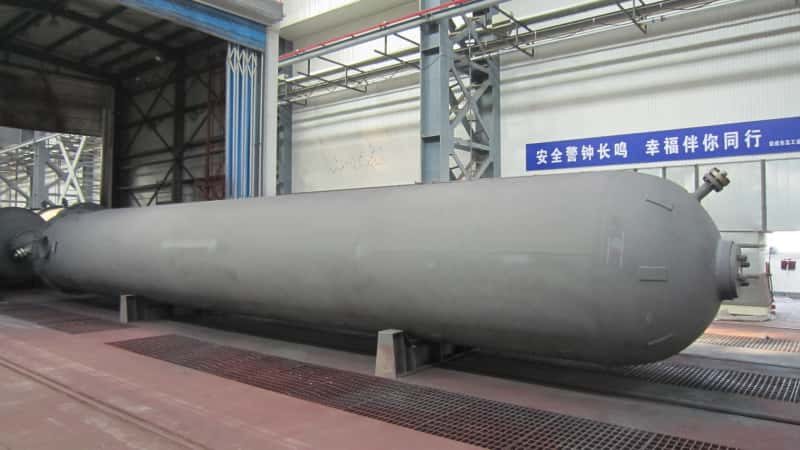

Industrial evaporator systems are used when chemical plants, environmental projects, and process manufacturers need to concentrate liquid streams, reduce wastewater volume, recover useful materials, or prepare feed for downstream treatment. For EPC buyers, selecting an industrial evaporator system is not about purchasing a single small component. It requires reviewing the complete equipment package, including evaporation vessels, heat exchangers, condensers, separators, storage vessels above 1,000 liters, materials, corrosion protection, inspection requirements, documentation, and project delivery conditions.
WSHI focuses on complete project-based equipment, including custom pressure vessels, evaporator-related equipment, industrial heat exchangers, process vessels, and large industrial storage tanks. This guide explains what buyers should confirm before requesting a quotation for chemical liquid concentration, wastewater evaporation, brine concentration, solvent recovery, or process recovery projects.
For environmental context, the U.S. EPA provides Effluent Guidelines information for industrial wastewater categories. For industrial energy context, the U.S. Department of Energy explains process heat basics. For pressure equipment context, ASME BPVC Section VIII Division 1 may be relevant where vessels or exchangers are pressure-rated. Final design and compliance requirements should always be confirmed by the owner, EPC contractor, inspection authority, and qualified engineers.
An industrial evaporator system can be selected by evaporation capacity alone.False
Evaporation capacity is only one input. Liquid composition, fouling risk, corrosion, heat source, pressure or vacuum conditions, materials, inspection scope, and downstream interfaces all affect system selection.
Evaporator procurement should be treated as a complete equipment package for EPC projects.True
A complete package may include evaporation vessels, heat exchangers, condensers, separators, storage vessels, piping interfaces, coating, inspection, documentation, and delivery planning.
What Is an Industrial Evaporator System?
An industrial evaporator system uses heat to remove water, solvent, or another volatile component from a liquid stream. The remaining liquid becomes more concentrated, while the vapor may be condensed, recovered, treated, reused, or discharged according to the process design.
Common applications include chemical liquid concentration, industrial wastewater volume reduction, brine concentration, solvent recovery support, mother liquor concentration, process condensate handling, environmental treatment projects, and feed preparation for crystallization or further treatment.
Depending on the project, an evaporator system may include evaporation vessels, shell and tube heat exchangers, condensers, separator vessels, large feed or concentrate storage vessels, transfer interfaces, coating or lining systems, controls interfaces, and final documentation.
Why Evaporator Selection Matters for EPC Projects
Evaporation affects energy use, material compatibility, corrosion risk, fouling, condensate quality, operating stability, and downstream treatment. A poorly selected evaporator system may create scaling, unstable operation, high energy consumption, poor concentration performance, cleaning difficulty, or maintenance problems.
For EPC buyers, the correct question is not only what type of evaporator is needed. Buyers should also ask what liquid will be concentrated, what target concentration is required, what heat source is available, what materials are suitable, what fouling or scaling risks exist, what downstream equipment must connect with the system, what inspection and documentation requirements apply, and how large equipment will be transported and installed.
For pressure vessels for chemical plants, these questions should be addressed before procurement begins.
Main Industrial Evaporator System Types
Falling Film Evaporator Systems
Falling film evaporators are often used for heat-sensitive liquids or applications requiring short residence time. Liquid flows as a thin film over heat transfer surfaces while vapor is generated. They may be suitable for certain chemical, food, pharmaceutical, or wastewater concentration duties, depending on process requirements.
Buyers should review feed distribution, fouling risk, material compatibility, vacuum condition, and cleaning method before selecting this type.
Forced Circulation Evaporator Systems
Forced circulation evaporators use pumps to move liquid through heat exchangers and evaporation vessels. They may be considered for liquids with higher viscosity, scaling tendency, suspended solids, crystallization-related service, or more difficult wastewater conditions.
For industrial wastewater or brine concentration, forced circulation systems are often reviewed because circulation velocity and heat transfer control can help manage difficult fluids. Final suitability depends on liquid analysis and process design.
Multi-Effect Evaporator Systems
Multi-effect evaporation uses vapor from one effect as the heating medium for another effect, improving steam economy compared with a single-effect system in suitable applications. It may be used where energy efficiency and continuous operation are important.
EPC buyers should evaluate steam availability, condensate handling, heat integration, operating complexity, fouling risk, and maintenance access.
Mechanical Vapor Recompression Systems
Mechanical vapor recompression, or MVR, uses compression to reuse vapor energy. It can reduce external steam consumption in some applications, but equipment selection, power consumption, compressor suitability, cleaning strategy, and fouling risk must be reviewed carefully.
The final process route should be selected by qualified engineers based on liquid properties, energy cost, operating schedule, reliability requirements, and treatment objectives.
Evaporator Type Comparison for EPC Buyers
| Evaporator Type | Typical Strength | Buyer Review Point |
|---|---|---|
| Falling film | Short residence time and good heat transfer for suitable liquids | Feed distribution, fouling risk, vacuum condition, and cleanability |
| Forced circulation | Can handle more difficult liquids, scaling tendency, and higher solids in some services | Circulation velocity, pump duty, heat exchanger fouling, and material selection |
| Multi-effect | Improves steam economy where continuous operation and heat integration are suitable | Steam availability, condensate handling, effect arrangement, and operating complexity |
| MVR | Can reduce external steam use by reusing vapor energy in suitable cases | Power cost, compressor suitability, vapor quality, fouling, and maintenance strategy |
Key Selection Factors for EPC Buyers
Liquid Composition and Fouling Risk
Liquid analysis is the starting point. Buyers should provide chemical composition, dissolved solids, suspended solids, COD, salts, chlorides, pH, viscosity, boiling point elevation, foaming tendency, scaling tendency, and corrosive components.
A clean process liquid and a high-salinity wastewater stream may require very different equipment. Material selection and cleaning strategy should be based on actual liquid data, not assumptions.
Feed Flow and Target Concentration
Evaporator capacity depends on feed flow rate, inlet concentration, target concentration, and required evaporation rate. Buyers should clarify whether the project is continuous or batch operation, and whether capacity is based on average flow, peak flow, or future expansion.
The manufacturer should not guarantee concentration performance without process data and engineering review.
Heat Source and Utility Conditions
Heat may come from steam, thermal oil, hot water, waste heat, or vapor recompression. Each option affects system design, heat exchanger selection, pressure rating, control strategy, and operating cost.
A heat exchanger manufacturer should review heat duty, temperature approach, pressure drop, fouling, cleaning access, and material requirements. In many systems, a shell and tube heat exchanger may be used for robust industrial service.
Materials and Corrosion Protection
Evaporator systems often handle hot concentrated liquids, which may be more corrosive than the original feed. Chlorides, acids, alkalis, solvents, salts, and high temperature can all affect material selection.
Depending on the project, carbon steel, stainless steel, duplex stainless steel, lined steel, or project-specified materials may be considered. Coating, lining, passivation, or corrosion allowance should be reviewed carefully. Final material selection should be confirmed by the EPC contractor and qualified engineers.
Pressure, Vacuum, and Temperature Conditions
Evaporators may operate under atmospheric pressure, vacuum, or pressure depending on the process. Vacuum operation can reduce boiling temperature, while pressure operation may be required for specific duties.
If any vessel or exchanger falls under pressure equipment requirements, applicable standards such as ASME Section VIII or local codes may apply depending on project location and specification. The final code basis should be confirmed before fabrication.
Related Equipment in Evaporator Packages
An industrial evaporator system may include multiple complete pieces of equipment, such as evaporation vessels, separator vessels, shell and tube heat exchangers, industrial condensers, large feed or concentrate storage tanks above 1,000 liters, process buffer vessels, condensate collection vessels, and custom pressure vessels.
For industrial storage tanks, WSHI focuses on large project-based tanks above 1,000 liters, not small day tanks or compact containers. For solvent recovery, wastewater concentration, or chemical processing, storage vessels should be included in the complete project scope.
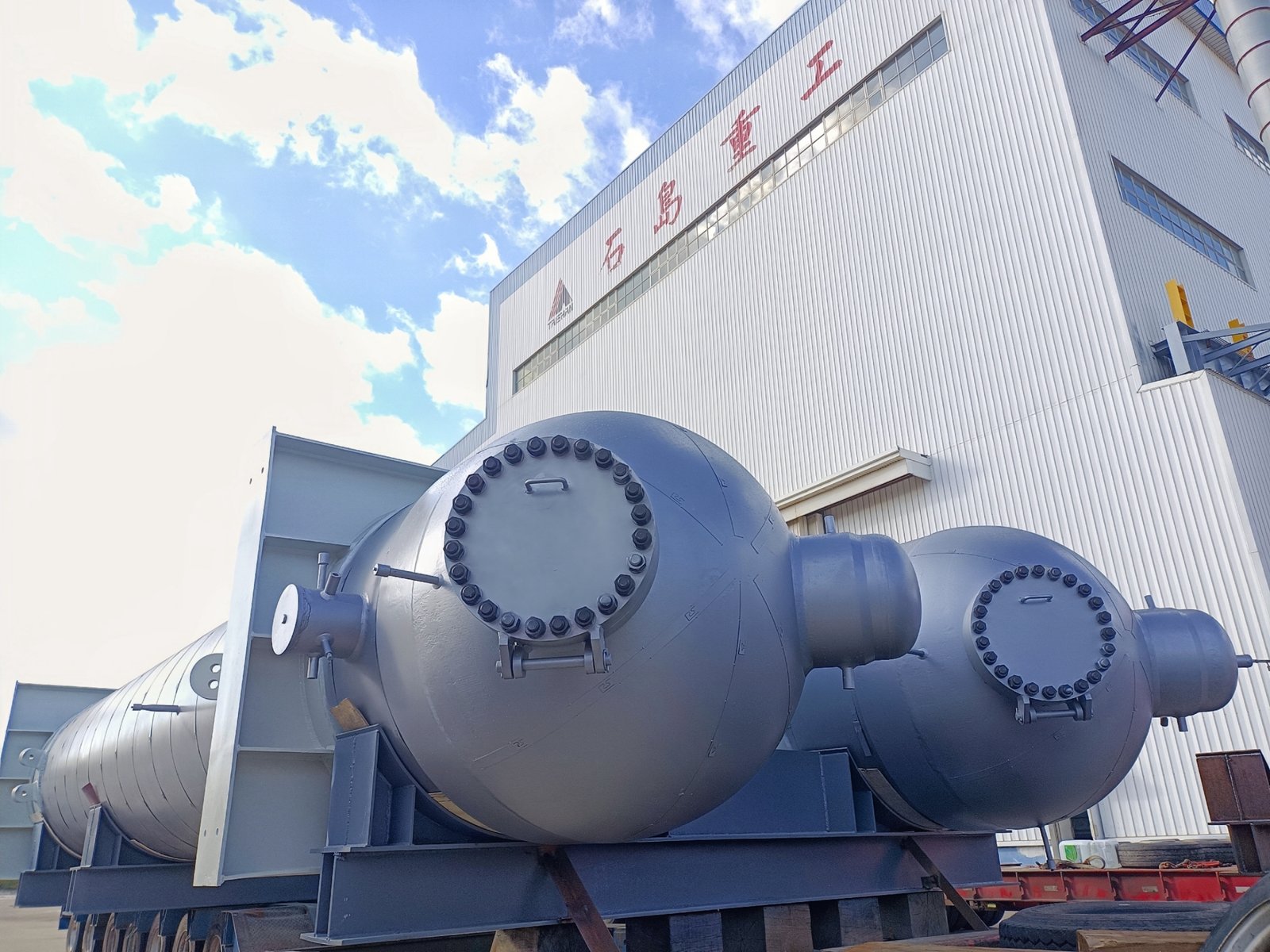
What Buyers Should Prepare Before Requesting a Quotation
| RFQ Item | Recommended Information |
|---|---|
| Liquid analysis | Composition, salts, chlorides, pH, COD, suspended solids, viscosity, foaming and scaling tendency |
| Capacity | Feed flow, inlet concentration, target concentration, evaporation rate, continuous or batch operation |
| Utilities | Steam, thermal oil, hot water, waste heat, power cost, cooling water, vacuum system, condensate handling |
| Materials | Material grade, corrosion allowance, lining, coating, cleaning chemicals, design life, service environment |
| Equipment scope | Evaporation vessels, heat exchangers, condensers, separators, storage vessels, supports, nozzles, documentation |
| Inspection and delivery | Code basis, NDT, pressure or leak testing, coating inspection, packing, lifting, transport limits, destination |
Manufacturing and Quality Control Considerations
Evaporator-related equipment requires controlled fabrication, especially where pressure, vacuum, corrosion, high temperature, or export documentation is involved. Manufacturing may include plate cutting, rolling, forming, welding, machining, nozzle fit-up, dimensional inspection, NDT, pressure or leak testing, vacuum testing where applicable, surface treatment, and final documentation.
For project-based pressure vessel manufacturing, EPC buyers should confirm approved drawings and datasheets, material certificates, welding procedure requirements, NDT scope according to project specifications, pressure, leak or vacuum test requirements where applicable, coating or lining requirements, final documentation package, packing, lifting, and delivery method.
A large-scale pressure vessel manufacturer should be able to support fabrication, inspection, coating, loading, and export delivery for large evaporator-related equipment.
Common Procurement Mistakes
One common mistake is choosing an evaporator system based only on evaporation capacity. The same capacity may require different equipment depending on fouling, corrosion, viscosity, solids, target concentration, and energy source.
Another mistake is not providing liquid analysis. Without liquid composition and operating data, the supplier cannot properly review material, scaling, cleaning, or thermal performance.
A third mistake is separating related equipment too much during procurement. Evaporators, heat exchangers, condensers, separator vessels, and storage tanks should be reviewed as one integrated project package.
Why Custom Manufacturing Matters
Industrial evaporator systems are usually project-specific. The process liquid, concentration target, operating pressure, vacuum condition, material, heat source, site layout, inspection requirements, and delivery route all affect equipment design and manufacturing.
WSHI supports project-based manufacturing for evaporator-related vessels, heat exchangers, condensers, storage vessels, separators, and custom chemical equipment. For chemical, petrochemical, environmental, and industrial wastewater projects, custom manufacturing helps align equipment with drawings, inspection requirements, and delivery schedules.
FAQ
What is an industrial evaporator system used for?
It is used to remove water, solvent, or volatile components from liquid streams for concentration, volume reduction, recovery, or downstream treatment.
What information is needed for an evaporator quotation?
Buyers should provide liquid composition, feed flow rate, inlet concentration, target concentration, temperature, pressure or vacuum conditions, material requirements, drawings, inspection scope, and delivery destination.
Which evaporator type is best for chemical liquid concentration?
There is no single best type. Falling film, forced circulation, multi-effect, and MVR systems may be suitable in different cases. Final selection depends on liquid properties, fouling risk, energy source, maintenance strategy, and process objectives.
Can WSHI supply only small evaporator parts?
WSHI focuses on complete project-based equipment such as evaporator-related vessels, heat exchangers, condensers, separators, and large storage vessels, not standalone small parts.
Are evaporator vessels pressure vessels?
They may be, depending on pressure, vacuum, temperature, volume, jurisdiction, and project requirements. The final classification should be confirmed by qualified engineers.
Conclusion
An industrial evaporator system should be selected as a complete project equipment package, not as a single small component. EPC buyers should confirm liquid composition, flow rate, target concentration, heat source, materials, pressure or vacuum conditions, inspection requirements, documentation, and delivery constraints before procurement.
If you are planning a chemical liquid concentration, wastewater evaporation, brine concentration, solvent recovery, or environmental treatment project, you can discuss your project requirements with an engineering team or download the pressure vessel catalog. Sharing drawings, liquid analysis, operating conditions, material requirements, inspection needs, and delivery terms will help support manufacturing feasibility review.