
How Should Buyers Specify Industrial Evaporators for Foaming Wastewater?
An industrial wastewater evaporator should do more than achieve a quoted evaporation rate. When wastewater foams during boiling, procurement teams also need confidence that the equipment can separate vapor from liquid, maintain manageable operating conditions, and produce condensate suitable for its intended downstream treatment or reuse. A quotation based only on daily wastewater volume leaves these questions unanswered.
For chemical manufacturers, pharmaceutical plants, and environmental EPC contractors, the starting point is a representative feed assessment. Equipment selection should then connect that assessment to the complete evaporation duty, including heating, vapor separation, condensation, concentrate handling, and project delivery.
A larger vapor separator always solves foaming wastewater carryover.False
Separation space is only one variable. Persistent foam, vapor loading, operating level and feed chemistry require representative testing and a complete process assessment.
Clear evaporator condensate is automatically suitable for reuse.False
Volatile substances can enter the vapor even without droplet carryover. Condensate must meet the intended use criteria under agreed sampling and test conditions.
Why Does Foaming Matter in Wastewater Evaporation?
Evaporation removes part of the water from a liquid stream, leaving a more concentrated residual liquid. However, some feeds form persistent foam during vapor generation. NPTEL’s evaporator solution-property guidance identifies foaming as a design consideration and explains that stable foam can leave with the vapor as entrainment. Consequently, a clear-looking feed sample at room temperature is not sufficient evidence of predictable behavior during evaporation.
Two contamination routes should be distinguished. Liquid droplets carried into the vapor stream can transport dissolved or suspended contaminants. Separately, volatile substances may transfer into the vapor even when droplet separation works effectively. EPA’s historical Evaporation Process capsule report discusses both carryover and volatile-organic contamination of condensate. This reference explains process risks; it does not establish current discharge limits or guarantee treatment performance.
Where Does This Procurement Problem Arise?
Relevant applications include chemical-production wastewater, cleaning and rinse streams, pharmaceutical process effluent, and other industrial liquids containing foam-forming substances. These descriptions are screening categories, not evidence that every wastewater within an industry will foam. Upstream recipes, cleaning chemicals, pretreatment, and batch scheduling can produce substantially different feeds at the same site.
Buyers should also define why evaporation is being considered. Reducing the volume sent for off-site treatment is a different objective from preparing condensate for reuse or producing a concentrate for further processing. Each objective leads to different acceptance criteria and equipment boundaries. Evaporation concentrates a residual stream; it should not be presented as automatically destroying its contaminants.
What Feed Information Should Buyers Provide?
Describe Variability, Not Just an Average Sample
Provide minimum, normal, and peak feed rates, operating hours, batch frequency, and expected production changes. Include available information on pH, dissolved salts, suspended solids, oils, surfactants, solvents, and relevant organic contaminants. Identify cleaning chemicals and upstream treatment additives, including antifoam already in use. Record the source and sampling conditions so that the engineering team understands what the analysis represents.
A single composite sample may conceal a short but difficult cleaning discharge. Ask whether separate samples are needed for normal production, cleaning cycles, and other credible operating conditions. Missing information should appear as a qualification in the quotation, not disappear behind a nominal treatment capacity.
Define the Concentration Endpoint
Specify both the incoming wastewater quantity and the desired concentrate condition. Daily feed capacity and hourly water evaporation capacity are not interchangeable. Buyers should also describe the intended concentrate destination, expected pumpability, allowable solids formation, and required discharge frequency.
Request a mass balance covering feed, condensate, concentrate, and relevant additional streams. Where several operating cases are expected, ask for those cases separately. A supplier’s assumptions about concentration limits, cleaning downtime, and available operating hours should be visible before competing quotations are compared.
How Should Industrial Evaporators for Foaming Wastewater Be Evaluated?
Use Testing to Resolve Material Uncertainty
Where foaming behavior is uncertain, discuss laboratory or pilot testing before fixing performance commitments. The proposed test should represent the intended operating pressure, temperature, concentration range, and relevant feed variations. Useful observations include foam persistence, liquid carryover, heat-transfer deterioration, concentrate handling, and condensate composition.
A short successful demonstration is not automatically evidence of sustained operation. Ask what the test establishes, what remains uncertain, and how the findings will influence equipment sizing and acceptance conditions. If antifoam is tested, document the chemical, dosing basis, and compatibility with subsequent treatment. Antifoam should not be treated as a substitute for evaluating the overall equipment design.
Evaluate the Complete Evaporation Arrangement
An evaporator type should not be selected from the word “foaming” alone. Feed viscosity, solids, thermal sensitivity, fouling behavior, circulation requirements, and operating flexibility must also be considered. NPTEL’s evaporator configuration discussion describes circulation arrangements and vapor-liquid disengagement, providing useful background for these engineering discussions.
Request an explanation of how the proposed arrangement handles the tested feed throughout its concentration range. A forced-circulation configuration, vacuum operation, or a larger separation vessel is not a universal remedy. Each proposal should connect its design choices to the actual duty and identify any required upstream conditioning.
Specify Vapor Separation and Condensation Together
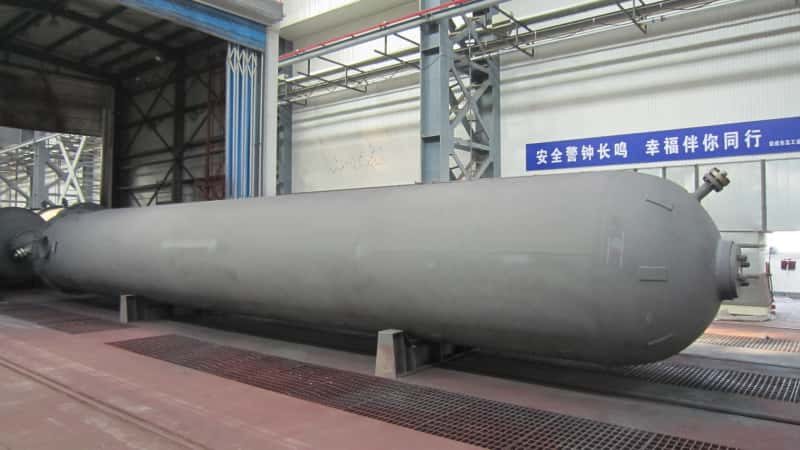
The procurement scope should include the vapor-separation function, whether incorporated into the evaporator body or provided through a separate vessel. Ask the responsible designer to document vapor loading, operating liquid levels, available disengagement space, and the expected response to feed changes. These are requirements for complete equipment, not a shopping list for replacement internals.
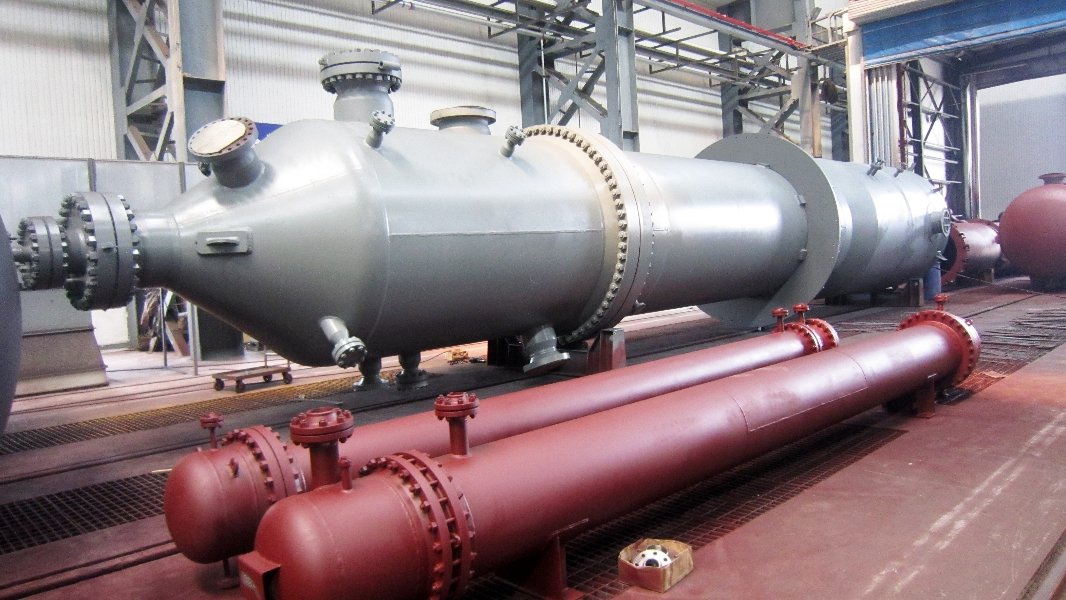
Condensation must be assessed against the same operating cases. Available cooling-water temperature, cooling duty, allowable pressure drop, non-condensable gases, and cleaning access influence the arrangement. When reviewing industrial shell-and-tube heat exchangers, make sure the condenser specification reflects the actual vapor composition rather than an assumption of pure water vapor.
Define the condensate destination before setting acceptance criteria. Reuse, further treatment, and discharge have different requirements. Agree on relevant analytical parameters, sampling locations, test conditions, and responsibilities. Visual clarity or conductivity alone may not establish suitability where organic contaminants are relevant. Off-spec condensate routing and non-condensable gas handling should also have named owners in the project scope.
Define the Equipment Supply Boundary
A quotation should state whether it covers individual fabricated vessels and exchangers, a coordinated static-equipment package, or an integrated evaporation system. Process design, automation, rotating equipment, installation, commissioning, and performance validation should not be assumed to belong to the vessel manufacturer simply because several fabricated items are supplied together.
For custom pressure vessels, identify who provides the process design basis and who approves mechanical drawings. Where feed, condensate, or concentrate storage is required, define the necessary working volume and compatibility requirements. This discussion concerns project-scale industrial storage tanks above 1,000 liters, with final capacity established from the operating and storage requirements.
Review Materials, Fabrication, and Delivery
Material selection should address the feed, the more concentrated process liquid, vapor-side conditions, and cleaning chemicals. A material acceptable for the incoming wastewater is not automatically suitable at the concentration endpoint. Request documented assumptions and qualified materials review where compatibility is uncertain, rather than relying on a generic stainless-steel designation.
The manufacturing specification should establish applicable design requirements, material traceability, welding documentation, required examination, dimensional checks, and pressure or leak testing as appropriate. Vacuum duties require explicit mechanical consideration. Inspection methods and acceptance criteria must follow the agreed design basis and applicable requirements; no single inspection package suits every installation.
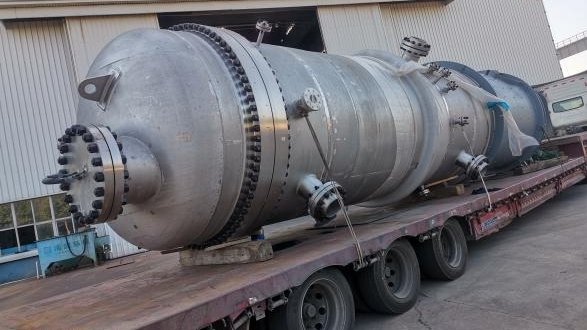
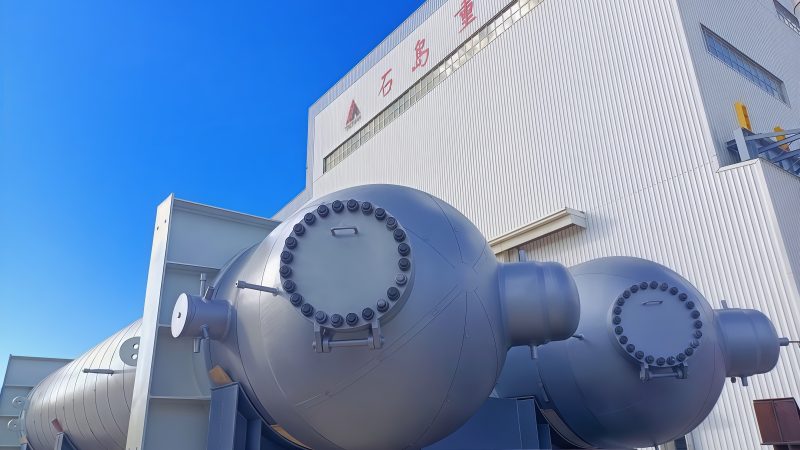
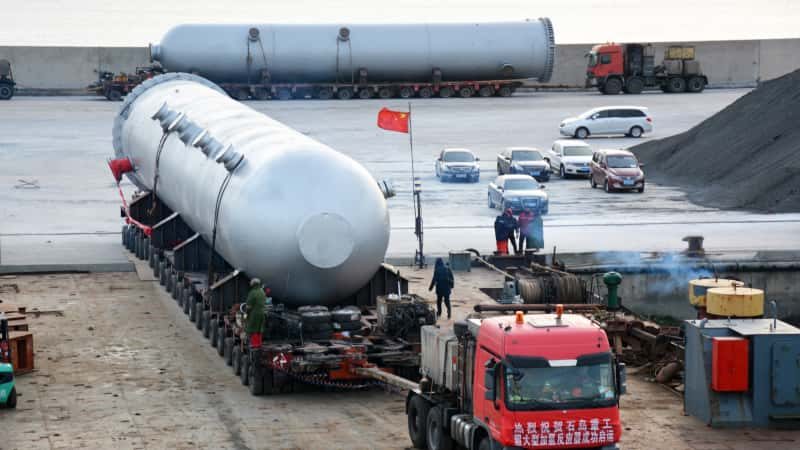
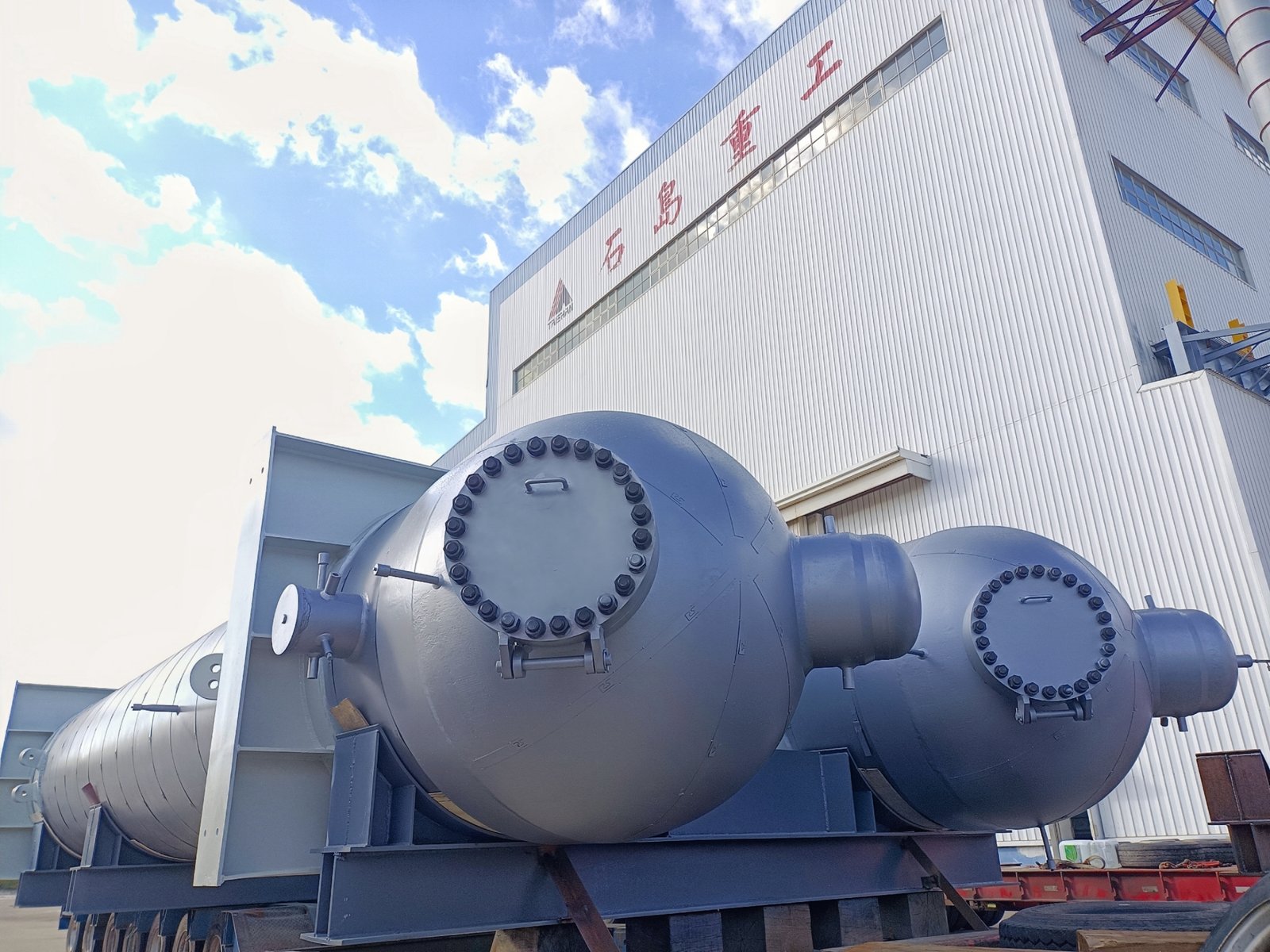
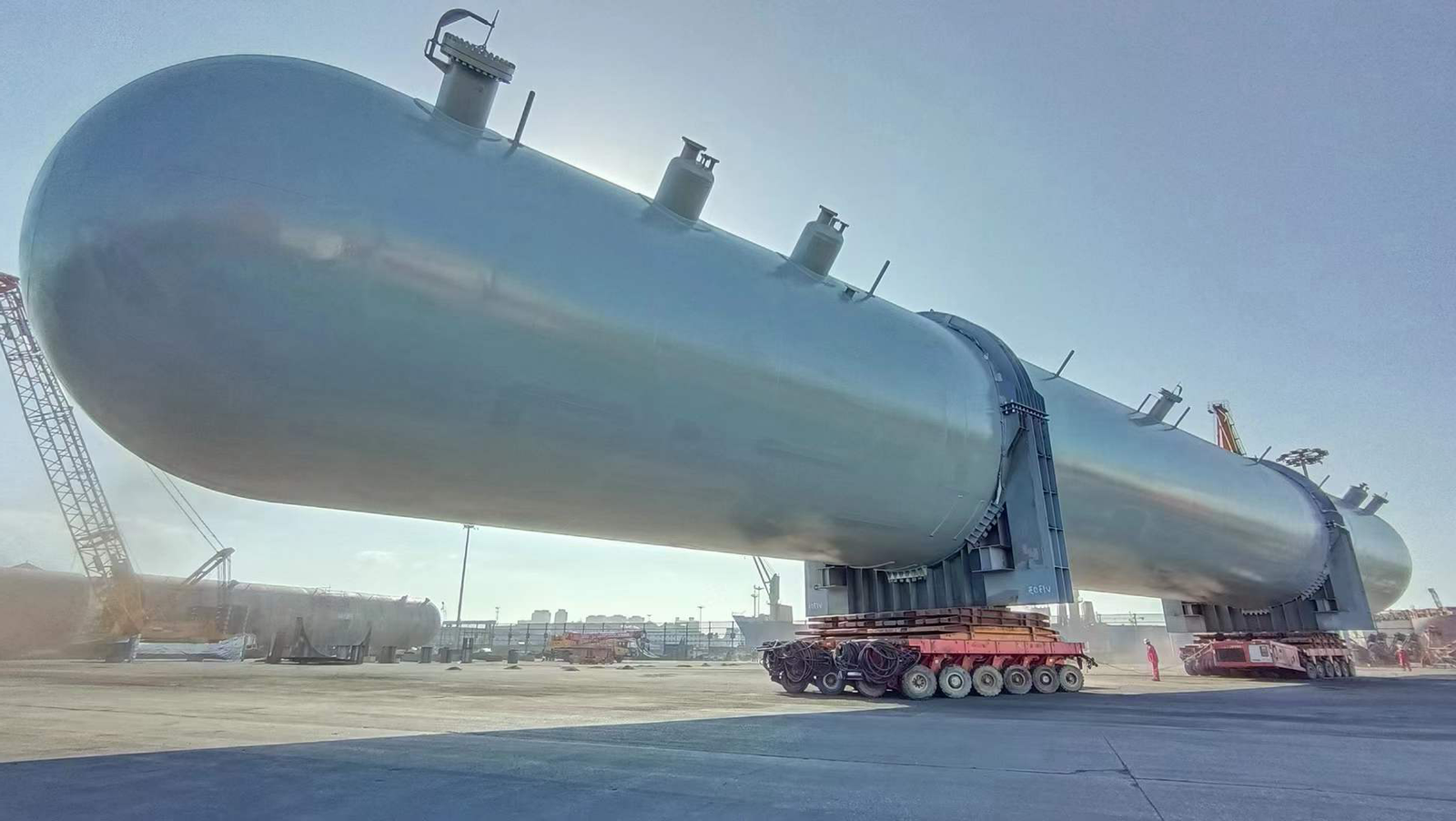
WSHI’s stated manufacturing scope includes drawing coordination, material procurement, welding, nondestructive examination, pressure testing, coating, and heavy-equipment delivery. For each quotation, buyers should confirm which activities apply to the ordered equipment. Shop inspection verifies specified manufacturing requirements; it does not by itself demonstrate performance with the customer’s wastewater.
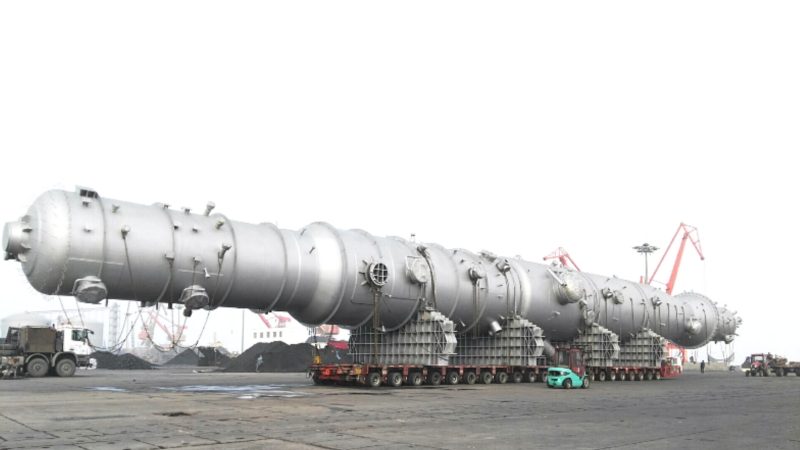
Delivery planning should address shipping dimensions, lifting arrangements, preservation, transport splits, site access, and the destination of documentation. If equipment is shipped separately for site assembly, responsibility for interconnections and installation verification should be explicit. Port delivery and installed, commissioned equipment are different contractual boundaries.
Buyer RFQ Checklist
| RFQ item | Buyer input |
|---|---|
| Feed envelope | Flow, composition, production changes, cleaning discharges and observed foam behavior |
| Concentration duty | Water removal rate, concentrate endpoint, operating hours and mass balance |
| Performance | Carryover, condensate-quality criteria, test method and feed conditions |
| Complete equipment scope | Heating, vapor separation, condenser, associated vessels and system interfaces |
| Construction and delivery | Materials, pressure or vacuum design, inspection, preservation and delivery point |
FAQ
Can a wastewater evaporator guarantee foam-free operation?
Not without a defined feed and operating envelope, and even then “foam-free” may be an unsuitable acceptance criterion. Buyers should request measurable performance requirements addressing throughput, carryover, condensate quality, and agreed operating conditions.
Does a larger vapor separator solve every foaming problem?
No. Additional separation space may be relevant, but equipment sizing must consider the feed, vapor loading, operating levels, and test findings. Persistent foam or volatile contaminants can require measures beyond changing vessel size.
Is evaporator condensate automatically suitable for reuse?
No. Its suitability depends on composition and the intended use. Testing may identify a need for additional treatment, and reuse acceptance criteria should be agreed before equipment procurement.
What should an initial inquiry contain?
Provide feed analyses, flow ranges, the concentration target, available utilities, known foaming observations, site constraints, and the required supply boundary. Identify information that is preliminary so the quotation can distinguish confirmed requirements from assumptions.
Discuss Your Wastewater Evaporation Equipment Scope
Selecting an industrial wastewater evaporator for foaming service starts with understanding the feed and defining responsibilities across the complete equipment arrangement. For a project requiring custom evaporators, separation vessels, heat exchangers, or storage tanks above 1,000 liters, discuss your project requirements with our engineering team. Share available analyses, drawings, operating conditions, and delivery requirements for manufacturing-scope review and equipment coordination.