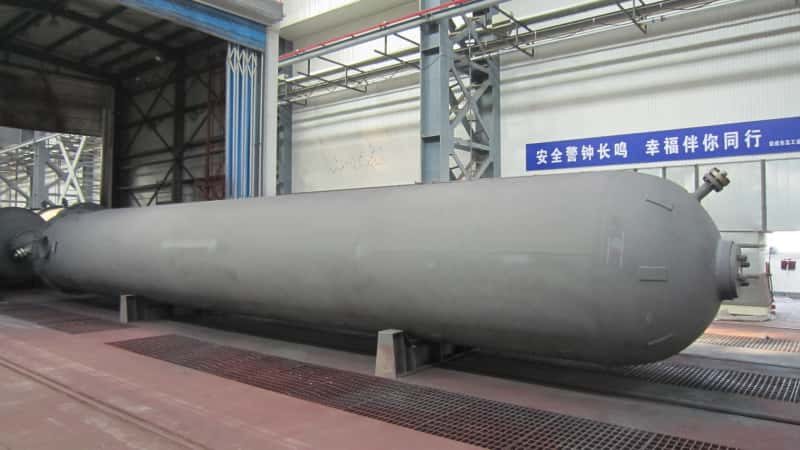

A jacketed pressure vessel is used when a chemical process requires controlled heating, cooling, or temperature maintenance inside a vessel. Instead of relying only on external equipment, a jacketed vessel allows steam, hot water, thermal oil, cooling water, glycol, or another heat transfer medium to circulate around the vessel wall. For EPC buyers, a jacketed vessel should be specified as complete process equipment, not as a small heating accessory.
WSHI focuses on project-based custom pressure vessels, custom process vessels, heat exchangers, separators, towers, and large industrial storage vessels above 1,000 liters. This article is written for buyers planning complete jacketed vessel procurement for chemical, petrochemical, environmental, and new energy projects.

For pressure equipment context, ASME BPVC Section VIII Division 1 may be relevant where the vessel or jacket side is designed as pressure equipment. For industrial heat context, the U.S. Department of Energy provides a general overview of process heat basics. Final code, safety, and design requirements should always be confirmed by the project owner, EPC contractor, inspection authority, and qualified engineers.
A jacketed vessel can be specified reliably by vessel volume alone.False
A reliable RFQ must define process medium, jacket medium, process-side pressure and temperature, jacket-side pressure and temperature, materials, inspection, testing, and delivery requirements.
A jacketed pressure vessel should be treated as complete process equipment.True
The inner vessel, jacket side, nozzles, supports, testing, coating, documentation, and site interfaces must be coordinated as one procurement scope.
What Is a Jacketed Pressure Vessel?
A jacketed pressure vessel is a vessel with an outer jacket or heat transfer space around part of the vessel body. A heating or cooling medium flows through the jacket to transfer heat through the vessel wall into the process material.
Jacketed vessels may be used for heating chemical liquids, maintaining process temperature, cooling reaction mixtures, dissolving or blending materials, supporting crystallization, processing solvents, producing polymers or resins, treating environmental streams, and handling batch or semi-batch chemical operations.
For industrial pressure vessels, both the inner vessel and jacket side may need pressure and temperature review depending on the project design. Buyers should define both sides clearly before requesting a quotation.
Why Jacketed Vessels Are Used in Chemical Processing
Chemical processes often depend on temperature control. Heating may be needed to dissolve solids, reduce viscosity, promote reaction, evaporate volatile components, or maintain flowability. Cooling may be required to control reaction heat, protect product quality, support crystallization, or prepare material for downstream processing.
A jacketed vessel can help provide controlled heating or cooling, temperature maintenance for viscous or sensitive materials, process flexibility for batch operations, and integration with steam, hot water, thermal oil, cooling water, or glycol systems. In some applications, a jacketed vessel can reduce the need for separate heat exchange loops, although final suitability depends on duty, vessel size, heat transfer requirement, medium, and operating conditions.
Common Applications
Chemical Reaction and Mixing
Jacketed vessels may be used in reaction or mixing processes where the material must be heated, cooled, or held within a temperature range. In such cases, the vessel should be reviewed as complete chemical process equipment, including pressure boundary, material, heat transfer medium, agitation interface if applicable, and inspection requirements.
Solvent and Resin Processing
Solvent, resin, polymer, and fine chemical production may require temperature control during dissolution, blending, reaction, holding, or transfer preparation. If the medium is flammable, corrosive, viscous, or high-temperature, material and safety review becomes more important.
Crystallization and Cooling Service
Some processes require controlled cooling to support crystallization or product separation. The jacket medium, cooling rate, material compatibility, cleaning access, and potential fouling should be reviewed by the project engineering team.
Environmental and Waste Treatment
Environmental projects may use jacketed vessels for heating wastewater streams, sludge, chemical solutions, or process liquids before downstream treatment. The actual material selection should be based on wastewater or process liquid analysis.
For pressure vessels for chemical plants, buyers should provide process medium data and temperature requirements before requesting a quotation.
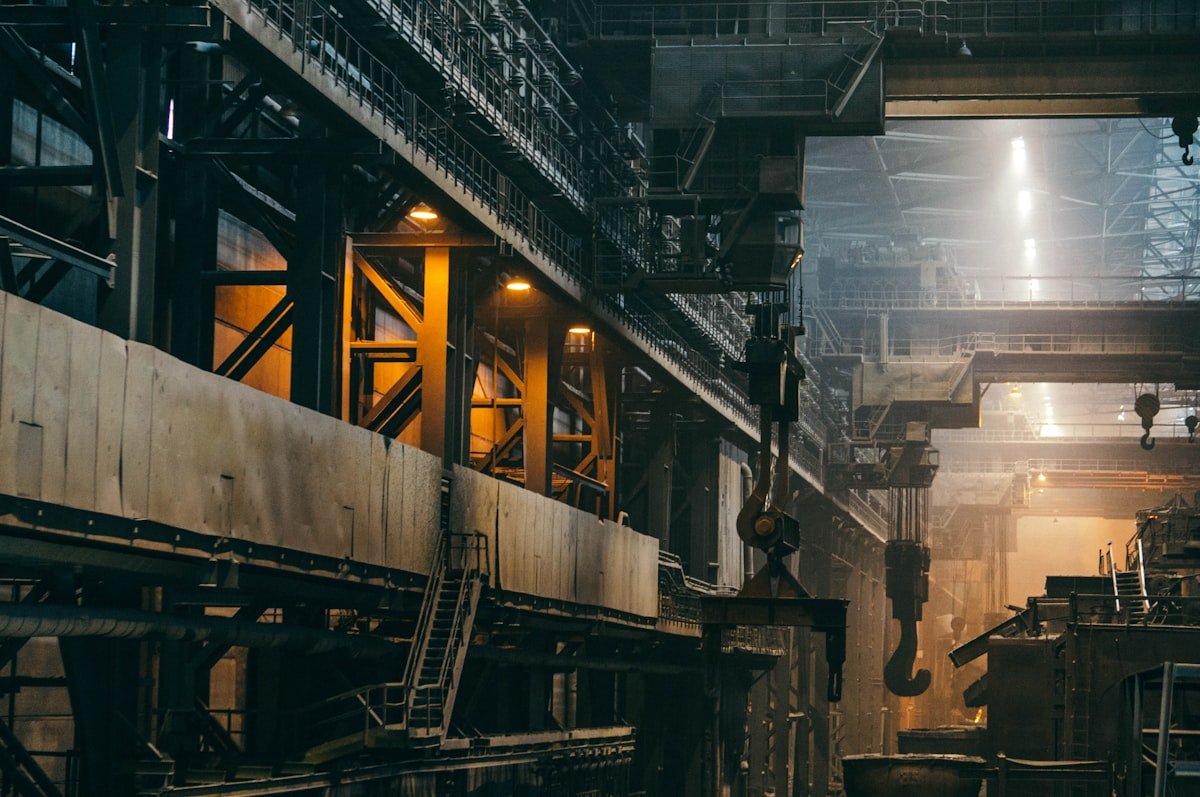
Typical Jacketed Vessel Services
| Service | Typical Purpose | Key Buyer Review Points |
|---|---|---|
| Steam heating | Heat liquids, maintain temperature, reduce viscosity, support reaction or blending | Jacket pressure, condensate drainage, temperature control, insulation, material compatibility |
| Thermal oil heating | Provide higher-temperature heat transfer where steam is not suitable | Oil temperature, fire safety review, expansion, leakage risk, jacket design temperature |
| Cooling water or glycol | Remove heat, control exothermic reactions, support cooling or crystallization | Scaling, corrosion, flow distribution, cooling rate, cleaning and maintenance access |
| Temperature holding | Maintain process material within a target temperature range | Heat loss, insulation, controls, operating cycle, process-side material behavior |
Key Selection Factors for EPC Buyers
Process Medium Inside the Vessel
The process medium determines material selection, corrosion allowance, internal finish, cleaning method, and safety review. Buyers should provide chemical composition, concentration, pH, viscosity, solids content, vapor pressure, temperature sensitivity, and corrosion data where available.
A jacketed vessel used for solvent processing may have very different requirements from one used for wastewater heating, resin blending, or crystallization service.
Jacket Heating or Cooling Medium
The jacket side may use steam, hot water, thermal oil, cooling water, glycol, or another heat transfer medium. Each option affects pressure rating, temperature design, material selection, drainage, safety review, and instrumentation.
Steam jackets may involve condensate drainage and pressure control. Thermal oil jackets require careful temperature and fire safety review. Cooling water jackets may require corrosion and scaling consideration.
Pressure and Temperature Boundary
Both the inner vessel and the jacket may have their own pressure and temperature conditions. EPC buyers should clearly define inner vessel operating pressure, inner vessel design pressure, inner vessel operating temperature, inner vessel design temperature, jacket operating pressure, jacket design pressure, jacket medium temperature, and vacuum conditions if applicable.
If pressure vessel codes apply, the project should define the applicable standard before fabrication. Final code basis should be confirmed by qualified engineers.
Material Selection and Corrosion Protection
Material selection should consider both the process side and jacket side. Carbon steel, stainless steel, lined construction, or project-specified materials may be used depending on service conditions.
For corrosive chemical or wastewater service, coating, lining, corrosion allowance, or special material may be required. The manufacturer should not assume compatibility without project data.
Nozzle Layout and Process Interface
A jacketed vessel may include process inlet, outlet, vent, drain, manway, instrument connections, safety device connection, jacket inlet, and jacket outlet. These interfaces should be reviewed with piping layout, maintenance access, insulation, lifting, and installation space.
Nozzle orientation and support arrangement should be finalized before fabrication to reduce site rework.
RFQ Checklist for Jacketed Pressure Vessels
| RFQ Item | Information to Provide |
|---|---|
| Process data | Process medium, composition, viscosity, solids, corrosion data, operating cycle, cleaning method |
| Vessel-side conditions | Operating pressure, design pressure, operating temperature, design temperature, vacuum condition |
| Jacket-side conditions | Heating or cooling medium, operating pressure, design pressure, medium temperature, flow requirement |
| Mechanical requirements | Volume, orientation, supports, nozzles, manways, instruments, safety device connection, lifting lugs |
| Materials and protection | Material grade, corrosion allowance, coating, lining, insulation interface, gasket and bolting requirements |
| Inspection and delivery | Code basis, NDT scope, vessel-side and jacket-side tests, final data book, packing, destination, transport limits |
Manufacturing and Quality Control
Jacketed vessels require careful fabrication because they may include two pressure boundaries: the process chamber and the jacket space. Manufacturing may involve shell forming, jacket fit-up, welding, nozzle installation, dimensional inspection, NDT, pressure testing, leak testing, surface treatment, and final documentation.
For project-based pressure vessel manufacturing, EPC buyers should confirm approved drawings and datasheets, material certificates, welding procedure requirements, welder qualification records, jacket-side and vessel-side test requirements, NDT scope according to project specifications, coating or lining requirements, dimensional inspection, final documentation package, packing, and delivery method.
A large-scale pressure vessel manufacturer should be able to coordinate fabrication, inspection, testing, coating, loading, and export delivery.
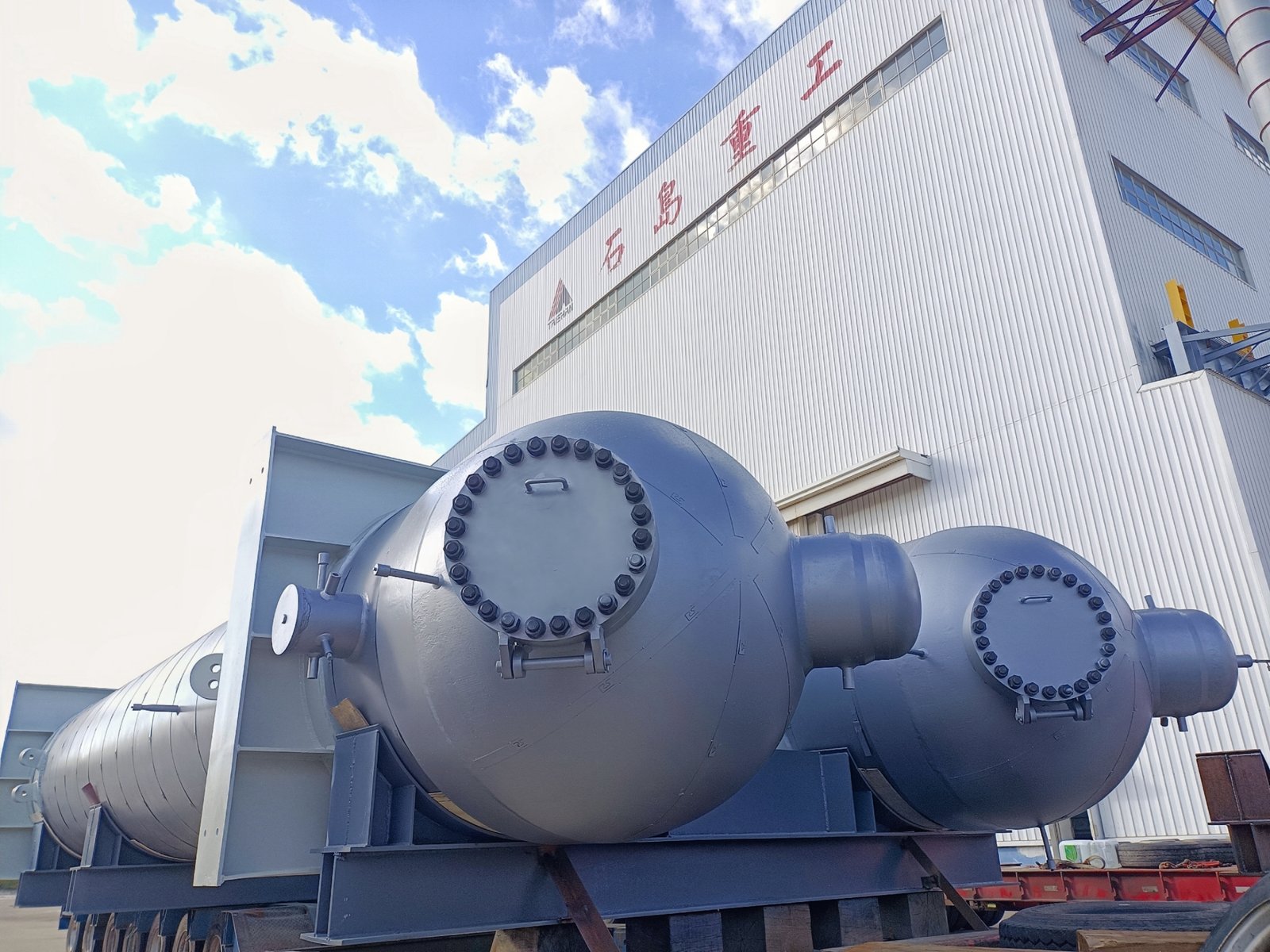
Related Equipment in Chemical Processing
Jacketed vessels often operate with heat exchangers, condensers, separators, storage vessels, and process towers. In some projects, a shell and tube heat exchanger may be used together with a jacketed vessel to support heating, cooling, heat recovery, or utility integration.
For larger process lines, related equipment may include industrial heat exchangers, industrial storage tanks above 1,000 liters, and process towers and columns.
Common Procurement Mistakes
One common mistake is specifying only the vessel volume. Jacketed vessels require both process-side and jacket-side conditions, including pressure, temperature, medium, material, test requirements, and control interfaces.
Another mistake is treating the jacket as a simple accessory. In pressure equipment, the jacket can affect fabrication, inspection, testing, safety review, and documentation.
A third mistake is not defining the heat transfer medium early. Steam, thermal oil, cooling water, hot water, and glycol have different design requirements. Changing the jacket medium late can affect pressure rating, nozzle design, testing, and material selection.
Why Custom Manufacturing Matters
Jacketed pressure vessels are usually custom equipment. Vessel size, jacket type, process medium, heat transfer medium, pressure, temperature, material, inspection scope, and site layout all affect design and fabrication.
WSHI supports project-based manufacturing for jacketed vessels, pressure vessels, heat exchangers, and custom chemical equipment. For chemical, petrochemical, environmental, and new energy projects, custom manufacturing helps align equipment with process duty, inspection requirements, and delivery schedule.
FAQ
What is a jacketed pressure vessel used for?
It is used for heating, cooling, or temperature control in chemical processing, solvent handling, resin production, crystallization, and environmental treatment applications.
Is the jacket side also pressure equipment?
It may be, depending on jacket pressure, temperature, volume, and local regulations. Both vessel side and jacket side should be reviewed by qualified engineers.
What information is needed for a jacketed vessel quotation?
Buyers should provide vessel volume, process medium, jacket medium, vessel-side pressure and temperature, jacket-side pressure and temperature, material requirements, drawings, inspection scope, testing requirements, and delivery destination.
Can WSHI supply only jacket parts or small accessories?
WSHI focuses on complete project-based jacketed vessels and pressure equipment, not standalone small parts or accessories.
What heating media can be used in a jacketed vessel?
Common media may include steam, hot water, thermal oil, cooling water, or glycol, depending on process requirements and engineering review.
Conclusion
A jacketed pressure vessel is used for controlled heating, cooling, or temperature maintenance in chemical processing. EPC buyers should confirm process medium, jacket medium, pressure and temperature conditions, materials, corrosion protection, inspection requirements, testing scope, and delivery constraints before procurement.
If you are planning a chemical processing, petrochemical, environmental, or new energy project, you can discuss your project requirements with an engineering team or download the pressure vessel catalog. Sharing drawings, operating conditions, jacket medium, material requirements, inspection needs, and delivery terms will help support manufacturing feasibility review.