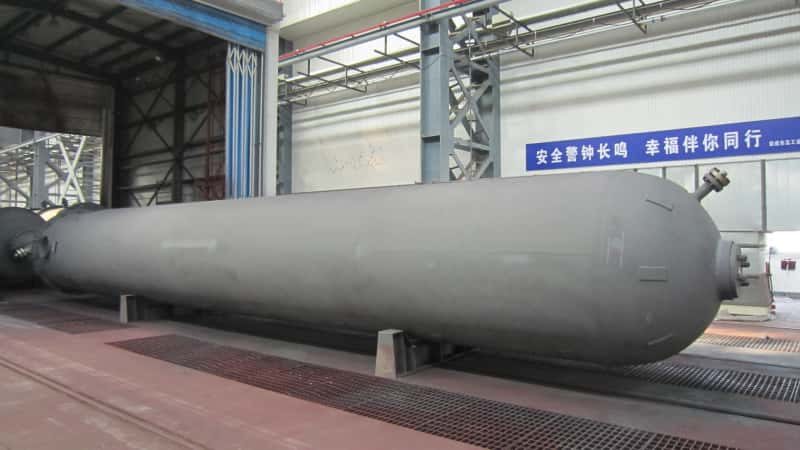

A process bypass changes what an exchanger’s outlet temperature means. Part of the process stream passes through the exchanger, while another part travels around it before the streams rejoin. The temperature at the exchanger outlet and the temperature downstream of the bypass mixing point are therefore different design and acceptance variables. A heat exchanger bypass temperature guarantee is credible only when the purchase specification identifies which temperature is promised, which stream flows through the exchanger, where the guarantee is measured, and who is responsible for the bypass arrangement.
For EPC engineers and industrial buyers, the practical problem is not simply whether a supplier can quote a required outlet temperature. It is whether that promise applies to the complete mixed process stream or only to the flow crossing the heat-transfer surface. The answer needs to appear consistently in the approved process flow diagram (PFD), piping and instrumentation diagram (P&ID), exchanger datasheet, thermal rating, and contract guarantee schedule.
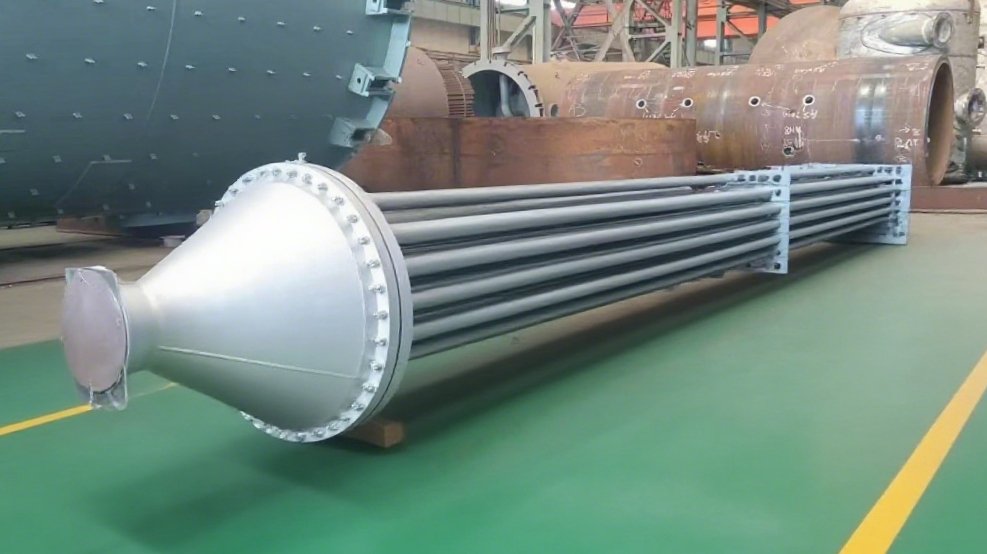
Why Does a Bypass Create Two Different Outlet Temperatures?
In the arrangement considered here, one process stream is divided upstream of a shell-and-tube exchanger. One branch enters the exchanger; the other bypasses it. The two streams meet downstream, creating a mixed process outlet. The utility or opposite process stream remains on the other side of the heat-transfer surface. Some projects bypass a utility stream instead; their boundaries and temperature consequences must be documented separately rather than assumed to match this example.
The three temperature locations of interest are:
- Exchanger process inlet (
T-P-IN): the process stream just before entering the exchanger, not the total stream at an upstream manifold unless the states are proven identical. - Exchanger process outlet (
T-E-OUT): the process stream leaving the exchanger before it mixes with bypass flow. - Mixed system outlet (
T-MIX-OUT): the combined stream at the agreed downstream point after the exchanger and bypass branches merge and mixing is adequate for the intended measurement.
The process flow should also identify the bypass branch state (T-BY) at the mixer. Heat gain or loss, pressure change, phase change, or additional mixing along the bypass can make that state different from the upstream process inlet.
| Boundary | Flow considered | Temperature to identify | Main procurement question |
|---|---|---|---|
| Exchanger process inlet/nozzle | Exchanger branch only | T-P-IN | Is this the exact condition used in the thermal rating? |
| Exchanger process outlet/nozzle | Exchanger branch only | T-E-OUT | Is the supplier guaranteeing this temperature at an agreed exchanger duty and branch flow? |
| Bypass branch before mixing | Bypass branch only | T-BY | Has the EPC accounted for the bypass state and pressure losses? |
| Mixed process outlet | Combined flow | T-MIX-OUT | Is the whole-system outlet temperature included in anyone’s contracted guarantee? |
A temperature sensor located after the mixing junction does not directly measure the exchanger branch outlet. Conversely, a nozzle temperature can confirm an exchanger-boundary condition without proving that the combined downstream stream meets its target. The distinction is treated in the engineering literature on heat-exchanger bypass control, which explicitly distinguishes the exchanger stream from the mixed system exit.
This topic differs from a conventional heat exchanger performance guarantee, where the central issue is verification at agreed equipment boundaries. With a bypass, the buyer must first decide whether that equipment boundary is even the location where the process requires its temperature target.
Which Flow Rates Must Appear on the Approved Design Basis?
A datasheet showing only “process flow: total” can be misleading when a bypass is present. The supplier may rate the exchanger using all process flow, while the process designer expects a smaller amount to cross the heat-transfer surface. Both quotations could show the same utility conditions yet represent different heat duties, velocities, and pressure drops.
The essential distinction is:
- Total process flow (
m-total): all mass flow supplied to the bypass-plus-exchanger arrangement at the defined upstream and downstream boundaries. - Exchanger branch flow (
m-ex): the mass flow that actually passes through the exchanger process side. - Bypass branch flow (
m-by): the flow that avoids the exchanger and later rejoins the process stream.
For a steady arrangement with no additional branch, leak, accumulation, or injection, m-total = m-ex + m-by. This mass balance is not a guarantee of what the actual split will be. The split depends on the approved hydraulic arrangement and operating conditions; the project engineer must supply the design basis and explain how the proposed split is achieved or constrained. A valve’s nominal position is not, by itself, a verified branch-flow measurement.
Record the actual simultaneous case, not unrelated maxima
A bypass fraction that changes with demand may cause exchanger branch flow, pressure drop, heat-transfer coefficient and process outlet state to change together. The process specification should give the conditions that are simultaneously possible and relevant, rather than selecting a maximum total flow from one scenario and a minimum utility temperature from another without evidence they coincide.
| Required data | Record in the RFQ or approved schedule | Source / approval required |
|---|---|---|
| Case ID and operating mode | Normal / agreed turndown / other approved case; revision | EPC process operating-case register |
| Total process mass flow | Value, unit, time basis, measurement/design status | Approved heat and material balance |
| Flow through exchanger | Value or defined design range, unit | Approved bypass split or hydraulic assessment |
| Bypass mass flow | Value or defined range, plus boundary | P&ID and process/hydraulic basis |
| Fluid composition and phase | Process side and utility side; pressure and temperature | Approved process data and property basis |
| Exchanger-side utility flow | Value/range and available inlet state | Utility design basis |
| Required outlet target | T-E-OUT and/or T-MIX-OUT; tolerance if approved | Contract guarantee schedule |
| Clean/fouled reference basis | Defined surface condition and governing case | EPC and assigned thermal designer |
| Status | Guaranteed / design check / information only | Written bid clarification |
Specify mass flow or an unambiguous volumetric-flow basis with density and reference conditions. Where the exchanger has multiple passes, phase change, or a variable-composition stream, the thermal/hydraulic reviewer also needs a justified model for the relevant range. Do not calculate a universal bypass percentage from a generic rule of thumb.
How Should the Mixed Outlet Temperature Be Calculated and Interpreted?
For a steady, adiabatic mixing junction with no shaft work and negligible changes in kinetic and potential energy, a straightforward engineering balance is:
Mass balance
m-total = m-ex + m-by
Enthalpy balance
m-total × h-mix = m-ex × h-ex,out + m-by × h-by
Here h-ex,out is the specific enthalpy at the exchanger branch outlet, h-by is the bypass stream enthalpy just before mixing, and h-mix is the resulting mixed-stream specific enthalpy. Consistent mass-flow units and thermodynamic reference conventions are required. The mixed temperature is then obtained from the resulting enthalpy, pressure, composition and phase using a suitable property method.
For a single-phase stream of essentially unchanged composition, with sufficiently constant and comparable specific heat and negligible external heat exchange, the familiar approximate relation is:
T-MIX-OUT ≈ (m-ex × T-E-OUT + m-by × T-BY) / m-total
This is a useful illustration of the distinction between the two temperatures, not a substitute for a validated thermal rating. It may be inappropriate when heat capacity varies strongly, streams have different compositions, heat is exchanged with the surroundings, flashing or condensation occurs, or the mixing point is not at the assumed pressure. A complete analysis may also need to account for mixing enthalpy, additional streams and transient accumulation.
The basic distinction between a mixing control volume and a heat exchanger control volume is explained in Introduction to Engineering Thermodynamics — steady-flow mixing chambers and heat exchangers.
Why a satisfactory mixed outlet does not necessarily prove exchanger duty
A process may meet a target at T-MIX-OUT because the bypass and exchanger streams mix in a favorable ratio, even if the exchanger branch is operating outside the assumptions in its rating. The reverse is also possible: the exchanger may satisfy its specified branch outlet condition, while the mixed outlet misses the process requirement because the bypass fraction or upstream temperature differs from the approved basis.
For cooling service, a stream bypassing the cooler may be warmer than the stream leaving the cooler. For heating service the direction is reversed. That qualitative relationship depends on the actual states and arrangement; it should not be turned into a fixed numeric temperature difference. The supplier’s exchanger thermal rating and the EPC’s downstream mixing assessment must use the same approved case and revision.
If the process target is a downstream product temperature, the buyer should demand a system balance that links the exchanger rating to the branch flows rather than treating the equipment outlet target as a proxy for the mixed outlet target.
What Temperature Should the Supplier Actually Guarantee?
There is no one-size-fits-all answer. The guarantee should follow the contractual scope and controllable boundaries, not the name of the equipment alone.
Case A: The supplier provides only the exchanger
For a fabrication-and-equipment supply where the EPC designs the bypass pipework, flow split, instruments and control arrangement, the most defensible exchanger-specific guarantee is usually a named exchanger-boundary thermal result, at specified branch flow and inlet/utility conditions, if thermal performance is included in the purchase order. It may be an outlet temperature, a duty, or another defined thermal measure, together with applicable pressure-drop requirements and an approved verification method.
In that case, T-MIX-OUT may be an EPC process requirement but not an unconditional warranty from the exchanger manufacturer. The manufacturer should still review relevant interface data supplied to it and declare deviations that could affect the offered exchanger.
Case B: One contracted party guarantees the complete bypass arrangement
If a contractor is expressly responsible for the exchanger and the complete bypass/mixing arrangement, its defined performance scope may include T-MIX-OUT. The contract must then allocate the design and acceptance responsibilities for branch hydraulic resistance, available utilities, process conditions, mixing adequacy, instruments, control-system interfaces and any excluded field piping. The company selling the vessel is not automatically the guarantor of those items.
Case C: Split scope with a system acceptance target
Many industrial projects fall between those two cases. The exchanger supplier guarantees a nozzle-to-nozzle performance item; the EPC or another package integrator owns the process-side flow split and downstream target; the owner provides operating and utility conditions. These interdependent promises can be valid, but their assumptions must be reconciled before award.
| Contract item | Equipment-only supply | Complete bypass-system scope (if expressly contracted) |
|---|---|---|
| Guaranteed temperature | Defined exchanger outlet condition, if included | Defined mixed-system outlet may be included |
| Flow basis | Approved flow through exchanger | Exchanger, bypass and total flows |
| Thermal rating | Supplier-assigned exchanger rating | Integrated exchanger and mixing assessment |
| Bypass hydraulic design | EPC / designated piping designer | Explicitly assigned system designer |
| Measurement point | Exchanger boundary or agreed equivalent | Downstream well-mixed location, plus branch measurements |
| Acceptance method | Approved equipment-specific calculation/test | Approved system test with required operating conditions |
| Performance deviations | Exchanger-side commitments and exclusions | System interactions and allocated remedies |
A mechanical certificate, dimensional inspection or pressure test does not establish either thermal result. Likewise, a compliant exchanger datasheet cannot alone prove the downstream target if the bypass flow path is outside its scope. For the broader distinction between mechanical and thermal acceptance, see the site’s performance-guarantee buyer guide.
Suggested contract wording (illustrative, not a legal clause): “The specified process-side outlet-temperature guarantee for HX-___ applies at point ___, upstream/downstream of the bypass mixing junction, at operating case ___ revision ___, under the agreed flow, fluid-property, utility and surface conditions. Responsibilities for the bypass split, instruments, site operating conditions, test execution and acceptance are as assigned in the guarantee schedule.” Every blank requires project approval.
Where Must Temperature and Flow Be Measured for Acceptance?
The drawing location of a thermowell can determine whether a test addresses the contracted guarantee at all. The acceptance plan needs separate tags or calculation boundaries for exchanger branch outlet temperature, mixed-system outlet temperature and, where relevant, bypass temperature.
A sensor just after a junction may read an incompletely mixed or stratified stream. A sensor several pipe sections downstream may represent a different pressure state or include external heat exchange. Neither position is inherently correct for every plant. The piping/process team must confirm the suitable bulk mixed-stream measurement point and demonstrate why the point is representative. For exchanger performance testing, the chosen nozzle/temperature location likewise must suit the agreed method and flow conditions.
| Evidence item | What it should show | Why buyers need it |
|---|---|---|
| Approved PFD and P&ID | HX boundary, bypass route, mixing junction and tag numbers | Prevents conflating branch and combined process outlets |
| Process and utility datasheet | Simultaneous temperatures, pressures, composition and flow | Connects measurement to rating basis |
| Flow-measurement register | Whether a meter reads total, exchanger, bypass or utility flow | Avoids assigning total flow to the exchanger rating |
| Temperature instrument register | Exact location, tag, process state, calibration and response | Establishes what was actually measured |
| Representative mixing evidence | Approved mixer/pipe assessment or validated measurement arrangement | Supports a meaningful mixed-stream reading |
| Test record and data reduction | Aligned time period, raw readings, property basis, uncertainty | Makes the result reproducible |
| Final guarantee and deviations | Point, value, condition, responsible party, accepted changes | Links evidence to contractual decision |
Synchronous operating data matter. A mixed outlet reading from one period cannot be compared directly with an exchanger flow recorded during another. Instruments may also report different averaging windows or conversion bases. During startup or other unsteady operation, energy storage in equipment and piping may matter; a steady-state calculation should not be used without an appropriate valid window.
The NIST policy on metrological traceability explains why a documented calibration chain and measurement uncertainty matter. It does not prescribe a temperature-tolerance value for this project. ASME PTC 12.5, Single Phase Heat Exchangers, and ASME PTC 19.1, Test Uncertainty, provide official scope information relevant when those methods are applicable and contractually specified. Do not infer mandatory use or claim compliance without reviewing the complete contracted edition and scope.
For existing installations with uncertain sensor locations or inconsistent energy balances, the related heat-exchanger heat-balance mismatch guide explains how to distinguish measurement-boundary problems from real performance questions. This article instead focuses on documenting a new purchase guarantee where a process bypass is planned.
Which Operating Cases Require a Separate Bypass Review?
The reference thermal case should not be interpreted as a warranty for every possible bypass condition. Depending on the project, relevant cases may include the normal design flow split, an approved low-throughput case, another specified utility condition, or a defined bypass configuration for a plant operating mode. A bypass-closed condition may also require review if it is credible and within the specified operating envelope.
The process authority should establish which cases are guaranteed, which require a design or operability check, and which are outside the contracted scope. A case can be technically relevant without carrying a commercial guarantee.
The review needs to connect four things:
- The total process flow and the fraction through the exchanger under that case.
- The exchanger rating at the corresponding process and utility inlet states and applicable heat-transfer surface condition.
- The downstream mixed-state calculation, including the actual bypass state and any additional streams or losses.
- The acceptance point, decision rule and responsible organization named in the contract.
| Review case | Exchanger flow | Bypass flow | Thermal/system evidence | Status and approver |
|---|---|---|---|---|
| Normal reference operation | Project value pending | Project value pending | Approved HX rating + mixer balance | To be assigned |
| Approved reduced-load operation | Pending | Pending | Hydraulics + relevant process/utility states | To be assigned |
| Approved alternate utility condition | Pending | Pending | Coincident utility availability + thermal rating | To be assigned |
| Another credible bypass configuration | Pending | Pending | Process review + system assessment | To be assigned |
This table is a blank RFQ framework, not a list of mandatory cases or evidence that every configuration can operate safely. No universal bypass position, minimum exchanger flow, allowable pressure drop or outlet-temperature tolerance is implied.
Hydraulic resistance and the thermal rating may interact. If less fluid crosses the exchanger, a calculation based on unchanged heat-transfer coefficients or pressure loss may not remain valid. The published research on exchanger bypass control establishes the importance of the assigned bypass flow and exchanger operating region; it does not supply a universal design fraction for every industrial plant.
How Can EPC Buyers Reconcile Supplier Bids Before Award?
A common bid comparison error is to accept two statements that look equivalent:
- Supplier A: “Process outlet temperature guaranteed at exchanger nozzle.”
- Supplier B: “Process outlet temperature guaranteed after bypass mixing.”
They are not the same obligation. Even if both bids contain the same number, the reference boundary, branch flow and potentially the contractor’s responsibility differ. Buyers should request clarifications against a common reference case rather than ranking those statements as identical.
Use a guarantee-to-evidence matrix
| Question to resolve | Required document or value | Proposed owner / approval | Open-item disposition |
|---|---|---|---|
| Which temperature is the promised outcome? | Named nozzle or downstream location; tag; units | EPC + contractual guarantor | Pending / accepted / deviation |
| What flows through the exchanger? | m-ex, basis and range | EPC process; thermal designer confirms | Pending / accepted / deviation |
| What is bypassed? | m-by, route and associated state | EPC process / piping | Pending / accepted / deviation |
| What is total delivered flow? | m-total, boundary and case | EPC process | Pending / accepted / deviation |
| What other conditions apply? | Fluid/utility states, duty, pressure loss, surface condition | Assigned thermal designer + buyer | Pending / accepted / deviation |
How is T-MIX-OUT demonstrated? | Approved enthalpy balance and measurement point | Assigned system integrator | Pending / accepted / deviation |
| Which test is valid? | Test window, instruments, uncertainty and corrections | Appointed test authority | Pending / accepted / deviation |
| Who signs acceptance? | Guarantee schedule and deviation closeout | Contract-appointed approver | Pending / accepted / deviation |
A useful discipline is to establish approved, mutually consistent revisions of the PFD/P&ID, process datasheet, bypass operating-case register, exchanger rating and guarantee schedule before accepting a quotation. If the flow split, measurement point or utility availability subsequently changes, the relevant engineering authority should assess whether the existing guarantee still applies and whether a new rating or contract clarification is required.
A practical example of an unresolved bid assumption
Suppose a purchase specification gives total process flow and a required downstream outlet temperature, but the exchanger datasheet lists only “process flow” with no bypass split. The offer provides a thermal rating for that listed flow and promises the stated temperature at the outlet nozzle. The quote is not yet comparable with a system requirement measured after mixing. The buyer should request the exchanger branch-flow basis, bypass flow and bypass state, a linked mixed-stream energy balance, identified measurement points and written allocation of the system guarantee.
This is a documentation example, not a company project or an implied numerical performance calculation. It shows why a perfectly valid exchanger rating can be attached to an incomplete system-level purchasing specification.
What Should Buyers Send to the Exchanger Manufacturer?
For an RFQ covering a custom shell-and-tube heat exchanger, provide an approved process diagram showing the bypass and mixing point, the exchanger branch and total process flows for each relevant case, actual process and utility conditions, the identified guarantee point, and the expected thermal and hydraulic assessment scope. Include a revision-controlled responsibility matrix for the mixing arrangement and its field instrumentation.
Ask the supplier to respond with the exact inlet/outlet boundaries used in its rating, confirmed process flow through the exchanger, predicted duty and outlet state for named cases, pressure-drop boundaries, assumptions and deviations. If a mixed-outlet promise is requested, the contract must identify which party performs and warrants the system assessment and what conditions are required for acceptance.
WSHI’s public portfolio includes complete industrial heat exchangers, but this general product capability does not establish responsibility for a particular project’s bypass piping, controls, mixing verification or plant-wide performance guarantee. Those responsibilities must be checked in the actual enquiry, proposal and purchase order.
Frequently Asked Questions About Heat Exchanger Bypass Temperature Guarantees
Which temperature should be measured for the equipment guarantee?
Measure or assess the temperature at the specific point defined in the guarantee schedule. For an exchanger-only thermal guarantee that may be the exchanger branch outlet before mixing; for an expressly contracted system guarantee it may be the mixed outlet downstream of the bypass junction. The approved method must ensure the measurement represents that stream and the relevant operating case.
Does achieving the mixed outlet temperature prove the heat exchanger meets its duty?
Not necessarily. The mixed temperature is influenced by both exchanger and bypass branches. Separate, suitable flow and enthalpy information is needed to establish exchanger duty at the agreed equipment boundary.
Can the supplier guarantee downstream temperature if the EPC designs the bypass?
Only to the extent expressly agreed. If the supplier has no responsibility for the flow split, piping, controls or site measurement arrangement, the downstream system target should not silently become an unconditional exchanger warranty. The EPC and supplier may allocate interface obligations through a negotiated guarantee and responsibility schedule.
Is the bypass split fixed by the exchanger design?
Not by the exchanger alone. It follows the specified process arrangement and hydraulic/control conditions. The exchanger thermal designer should assess the stated exchanger branch flows, but a generic bypass fraction should not be substituted for an approved system basis.
Can a factory pressure test verify the post-mixing outlet temperature?
No. A pressure test addresses pressure-boundary construction under its approved procedure. A mixed-stream thermal guarantee requires a separate, specifically agreed calculation or performance verification method with the appropriate equipment and system conditions.
References
- Soave, N., and Barolo, M. (2021). On the Effectiveness of Heat-Exchanger Bypass Control. Processes, 9(2), 244. Research discussing flow splitting, mixed system outlet states and bypass-control performance. Not a universal design or guarantee standard.
- BCcampus Open Education. Introduction to Engineering Thermodynamics — Applications of Mass and Energy Conservation in Steady-Flow Devices. Educational basis for mixing-chamber and heat-exchanger balances; apply actual project properties and phase states.
- ASME. PTC 12.5 — Single Phase Heat Exchangers. Official publication/scope information. Applicability and required edition are contract-specific.
- ASME. PTC 19.1 — Test Uncertainty. Official scope information regarding measurement uncertainty; not a source of a project-specific acceptance tolerance.
- NIST. Metrological Traceability: Frequently Asked Questions and NIST Policy. Measurement traceability and uncertainty concepts; no specific exchanger acceptance limit is prescribed here.