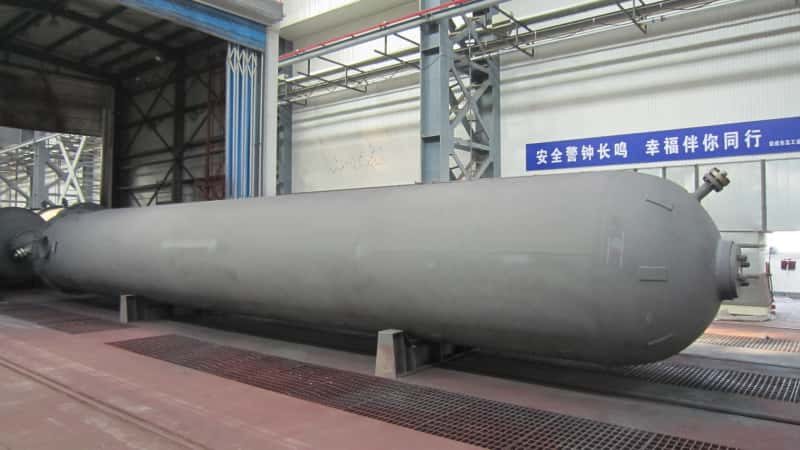

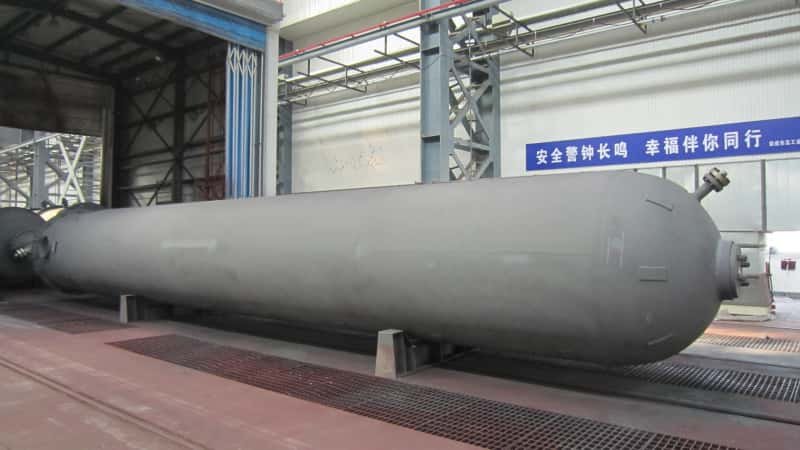
Large pressure storage tanks are not ordinary storage containers. They are engineered pressure equipment used to store gases or liquefied gases under controlled pressure, often in oil and gas, chemical, petrochemical, energy, metallurgy, and industrial gas projects. For buyers, the most important question is not simply tank volume. The real decision involves design pressure, stored medium, material selection, corrosion allowance, fabrication quality, inspection scope, transport limitations, and code compliance.
This guide focuses only on large, stationary, metallic pressure storage tanks. It does not cover small domestic tanks, non-pressure atmospheric tanks, plastic tanks, portable tanks, ISO tank containers, road tankers, or mobile storage equipment. WSHI’s scope is industrial pressure equipment such as storage tanks, liquefied gas storage tanks, high-pressure gas storage tanks, and large custom pressure vessels for demanding industrial service.
In B2B procurement, a large pressure storage tank is usually purchased for a long service life. A wrong specification can increase fabrication cost, delay delivery, or create safety and regulatory problems after installation. This article explains the key selection factors for engineering teams, EPC contractors, and plant owners who need reliable large pressure storage tanks for industrial projects.
What Is a Large Pressure Storage Tank?
A large pressure storage tank is a stationary vessel designed to hold a fluid at a pressure above atmospheric pressure. Unlike atmospheric storage tanks, it must be designed as a pressure-retaining component and manufactured under a recognized pressure vessel code or project specification. In many international projects, the buyer may require ASME Section VIII, local pressure vessel registration, third-party inspection, or an equivalent recognized design standard.
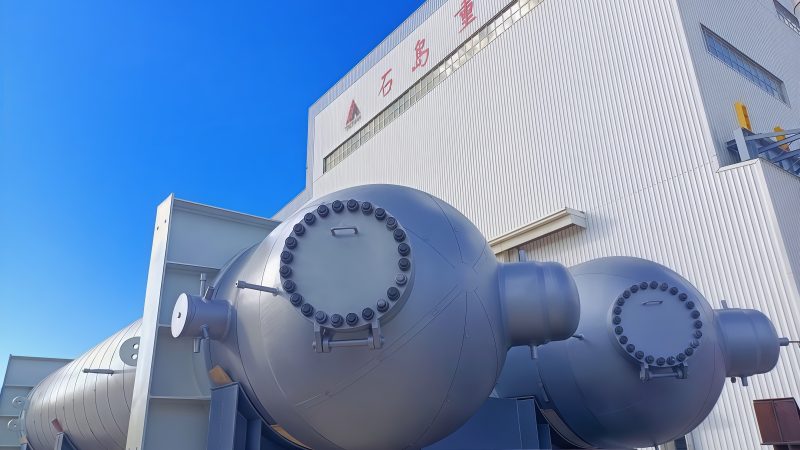
The word “large” can refer to high volume, heavy shell thickness, large diameter, long overall length, high stored mass, or the need for special transport and installation planning. Large tanks may be horizontal bullet tanks, vertical pressure vessels, spherical storage tanks, or custom configurations designed for a specific process unit.
What This Article Does Not Cover
To avoid confusion, this guide is not about general-purpose commodity storage. The following products are outside the scope:
- Small water pressure tanks for residential or light commercial use
- Atmospheric storage tanks without pressure vessel design requirements
- Plastic, FRP, PE, or other non-metallic tanks
- Portable air receivers, mobile tanks, road tankers, or ISO tank containers
- Simple open-top or low-duty storage containers
The focus here is large fabricated pressure equipment, typically made from carbon steel, low-alloy steel, stainless steel, or special alloy materials, and used in projects where engineering, welding, NDE, documentation, and compliance matter.
Common Applications of Large Pressure Storage Tanks
Large pressure storage tanks are used where the stored medium must remain under pressure for process, safety, or phase-control reasons. They are common in LPG terminals, industrial gas stations, chemical production units, refinery systems, power and energy projects, and special research facilities.
| Application | Typical stored medium | Key buying concern |
|---|---|---|
| LPG storage | Propane, butane, LPG mixtures | Design pressure, volume, site regulation, safety distance |
| Industrial gas storage | Nitrogen, oxygen, hydrogen, compressed gas | High pressure, material compatibility, leakage control |
| Chemical plant storage | Ammonia, process gas, intermediate products | Corrosion, toxicity, inspection, emergency safety |
| Oil and gas processing | Hydrocarbon gas or liquid under pressure | Code compliance, sour service, operating cycles |
| Energy and research projects | Special gases or high-pressure media | Custom design, testing, documentation, project review |
For example, WSHI’s project experience includes large-scale LPG bullet tanks, high-pressure liquid oxygen storage tanks, and other heavy pressure equipment used in oil and gas, chemical, aerospace, and energy applications.
Main Types of Large Pressure Storage Tanks
Horizontal bullet tanks
Horizontal bullet tanks are widely used for LPG, ammonia, and other liquefied gas storage applications. They are often selected when the project requires large capacity, easier shop fabrication, predictable support design, and relatively straightforward maintenance access. For many LPG projects, a horizontal tank is a practical and economical choice.
Vertical pressure storage vessels
Vertical tanks are used when the site layout, process arrangement, or available footprint favors a vertical configuration. They may require more attention to wind load, seismic load, skirt or leg supports, platform design, and foundation interface. Vertical pressure storage vessels are common in chemical plants and process units where piping arrangement and plot space are important.
Spherical storage tanks
Spherical tanks are typically used for very large-volume storage of pressurized gases or liquefied gases. A sphere distributes pressure stress efficiently, but fabrication, field assembly, inspection, and installation are more complex. For very large tank farms, spherical storage may be evaluated alongside bullet tanks depending on volume, site conditions, local regulation, and project economics.
Key Design Parameters Buyers Must Define
A large pressure storage tank cannot be accurately quoted from capacity alone. The manufacturer needs a complete technical basis. Missing data usually leads to assumptions, and assumptions can lead to price differences or later design changes.
- Stored medium and composition
- Design pressure and operating pressure
- Design temperature and operating temperature range
- Nominal capacity, working capacity, and filling ratio
- Corrosion allowance and expected service life
- Material grade and special material requirements
- Design code, such as ASME Section VIII or project-specific standards
- NDE scope, hydrostatic test pressure, and third-party inspection
- Nozzle list, manways, supports, platforms, ladders, and safety accessories
- Transportation limits, site lifting conditions, and installation method
True or false: the largest tank is always the best solution. False. Oversizing can increase shell thickness, foundation load, transport difficulty, inspection cost, and delivery time. The better approach is to match capacity with process demand, safety reserve, filling ratio, operating schedule, and site layout.
Design Code and Certification
Large pressure storage tanks are usually designed according to a pressure vessel code, not only a storage tank standard. For international procurement, buyers often request ASME Section VIII design, ASME U Stamp certification, or a local equivalent. The final requirement depends on the country of installation, owner specification, insurance requirements, and statutory pressure equipment rules.
If the project requires ASME certification, the inquiry should clearly state whether the tank must be ASME stamped, whether third-party inspection is required, and what documentation must be included in the final data book. Buyers comparing code and non-code tanks can also review our guide on ASME-certified pressure tanks versus non-code tanks.
For high-pressure or fatigue-sensitive applications, the design division may also matter. The related guide ASME Section VIII Div. 1 vs Div. 2 explains how to evaluate the design route for pressure vessels, reactors, heat exchangers, and storage equipment.
Material Selection for Large Pressure Storage Tanks
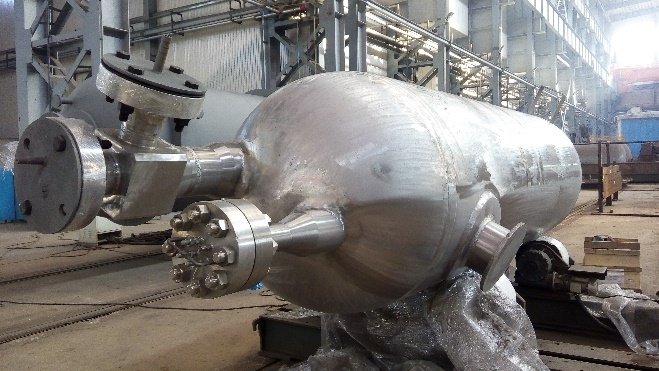
Material selection directly affects safety, service life, fabrication difficulty, and cost. Carbon steel is commonly used for many LPG and industrial gas tanks. Low-temperature carbon steel may be required where the stored medium or site condition creates low-temperature service. Stainless steel, low-alloy steel, clad plate, or special alloy materials may be needed for corrosive media, special chemicals, or high-pressure service.
The buyer should provide process data rather than only naming the fluid. For chemical or gas storage, the manufacturer may need composition, water content, sulfur content, chloride content, operating temperature, pressure cycles, and corrosion data. These details help determine corrosion allowance, impact testing, post-weld heat treatment, lining, cladding, or other protective measures.
For more detailed material thinking, see how to choose pressure vessel material and how material selection affects large oil and gas storage tank performance.
Wall Thickness, Corrosion Allowance, and Safety Margin
Wall thickness is determined by design pressure, diameter, material allowable stress, joint efficiency, corrosion allowance, temperature, and code formula or analysis method. In large tanks, a small change in pressure or corrosion allowance can significantly affect steel weight, welding volume, heat treatment requirements, and transportation planning.
Corrosion allowance should be based on actual medium and expected service life. Too little allowance can reduce long-term reliability; too much can create unnecessary weight and cost. If the service is corrosive, the buyer should consider inspection access, corrosion monitoring, internal coating, cladding, or upgraded metallurgy instead of relying only on extra thickness.
Nozzles, Manways, Supports, and Accessories
Large pressure storage tanks are more than shells and heads. Nozzle arrangement, manway position, support design, instrument ports, relief devices, drain and vent connections, lifting lugs, saddles, platforms, and ladders all affect the final design. Late changes to these details can delay fabrication because they may require recalculation, drawing revision, material rework, or additional inspection.
For LPG and other hazardous media, safety accessories are especially important. Pressure relief valves, level gauges, pressure gauges, temperature instruments, emergency shutoff connections, grounding, and fire protection interfaces should be coordinated with the plant design and local regulations.
NDE, Hydrostatic Testing, and Inspection
For large pressure storage tanks, nondestructive examination is a major part of quality control. Typical inspection may include visual inspection, radiographic testing, ultrasonic testing, magnetic particle testing, liquid penetrant testing, hardness testing, positive material identification, and dimensional inspection. The exact scope depends on the code, material, joint type, thickness, and owner specification.
Hydrostatic testing verifies pressure integrity before delivery. The test pressure, holding time, water quality, drying requirement, and post-test preservation should be agreed before manufacturing. For oxygen, ammonia, hydrogen, or special gas service, cleanliness and drying may become critical details.
Buyers should request an inspection and test plan before fabrication starts. The ITP should define hold points, witness points, document review stages, third-party participation, and final release requirements.
Transportation and Installation Planning
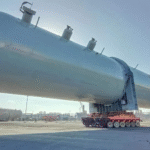
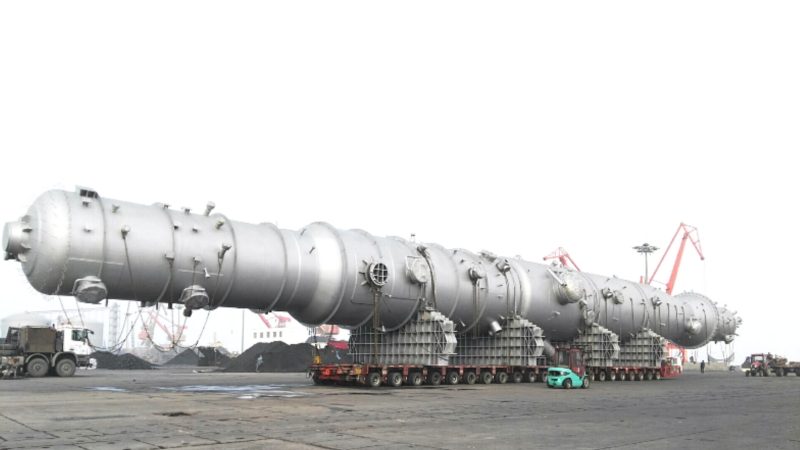
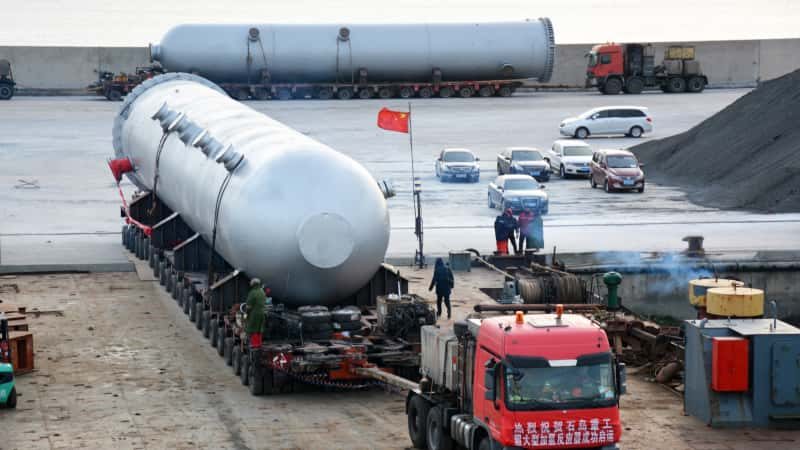
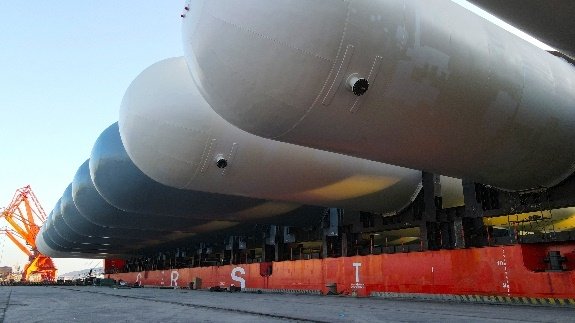
Large pressure storage tanks often become logistics projects. Diameter, length, weight, lifting points, road restrictions, port handling, sea freight, and site access can limit the final tank size. A design that looks efficient in calculations may become impractical if it cannot be transported or lifted safely.
For export projects, the manufacturer and buyer should confirm maximum transport dimensions, shipping method, lifting plan, preservation method, saddle support during transport, and packaging requirements. If the tank is too large for one-piece delivery, the project may need modular fabrication or field assembly, which changes inspection and schedule planning.
How to Compare Supplier Quotations
Large pressure storage tank quotations can look similar on the surface but differ significantly in technical scope. A serious comparison should check what is included and what is excluded. Buyers should compare design code, certification, plate material, corrosion allowance, NDE percentage, heat treatment, hydrostatic test, painting system, accessories, documentation, and delivery terms.
| Quotation item | Why it matters |
|---|---|
| Design code and stamp | Determines compliance, inspection, and acceptance basis |
| Material grade and origin | Affects strength, low-temperature performance, corrosion resistance |
| NDE scope | Controls weld quality verification and acceptance level |
| Accessories included | Relief valves, gauges, ladders, platforms, and nozzles can change cost |
| Documentation package | Needed for registration, commissioning, maintenance, and future inspection |
| Delivery schedule | Must match plate procurement, welding, heat treatment, testing, and transport |
This is also why supplier evaluation should include engineering capability and project experience, not only price. For a broader supplier checklist, see how to evaluate pressure tank manufacturers and suppliers and how to choose a reliable pressure vessel manufacturer.
Documentation Buyers Should Request
For large industrial tanks, documentation is part of the delivered equipment. The final data book should support site registration, commissioning, maintenance, and future inspection. A complete package may include:
- Approved general arrangement drawings and detailed fabrication drawings
- Design calculations and code compliance documents
- Material certificates and traceability records
- Welding procedure specifications and welder qualifications
- NDE reports and inspection records
- Heat treatment charts, if applicable
- Hydrostatic test report and pressure gauge calibration record
- Dimensional inspection report
- Coating, packing, and preservation records
- Operation, maintenance, and spare parts information where required
Common Mistakes When Buying Large Pressure Storage Tanks
- Requesting only volume without providing design pressure and medium details
- Confusing atmospheric storage tanks with pressure storage tanks
- Accepting a quotation without clear design code or certification scope
- Ignoring transport limits until after the tank has been designed
- Underestimating corrosion, low-temperature service, or cyclic operation
- Comparing suppliers without checking NDE, documentation, and accessories
- Choosing a supplier without heavy fabrication and pressure vessel experience
True or false: a plastic tank or non-pressure tank can replace a pressure storage tank if the volume is the same. False. Pressure storage requires code-based design, qualified materials, pressure-retaining welds, inspection, and testing. Volume alone does not define suitability.
Practical Buying Checklist
Before sending an inquiry, prepare a technical datasheet or at least a basic specification. The more complete the information, the more accurate the quotation will be.
- Tank type: horizontal bullet, vertical vessel, spherical tank, or custom design
- Stored medium and composition
- Design pressure, operating pressure, design temperature, and operating temperature
- Total volume, working volume, and filling ratio
- Design code, certification, and inspection authority requirements
- Material requirement and corrosion allowance
- Nozzle schedule, manway size, supports, and accessories
- Painting, insulation, fireproofing, or surface protection requirements
- Transport dimension limits and delivery destination
- Required documentation and language of documents
Why Work With WSHI for Large Pressure Storage Tanks?
Large pressure storage tanks require pressure vessel engineering, heavy fabrication capability, qualified welding, quality control, and project delivery experience. WSHI manufactures custom pressure equipment for oil and gas, petrochemical, chemical, energy, metallurgy, and aerospace-related projects. Our product scope includes LPG storage tanks, high-pressure gas storage tanks, reactors, heat exchangers, and other industrial pressure vessels.
We focus on large fabricated metallic pressure equipment, not small tanks, plastic tanks, non-pressure tanks, or mobile tank containers. If your project requires a stationary large pressure storage tank with engineering review, code compliance, inspection documentation, and reliable fabrication, WSHI can support the inquiry from early specification review to final delivery.
Conclusion
A large pressure storage tank is a critical industrial asset. The best design depends on medium, pressure, temperature, capacity, material, code, inspection scope, and site logistics. Buyers should define these requirements early and compare suppliers based on technical scope, not price alone.
Need a large ASME pressure storage tank for an industrial project? Send us your design conditions, tank volume, stored medium, project standard, and delivery location. Contact WSHI to discuss a custom large pressure storage tank built for your process, safety, and compliance requirements.