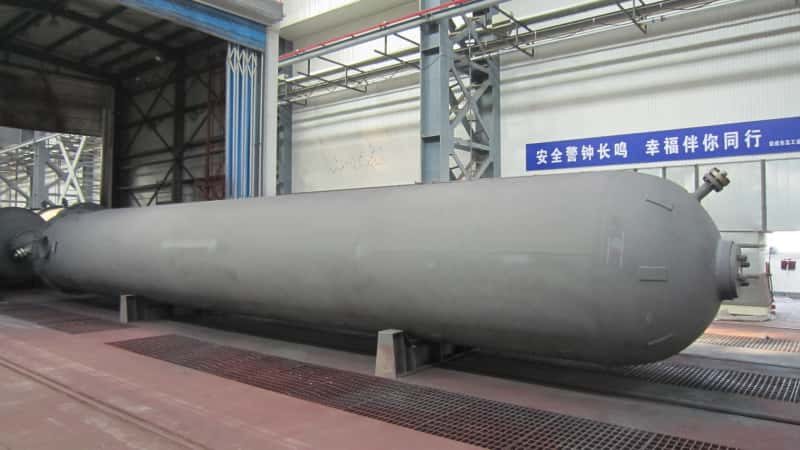

When an industrial project requires a custom pressure vessel, the question is rarely only “Can the vessel hold pressure?” A purchasing team also has to confirm whether the equipment will satisfy project specifications, local regulations, inspection expectations, fatigue life, material compatibility, and documentation requirements. This is why the choice between ASME Section VIII Division 1 and Division 2 matters so much.

For many standard pressure vessels, Div. 1 is the familiar and economical route. For higher pressure, cyclic loading, severe service, thinner-wall optimization, or more demanding owner specifications, Div. 2 may provide a better engineering basis. The correct decision affects vessel thickness, cost, inspection scope, manufacturing lead time, and long-term operating reliability.
This guide explains the practical difference between ASME Section VIII Div. 1 and Div. 2 from the viewpoint of engineering procurement. It is written for EPC companies, chemical plants, oil and gas projects, fertilizer plants, and industrial buyers evaluating heat exchangers, reactors, storage tanks, and process towers and columns.
What Is ASME Section VIII?
ASME Boiler and Pressure Vessel Code Section VIII is one of the most widely referenced design and fabrication codes for pressure vessels. It defines requirements for design, materials, fabrication, examination, testing, inspection, certification, and stamping. For international projects, an ASME-compliant vessel is often requested because it gives owners, insurers, and authorities a recognized technical framework.
In procurement documents, buyers may refer to an “ASME pressure vessel,” “ASME U Stamp vessel,” or “ASME-certified vessel.” These terms often point to Section VIII, but the buyer still needs to specify whether the design basis is Division 1 or Division 2. The choice should be made before detailed quotation because it changes calculations, drawings, inspection, and sometimes the manufacturing process.
Quick Comparison: Div. 1 vs Div. 2
| Item | ASME Section VIII Div. 1 | ASME Section VIII Div. 2 |
|---|---|---|
| Typical use | General industrial pressure vessels | High-pressure, high-risk, cyclic, or optimized designs |
| Design method | Rule-based formulas | More detailed design-by-rule and design-by-analysis |
| Engineering effort | Lower to moderate | Higher, often requiring more analysis |
| Inspection requirements | Standard code examination based on service and joint efficiency | More rigorous examination and documentation expectations |
| Wall thickness | Can be more conservative | May allow optimized thickness when analysis supports it |
| Best fit | Common tanks, separators, receivers, many shell and tube exchangers | High-pressure reactors, fatigue-sensitive vessels, large capital equipment |
True or false: Div. 2 is always better than Div. 1. False. Div. 2 is more detailed, but it is not automatically the best choice for every project. A simple compressed air receiver, low-cycle storage vessel, or conventional process tank may not benefit from the extra engineering and inspection cost of Div. 2.
Why the Division Choice Matters in Real Procurement
The code division is not only an engineering detail. It becomes part of the commercial boundary between buyer and manufacturer. If the inquiry says “ASME vessel” but does not specify the division, different suppliers may quote different assumptions. One offer may include standard Div. 1 calculations, while another may include Div. 2 stress analysis, higher NDE coverage, additional inspection hold points, or a more complete manufacturing data book.
This makes quotation comparison difficult. A lower-priced offer may simply exclude requirements that will later be requested by the owner, insurer, or local authority. For industrial buyers, the safer approach is to define the code basis early, then ask every supplier to quote the same standard, certification scope, documentation package, and inspection plan.
When Div. 1 Is Usually the Right Choice
ASME Section VIII Div. 1 is widely used because it gives a proven and efficient design route for many industrial vessels. It is often appropriate when the pressure, temperature, corrosion allowance, and operating cycles are within conventional ranges, and when the owner does not require advanced fatigue or stress analysis.
Div. 1 is commonly selected for liquefied gas storage tanks, general process vessels, industrial receivers, separators, and many shell and tube heat exchangers. If the process is stable and the project priority is reliable manufacturing with reasonable cost and schedule, Div. 1 is often sufficient.
Typical Div. 1 applications
- LPG storage tanks and other pressure storage equipment
- Standard shell and tube heat exchangers for chemical or refining service
- Compressed gas receivers and utility vessels
- Process tanks where cyclic loading is not severe
- Projects where the local regulation accepts Div. 1 design and inspection
When Div. 2 Should Be Considered

Division 2 is commonly considered when the vessel is expensive, highly loaded, exposed to fatigue, or part of a critical process unit. The code allows more detailed stress evaluation, which can be useful for large-diameter vessels, thick-wall components, high-pressure nozzles, cyclic pressure operation, or complex geometry.
For example, a hydrocracking reactor or high-pressure hydrogen service vessel may need closer attention to stress concentration, material toughness, weld quality, heat treatment, and nondestructive examination. In these cases, Div. 2 can provide a stronger technical basis for the owner and manufacturer.
Typical Div. 2 drivers
- High design pressure or high design temperature
- Frequent pressure or temperature cycles
- Large nozzles, special supports, or complex attachments
- Severe process media such as hydrogen, ammonia, sour gas, or corrosive chemicals
- Owner requirement for detailed fatigue or stress analysis
- Need to optimize wall thickness on large capital equipment
Material Selection Under Div. 1 and Div. 2
Material selection is one of the places where the code decision connects directly with plant reliability. Carbon steel may be suitable for many utility and storage services, while stainless steel, low-alloy steel, duplex stainless steel, nickel alloy, or clad plate may be required for corrosion, temperature, or hydrogen service. The vessel material must also satisfy design temperature, impact testing, weldability, and post-weld heat treatment requirements.
For corrosive media, the buyer should provide the process fluid composition, chloride content, sulfur content, water content, operating pH, design temperature, and expected corrosion rate. These details help the manufacturer evaluate corrosion allowance, lining, cladding, or upgraded metallurgy. For a deeper buying reference, see our article on how to choose pressure vessel material.
NDE, Testing, and Inspection Scope
Nondestructive examination is another major cost and risk factor. Depending on the code division and project specification, inspection may include radiographic testing, ultrasonic testing, magnetic particle testing, liquid penetrant testing, hardness testing, positive material identification, impact testing, and hydrostatic pressure testing. Div. 2 projects often involve more detailed examination planning because the design may depend on stricter quality assumptions.
Buyers should not treat NDE as a generic line item. A good inquiry should state the required percentage of RT or UT, acceptance criteria, third-party inspection requirements, witness points, and documentation format. This is especially important for high-temperature and high-pressure heat exchangers, pressure reactors, and heavy-wall vessels.
How the Code Choice Affects Cost and Lead Time
The purchase price of a pressure vessel is not determined only by steel weight. Code selection influences engineering hours, inspection points, welding procedure qualification, documentation, material traceability, hydrostatic testing, and third-party review. A Div. 2 vessel may reduce material thickness in some cases, but the saving must be compared with the cost of additional analysis and examination.
For conventional equipment, Div. 1 often gives the most economical result. For thick-wall or high-pressure equipment, Div. 2 may become competitive because optimized design can reduce weight, welding volume, and installation load. The best approach is to ask the manufacturer to evaluate both design routes when the project is technically close to the boundary.
If lead time is critical, buyers should also review manufacturing capacity early. Large pressure parts, heavy wall shells, forged nozzles, heat treatment, and NDE scheduling can extend delivery time. This is especially important for pressure tank manufacturing and delivery planning.
Product-Specific Guidance
[Heat exchangers](https://pressure-tank.com/pressure-vessels/heat-exchanger/)
For many heat exchanger selection projects, Div. 1 is adequate. However, Div. 2 may be useful for high-pressure units, hydrogen service, high-temperature operation, or equipment with special closure systems such as a breech lock type heat exchanger. Buyers should also confirm applicable heat exchanger standards and certifications, because TEMA, ASME, PED, or project specifications may all apply.
Reactors
Reactors often involve pressure, temperature, agitation, catalyst beds, corrosive media, and cyclic operation. A standard reactor may be designed under Div. 1, but critical chemical or petrochemical units should be reviewed carefully. Buyers can use the same thinking described in key specifications for purchasing reactors: process media, corrosion allowance, design life, internals, inspection access, and documentation must be clear before quotation.
Storage tanks and gas vessels
Pressure storage tanks are often evaluated by design pressure, volume, stored medium, site condition, and local regulation. For common industrial service, Div. 1 is typical. For high-pressure gas storage, cryogenic-related systems, or special safety requirements, more detailed analysis may be necessary. See our pressure tank selection guide and high-pressure gas storage tanks for related product considerations.
Process towers and columns
Columns are tall, heavy, and often exposed to wind load, seismic load, tray loads, platforms, and process temperature gradients. ASME Section VIII is part of the pressure design, but structural checks are also important. For procurement, the buyer should clarify tray or packing load, corrosion allowance, transport limits, field assembly requirements, and inspection scope. Related product examples include fractionation tower columns and scrubber towers.
Example Selection Scenarios
| Project condition | Likely code route | Reason |
|---|---|---|
| Standard pressure tank for stable utility service | Div. 1 | Conventional pressure, limited cycles, economical fabrication |
| Large LPG bullet tank for export project | Div. 1 or project-specified | Usually conventional, but owner and local regulation must be confirmed |
| High-pressure reactor with hydrogen service | Consider Div. 2 | Severe service, material toughness, fatigue and stress concentration concerns |
| High-pressure shell and tube heat exchanger | Div. 1 or Div. 2 | Depends on pressure, temperature, closure type, fatigue cycles, and owner specification |
| Tall process column with platforms and internals | Div. 1 plus structural checks, or Div. 2 if specified | Pressure design must be integrated with wind, seismic, support, and internal load checks |
Procurement Checklist Before Requesting a Quotation
Before asking a manufacturer to quote an ASME pressure vessel, prepare the following information. It helps avoid under-specified offers and makes different suppliers easier to compare.
- Design code: ASME Section VIII Div. 1 or Div. 2
- Design pressure, operating pressure, design temperature, and operating temperature
- Process medium, corrosion data, and required corrosion allowance
- Material requirements, including carbon steel, stainless steel, alloy steel, or clad plate
- Expected design life and pressure or temperature cycle frequency
- NDE requirements such as RT, UT, MT, PT, and PMI
- Heat treatment, impact test, hardness test, and hydrostatic test requirements
- Documentation: calculations, drawings, material certificates, welding records, NDE reports, and inspection test plan
- Certification requirement, including ASME U Stamp or third-party inspection
True or false: A lower vessel price always means better procurement value. False. If a quotation omits NDE scope, material traceability, code stamping, corrosion allowance, or documentation, the initial price may look attractive but create project risk later. A reliable supplier should be able to explain exactly what is included.
Documentation Buyers Should Request
For B2B pressure equipment procurement, documentation is part of the product. At minimum, buyers should request approved drawings, design calculations, material certificates, welding procedure specifications, welder qualification records, NDE reports, heat treatment charts where applicable, pressure test records, dimensional inspection reports, coating or packing reports, and the final data book.
For complex projects, the documentation package should also include an inspection and test plan, manufacturing schedule, quality control plan, deviation list, spare parts list, and preservation instructions for storage before installation. These records help the plant owner manage commissioning, future inspection, maintenance, and regulatory review.
Common Mistakes to Avoid
- Specifying “ASME vessel” without stating Div. 1 or Div. 2
- Comparing supplier prices without comparing inspection and documentation scope
- Ignoring pressure or temperature cycles in reactor and heat exchanger service
- Choosing material based only on price instead of corrosion and temperature data
- Leaving nozzle loads, supports, platforms, or internals until late in the project
- Assuming a non-code tank can replace an ASME-certified vessel in regulated service
How to Work With an ASME Pressure Vessel Manufacturer
A qualified manufacturer should support buyers from early technical review through final documentation. For custom pressure equipment, early communication is valuable because small specification changes can have a large effect on thickness, welding, inspection, and delivery. This is one reason many buyers evaluate a supplier’s engineering capability, manufacturing record, quality system, and export experience before placing an order.
Useful internal references include our guide on how to choose a reliable pressure vessel manufacturer, the comparison between ASME-certified and non-code pressure tanks, and the material selection article how to choose pressure vessel material. For heat exchanger procurement, also review how to evaluate heat exchanger manufacturers and suppliers.
Conclusion: Choose the Code Based on Risk, Not Habit
ASME Section VIII Div. 1 and Div. 2 are both proven design routes, but they serve different procurement needs. Div. 1 is practical and economical for many industrial pressure vessels. Div. 2 becomes valuable when the vessel is high pressure, fatigue-sensitive, technically complex, or financially critical to the project.
The best choice depends on process conditions, owner specifications, regulatory requirements, inspection expectations, and lifecycle risk. If the specification is uncertain, a manufacturer with pressure vessel engineering experience can compare both routes and help the buyer make a technically sound decision.
Need support for an ASME pressure vessel project? WSHI manufactures custom pressure vessels, heat exchangers, reactors, storage tanks, and process towers and columns for demanding industrial applications. Contact us with your design conditions, drawings, or datasheet, and our engineering team will help review the proper code route for your project.