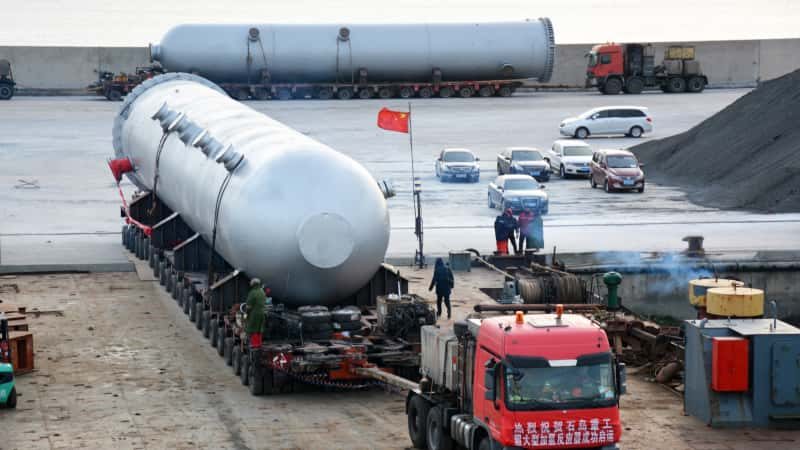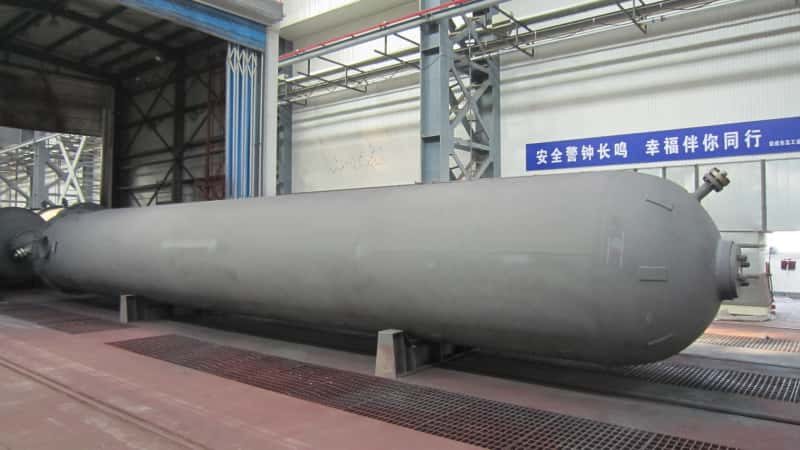

Corrosion allowance is additional metal thickness intentionally provided above the pressure-retaining thickness required by design to compensate for expected material loss during the intended service period of a pressure vessel.
In simple terms, if corrosion is expected to remove part of the vessel wall over time, the designer may provide additional sacrificial thickness so that the vessel can lose some material while still retaining sufficient structural thickness for its design conditions.
However, corrosion allowance is frequently misunderstood.
It is not simply:
“Add 3 mm to every pressure vessel.”
It is also not a substitute for:
- selecting the correct material;
- understanding the process chemistry;
- controlling corrosion;
- using cladding or lining where appropriate;
- monitoring equipment condition;
- inspecting the vessel during service.
For EPC contractors and industrial buyers, the correct question is therefore not:
“What corrosion allowance do pressure vessels normally use?”
The better question is:
“What metal-loss mechanism is expected in this specific service, at what rate, for what design life, and is additional sacrificial thickness the correct way to manage it?”
The ASME Boiler and Pressure Vessel Code Section VIII Division 1 provides the construction framework for pressure vessels, including provisions related to corrosion considerations, but there is no single universal corrosion allowance such as 1.5 mm, 3 mm, or 6 mm that automatically applies to every industrial pressure vessel.
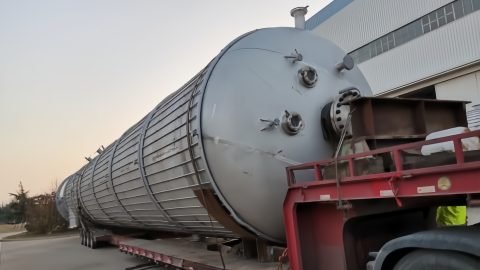
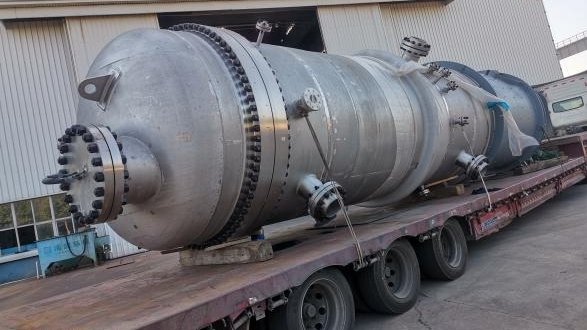
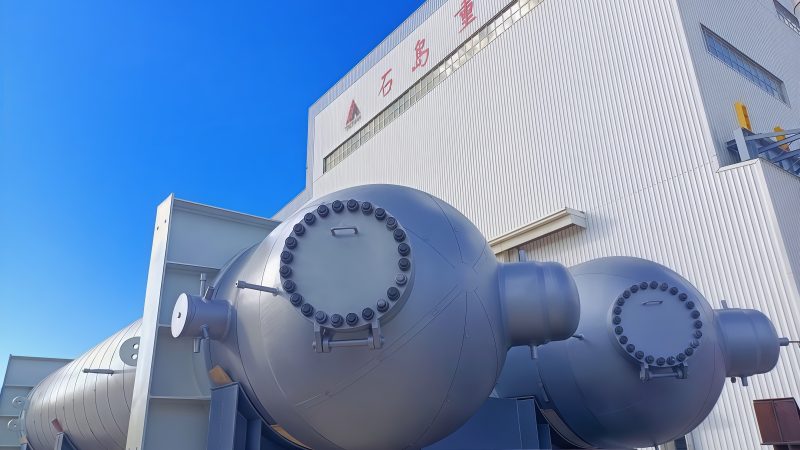
Large reactors manufactured by Weihai Shidao Heavy Industry (WSHI) using a Q345R structural base with S31603 corrosion-resistant cladding. In severe process environments, material selection and corrosion-resistant construction may be more effective than simply increasing corrosion allowance.
Executive Summary
The key principles of pressure vessel corrosion allowance are:
| Question | Engineering Principle |
|---|---|
| What is corrosion allowance? | Additional sacrificial metal provided for expected material loss |
| Is 3 mm a universal value? | No |
| Who determines it? | Normally owner/EPC/process/materials engineering, with manufacturer review |
| What influences the value? | Corrosion rate, design life, process chemistry, materials and project specification |
| Does ASME prescribe one fixed allowance? | No universal fixed millimeter value applies to every vessel |
| Does stainless steel always need zero CA? | No; suitability depends on actual damage mechanisms |
| Can CA prevent stress corrosion cracking? | Generally no |
| Can CA solve severe pitting? | Not reliably by itself |
| Does CA increase vessel weight? | Yes, sometimes significantly on large equipment |
| Can cladding replace a large CA? | In suitable services, corrosion-resistant construction may be more appropriate |
| Is CA counted as usable MAWP thickness? | Specified corrosion allowance is excluded when determining pressure capability under the applicable MAWP principles |
| Does corrosion allowance disappear during service? | It is progressively consumed if actual metal loss occurs |
The most important principle is:
Corrosion allowance is appropriate for reasonably predictable metal loss. It is not a universal solution for every corrosion or cracking mechanism.
Quick Answer: What Is Corrosion Allowance in a Pressure Vessel?
Suppose a pressure calculation determines that a vessel shell requires:
20 mm of structural pressure-retaining thickness
and the project specifies:
3 mm corrosion allowance
The conceptual design basis becomes:
Required Structural Thickness + Corrosion Allowance
or:
20 mm + 3 mm = 23 mm
Additional considerations may still affect the actual ordered plate thickness, including:
- mill tolerance;
- forming thinning;
- fabrication tolerance;
- project-specific minimum thickness;
- commercial plate availability.
Therefore, the actual nominal plate selected might be greater than 23 mm.
This is a simplified example only. It is not a complete ASME thickness calculation.
The important distinction is that the 20 mm structural requirement and the 3 mm corrosion allowance serve different purposes.
The structural thickness carries pressure and other applicable loads.
The corrosion allowance is sacrificial thickness intended to accommodate future material loss.
Why Is Corrosion Allowance Added?
Pressure vessels can gradually lose material because of mechanisms such as:
- general corrosion;
- predictable uniform chemical attack;
- erosion-corrosion;
- certain forms of process-side metal loss;
- external corrosion where applicable.
If material loss is reasonably predictable, providing additional metal at the design stage can delay the point at which the remaining wall approaches its minimum required thickness.
Conceptually:
New Vessel
Required thickness + unused corrosion allowance
↓
Years of Operation
Some corrosion allowance consumed
↓
Later Service
Less remaining corrosion allowance
↓
Integrity Limit
Actual thickness approaches required structural thickness
This is why corrosion allowance connects the original equipment design with future inspection and remaining-life management.
API 510’s in-service pressure vessel framework uses actual measured thickness and required thickness when assessing remaining corrosion allowance and service life.
For a broader discussion of degradation mechanisms, see:
What Causes Pressure Vessel Failure?
How Is Corrosion Allowance Determined?
A useful conceptual starting point is:
Expected Corrosion Allowance ≈ Expected Corrosion Rate × Intended Exposure Period
But this should not be treated as a universal ASME formula.
Real projects may also need to consider:
- uncertainty in corrosion-rate data;
- startup and shutdown conditions;
- process contamination;
- changes in chemistry;
- erosion;
- water accumulation;
- cleaning conditions;
- shutdown corrosion;
- external corrosion;
- project minimum requirements;
- owner standards;
- inspection strategy;
- material upgrades;
- cladding or lining alternatives.
For example, if reliable operating history from comparable equipment indicates a relatively stable uniform corrosion rate, engineers can use that information as part of the corrosion design basis.
If the corrosion mechanism is highly localized, unpredictable, or crack-like, simply multiplying a rate by design life may be inappropriate.
Who Should Specify the Corrosion Allowance?
Corrosion allowance should not normally be invented by the pressure vessel manufacturer after receiving an incomplete RFQ.
Responsibility varies by contract, but a typical EPC structure is:
Owner / Process Licensor
May establish:
- process composition;
- corrosion basis;
- material requirements;
- expected design life;
- operating envelope;
- owner corrosion standards.
EPC / Materials Engineer
May define:
- material of construction;
- corrosion allowance;
- cladding or lining;
- corrosion monitoring requirements;
- special material requirements.
Pressure Vessel Manufacturer
Uses the specified design basis to perform or complete:
- pressure calculations;
- minimum required thickness;
- nominal thickness selection;
- nozzle design;
- fabrication planning;
- welding;
- inspection;
- material traceability.
The manufacturer should raise a technical clarification if the corrosion allowance appears inconsistent with:
- process medium;
- specified material;
- service severity;
- applicable project requirements.
But the manufacturer should not be expected to guess unknown process corrosion data.
Does ASME Specify a Standard Corrosion Allowance?
A common misconception is:
“ASME requires a 3 mm corrosion allowance.”
That is not a universal ASME Section VIII rule.
ASME provides rules for pressure-vessel construction and requires corrosion to be appropriately considered, but the required corrosion allowance depends on the service and project design basis.
You may also encounter online references to fixed values such as 1/16 inch.
Be careful with the source.
For example, 46 CFR §54.01-35 contains specific corrosion-allowance provisions for pressure vessels under U.S. Coast Guard marine regulations and explicitly modifies UG-25 of ASME Section VIII.
Those marine-specific requirements should not be copied and presented as the universal corrosion allowance for every refinery, chemical plant, fertilizer plant, or industrial pressure vessel.
The applicable hierarchy should instead be established from:
Jurisdiction → Design Code → Owner Standard → EPC Specification → Process Corrosion Basis
Is 3 mm Corrosion Allowance Standard?
No.
3 mm is a commonly encountered project specification in some industrial applications, but it is not a universal value.
Depending on service, an owner or EPC may specify:
- zero corrosion allowance;
- a relatively small allowance;
- several millimeters;
- a larger value;
- corrosion-resistant cladding instead of a large allowance.
The correct value depends on the project.
This distinction matters commercially.
A purchaser who sends an RFQ stating:
“Use standard corrosion allowance.”
may receive quotations based on completely different assumptions.
Supplier A may assume one value.
Supplier B may assume another.
Supplier C may recommend stainless steel.
Supplier D may propose a clad structure.
The quoted prices may then appear comparable when the equipment designs are actually different.
For procurement, always specify the corrosion allowance explicitly or request the manufacturer to state its assumption clearly in the technical offer.
What Factors Determine Corrosion Allowance?
Several factors should be considered together.
1. Process Medium
The contained fluid is fundamental.
Questions include:
- Is the medium wet or dry?
- Is water expected to condense?
- Are acids present?
- Are chlorides present?
- Is H₂S present?
- Is CO₂ present?
- Are sulfur compounds present?
- Are solids or catalyst particles present?
- Does concentration change during operation?
The same carbon-steel vessel may perform very differently in dry gas and wet acidic service.
2. Operating Temperature
Corrosion behavior can change dramatically with temperature.
Temperature can affect:
- chemical reaction rates;
- solubility;
- condensation;
- protective film stability;
- material susceptibility.
Designers should therefore evaluate the complete operating temperature range rather than only normal temperature.
3. Corrosion Rate
Where corrosion is predictable, reliable corrosion-rate information can provide a basis for allowance selection.
Sources may include:
- historical plant data;
- comparable equipment;
- process licensor data;
- laboratory testing;
- corrosion specialist assessment;
- published engineering data.
The best data usually come from equipment operating under genuinely comparable conditions.
4. Design Life
A vessel intended for a longer design life may require greater corrosion management than identical equipment intended for a shorter service period.
However:
A longer design life does not automatically mean that more carbon steel is always the best solution.
At some point, upgrading material or using cladding may become technically and economically preferable.
5. Material of Construction
Carbon steel, stainless steel, duplex steel, nickel alloy, titanium, zirconium, and clad materials behave differently in specific process environments.
The material choice should therefore be made before treating corrosion allowance as an isolated number.
For an overview of WSHI’s material capabilities, see our custom pressure vessels.
6. Corrosion Mechanism
The type of deterioration matters as much as the rate.
Corrosion allowance works best where metal loss is reasonably predictable.
It is much less effective against mechanisms involving:
- localized pitting;
- crevice corrosion;
- stress corrosion cracking;
- hydrogen damage;
- brittle cracking;
- fatigue;
- high-temperature hydrogen attack.
7. External Environment
The process side is not the only potential corrosion source.
External deterioration may result from:
- atmospheric exposure;
- marine environments;
- insulation;
- condensation;
- chemical splash;
- damaged coatings.
Corrosion under insulation can be particularly difficult because deterioration may remain hidden beneath insulation systems.
8. Inspection Strategy
Corrosion allowance should be linked to future inspection.
If general wall thinning is expected, the owner may establish:
- baseline thickness measurements;
- corrosion monitoring locations;
- inspection intervals;
- ultrasonic thickness monitoring.
Design and integrity management should therefore work together.
Corrosion Allowance vs Required Thickness
This distinction is fundamental.
Required Thickness
The minimum structural thickness needed to satisfy the applicable pressure and load calculations.
Corrosion Allowance
Additional sacrificial thickness provided for anticipated future metal loss.
Nominal Thickness
The actual specified or ordered material thickness after accounting for applicable design and fabrication requirements.
Conceptually:
Nominal Thickness ≥ Required Structural Thickness + Corrosion Allowance + Applicable Manufacturing Considerations
The exact relationship depends on the applicable Code and project specification.
Do not treat the entire nominal wall as interchangeable pressure capacity.
Is Corrosion Allowance Included When Calculating MAWP?
Specified corrosion allowance should not simply be counted as extra structural thickness when establishing vessel pressure capability.
The ASME-derived MAWP provisions reproduced in 46 CFR §54.10-5 explicitly state that specified corrosion allowance is excluded when determining the maximum allowable pressure of a vessel part.
This is logical.
If 3 mm was intentionally provided to disappear gradually during service, it would be inconsistent to simultaneously rely on that same 3 mm as permanent pressure-retaining capacity.
A useful conceptual distinction is:
Structural Thickness → supports pressure design
Corrosion Allowance → accommodates future metal loss
For related pressure terminology, buyers should also distinguish among:
- operating pressure;
- design pressure;
- MAWP;
- test pressure.
Does Corrosion Allowance Increase the MAWP?
Not in the simple sense that:
“We added 3 mm CA, so the vessel can now operate at a higher pressure.”
That is the wrong way to interpret it.
The additional thickness was specified for corrosion purposes.
The final vessel MAWP is calculated according to the applicable design rules and treatment of corrosion allowance.
Therefore, corrosion allowance should not be viewed as free design margin available for increased plant throughput or higher operating pressure.
Does Corrosion Allowance Increase Vessel Weight?
Yes.
For large pressure vessels, even a few additional millimeters of wall thickness can add substantial material weight.
The approximate added metal volume for a simple cylindrical shell increases with:
Diameter × Length × Added Thickness
This means corrosion allowance can materially affect large:
- reactors;
- towers;
- separators;
- drums;
- storage vessels.
Higher weight can then influence:
- steel cost;
- welding volume;
- forming;
- PWHT;
- lifting;
- supports;
- foundations;
- transportation;
- erection.
Why This Matters for EPC Cost Optimization
Consider a very large vessel.
Adding several millimeters “just to be safe” may increase steel tonnage across:
- shell courses;
- heads;
- nozzle necks;
- other process-wetted pressure parts.
If a more corrosion-resistant material or clad structure could provide better lifecycle performance, simply increasing carbon-steel thickness may not be the most economical design.
Therefore:
Corrosion allowance should be engineered, not maximized.
Is More Corrosion Allowance Always Better?
No.
Excessive corrosion allowance can introduce unnecessary:
- material cost;
- equipment weight;
- welding volume;
- fabrication time;
- transportation difficulty.
For extremely large vessels, additional thickness can also influence manufacturing feasibility.
The goal is not to maximize wall thickness.
The goal is to provide an appropriate corrosion-management strategy for the intended service.
Sometimes that strategy is:
Carbon Steel + Corrosion Allowance
Sometimes it may be:
Corrosion-Resistant Alloy
or:
Carbon / Low-Alloy Structural Base + Corrosion-Resistant Cladding
or:
Weld Overlay
or:
Lining / Coating
depending on the process and applicable engineering requirements.
Can Corrosion Allowance Compensate for Pitting?
Not reliably in every case.
Corrosion allowance is most straightforward when deterioration occurs relatively uniformly.
Pitting is localized.
Imagine a vessel with 3 mm corrosion allowance.
If most of the vessel loses only 0.5 mm but one local area develops a pit several millimeters deep, the average corrosion allowance does not guarantee acceptable local integrity.
Localized corrosion may therefore require:
- more suitable materials;
- better process control;
- coatings or linings;
- corrosion monitoring;
- localized inspection;
- engineering evaluation.
The damage morphology matters.
Can Corrosion Allowance Prevent Stress Corrosion Cracking?
Generally, no.
Stress corrosion cracking is fundamentally different from uniform corrosion.
It involves an interaction between:
susceptible material + specific environment + tensile stress
A crack can propagate through material without consuming the vessel wall uniformly.
Adding several millimeters of extra material does not necessarily remove:
- material susceptibility;
- process environment;
- welding residual stress.
This is why severe chloride, caustic, sour, hydrogen, or other cracking-sensitive services may require specific:
- material selection;
- hardness limits;
- heat treatment;
- welding control;
- process control;
- NDE.
Corrosion allowance should never become a substitute for damage-mechanism analysis.
For broader failure mechanisms, see What Causes Pressure Vessel Failure?.
Can Corrosion Allowance Prevent Hydrogen Damage?
No general corrosion allowance can guarantee protection against hydrogen-related damage.
Hydrogen-related mechanisms may depend on:
- hydrogen partial pressure;
- temperature;
- H₂S;
- metallurgy;
- hardness;
- inclusions;
- welding;
- heat treatment.
In high-temperature hydrogen service, material selection becomes particularly important.
This is why heavy refinery reactors may use specialized Cr-Mo materials and corrosion-resistant internal overlays rather than relying on very large corrosion allowances.
Real Project Example: Hydrocracking Reactor
A heavy refinery reactor demonstrates the difference between adding thickness and engineering a material system for severe service.
WSHI manufactured a hydrocracking reactor for Wudi Xinyue Fuel Chemical Co., Ltd.
Published project data include:
| Parameter | Project Data |
|---|---|
| Equipment | Hydrocracking Reactor |
| Diameter | φ4000 mm |
| Wall Configuration | 212 + 6.5 mm |
| Length | 22,049 mm |
| Weight | 626.6 tons |
| Base Material | 12Cr2Mo1V forged |
| Overlay | E309L + E347 |
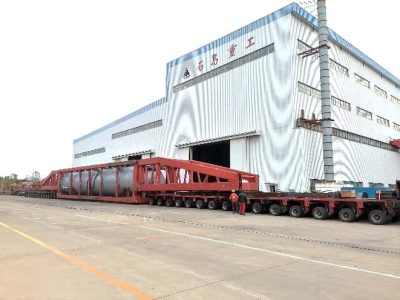
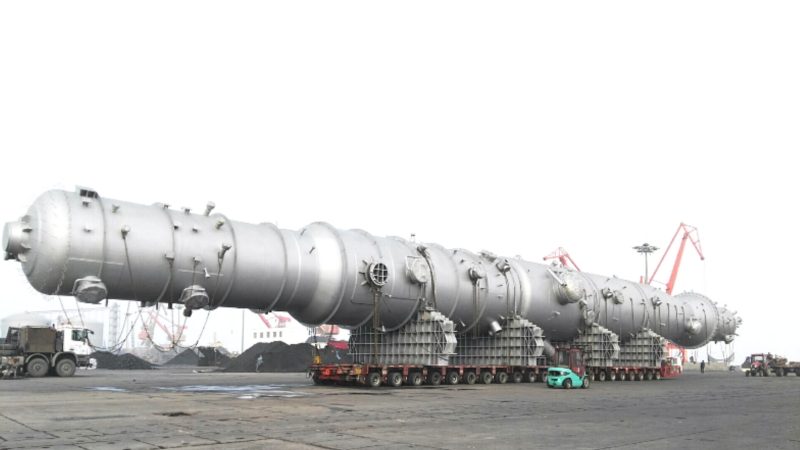
626.6-ton hydrocracking reactor manufactured by WSHI. Severe refinery service may require thick structural alloy steel combined with corrosion-resistant weld overlay rather than relying solely on sacrificial corrosion allowance.
The key lesson is:
A severe corrosion environment is not automatically solved by making the vessel thicker.
The correct solution may require an engineered combination of:
- structural base metal;
- corrosion-resistant layer;
- welding procedures;
- heat treatment;
- NDE;
- process controls.
Corrosion Allowance vs Cladding
These concepts should not be confused.
Corrosion Allowance
Uses additional base-metal thickness that can be sacrificially consumed.
Cladding
Uses a corrosion-resistant material layer over a structural base material.
A simplified comparison is:
| Approach | Primary Strategy |
|---|---|
| Carbon Steel + CA | Accept predictable metal loss |
| Solid Stainless / Alloy | Resist corrosion throughout wall |
| Clad Vessel | Structural base + corrosion-resistant process surface |
| Weld Overlay | Deposit corrosion-resistant alloy on process surface |
| Lining | Separate process medium from structural vessel surface |
| Coating | Protect surface through applied protective barrier |
No option is universally best.
The correct solution depends on:
- process chemistry;
- pressure;
- temperature;
- corrosion mechanism;
- vessel size;
- material availability;
- fabrication;
- inspection;
- lifecycle cost.
Real Project Example: Q345R + S31603 Clad Reactors
WSHI manufactured three large reactors for Qingdao Gulf Chemical using:
Q345R + S31603 clad construction
Each reactor was approximately:
- Φ6600 × 13,410 mm;
- 135 tons.
The structural carbon-steel base provides pressure-retaining mechanical strength, while the S31603 process-side layer provides corrosion resistance for the intended chemical environment.
View the Gulf Chemical Reactor Project
Q345R + S31603 clad reactor manufactured by WSHI. Clad construction can combine structural strength with a corrosion-resistant process surface in applications where simply increasing carbon-steel corrosion allowance may not provide the optimum solution.
This type of design illustrates a broader procurement principle:
Evaluate lifecycle corrosion strategy—not only initial material price.
Corrosion Allowance vs Lining
Linings can also be used to separate corrosive media from the structural vessel wall.
Depending on application, examples can include:
- rubber lining;
- polymer lining;
- PTFE-based systems;
- glass lining;
- refractory systems;
- metallic lining.
However, linings introduce different engineering issues:
- adhesion;
- permeation;
- temperature limits;
- mechanical damage;
- inspection;
- repairability;
- nozzle detailing.
A lined vessel is not simply equivalent to a vessel with corrosion allowance.
The protection mechanism is completely different.
Does Stainless Steel Need Corrosion Allowance?
Sometimes yes, sometimes no.
The statement:
“Stainless steel never needs corrosion allowance.”
is too broad.
Certain stainless-steel applications may justify zero specified corrosion allowance when reliable engineering evidence shows negligible expected metal loss and project requirements permit it.
But stainless steels can still experience:
- pitting;
- crevice corrosion;
- chloride stress corrosion cracking;
- intergranular attack;
- localized chemical attack.
Therefore:
Zero corrosion allowance must come from a corrosion assessment—not from the word “stainless.”
The same principle applies to:
- duplex stainless steel;
- nickel alloys;
- titanium;
- zirconium.
High corrosion resistance does not mean universal immunity.
Does Carbon Steel Always Need Corrosion Allowance?
Also no.
Some dry, non-corrosive services may justify little or no sacrificial corrosion allowance depending on:
- process chemistry;
- moisture;
- design basis;
- owner specifications;
- applicable requirements.
But carbon steel should not automatically receive zero CA simply because the process is described as “gas service.”
Engineers should consider:
- condensation;
- shutdown conditions;
- water carryover;
- oxygen ingress;
- external environment.
Actual service conditions matter.
Internal vs External Corrosion Allowance
Another common mistake is considering only the process side.
A vessel can experience:
Internal Corrosion
and:
External Corrosion
at the same time.
Internal corrosion may arise from process chemistry.
External corrosion may result from:
- atmosphere;
- coastal conditions;
- insulation;
- rainwater;
- chemical exposure.
The corrosion-protection strategy may therefore combine:
Internal CA or CRA protection
with:
External coatings / insulation design / weather protection
rather than using one generic thickness value to solve both.
What If Both Sides of a Component Are Corrosive?
This must be explicitly evaluated.
Examples include:
- heat-exchanger tubesheets;
- internal partitions;
- jacketed vessel walls;
- process internals exposed from multiple sides.
Do not automatically assume that a single corrosion allowance applied to one face is sufficient.
The design should identify:
- which surfaces are exposed;
- what media contact each surface;
- expected corrosion mechanism;
- required sacrificial thickness or protection.
How Does Corrosion Allowance Work in Heat Exchangers?
Heat exchangers require particular care because they often contain two different process streams.
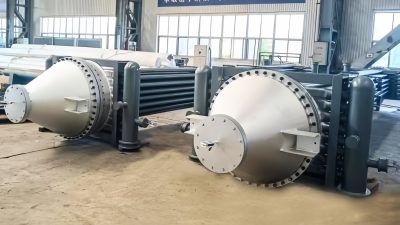
High-pressure industrial heat exchanger manufactured by WSHI. Shell-side and tube-side corrosion conditions should be evaluated separately because the two process streams may have very different chemistry, pressure, temperature, and materials.
For a shell-and-tube heat exchanger, engineers may need to evaluate separately:
Shell Side
- shell;
- shell-side heads;
- nozzles;
- tubesheet face.
Tube Side
- channels;
- channel covers;
- nozzles;
- tubes;
- tubesheet surfaces.
For example:
Shell Side
Hydrocarbon process fluid with relatively mild corrosion
Tube Side
Cooling water containing chlorides
The corrosion strategy may therefore be completely different for the two sides.
Tube-wall selection also interacts directly with:
- heat transfer;
- pressure drop;
- tube size;
- mechanical strength.
Therefore, simply applying the same large corrosion allowance used for the shell to every heat-transfer tube is not an appropriate universal design rule.
Corrosion Allowance in Storage Vessels
Corrosion allowance also depends strongly on what is stored.
Industrial storage vessels may handle:
- hydrocarbons;
- LPG;
- chemicals;
- industrial gases;
- water;
- condensate;
- thermal fluids.
Important questions include:
- Does water settle at the bottom?
- Is the vapor space corrosive?
- Does condensation occur?
- Is the material exposed during filling and emptying?
- Is the tank insulated?
- Is the external environment corrosive?
- Are chemicals concentrated locally?
Different zones in one vessel may therefore experience different corrosion severity.
For certain applications, localized protection or different materials can be more appropriate than assuming uniform corrosion everywhere.
Corrosion Allowance in Towers and Columns
Large process towers and columns can contain multiple process zones.
The top of a column may experience:
- condensation;
- acidic water;
- lower temperature.
The bottom may experience:
- higher temperature;
- different chemical composition;
- heavier process fractions.
This means corrosion behavior can vary significantly along the vessel height.
An EPC materials engineer may therefore specify:
- different materials by shell course;
- clad zones;
- corrosion-resistant trays;
- localized weld overlay;
- different corrosion allowances.
This can be more technically appropriate than assigning one generic corrosion allowance to the entire tower.
Corrosion Allowance and Nozzles
Nozzles should not be forgotten.
Process-wetted nozzle components may include:
- nozzle neck;
- forged neck;
- reinforcement elements where applicable;
- internal projection;
- flanges.
Corrosion can be particularly important at:
- inlet nozzles;
- high-velocity outlets;
- two-phase flow zones;
- injection points;
- mixing points.
The nozzle design should therefore be consistent with the vessel corrosion basis.
A shell designed with appropriate CA can still experience problems if the nozzle metallurgy or thickness was not evaluated correctly.
Corrosion Allowance and Vessel Internals
Pressure vessels can contain:
- trays;
- baffles;
- distributors;
- demisters;
- support grids;
- vortex breakers;
- catalyst supports;
- internal piping.
These internals may also experience corrosion.
However, their design philosophy may differ from the main pressure boundary.
Some components are:
- removable;
- replaceable;
- non-pressure-retaining.
Others carry substantial mechanical loads.
The project specification should clearly state corrosion requirements for important internals rather than assuming the pressure-shell CA applies automatically to everything inside the vessel.
Corrosion Allowance vs Mill Tolerance
These terms are not interchangeable.
Corrosion Allowance
Extra thickness intentionally provided for expected service-related material loss.
Mill Tolerance
Permitted manufacturing variation in supplied material thickness.
If nominal plate is specified as 20 mm, actual delivered thickness may be slightly below nominal within the applicable material specification tolerance.
Therefore, mill tolerance must be considered separately where required by the design rules.
A common mistake is:
Required thickness = 20 mm, therefore order 20 mm plate.
This may be incorrect if the design must also accommodate:
- corrosion allowance;
- negative mill tolerance;
- forming thinning;
- other fabrication considerations.
Corrosion Allowance vs Forming Allowance
Forming heads or shell components may reduce local material thickness.
For example, forming a head can change thickness in different regions.
Therefore, the manufacturer may need to purchase thicker starting material so that the finished formed component remains above:
required structural thickness + specified corrosion allowance
after forming.
Corrosion allowance should not be confused with fabrication thickness loss.
How Does Corrosion Allowance Affect Pressure Vessel Cost?
Corrosion allowance affects much more than raw plate price.
Additional thickness can increase:
Material Cost
More steel or alloy material is required.
Welding Cost
Thicker pressure-boundary joints can require:
- more weld metal;
- more welding passes;
- longer welding time.
Heat Treatment
Greater thickness can influence:
- PWHT requirements;
- heating duration;
- furnace loading.
NDE
Thicker welds can affect:
- UT technique;
- RT feasibility;
- inspection time.
Equipment Weight
Higher weight affects:
- crane requirements;
- turning rolls;
- supports;
- foundations.
Transportation
Large pressure vessels may face:
- road limits;
- port handling limits;
- trailer capacity;
- shipping constraints.
For heavy industrial equipment, the difference between an engineered corrosion strategy and arbitrary over-thickening can therefore be commercially significant.
When Should You Consider a More Corrosion-Resistant Material Instead?
Increasing corrosion allowance becomes less attractive when:
- expected corrosion rate is high;
- corrosion is strongly localized;
- very long design life is required;
- added wall thickness becomes excessive;
- contamination cannot be tolerated;
- frequent replacement is unacceptable;
- process shutdown costs are high.
Possible alternatives may include:
- stainless steel;
- duplex stainless steel;
- nickel alloys;
- titanium;
- zirconium;
- clad construction;
- weld overlay;
- engineered lining systems.
The decision should ideally consider total lifecycle cost, not only purchase price.
Carbon Steel + CA vs Stainless Steel: Which Is Cheaper?
There is no universal answer.
Carbon Steel + Corrosion Allowance
May offer:
- lower raw material cost;
- familiar fabrication;
- easier availability.
But can create:
- higher weight;
- ongoing corrosion monitoring;
- shorter remaining-life margin;
- potential replacement cost.
Stainless or Corrosion-Resistant Alloy
May involve:
- higher purchase cost;
- more specialized welding;
- more expensive raw materials.
But may reduce:
- general corrosion;
- required sacrificial thickness;
- maintenance.
The correct comparison is therefore:
CAPEX + maintenance + inspection + downtime + repair + expected service life
rather than simply:
price per ton of steel
How Is Corrosion Allowance Used During In-Service Inspection?
When a new vessel enters service, the corrosion allowance effectively becomes part of the equipment’s future integrity margin.
API 510 uses the concept of remaining corrosion allowance when evaluating existing pressure vessels.
A simplified relationship is:
Remaining Corrosion Allowance = Actual Measured Thickness − Required Thickness
If:
Actual Thickness = 22 mm
and:
Required Thickness = 19 mm
the simplified remaining thickness margin is:
3 mm
Corrosion rate can then help estimate how rapidly this margin is being consumed.
Conceptually:
Remaining Life ≈ Remaining Thickness Margin ÷ Corrosion Rate
Actual assessments must use the applicable API 510 requirements and qualified engineering judgment.
The API Pressure Vessel Inspector Body of Knowledge includes corrosion rate, remaining corrosion allowance, remaining life, and inspection interval concepts as fundamental pressure-vessel integrity topics.
What Happens When Corrosion Allowance Is Used Up?
Reaching the end of the originally specified corrosion allowance does not necessarily mean:
“The vessel explodes tomorrow.”
But it is an important integrity condition.
The actual vessel thickness must be compared against the required thickness under the applicable code and current service conditions.
Depending on the findings, possible actions may include:
- continued monitoring;
- shorter inspection interval;
- repair;
- rerating;
- Fitness-for-Service assessment;
- replacement.
The decision should be engineering-based.
The vessel should not simply continue operating indefinitely because no leakage is visible.
Does a Vessel Still Need Inspection If It Has Large Corrosion Allowance?
Yes.
Corrosion allowance is not a substitute for inspection.
Actual corrosion may differ from the original assumption because of:
- process changes;
- contamination;
- temperature changes;
- water ingress;
- abnormal operation;
- localized corrosion.
A vessel designed with 6 mm of CA can still develop a serious local defect before all 6 mm is uniformly consumed.
Inspection confirms whether the original corrosion assumptions remain valid.
Can Corrosion Allowance Be Added Later?
Not literally.
Once a pressure vessel has been manufactured, you cannot simply increase its original wall thickness by changing a number in the datasheet.
If future operation requires a more severe corrosion basis, options may include:
- engineering assessment;
- protective lining;
- weld overlay;
- repair;
- rerating;
- replacement.
This is why accurate corrosion information is valuable before procurement.
What Happens If the Process Medium Changes?
A change of service can invalidate the original corrosion basis.
For example, a vessel originally designed for:
dry hydrocarbon service
may later be exposed to:
water + chlorides + acidic components
The original corrosion allowance may no longer be appropriate.
A Management of Change review should evaluate:
- material compatibility;
- new damage mechanisms;
- corrosion rate;
- pressure;
- temperature;
- inspection requirements.
Do not assume that unused corrosion allowance automatically makes the vessel suitable for a more aggressive process.
What Should EPC Buyers Specify in the RFQ?
For pressure vessel procurement, include enough information for the manufacturer to understand the complete corrosion basis.
Process Data
- process medium;
- chemical composition;
- impurities;
- water content;
- solids;
- density;
- operating pressure;
- operating temperature;
- upset conditions.
Design Data
- design pressure;
- design temperature;
- design life;
- corrosion allowance;
- external corrosion requirements;
- vacuum conditions.
Material Data
- base material;
- corrosion-resistant material;
- clad specification;
- weld overlay requirement;
- lining or coating.
Fabrication Requirements
- PWHT;
- PMI;
- NDE;
- weld overlay procedure;
- ferrite requirements where applicable;
- hardness limits where applicable.
Inspection Requirements
- inspection hold points;
- corrosion monitoring locations;
- baseline thickness data;
- third-party inspection;
- manufacturing data book.
For custom projects, the more complete the process and materials data, the less the manufacturer needs to rely on assumptions.
Corrosion Allowance RFQ Example
A much better specification is:
Equipment: Vertical Process Separator
Design Pressure: 2.5 MPaG
Design Temperature: 220°C
Process Medium: Hydrocarbon + H₂S + water
Base Material: SA-516 Gr.70
Corrosion Allowance: 3 mm, process side
External Environment: Coastal industrial atmosphere
Design Life: 20 years
Code: ASME Section VIII Division 1
Special Requirements: Project materials specification to apply
than:
“Separator, carbon steel, standard corrosion allowance.”
The first gives manufacturers a defined design basis.
The second creates commercial and engineering ambiguity.
Common Corrosion Allowance Mistakes
1. Automatically Using 3 mm
A familiar number is not automatically the correct number.
2. Treating ASME as the Source of a Universal CA
ASME does not establish one fixed millimeter value for all industrial pressure vessels.
3. Ignoring the Corrosion Mechanism
Uniform corrosion and stress corrosion cracking cannot be managed in the same way.
4. Assuming More Thickness Always Means Better Design
Excess thickness can increase cost without solving the actual corrosion problem.
5. Assuming Stainless Steel Means Zero Corrosion
Stainless steels can still suffer localized corrosion and cracking.
6. Ignoring External Corrosion
A vessel can deteriorate from both sides.
7. Forgetting Nozzles and Internals
The shell is only one part of the complete equipment.
8. Confusing CA with Mill Tolerance
They address different issues.
9. Counting CA as Free Pressure Capacity
Specified corrosion allowance serves a sacrificial lifecycle purpose.
10. Failing to Reassess After Process Changes
A new medium may create a new corrosion mechanism.
Corrosion Allowance Design Checklist
Before finalizing corrosion allowance, confirm:
- Process medium is clearly defined
- Chemical composition is available
- Water and condensation conditions are understood
- Operating temperature range is defined
- Design temperature is defined
- Expected corrosion mechanism is identified
- Corrosion-rate data are reasonably reliable
- Intended design life is defined
- Base material is selected
- Localized corrosion risk is reviewed
- Stress corrosion cracking risk is reviewed
- Hydrogen-related damage is reviewed where applicable
- Internal and external corrosion are considered separately
- Cladding / overlay / lining alternatives are evaluated where appropriate
- Corrosion allowance is explicitly stated in the datasheet
- Nozzle corrosion basis is defined
- Vessel internals are addressed
- Mill tolerance is handled separately
- Forming thinning is handled separately
- Future inspection strategy is considered
- Supplier assumptions are clearly listed in the technical quotation
What Should Buyers Check When Selecting a Pressure Vessel Manufacturer?
For corrosion-sensitive projects, a pressure vessel manufacturer should offer more than plate rolling and welding.
Important capabilities include:
| Capability | Why It Matters |
|---|---|
| Materials engineering | Helps execute the specified corrosion strategy |
| Special-material fabrication | Enables stainless, duplex, nickel, titanium or zirconium solutions |
| Clad fabrication | Supports structural-base + CRA designs |
| Weld overlay | Important for refinery and severe process vessels |
| Qualified welding procedures | Critical when joining dissimilar or alloy materials |
| PWHT capability | Important for applicable alloy and thick-wall equipment |
| PMI | Supports alloy verification |
| NDE | Supports pressure-boundary and overlay quality |
| Material traceability | Confirms materials throughout fabrication |
| Heavy fabrication | Allows large corrosion-resistant vessels to be manufactured reliably |
| Documentation | Provides lifecycle traceability for EPC and plant integrity teams |
WSHI Corrosion-Resistant Pressure Vessel Capability
Weihai Shidao Heavy Industry (WSHI) specializes in large, tailor-made pressure vessels for demanding industrial applications including:
- refining;
- petrochemical;
- oil and gas;
- fertilizer;
- chemical processing;
- metallurgy;
- energy.
Material capabilities published across WSHI’s product and project portfolio include:
- carbon steel;
- low-alloy steel;
- Cr-Mo steel;
- stainless steel;
- duplex stainless steel;
- nickel alloys;
- titanium;
- zirconium;
- clad structures;
- corrosion-resistant weld overlay.
Representative corrosion-resistant construction includes:
12Cr2Mo1V + E309L/E347 weld overlay for a 626.6-ton hydrocracking reactor
and:
Q345R + S31603 clad structure for 135-ton fine-chemical reactors.
These examples illustrate why pressure-vessel corrosion strategy should be selected around the actual process rather than applying the same corrosion allowance to every project.
Planning a Corrosion-Resistant Pressure Vessel Project?
For a reliable technical and commercial evaluation, provide:
equipment type + process medium/composition + operating pressure + design pressure + operating temperature + design temperature + expected design life + material + corrosion allowance + cladding/lining requirement + dimensions + applicable code + NDE requirements + quantity + drawings/datasheet
Contact the WSHI engineering team to discuss your pressure vessel requirements.
Frequently Asked Questions
What is corrosion allowance in a pressure vessel?
Corrosion allowance is additional sacrificial metal thickness provided above the required structural thickness to accommodate expected material loss during service.
It is primarily useful where metal loss is reasonably predictable.
What is the standard corrosion allowance for pressure vessels?
There is no single universal standard corrosion allowance for every pressure vessel.
Values such as 1.5 mm, 3 mm, or other amounts may appear in owner or project specifications, but the correct value depends on process chemistry, corrosion rate, material, design life, and applicable requirements.
Does ASME require a 3 mm corrosion allowance?
No universal ASME Section VIII rule requires every pressure vessel to use 3 mm corrosion allowance.
Corrosion must be appropriately considered, but the selected allowance depends on the actual service and project design basis.
Does ASME require 1/16 inch corrosion allowance?
Not as a universal rule for all industrial pressure vessels.
Specific U.S. marine regulations such as 46 CFR contain their own corrosion-allowance provisions modifying ASME UG-25. Those requirements should not be generalized to every ASME pressure vessel in every industry.
How do you calculate pressure vessel corrosion allowance?
A conceptual approach is:
Corrosion Allowance ≈ Expected Corrosion Rate × Intended Service Period
However, actual selection may also require engineering allowances for uncertainty, process variation, project requirements, material selection, inspection strategy, and the nature of the corrosion mechanism.
This should not be treated as a universal ASME formula.
Is corrosion allowance included in required thickness?
Corrosion allowance is normally considered in addition to the structural thickness required for pressure and applicable mechanical loads.
The complete nominal material selection must also account for applicable manufacturing and fabrication requirements.
Does corrosion allowance increase MAWP?
Specified corrosion allowance should not simply be treated as additional pressure-retaining thickness available to increase operating pressure.
It is provided for anticipated future metal loss.
Does stainless steel require corrosion allowance?
Not always, but zero corrosion allowance should not be assumed automatically.
Stainless steels can still experience pitting, crevice corrosion, stress corrosion cracking, or other service-specific degradation.
The corrosion basis should be evaluated for the actual process.
Does carbon steel always require corrosion allowance?
No universal rule requires a positive corrosion allowance in every carbon-steel application.
Some sufficiently non-corrosive services may justify little or no allowance depending on the process and project requirements.
The decision should be based on engineering data.
Is more corrosion allowance better?
Not necessarily.
Excessive corrosion allowance increases material, weight, welding, fabrication, transportation, and potentially foundation costs.
In severe corrosion service, upgrading material or using cladding may provide better lifecycle performance.
Can corrosion allowance prevent pitting?
Not reliably in all cases.
Pitting is localized and can penetrate deeply while average wall loss remains low.
Material selection, corrosion control, and appropriate inspection may be more important.
Can corrosion allowance prevent stress corrosion cracking?
Generally no.
Stress corrosion cracking depends on susceptible material, environment, and tensile stress. Simply increasing wall thickness does not eliminate those conditions.
What is the difference between corrosion allowance and cladding?
Corrosion allowance provides sacrificial base-metal thickness that may be consumed over time.
Cladding provides a corrosion-resistant process-side layer over a structural base material.
The two approaches manage corrosion in fundamentally different ways.
What is the difference between corrosion allowance and mill tolerance?
Corrosion allowance compensates for expected service-related metal loss.
Mill tolerance accounts for permitted manufacturing variation in supplied material thickness.
They must not be treated as the same allowance.
What happens when corrosion allowance is consumed?
The vessel’s actual measured thickness should be compared with the required thickness under the applicable in-service integrity framework.
Depending on remaining thickness and deterioration rate, action may include continued monitoring, repair, rerating, Fitness-for-Service assessment, or replacement.
Who specifies corrosion allowance?
In many EPC projects, corrosion allowance is specified by the owner, process licensor, EPC contractor, or materials engineer based on process and corrosion data.
The pressure vessel manufacturer incorporates the specified value into the mechanical design and should clarify inconsistent or missing requirements.
Conclusion
Corrosion allowance is one of the most important—but also one of the most frequently oversimplified—parameters in pressure vessel design.
It should not be reduced to:
“Just add 3 mm.”
The correct corrosion strategy begins with:
process chemistry → damage mechanism → corrosion rate → design life → material selection → corrosion allowance or CRA protection → fabrication → inspection
For predictable uniform metal loss, additional sacrificial thickness can be an effective and economical solution.
For severe localized corrosion, stress corrosion cracking, hydrogen damage, or aggressive chemical environments, simply making the vessel thicker may provide little real benefit.
The better solution may involve:
- more suitable base material;
- stainless or nickel alloy;
- duplex steel;
- titanium or zirconium;
- clad construction;
- weld overlay;
- engineered lining or coating.
For EPC contractors and industrial buyers, the practical procurement principle is:
Specify the corrosion basis, not just the vessel dimensions.
An RFQ should clearly define:
process medium + pressure + temperature + design life + material + corrosion allowance + corrosion-resistant construction requirements
so that competing manufacturers quote the same technical basis.
For large reactors, towers, separators, storage vessels, and heat exchangers, this becomes especially important because every unnecessary millimeter can add significant weight and cost—while an insufficient or technically inappropriate corrosion strategy can shorten equipment life and increase integrity risk.
The objective is not the thickest possible vessel.
It is a pressure vessel with the right material, right structural thickness, and right corrosion strategy for its intended service life.
Standards and Technical References
- ASME BPVC Section VIII Division 1 — Rules for Construction of Pressure Vessels
- ASME 2025 Boiler and Pressure Vessel Code
- 46 CFR §54.01-35 — Corrosion Requirements Modifying UG-25
- 46 CFR §54.10-5 — Maximum Allowable Working Pressure
- API Standard 510 — Pressure Vessel Inspection Code
- API RP 571 — Damage Mechanisms Affecting Fixed Equipment
- WSHI Pressure Vessels
- Xinyue Fuel Chemical Hydrocracking Reactor Project
- Qingdao Gulf Chemical Clad Reactor Project