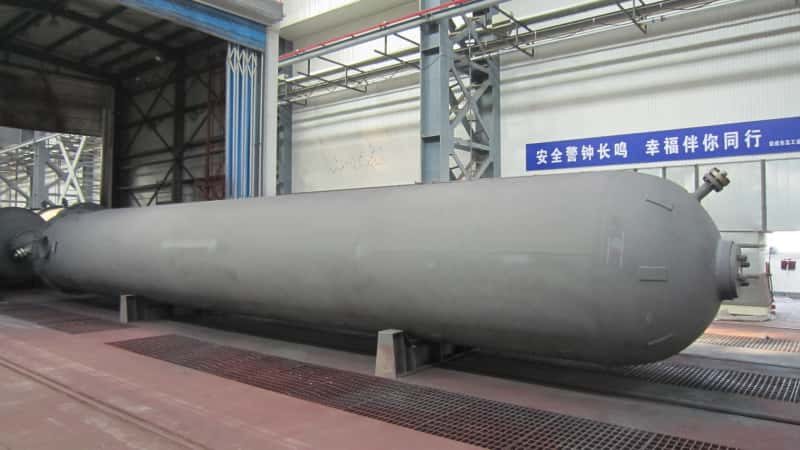

For pressure vessels handling corrosive chemicals, refinery streams, hydrogen-containing media, acids, chlorides, or other aggressive process fluids, material selection often comes down to three broad construction strategies:
Solid corrosion-resistant alloy
Clad plate
Corrosion-resistant weld overlay
All three can provide effective corrosion resistance when correctly engineered, but they are not interchangeable.
A solid-alloy vessel uses the corrosion-resistant material through essentially the full pressure-retaining wall. A clad vessel combines a structural base material—typically carbon or low-alloy steel—with a metallurgically bonded corrosion-resistant alloy layer on the process side. Weld overlay instead deposits corrosion-resistant weld metal onto the surface of a structural substrate.
The best choice depends on far more than alloy price.
EPC contractors and equipment buyers need to consider:
- process chemistry;
- pressure;
- temperature;
- required structural thickness;
- corrosion mechanism;
- vessel diameter and weight;
- fabrication route;
- welding;
- heat treatment;
- inspection;
- repairability;
- material availability;
- lifecycle cost.
For large, thick-wall pressure equipment, using a corrosion-resistant alloy through the entire wall can become technically and economically inefficient. In suitable applications, clad construction or weld overlay allows the structural steel to provide the required mechanical strength while a thinner corrosion-resistant layer protects the process surface.
The ASME Boiler and Pressure Vessel Code Section VIII Division 1 provides the primary design and construction framework for many industrial pressure vessels, while material specifications such as ASTM A264 and ASTM A265 establish requirements for certain stainless- and nickel-alloy-clad steel plates.
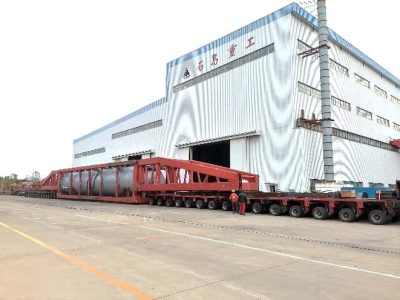
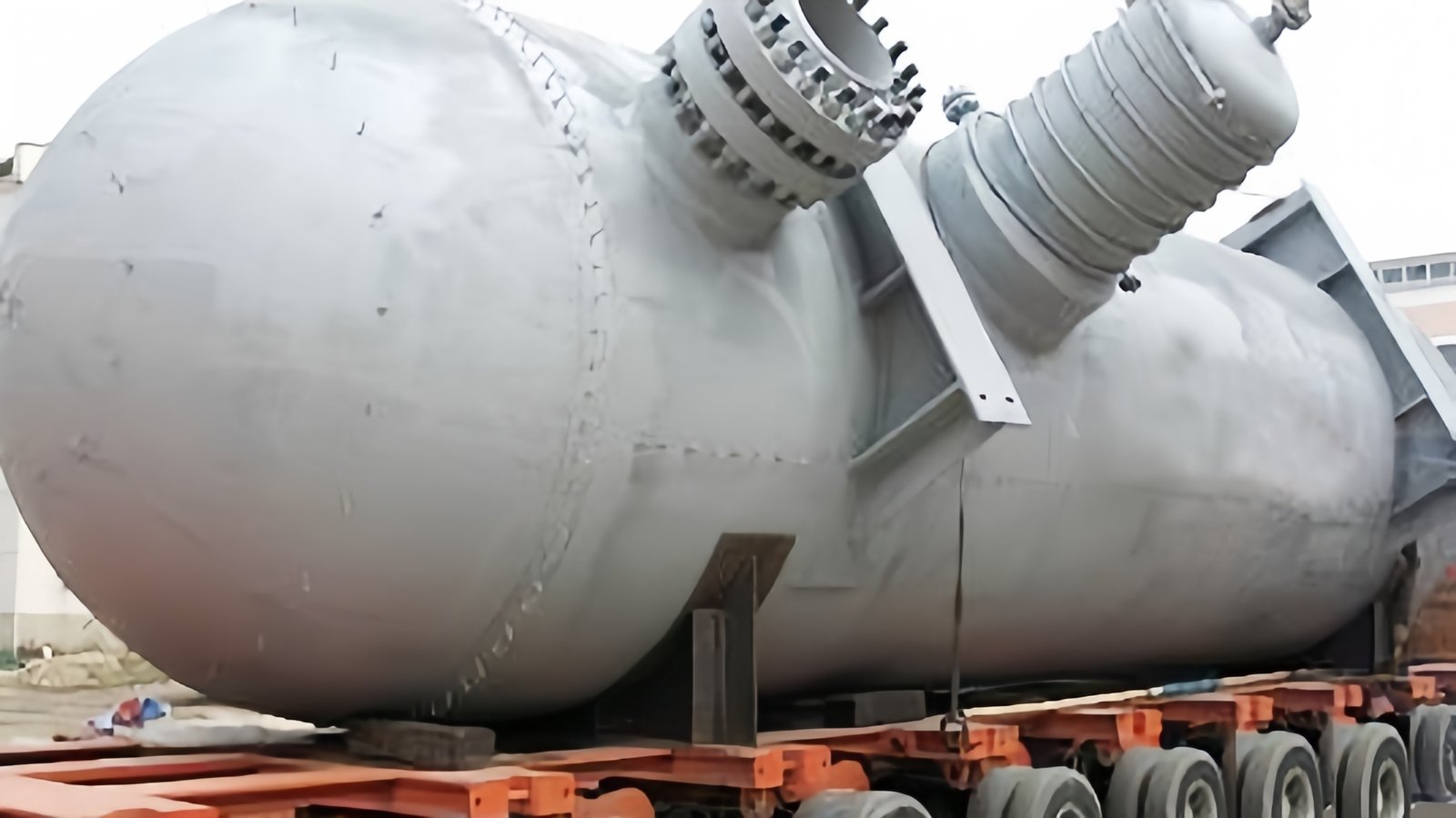
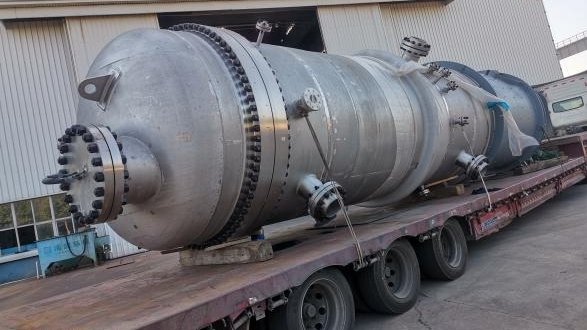
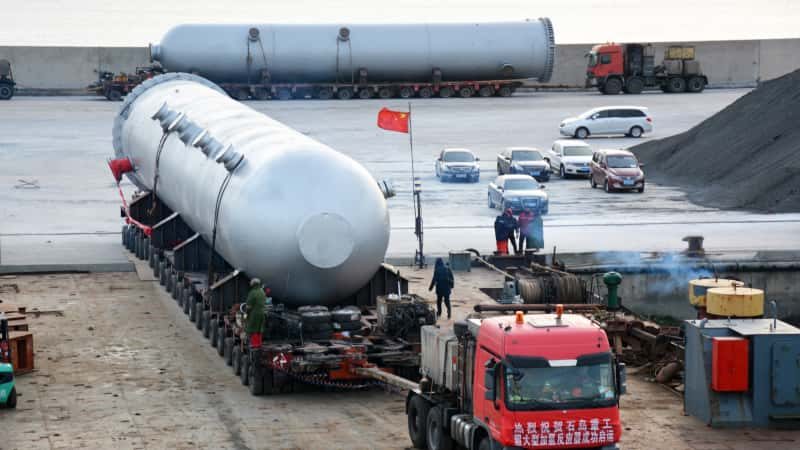
626.6-ton hydrocracking reactor manufactured by Weihai Shidao Heavy Industry (WSHI), using a 12Cr2Mo1V forged structural base with E309L + E347 corrosion-resistant weld overlay.
Executive Summary
The three construction approaches can be summarized as follows:
| Construction | Basic Concept | Main Advantage | Main Consideration |
|---|---|---|---|
| Solid Alloy | Full pressure-retaining wall uses corrosion-resistant alloy | Simple material concept and full-wall corrosion resistance | High material cost and fabrication challenges at large thickness |
| Clad Plate | Structural steel base + metallurgically bonded CRA layer | Combines structural strength and corrosion resistance efficiently | Bond integrity and clad-joint fabrication require control |
| Weld Overlay | CRA weld metal deposited onto structural substrate | Flexible for complex geometry, local surfaces and heavy-wall equipment | Dilution, weld chemistry, productivity and inspection must be controlled |
A useful rule of thumb is:
The thicker and larger the pressure vessel becomes, the stronger the economic case can become for separating the structural function from the corrosion-resistant function.
However, that does not mean clad or overlay is always superior.
Solid alloy can remain preferable when:
- wall thickness is moderate;
- vessel size is manageable;
- product purity is critical;
- corrosion resistance is required through the entire section;
- fabrication simplicity favors one material;
- lifecycle economics justify the alloy cost.
The correct decision is therefore:
process environment → damage mechanism → structural requirement → material system → fabrication route → lifecycle economics
Quick Answer: Clad vs Solid Alloy Pressure Vessel
A solid-alloy pressure vessel uses a corrosion-resistant material such as stainless steel, duplex stainless steel, nickel alloy, titanium, or another suitable alloy throughout the relevant pressure-retaining section.
A clad pressure vessel normally uses a lower-cost structural material such as carbon or low-alloy steel as the load-bearing base, with a thinner corrosion-resistant alloy layer metallurgically bonded to the process surface.
For example:
Solid Alloy
316L stainless steel throughout a 28 mm vessel wall
versus:
Clad Construction
Carbon-steel structural base + several millimeters of 316L process-side cladding
The clad approach can reduce the amount of expensive corrosion-resistant material while maintaining the process-side corrosion properties required by the service.
A third option is:
Structural Steel + Weld Overlay
where corrosion-resistant weld metal is deposited directly onto the process-wetted surface.
These three construction routes should be evaluated independently.
What Is a Solid-Alloy Pressure Vessel?
A solid-alloy pressure vessel uses substantially the same corrosion-resistant alloy throughout the pressure-retaining wall.
Typical materials can include:
- 304L stainless steel;
- 316L stainless steel;
- duplex stainless steel;
- super duplex stainless steel;
- Alloy 825;
- Alloy 625;
- Hastelloy-type nickel alloys;
- titanium;
- zirconium.
The selected alloy performs both major functions:
- provides structural pressure-retaining strength, and
- provides corrosion resistance to the process medium.
This makes the material concept relatively straightforward.
There is no separate interface between a structural base plate and a corrosion-resistant clad layer.
Advantages of Solid-Alloy Construction
Potential benefits include:
- corrosion-resistant material throughout the wall;
- no clad bond interface;
- simpler interpretation of local surface damage;
- potentially simpler nozzle and attachment details;
- no requirement to restore a separate clad layer across every pressure-boundary seam;
- good suitability for high-purity applications in appropriate alloys.
But these advantages must be balanced against cost and manufacturing feasibility.
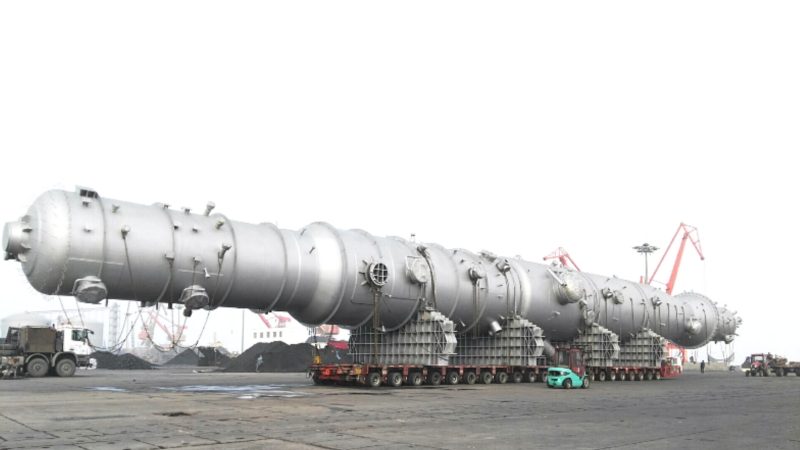
Real Project Example: 520-Ton Solid 316L Reaction Column
A useful real-world example is WSHI’s DPC Reaction Column manufactured for Sichuan Lutianhua Zhonglan New Materials.
Published project data include:
| Parameter | Project Data |
|---|---|
| Equipment | DPC Reaction Column |
| Diameter | Φ7100 mm |
| Wall Thickness | 28 mm |
| Length | 39,000 mm |
| Weight | 520 tons |
| Material | S31603 / 316L Stainless Steel |
| Construction | Solid stainless steel |
The vessel was manufactured entirely from S31603 stainless steel, rather than using a carbon-steel base with stainless cladding.
View the DPC Reaction Column Project
This illustrates an important point:
Large equipment does not automatically require clad construction.
Process purity, corrosion requirements, design conditions, material availability, fabrication capability, and lifecycle economics can still make solid stainless construction the appropriate solution.
What Is a Clad Pressure Vessel?
In this article, clad pressure vessel refers to a vessel using a structural base metal together with a metallurgically bonded corrosion-resistant alloy layer.
A typical arrangement is:
Process Fluid
↓
Corrosion-Resistant Cladding
↓
Carbon or Low-Alloy Structural Base Metal
The two layers perform different engineering functions.
Base Metal
The base metal normally provides most of the required:
- mechanical strength;
- pressure-retaining thickness;
- stiffness;
- structural support.
Common base materials include:
- carbon steel;
- low-alloy pressure-vessel steels;
- Cr-Mo steels.
Cladding
The process-side layer is selected primarily for:
- corrosion resistance;
- erosion resistance;
- chemical compatibility;
- product purity.
Common corrosion-resistant cladding materials include:
- stainless steel;
- duplex stainless steel;
- nickel alloys;
- titanium;
- zirconium.
Whether the clad layer is credited toward structural pressure thickness depends on the applicable design rules and project design basis and should never simply be assumed.
How Is Clad Plate Made?
Clad plate is typically produced before pressure-vessel fabrication.
Common metallurgical bonding routes include:
- roll bonding;
- explosion bonding;
- other qualified bonding processes.
The objective is to create a continuous metallic bond between:
Base Metal + Cladding Alloy
ASTM maintains several specifications for commonly used clad plate systems.
ASTM A263
ASTM A263 covers carbon- or low-alloy-steel plate integrally bonded to stainless chromium steel.
ASTM A264
ASTM A264 covers carbon- or low-alloy-steel plate bonded to stainless chromium-nickel steel.
This includes material systems relevant to many stainless-clad pressure vessels.
ASTM A265
ASTM A265 covers carbon- or low-alloy-steel plate bonded to nickel or nickel-base alloys.
These specifications include requirements relating to the composite plate and its metallurgical bond.
Why Use Clad Plate Instead of Solid Alloy?
The fundamental economic logic is simple.
Suppose a pressure vessel requires a relatively thick wall because of:
- high pressure;
- large diameter;
- external loads;
- heavy internals.
But only the internal process surface requires an expensive corrosion-resistant alloy.
Manufacturing the complete pressure boundary from that alloy can require a very large quantity of premium material.
Clad construction instead allows:
thicker structural steel
plus:
thinner corrosion-resistant layer
This can reduce the amount of expensive alloy while preserving the required process-side corrosion properties.
TWI notes that corrosion-resistant alloys such as nickel alloys, titanium, and stainless steels are often expensive, and applying such material as a cladding over a less costly structural base can provide a more economical engineering solution.
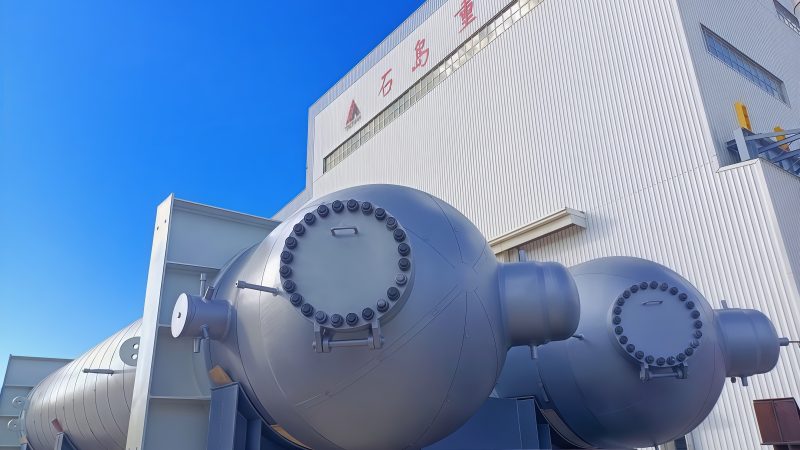
Real Project Example: Q345R + S31603 Clad Reactors
WSHI manufactured Primary, Secondary and Standby Reactors for Qingdao Gulf Chemical using:
Q345R + S31603 clad construction
Published specifications include:
| Parameter | Project Data |
|---|---|
| Equipment | Primary, Secondary & Standby Reactors |
| Diameter | Φ6600 mm |
| Length | 13,410 mm |
| Weight | 135 tons per unit |
| Structural Material | Q345R |
| Corrosion-Resistant Layer | S31603 |
| Construction | Clad Structure |
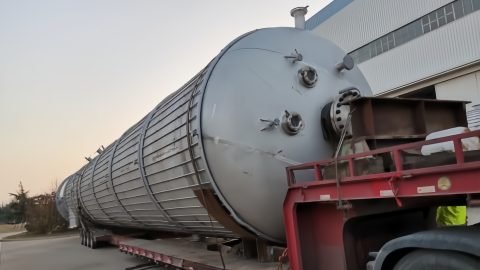
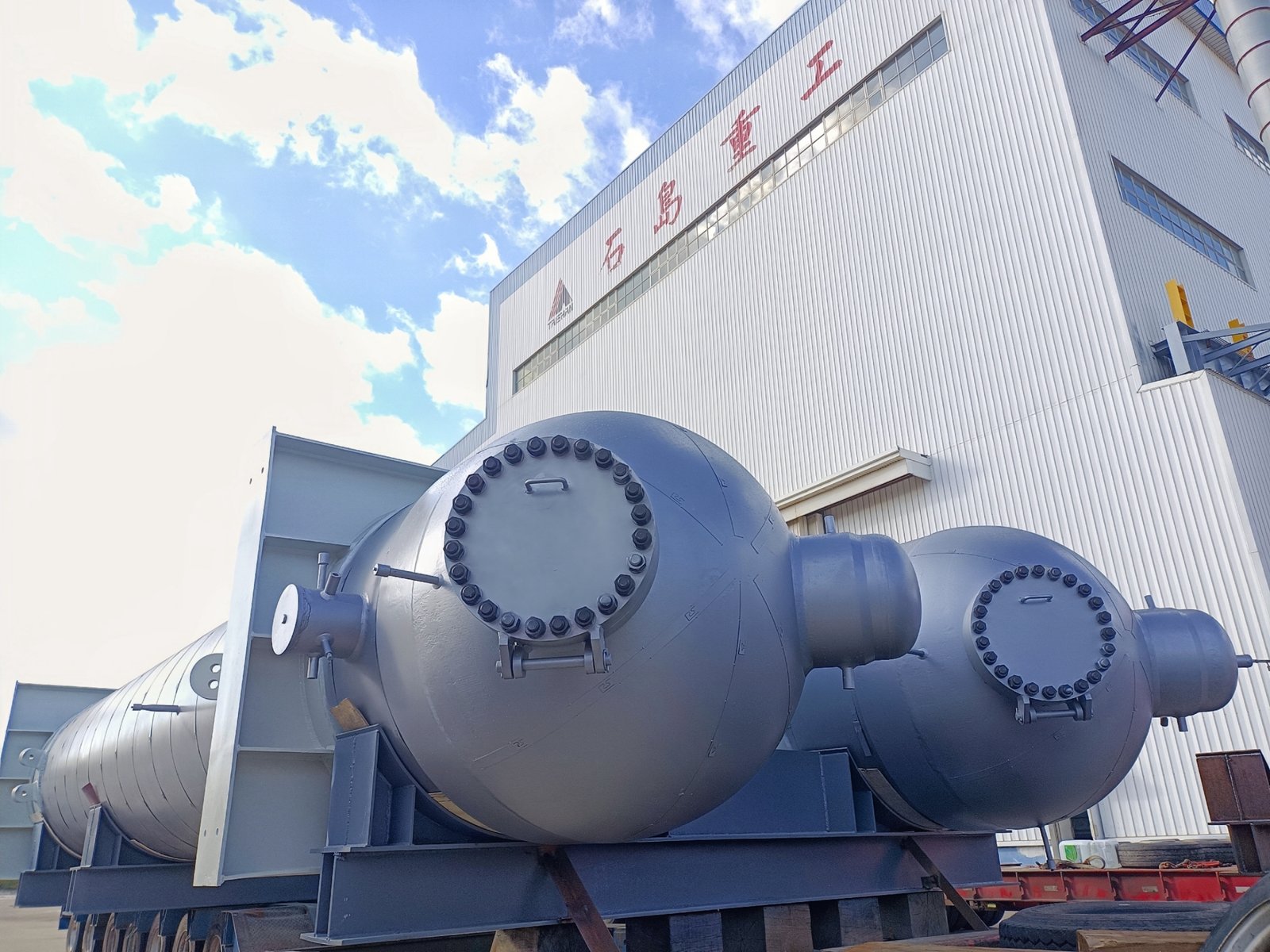
Q345R + S31603 clad reactors manufactured by WSHI. The structural base provides mechanical strength while the process-side stainless layer provides corrosion resistance.
Explore WSHI fertilizer and chemical pressure vessel projects
This project demonstrates the core clad-vessel concept:
Use structural material where structural strength is required and corrosion-resistant material where corrosion resistance is required.
What Is Weld Overlay?
Weld overlay is another way of creating a corrosion-resistant process surface.
Instead of purchasing a plate that already contains a metallurgically bonded clad layer, the manufacturer deposits corrosion-resistant weld metal onto the structural substrate.
Conceptually:
Structural Steel Surface
↓
First Overlay Layer
↓
Additional CRA Layer(s)
↓
Required Final Corrosion-Resistant Surface
Common overlay alloys can include:
- 308L / 309L-type stainless consumables;
- 316L-type materials;
- 347-type stainless alloys;
- Alloy 625;
- Alloy 825;
- other project-specific CRA consumables.
Weld overlay is particularly useful for:
- thick-wall reactors;
- forged sections;
- nozzles;
- complex geometry;
- local corrosion-resistant areas;
- heavy-wall pressure equipment where clad plate may not cover every component efficiently.
Weld Overlay Is Not the Same as Clad Plate
This distinction matters.
Clad Plate
The CRA layer is bonded to the structural plate before vessel fabrication.
Weld Overlay
The CRA layer is created through a welding deposition process.
Both can create a corrosion-resistant process surface.
But their:
- manufacturing sequence;
- metallurgical behavior;
- inspection;
- repair;
- welding procedure;
are different.
Therefore, an RFQ that simply states:
“Stainless clad required”
may not provide enough information.
The buyer should state whether the project requires:
- clad plate;
- weld overlay;
- either method subject to approval;
- a specific material specification.
Real Project Example: 626.6-Ton Hydrocracking Reactor with Weld Overlay
Severe refinery equipment provides a strong example of weld-overlay construction.
WSHI manufactured a Hydrocracking Reactor for Wudi Xinyue Fuel Chemical with the following published data:
| Parameter | Project Data |
|---|---|
| Equipment | Hydrocracking Reactor |
| Diameter | φ4000 mm |
| Wall Configuration | 212 + 6.5 mm |
| Length | 22,049 mm |
| Weight | 626.6 tons |
| Structural Material | 12Cr2Mo1V forged |
| Weld Overlay | E309L + E347 |
The pressure boundary uses a heavy Cr-Mo-V structural base, while the internal process surface uses corrosion-resistant weld overlay.
This is a fundamentally different construction strategy from manufacturing the complete 212+ mm structural section from stainless steel.
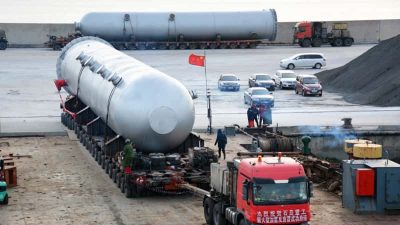
Large hydrocracking reactor manufactured by WSHI. Heavy-wall refinery reactors can combine specialized structural alloy steel with corrosion-resistant internal weld overlay.
The design reflects the separation of two functions:
structural pressure resistance
and:
process-side corrosion protection
Solid Alloy vs Clad Plate vs Weld Overlay
The three options can now be compared directly.
| Factor | Solid Alloy | Clad Plate | Weld Overlay |
|---|---|---|---|
| Structural wall | CRA | Usually carbon/low-alloy steel | Usually carbon/low-alloy steel |
| Corrosion surface | Same material as wall | Bonded CRA layer | Deposited CRA weld metal |
| CRA consumption | High | Lower | Lower / localized |
| Thick-wall economics | Can become expensive | Often attractive | Often attractive |
| Bond interface | None | Yes | Fusion interface |
| Complex geometry | Depends on material/form | More difficult in some details | Highly adaptable |
| Large forged components | Expensive in solid CRA | May require transition solutions | Often well suited |
| Dilution control | Not applicable | Not a weld-overlay issue in original plate | Critical |
| Joint fabrication | Single alloy family | Requires clad restoration/detailing | Requires qualified overlay process |
| Repair philosophy | Material-specific | Bond/clad repair required | Overlay repair possible with qualified procedure |
This is a directional comparison only.
Actual material selection should be based on the project-specific design and process conditions.
When Is Solid Alloy Usually the Better Choice?
Solid-alloy construction may be attractive when several of the following conditions apply.
1. Required Wall Thickness Is Moderate
If the vessel does not require an extremely thick wall, the amount of expensive alloy may remain commercially manageable.
The economic advantage of clad construction generally becomes more significant as:
- diameter increases;
- pressure increases;
- required wall thickness increases;
- total equipment weight increases.
2. Product Purity Is Critical
Fine-chemical, pharmaceutical, polymer, and specialty-chemical processes may place very high importance on:
- contamination control;
- cleanability;
- smooth internal surfaces;
- material consistency.
Solid stainless construction can be attractive in these services.
3. Corrosion Resistance Is Required Throughout the Wall
Some applications may require corrosion-resistant material beyond only the process-facing surface.
In these cases, a superficial corrosion-resistant layer may not satisfy the actual engineering objective.
4. Fabrication Simplicity Favors a Single Material
Clad vessels introduce additional fabrication details.
A solid-alloy vessel avoids:
- clad bond interfaces;
- clad edge preparation;
- restoration of cladding across some joints.
However, this does not mean solid alloy is automatically easier to manufacture.
Highly alloyed materials can introduce their own challenges involving:
- forming;
- welding;
- heat input;
- contamination;
- distortion;
- pickling;
- passivation.
5. Equipment Size Is Compatible with Material Availability
Solid-alloy plate, forgings, heads, and other components must be available in the required:
- thickness;
- diameter;
- width;
- weight.
Availability can become a major constraint on large heavy equipment.
When Is Clad Plate Usually Attractive?
Clad plate becomes particularly interesting when:
- the vessel is large;
- structural wall thickness is substantial;
- the process side requires CRA;
- the expensive alloy is not needed through the full wall;
- suitable clad plate is available;
- forming and joint fabrication are practical.
Typical applications can include:
- reactors;
- process columns;
- separators;
- chemical vessels;
- large heat-exchanger components.
Clad construction is especially logical when the engineering problem can be separated cleanly into:
strength requirement
and:
corrosion-resistance requirement
Clad Plate Can Reduce Alloy Consumption
Imagine a simplified vessel requiring:
50 mm structural thickness
and a corrosion-resistant process surface.
A full-wall nickel-alloy vessel could require approximately 50 mm of expensive alloy throughout the shell.
A clad solution might instead use:
structural steel + a much thinner nickel-alloy layer
subject to the actual mechanical and corrosion design.
On a large-diameter vessel, that difference can represent a substantial quantity of high-value material.
This is why clad equipment is widely used in:
- chemical processing;
- petrochemical;
- oil and gas;
- refining;
- power;
- metallurgical processing.
When Is Weld Overlay Usually Attractive?
Weld overlay is particularly attractive when the required corrosion-resistant surface needs to be applied to:
- thick forged shells;
- large nozzles;
- flange faces;
- complex internal geometry;
- local severe-corrosion zones;
- heavy-wall reactor components.
A manufacturer can deposit the required CRA onto selected areas instead of manufacturing every structural component from the alloy.
This can be especially important for:
- hydrocracking reactors;
- hydrofining reactors;
- hydrogenation reactors;
- high-pressure separators;
- ammonia or methanol process equipment.
WSHI’s refinery pressure vessel portfolio includes several heavy-wall vessels using E309L/E347-type overlay construction.
Why Is Dilution Important in Weld Overlay?
Dilution is one of the most important technical issues in weld-overlay fabrication.
During welding, some of the structural substrate melts and mixes with the deposited corrosion-resistant weld metal.
This changes the final overlay chemistry.
For example, depositing a nickel-based alloy onto carbon steel can introduce iron from the substrate into the overlay.
If dilution becomes excessive, the deposited surface may no longer provide the corrosion properties expected from the nominal filler alloy.
TWI identifies dilution as a major factor in corrosion-resistant weld overlay and notes that it can have a significant effect on the corrosion resistance of the deposited layer.
Read TWI’s technical overview of cladding
This is why weld-overlay qualification must consider more than whether the weld simply “sticks” to the base metal.
Important variables can include:
- welding process;
- current;
- voltage;
- travel speed;
- heat input;
- filler material;
- bead overlap;
- layer sequence;
- substrate metallurgy.
Why Multiple Overlay Layers May Be Used
The first weld-overlay layer experiences the greatest interaction with the structural base material.
Additional layers can help achieve the required final surface chemistry and corrosion properties.
This is one reason a specification might identify a material system such as:
E309L + E347
rather than simply saying:
“Stainless steel overlay.”
The detailed sequence, chemistry, thickness, and qualification should be established by the applicable welding procedure and project specification.
What Does ASME Section IX Have to Do with Weld Overlay?
ASME BPVC Section IX addresses qualification of welding procedures and welding personnel used for Code construction.
For pressure-vessel weld overlay, qualified procedures are important because changes in:
- process;
- consumables;
- heat input;
- technique;
- material combination;
can affect the final metallurgical result.
An overlay should therefore not be treated as cosmetic surfacing.
It is a controlled metallurgical manufacturing operation.
How Is Clad Plate Joined During Pressure Vessel Fabrication?
Joining clad plate is more complicated than joining ordinary carbon-steel plate.
The joint must restore both:
- structural continuity, and
- corrosion-resistant process-surface continuity.
A typical fabrication sequence may involve:
Prepare Joint
↓
Control / Remove Clad Near Weld Preparation as Required
↓
Complete Structural Base-Metal Weld
↓
Perform Required Inspection
↓
Restore Corrosion-Resistant Layer
↓
Final Surface Inspection
The exact sequence depends on:
- material combination;
- thickness;
- welding procedure;
- applicable Code;
- project requirements.
Poor clad-joint detailing can create:
- dissimilar-metal problems;
- dilution;
- localized corrosion;
- weld defects;
- loss of corrosion-resistant coverage.
Therefore, clad pressure vessels require fabricators with experience in both pressure-boundary welding and CRA restoration.
What Is Bond Integrity in Clad Plate?
Clad plate relies on a metallurgical bond between:
base metal
and:
cladding alloy
Bond quality therefore matters.
Applicable material specifications can include requirements related to:
- bond strength;
- shear strength;
- bend tests;
- tensile properties;
- chemical composition.
For example, ASTM A264 covers stainless chromium-nickel steel-clad plate generally intended for pressure-vessel applications and requires the alloy layer to be metallurgically bonded to the base material.
Inspection requirements should be defined by the applicable:
- material specification;
- construction code;
- purchaser specification.
Can Cladding Delaminate?
Bond deterioration or separation can be a credible concern in some clad systems and operating environments.
Risk depends on factors such as:
- clad manufacturing process;
- interface quality;
- forming;
- welding;
- thermal cycling;
- hydrogen exposure;
- operating temperature.
This does not mean clad equipment is inherently unreliable.
It means the bond interface is another engineering feature that must be qualified and inspected appropriately.
For severe high-temperature hydrogen applications, material system and cladding technology require particularly careful assessment.
Does the Clad Layer Carry Pressure?
Do not make a universal assumption.
In many clad-vessel designs, the structural base material is intended to provide the primary pressure-retaining strength while the CRA layer is primarily provided for corrosion resistance.
However, whether any portion of the clad thickness can be credited in mechanical design depends on:
- applicable Code;
- material specification;
- bonding method;
- design assumptions;
- project requirements.
Therefore:
Do not assume that a 50 mm base + 5 mm clad vessel automatically has 55 mm of structural pressure thickness.
The manufacturer’s mechanical calculation should clearly define how the composite wall is treated.
This is closely related to the concept of corrosion allowance in pressure vessel design.
Cladding Is Not the Same as Corrosion Allowance
These strategies solve corrosion differently.
Corrosion Allowance
Accepts predictable metal loss.
Example:
Carbon Steel Structural Thickness + 3 mm Sacrificial Material
Cladding
Attempts to resist the corrosive process using a CRA surface.
Example:
Carbon Steel Structural Base + 316L Cladding
The first strategy says:
“Some metal loss is expected.”
The second says:
“Use a process-facing material selected to resist the corrosive environment.”
In severe applications, these can also be combined where the project design requires it.
But neither should be specified without a materials-engineering basis.
Clad Plate vs Weld Overlay: Which Is Better?
Neither is universally better.
Clad Plate May Be Preferred When:
- large flat or formed shell areas need CRA protection;
- suitable clad plate is commercially available;
- a consistent bonded layer is desired over broad surfaces;
- vessel geometry is compatible with clad plate fabrication.
Weld Overlay May Be Preferred When:
- components are extremely thick;
- forged sections require CRA surfaces;
- geometry is complex;
- local regions require protection;
- nozzles or closures need corrosion-resistant surfacing;
- project metallurgy favors a controlled deposited layer.
Many large pressure vessels actually use more than one approach.
For example:
- clad plate for shell sections;
- weld overlay for nozzle bores;
- solid alloy for certain internals;
- alloy weld metal for clad restoration.
Therefore, material architecture should be developed at the equipment-system level, not component by component in isolation.
Solid Alloy vs Weld Overlay: Which Is More Reliable?
Reliability cannot be determined from the construction type alone.
A well-designed and well-manufactured overlay system can perform successfully in demanding industrial service.
A poorly selected solid alloy can still fail if it is susceptible to:
- chloride SCC;
- pitting;
- high-temperature degradation;
- hydrogen damage.
Likewise, an improperly applied overlay can suffer from:
- excessive dilution;
- incomplete coverage;
- cracking;
- poor chemistry;
- defects.
Reliability depends on:
material selection + process environment + design + fabrication + inspection + operation
not simply on whether the vessel is “solid” or “clad.”
How Does Pressure Affect the Material Choice?
As internal pressure increases, required structural thickness often increases.
This can make solid CRA construction progressively more expensive.
Consider two hypothetical vessels using the same corrosion-resistant alloy.
Vessel A
Required wall thickness:
12 mm
Vessel B
Required wall thickness:
180 mm
Using the CRA through the entire 12 mm wall might be economically reasonable.
Using that same premium alloy throughout 180 mm of a very large vessel can create a completely different procurement problem.
This is why heavy hydroprocessing reactors often use:
Cr-Mo structural material + CRA weld overlay
instead of several hundred millimeters of solid stainless or nickel alloy.
For related design fundamentals, see:
Design Pressure vs MAWP: What Is the Difference?
How Does Vessel Diameter Affect the Decision?
Diameter multiplies material consumption.
A few millimeters of expensive alloy across a small vessel represents relatively little material.
The same alloy thickness over:
- a 6 m diameter shell;
- tens of meters of vessel length;
can represent many tons.
As size increases, material-selection economics should therefore consider:
- alloy tonnage;
- forming capability;
- plate availability;
- welding volume;
- lifting;
- transportation.
This is particularly relevant to large:
- reactors;
- process towers;
- separators;
- heat exchangers.
How Does Temperature Affect Clad Selection?
A material pair suitable at moderate temperature is not automatically suitable for high-temperature service.
Temperature can influence:
- differential thermal expansion;
- base-metal strength;
- clad bond stresses;
- diffusion;
- weld metallurgy;
- creep;
- corrosion.
The thermal expansion coefficients of the base and CRA materials may differ.
During:
- heat treatment;
- startup;
- shutdown;
- service;
the materials can therefore experience different thermal strains.
For high-temperature pressure vessels, the complete composite system must be assessed rather than selecting the cladding solely from a corrosion table.
How Does PWHT Affect Clad and Overlay Construction?
Post-weld heat treatment can affect both:
structural base material
and:
corrosion-resistant layer
Important considerations can include:
- intermetallic or metallurgical changes;
- diffusion;
- hardness;
- residual stress;
- corrosion resistance;
- distortion.
For heavy-wall Cr-Mo pressure equipment, PWHT may be an essential part of fabrication.
The CRA system therefore needs to be compatible with the required heat-treatment cycle.
This is one reason materials selection, welding, and PWHT should not be handled as three independent decisions.
What About Dissimilar-Metal Welding?
Clad vessels frequently require joining combinations such as:
Carbon Steel / Low-Alloy Steel
to:
Stainless Steel / Nickel Alloy
Dissimilar-metal welding introduces additional issues including:
- filler-metal selection;
- dilution;
- thermal expansion mismatch;
- carbon migration in some systems;
- heat treatment;
- corrosion behavior.
The welding sequence and qualified procedure are therefore critical.
The correct filler material cannot be selected only by matching the cladding alloy name.
How Is Weld Overlay Inspected?
Inspection requirements depend on:
- project specification;
- overlay material;
- thickness;
- geometry;
- applicable Code.
Possible controls may include:
- visual inspection;
- PT;
- UT where appropriate;
- thickness measurement;
- chemical analysis;
- ferrite measurement where applicable;
- PMI;
- bond/interface assessment;
- corrosion testing where specified.
The purpose is not only to check for conventional welding defects.
Inspection may also need to verify that the final CRA surface actually has the:
- thickness;
- chemistry;
- integrity;
required by the project.
Why Is PMI Important?
Positive Material Identification can be particularly valuable in equipment containing multiple alloys.
A large reactor may include:
- Cr-Mo base material;
- stainless overlay;
- nickel-alloy nozzles;
- stainless internals;
- different welding consumables.
Material mix-up can therefore create serious consequences.
PMI can help verify that the required alloy system has actually been installed in the correct location.
Can a Damaged Clad Layer Be Repaired?
Potentially, yes.
Local clad or overlay damage may sometimes be repaired using a qualified welding procedure.
However, repair decisions should consider:
- cause of damage;
- base-metal condition;
- remaining structural thickness;
- clad material;
- service environment;
- heat treatment;
- weld chemistry;
- required NDE.
Simply depositing new stainless weld metal over a damaged surface is not automatically an acceptable repair.
The underlying damage mechanism must first be understood.
Can You Add Weld Overlay to an Existing Vessel?
In some cases, weld overlay can form part of an engineered repair or corrosion-upgrade strategy.
For example, severely corroded process surfaces have been repaired or protected using controlled-deposition and overlay techniques.
However, retrofitting overlay requires engineering assessment of:
- original material;
- existing damage;
- remaining wall thickness;
- weldability;
- PWHT;
- distortion;
- operating environment.
It should not be treated as a universal field repair.
Which Option Has the Lowest Initial Cost?
There is no universal answer.
A useful cost comparison is:
| Cost Driver | Solid Alloy | Clad Plate | Weld Overlay |
|---|---|---|---|
| CRA material quantity | High | Lower | Lower |
| Base steel | None / limited | Significant | Significant |
| Specialized plate procurement | Moderate–high | High | Lower in some cases |
| Overlay welding labor | None | Limited/local | Potentially high |
| Clad joint fabrication | None | Required | Different complexity |
| Heat treatment interaction | Material specific | Must consider composite | Must consider overlay |
| Inspection complexity | Moderate | Higher | Higher |
| Large-wall economics | Often expensive | Often favorable | Often favorable |
For a small stainless vessel, solid alloy may be the simplest and cheapest approach.
For a 600-ton heavy-wall reactor, the result can be very different.
Which Option Has the Lowest Lifecycle Cost?
Initial equipment price does not determine lifecycle cost.
A lifecycle evaluation should consider:
CAPEX
*
Inspection
*
Maintenance
*
Repair
*
Shutdown
*
Corrosion Risk
*
Replacement
For example, choosing carbon steel with an excessively large corrosion allowance instead of an appropriate CRA system may reduce initial alloy spending but increase:
- vessel weight;
- corrosion monitoring;
- future repair;
- shutdown risk.
Likewise, specifying solid nickel alloy where clad construction would provide equivalent service performance can dramatically increase CAPEX without creating proportional lifecycle benefit.
The economically optimum material system is therefore application-specific.
How Should EPC Buyers Choose Between Solid Alloy, Clad and Overlay?
A useful decision sequence is:
Step 1: Identify the Damage Mechanism
Determine whether the concern is:
- general corrosion;
- pitting;
- crevice corrosion;
- SCC;
- hydrogen-related damage;
- erosion;
- contamination.
Step 2: Select the Process-Side Material
Identify the alloy capable of meeting:
- corrosion;
- temperature;
- process-purity;
- lifecycle requirements.
Step 3: Calculate Structural Thickness
Determine how much pressure-retaining material is actually required.
Step 4: Compare Construction Routes
Evaluate:
Solid CRA
versus:
Structural Base + Clad Plate
versus:
Structural Base + Weld Overlay
Step 5: Check Material Availability
Verify:
- plate size;
- thickness;
- forging availability;
- clad plate availability;
- forming capability.
Step 6: Evaluate Fabrication
Consider:
- welding;
- forming;
- PWHT;
- NDE;
- machining;
- overlay productivity.
Step 7: Compare Lifecycle Economics
Do not compare only raw material price.
Three Real WSHI Material Strategies
WSHI’s published project portfolio contains examples of all three major approaches.
| Strategy | WSHI Project | Material System |
|---|---|---|
| Solid Alloy | DPC Reaction Column | S31603 / 316L |
| Clad Structure | Gulf Chemical Reactors | Q345R + S31603 |
| Weld Overlay | Hydrocracking Reactor | 12Cr2Mo1V + E309L/E347 |
This is useful because it demonstrates that there is no single “best pressure vessel material construction.”
The appropriate solution changes with:
- process;
- pressure;
- temperature;
- equipment size;
- corrosion environment.
For more information, explore WSHI’s fertilizer and chemical projects and refinery pressure vessel projects.
What Should Be Included in an RFQ for a Clad Pressure Vessel?
Do not simply write:
Material: Stainless Steel Clad
A stronger RFQ should identify the complete material architecture.
Base-Metal Requirements
Specify:
- material grade;
- applicable specification;
- required mechanical properties.
Cladding Requirements
Specify:
- CRA grade;
- nominal thickness;
- minimum finished thickness where required;
- clad plate or weld overlay;
- material specification.
Process Information
Provide:
- medium;
- composition;
- contaminants;
- design pressure;
- operating pressure;
- design temperature;
- operating temperature;
- design life.
Welding Requirements
Define where applicable:
- WPS/PQR;
- overlay procedure;
- dissimilar-metal welding;
- filler metal;
- clad restoration requirements.
Inspection Requirements
Potentially include:
- UT;
- PT;
- PMI;
- chemical analysis;
- bond testing;
- overlay thickness;
- project-specific NDE.
Heat Treatment
State:
- PWHT requirements;
- heat-treatment limitations;
- required temperature records.
Documentation
Request:
- material certificates;
- clad plate certificates;
- weld maps;
- WPS/PQR;
- overlay records;
- NDE reports;
- PMI reports;
- PWHT charts;
- pressure-test records;
- final manufacturing data book.
For broader procurement documentation, see the Pressure Vessel RFQ Guide for EPC Buyers.
Example RFQ Material Specification
A better material description might look like:
Equipment: High-Pressure Process Reactor
Base Material: SA-387 Gr.22 Class 2
Internal CRA: Alloy 347 stainless weld overlay
Minimum Finished Overlay Thickness: Per approved project specification
Design Pressure: 15 MPaG
Design Temperature: 430°C
Design Code: ASME Section VIII
PWHT: Required per applicable design and material rules
Inspection: UT/PT/PMI and overlay examination per project specification
Process Medium: Hydrogen-containing refinery stream
rather than:
“Alloy pressure vessel required.”
The first enables manufacturers to quote against a defined engineering basis.
The second leaves critical assumptions unresolved.
Common Material Selection Mistakes
1. Assuming Solid Alloy Is Always Safer
Construction type alone does not determine reliability.
2. Choosing Clad Only Because It Is Cheaper
The material system must first be suitable for the process.
3. Treating Clad Plate and Weld Overlay as the Same Thing
Their manufacturing routes and quality controls differ.
4. Ignoring Dilution
Overlay chemistry can change through mixing with the substrate.
5. Assuming the Clad Layer Automatically Carries Pressure
Structural credit depends on the applicable design rules.
6. Ignoring PWHT Effects
Heat treatment can affect the entire composite material system.
7. Specifying Only “316L Cladding”
The RFQ should also define:
- cladding method;
- thickness;
- base material;
- inspection;
- welding requirements.
8. Ignoring Nozzles
The shell may be clad while nozzles remain exposed to the same corrosive fluid.
9. Ignoring Weld Seams
The process surface must remain corrosion resistant across structural joints.
10. Comparing Supplier Prices Without Comparing Material Architecture
A solid-alloy quote and a clad-vessel quote are not technically equivalent unless the process performance basis has first been established.
Material Selection Checklist for EPC Buyers
Before choosing solid alloy, clad plate, or weld overlay, confirm:
- Process medium is fully defined
- Process contaminants are identified
- Operating pressure is defined
- Design pressure is defined
- Operating temperature range is defined
- Design temperature is defined
- Damage mechanisms are identified
- Required design life is defined
- Corrosion rate data are reviewed
- Required structural thickness is calculated
- CRA material is selected
- Solid-alloy option is evaluated
- Clad-plate option is evaluated
- Weld-overlay option is evaluated
- Material availability is confirmed
- Clad bond requirements are defined
- Overlay dilution requirements are defined
- Overlay finished thickness is defined
- Nozzle materials are defined
- Internal components are defined
- Dissimilar-metal welds are reviewed
- PWHT compatibility is reviewed
- NDE requirements are defined
- PMI requirements are defined
- Repair philosophy is considered
- Lifecycle cost is evaluated
What Should Buyers Check in a Pressure Vessel Manufacturer?
Clad and overlay pressure vessels require a broader manufacturing capability than ordinary carbon-steel vessels.
Important supplier capabilities include:
| Capability | Why It Matters |
|---|---|
| Materials engineering | Supports complex material combinations |
| Clad plate fabrication | Required for forming and welding composite plate |
| CRA weld overlay | Enables corrosion-resistant surfaces on heavy components |
| Dissimilar-metal welding | Critical at clad transitions |
| Qualified WPS/PQR | Controls metallurgical integrity |
| Thick-wall fabrication | Important for refinery and high-pressure equipment |
| PWHT capability | Critical for applicable base materials |
| PMI capability | Helps prevent alloy mix-up |
| NDE | Supports clad and weld quality |
| Heavy lifting | Required for large composite equipment |
| Material traceability | Tracks base, clad and weld consumables |
| Documentation control | Essential for EPC turnover and lifecycle integrity |
WSHI Special-Material Pressure Vessel Capability
Weihai Shidao Heavy Industry (WSHI) manufactures large custom pressure vessels for:
- refining;
- petrochemical;
- oil and gas;
- fertilizer;
- chemical processing;
- energy;
- metallurgy.
Its project portfolio includes equipment manufactured from:
- carbon steel;
- low-alloy steel;
- Cr-Mo steel;
- stainless steel;
- duplex stainless steel;
- nickel alloys;
- titanium;
- zirconium;
- clad structures;
- corrosion-resistant weld overlay.
Relevant examples include:
520-ton solid S31603 reaction column
135-ton Q345R + S31603 clad reactors
626.6-ton 12Cr2Mo1V + E309L/E347 overlay hydrocracking reactor
These projects illustrate the most important material-selection principle:
The correct solution is not “solid alloy” or “clad” by default. The correct solution is the material architecture that best matches the specific process, pressure, temperature, corrosion mechanism, manufacturing requirements, and lifecycle economics.
Planning a Corrosion-Resistant Pressure Vessel Project?
For an accurate technical and commercial evaluation, provide:
equipment type + process composition + design pressure + operating pressure + design temperature + operating temperature + required design life + base material + CRA requirement + clad/overlay thickness + applicable code + PWHT requirements + NDE requirements + equipment dimensions + quantity + datasheet/drawings
Contact the WSHI engineering team to discuss your reactor, heat exchanger, tower, separator, or other special-material pressure vessel requirements.
Frequently Asked Questions
What is the difference between a clad and solid-alloy pressure vessel?
A solid-alloy pressure vessel uses corrosion-resistant material throughout the relevant pressure-retaining wall.
A clad vessel normally uses a lower-cost structural steel base with a thinner corrosion-resistant alloy layer metallurgically bonded to the process-facing surface.
The clad structure separates structural strength from corrosion resistance.
Is a clad pressure vessel cheaper than solid stainless steel?
It can be, particularly for large or thick-wall equipment where using stainless or another expensive CRA throughout the full wall would require a substantial quantity of alloy.
However, clad plate, special welding, inspection, and fabrication also add cost.
The correct comparison depends on vessel size, material, fabrication, and lifecycle requirements.
What is the difference between clad plate and weld overlay?
Clad plate is manufactured by metallurgically bonding a corrosion-resistant alloy layer to a structural base plate before vessel fabrication.
Weld overlay is created by depositing corrosion-resistant weld metal onto the structural surface.
They can serve similar corrosion-protection purposes but require different fabrication and inspection methods.
What is weld overlay in a pressure vessel?
Weld overlay is a corrosion-resistant layer deposited by welding onto the internal or external surface of a structural pressure-vessel component.
It is commonly used on heavy-wall reactors, forged nozzles, separators, and other severe-service equipment.
Does weld overlay carry pressure?
The overlay should not automatically be assumed to contribute to pressure-retaining structural thickness.
How the overlay is treated depends on the applicable construction code and approved mechanical design.
Does cladding count as pressure vessel wall thickness?
Possibly under specific approved design rules, but not automatically.
Many designs rely primarily on the structural base metal for pressure strength and use the clad layer for corrosion resistance.
The manufacturer’s Code calculation should define how the composite wall is treated.
What materials are commonly used for pressure vessel cladding?
Depending on service, cladding materials can include:
- stainless steel;
- duplex stainless steel;
- nickel alloys;
- titanium;
- zirconium;
- other corrosion-resistant alloys.
The material should be selected from actual process chemistry and damage mechanisms.
Why is carbon steel used under stainless cladding?
Carbon or low-alloy steel can provide the required structural strength at lower material cost.
A thinner stainless layer can then provide the corrosion-resistant process surface.
This allows the two materials to perform different engineering functions.
What is dilution in weld overlay?
Dilution is the mixing of base-metal material into the deposited weld-overlay metal during welding.
Excessive dilution can alter the chemistry and corrosion resistance of the final overlay, so welding parameters and procedures must be controlled.
Why are multiple weld-overlay layers sometimes required?
The first deposited layer can experience significant dilution from the base metal.
Additional layers can help achieve the required finished chemistry, thickness, and corrosion performance.
The actual layer sequence must follow the qualified welding procedure and project specification.
Is clad plate the same as lined pressure vessel construction?
No.
Clad plate uses a metallurgically bonded metallic layer.
A liner may be mechanically attached, loosely installed, chemically bonded, or formed from non-metallic material depending on the system.
The structural and inspection behavior is different.
Is clad better than corrosion allowance?
They manage different corrosion strategies.
Corrosion allowance accepts predictable material loss.
Cladding uses a corrosion-resistant process surface to reduce or prevent attack on the structural base.
The correct choice depends on the corrosion mechanism and lifecycle economics.
Can a clad pressure vessel be repaired?
Yes, certain clad and overlay damage can be repaired using approved engineering procedures.
Repair must account for both structural base-metal integrity and restoration of the corrosion-resistant layer.
When should I choose solid stainless steel instead of clad steel?
Solid stainless may be attractive when:
- wall thickness is moderate;
- contamination control is important;
- equipment size is manageable;
- corrosion resistance is required throughout the wall;
- fabrication and lifecycle economics support the alloy choice.
When is weld overlay better than clad plate?
Weld overlay can be attractive for:
- heavy forged components;
- nozzles;
- complex geometry;
- local corrosion-resistant areas;
- very thick-wall reactors.
The final choice should be based on engineering, fabrication, availability, and cost.
What should I specify in a clad pressure vessel RFQ?
At minimum specify:
- base material;
- CRA material;
- clad plate or weld overlay;
- finished CRA thickness;
- pressure and temperature;
- process medium;
- design life;
- applicable Code;
- PWHT;
- NDE;
- PMI;
- documentation requirements.
Conclusion
There is no universal winner in the comparison of:
Solid Alloy vs Clad Plate vs Weld Overlay
Each solves the pressure-vessel material problem differently.
A solid-alloy vessel uses one corrosion-resistant material for both structural strength and process compatibility.
A clad vessel combines a structural base metal with a metallurgically bonded corrosion-resistant surface.
A weld-overlay vessel uses a structural substrate and creates the corrosion-resistant layer through qualified weld deposition.
For relatively moderate wall thicknesses, solid alloy may offer a straightforward and reliable solution.
As vessels become:
- larger;
- heavier;
- thicker;
- higher pressure;
using expensive CRA throughout the full structural wall can become increasingly difficult to justify.
Clad plate or weld overlay can then provide a more efficient material architecture.
But material cost should never be the first decision criterion.
The correct selection sequence is:
process chemistry → damage mechanism → CRA selection → structural requirement → equipment size → fabrication route → inspection → lifecycle economics
For EPC contractors, the practical procurement lesson is therefore:
Do not ask manufacturers simply for a “stainless pressure vessel” or a “clad pressure vessel.” Specify the complete material system and the engineering requirement behind it.
The right question is not:
Which construction is cheapest per kilogram?
It is:
Which material architecture provides the required structural integrity, corrosion resistance, manufacturability, inspectability, and lifecycle reliability for this specific process?
Standards and Technical References
- ASME BPVC Section VIII Division 1 — Rules for Construction of Pressure Vessels
- ASME BPVC Section IX — Welding, Brazing and Fusing Qualifications
- ASTM A263 — Stainless Chromium Steel-Clad Plate
- ASTM A264 — Stainless Chromium-Nickel Steel-Clad Plate
- ASTM A265 — Nickel and Nickel-Base Alloy-Clad Steel Plate
- TWI — Cladding
- TWI — CRA Weld Overlay: Dilution and Corrosion Resistance
- WSHI Hydrocracking Reactor Project
- WSHI Fertilizer & Chemical Pressure Vessel Projects
- WSHI Pressure Vessels