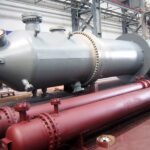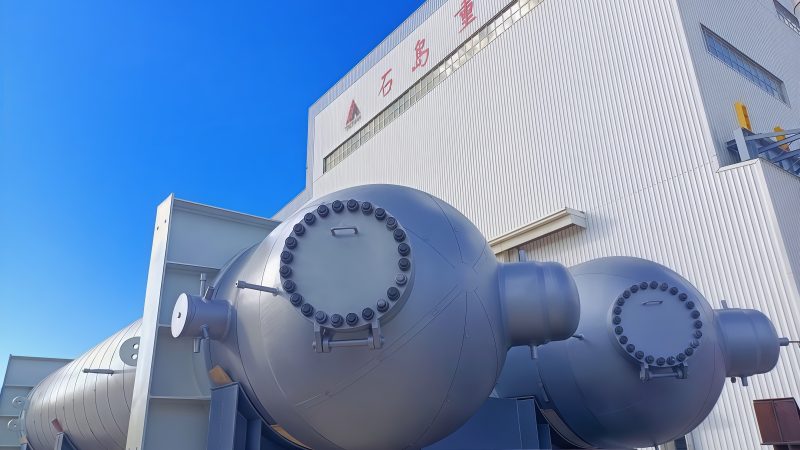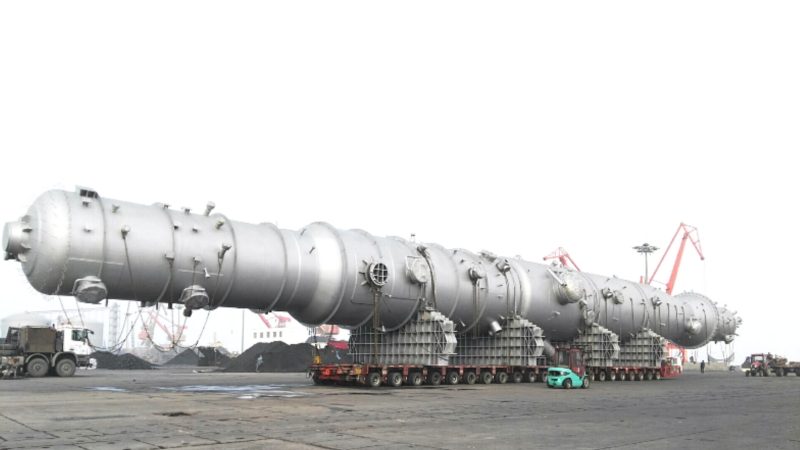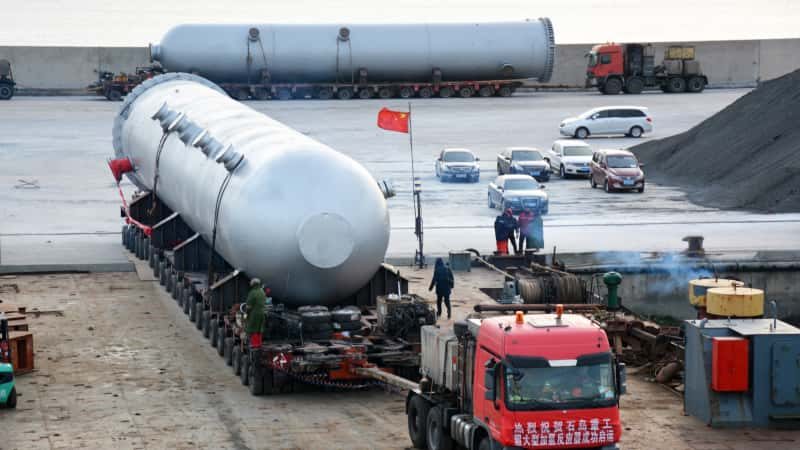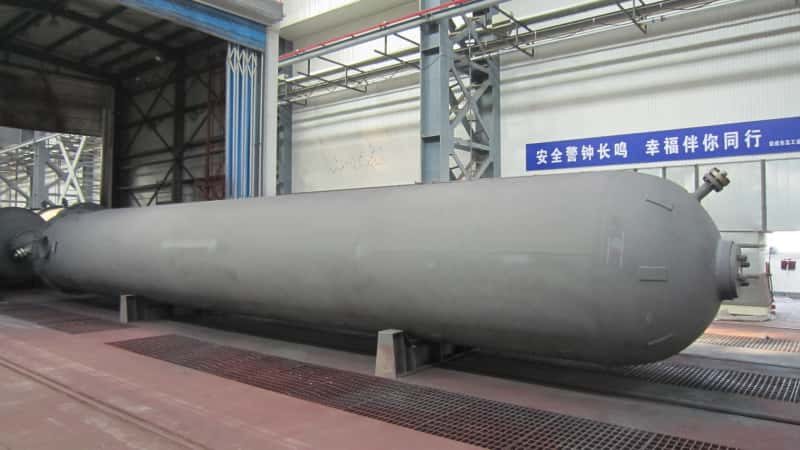

Double pipe, shell and tube, and plate heat exchangers all transfer heat between two fluids, but they solve different engineering problems. A buyer who chooses only by initial price or heat-transfer coefficient can end up with equipment that is too large, too difficult to clean, too sensitive to fouling, or unsuitable for the required pressure and temperature. The better approach is to compare structure, heat-transfer area, pressure rating, temperature limits, fouling tolerance, cleaning method, footprint, lifecycle cost, and application conditions together.
A double pipe heat exchanger uses one pipe inside another pipe. It is simple, strong, and practical for small to medium duties, high-pressure small-flow services, pilot systems, viscous fluids, and applications where straightforward counterflow heat transfer is useful. A shell and tube heat exchanger uses many tubes inside a shell and is usually better for large industrial duties, severe process conditions, dirty fluids, condensers, reboilers, and refinery or chemical plant service. A plate heat exchanger uses stacked plates and narrow channels, giving high thermal efficiency and compact size for clean compatible fluids, but it can be more sensitive to fouling, particulates, gasket limits, and pressure-temperature restrictions.
For related equipment categories, buyers can review hairpin heat exchangers, shell and tube heat exchangers, broader industrial heat exchangers, and custom pressure vessels when planning an EPC equipment package.
A double pipe heat exchanger is structurally simpler than a shell and tube heat exchanger.True
A basic double pipe exchanger uses one pipe inside another pipe, while a shell and tube exchanger uses a tube bundle, shell, tube sheets, baffles, channels, nozzles, and more complex mechanical details.
Plate heat exchangers are always the best choice because they have high thermal efficiency.False
Plate heat exchangers are efficient for many clean-fluid services, but pressure, temperature, fouling, gasket compatibility, solids, viscosity, and cleaning requirements can make double pipe or shell and tube designs more suitable.
Quick Comparison
The simplest way to compare these exchanger types is to start with their construction. Structure drives heat-transfer area, pressure boundary, cleaning method, installed space, and cost behavior.
| Comparison factor | Double pipe heat exchanger | Shell and tube heat exchanger | Plate heat exchanger |
|---|---|---|---|
| Main structure | One pipe inside another pipe | Tube bundle inside cylindrical shell | Stacked corrugated plates |
| Best duty size | Small to medium | Medium to very large | Small to large for clean fluids |
| Footprint | Compact for small duty; long for large duty | Larger than plate, efficient for large area | Very compact |
| Pressure capability | Very good for pipe-based small services | Excellent and highly flexible | Good within gasketed, brazed, or welded design limits |
| Fouling tolerance | Good for small dirty or viscous streams if cleanable | Excellent when designed for mechanical cleaning | Lower for narrow channels unless wide-gap or openable design is used |
| Typical use | Pilot plants, sample coolers, small chemical heaters, high-pressure loops | Refineries, petrochemical plants, condensers, reboilers, oil coolers | HVAC, food and beverage, clean utilities, compact heat recovery |
How the Structures Differ
A double pipe heat exchanger is the simplest of the three. One fluid flows through the inner pipe, while the other fluid flows through the annular space between the inner and outer pipes. The unit may be built as straight sections, hairpin sections, or multiple modules in series or parallel. Thermopedia describes double-pipe exchangers as tube-in-tube or jacketed designs that are commonly arranged for countercurrent flow. The heat-transfer surface is mainly the wall of the inner pipe, so scaling up requires more length or more sections.
A shell and tube heat exchanger has a much larger and more flexible structure. It contains many tubes mounted in tube sheets inside a shell. One fluid flows through the tubes, while the other flows across or along the tube bundle inside the shell. Baffles support the tubes and direct shell-side flow. Thermopedia describes shell and tube exchangers as tube bundles mounted inside a cylindrical shell, and the TEMA standards are widely used for shell and tube mechanical design and terminology.
A plate heat exchanger uses thin corrugated plates to create alternating hot and cold fluid channels. The plate pattern creates turbulence and high surface area in a compact volume. Alfa Laval explains that gasketed plate heat exchangers use gaskets to seal and direct fluids through alternating channels. This design can be very efficient, but the narrow passages and gasket system must be compatible with the process fluid, pressure, temperature, solids, and cleaning method.
| Structural item | Double pipe | Shell and tube | Plate |
|---|---|---|---|
| Heat-transfer element | Inner pipe wall | Many tube walls | Thin plate surfaces |
| Flow enhancement | Counterflow, velocity, fins, series sections | Baffles, tube passes, shell passes, tube layout | Corrugations and narrow channels |
| Expansion handling | Pipe flexibility, bends, expansion loops | U-tube, floating head, expansion joint, mechanical design | Frame compression, gasket design, welded or brazed pack design |
| Cleaning access | Simple if removable or accessible | Tube-side cleaning; shell-side depends on configuration | Excellent for gasketed units; limited for brazed units |
| Scalability | Add hairpins or banks | Increase shell diameter, tube count, length, or number of shells | Add plates in gasketed designs or use larger plate packs |
Heat Transfer Efficiency and Footprint
Plate heat exchangers often provide the highest heat-transfer area per unit volume because thin plates and corrugated channels create strong turbulence. This makes them attractive for clean water-to-water duties, HVAC heat recovery, sanitary service, district heating, and clean process liquids where close temperature approach matters.
Shell and tube exchangers are usually less compact than plate exchangers, but they remain highly effective for large duties because many tubes can be packed into one shell. They also handle phase change, high temperature, fouling, pressure, and large industrial flows better than many compact designs. The DOE fundamentals handbook on thermodynamics, heat transfer, and fluid flow discusses exchanger fundamentals and shows why flow arrangement, area, and temperature difference all matter in exchanger performance.
Double pipe exchangers can be efficient in counterflow for small services, but they do not provide the same surface area density as plate or large shell and tube units. Their efficiency advantage is practical rather than universal: simple flow, high pressure tolerance, easy isolation, and good performance for small or specialized duties.
| Efficiency question | Double pipe | Shell and tube | Plate |
|---|---|---|---|
| Best thermal strength | Counterflow in small duties | Large area and robust process flexibility | High turbulence and compact surface area |
| Close temperature approach | Good in counterflow | Moderate to good depending on design | Excellent for suitable clean fluids |
| Large-duty practicality | Limited because many sections may be needed | Excellent | Good for clean compatible fluids |
| Dirty-service efficiency | Good for small cleanable services | Often best because fouling allowance and cleaning can be designed in | Can fall quickly if channels foul or plug |
| Footprint advantage | Good only at small scale | Moderate | Strong |
Plate heat exchangers often provide the most compact heat-transfer surface for clean compatible fluids.True
Thin corrugated plates can create high turbulence and high surface area density, but this advantage depends on fluid cleanliness, pressure, temperature, and gasket or plate compatibility.
Pressure and Temperature Resistance
Pressure and temperature resistance depend on the pressure boundary. A double pipe heat exchanger is structurally close to pressure piping, so it can be attractive for high-pressure small-flow services. The inner pipe and outer pipe can be selected with suitable wall thickness, pipe schedule, material, welds, and flanges. Thermal expansion must still be handled carefully.
Shell and tube exchangers generally offer the broadest pressure and temperature design flexibility. They can be built as pressure vessels with heavy shells, tube sheets, channels, nozzles, special metallurgy, expansion features, and inspection plans. This is one reason they are widely used in refineries, petrochemical plants, gas processing systems, power plants, and chemical process units.
Plate heat exchangers can be strong within their design range, especially brazed or welded types, but gasketed units are often limited by gasket material, frame compression, plate thickness, and channel geometry. They should not be selected for severe service only because they are compact.
Fouling, Cleaning, and Maintenance
Fouling can completely change the best choice. A clean-fluid heat recovery duty may favor a plate exchanger, but a dirty cooling water, viscous oil, slurry, crystallizing fluid, or fouling hydrocarbon service may favor shell and tube or double pipe equipment. The key question is not only how fast the exchanger transfers heat when clean, but how it performs after weeks or months of operation.
Double pipe heat exchangers can be simple to inspect, flush, or clean when designed with removable sections. Shell and tube exchangers can be mechanically cleaned on the tube side and can be designed with removable bundles or cleanable tube layouts. Gasketed plate heat exchangers can be opened for inspection and cleaning, but gaskets, alignment, tightening sequence, and plate damage must be managed. Brazed plate exchangers are compact but less serviceable because they cannot be opened like gasketed units.
| Maintenance factor | Double pipe | Shell and tube | Plate |
|---|---|---|---|
| Best maintenance advantage | Simple small-system service | Deep mechanical cleaning and repairability | Fast opening and plate inspection for gasketed units |
| Common issue | Many sections can increase labor | Bundle pulling needs space and lifting | Gasket aging and narrow-channel blockage |
| Cleaning method | Flushing, chemical cleaning, mechanical access where designed | Tube brushing, hydrojetting, chemical cleaning, bundle repair | CIP, manual plate cleaning, gasket replacement |
| Dirty-fluid suitability | Good for small dirty or viscous streams | Often excellent | Only with suitable wide-gap or openable designs |
| Repair path | Replace pipe sections or fittings | Plug tubes, retube, repair bundle, replace gaskets | Replace plates or gaskets in gasketed units |
Cost and Lifecycle Economics
A double pipe heat exchanger can be economical for small heat duties because the design is simple and pipe-based. However, as required heat duty increases, the number of sections, supports, valves, drains, vents, insulation, and installation work can increase quickly. At some point, shell and tube or plate equipment may provide lower installed cost.
Shell and tube exchangers can have higher initial cost than simple double pipe units, but they are often economical for large industrial duties because they concentrate large surface area into one robust vessel. Plate exchangers can reduce installed space and sometimes capital cost in clean-fluid service, but buyers should include gasket replacement, fouling risk, cleaning cost, compatibility, and pressure-temperature limitations in lifecycle analysis.
For a deeper procurement view, buyers can also review the article on double pipe heat exchanger cost considerations and the article on double pipe heat exchanger installation steps.
Application-Based Selection Guide
| Application condition | Often preferred type | Reason |
|---|---|---|
| Small high-pressure chemical stream | Double pipe | Simple pressure-rated pipe construction is practical and strong |
| Pilot plant heater or cooler | Double pipe | Easy to install, modify, clean, and instrument |
| Large refinery process cooler | Shell and tube | Handles large duty, pressure, temperature, and fouling |
| Steam condenser or reboiler | Shell and tube | Well suited to phase change and large heat-transfer area |
| Dirty cooling water | Shell and tube | Tubes can be mechanically cleaned and fouling allowance can be designed in |
| HVAC water-to-water heat recovery | Plate | Compact footprint and high thermal efficiency for clean fluids |
| Food or beverage clean-fluid service | Plate | Gasketed plate units can be efficient and cleanable |
| Viscous oil heating, small duty | Double pipe or shell and tube | Larger passages and cleaning access may matter more than compactness |
| Limited equipment room space | Plate | Highest surface area density when fluids are compatible |
| Severe industrial process service | Shell and tube | Most flexible for pressure, temperature, metallurgy, inspection, and repair |
What Buyers Should Prepare Before Asking for a Quotation
Before asking a manufacturer to compare double pipe, shell and tube, and plate heat exchangers, buyers should prepare process datasheets, fluid names and properties, heat duty, inlet and outlet temperatures, flow rates, operating and design pressure, operating and design temperature, fouling factor, allowable pressure drop, material requirements, corrosion risk, cleaning method, installation space, maintenance access, design code, inspection requirements, delivery terms, and documentation requirements.
A qualified large-scale pressure vessel manufacturer should help evaluate whether the duty is better handled by double pipe, shell and tube, plate, or another heat exchanger configuration rather than quoting a single type without reviewing the full process conditions.
FAQ
How is a double pipe heat exchanger different from a shell and tube heat exchanger?
A double pipe heat exchanger uses one pipe inside another pipe, with one fluid in the inner pipe and the other in the annulus. A shell and tube heat exchanger uses a bundle of many tubes inside a cylindrical shell, making it more suitable for larger industrial heat duties and higher flow rates.
Why choose a double pipe heat exchanger instead of a plate heat exchanger?
A double pipe exchanger may be preferred for simple construction, small duties, high-pressure service, viscous fluids, or straightforward tubular cleaning. A plate exchanger may be preferred when clean fluids, compact footprint, high thermal efficiency, and close temperature approach are more important.
Is a double pipe heat exchanger more efficient than shell and tube or plate designs?
It can be effective for small counterflow duties, but it is usually not the most compact choice for large heat loads. Plate exchangers often have high surface area density for clean fluids, while shell and tube exchangers are often more practical for large rugged industrial duties.
Which heat exchanger is best for high pressure?
For small high-pressure streams, a double pipe exchanger can be very practical. For broader severe-service industrial applications, shell and tube exchangers usually offer the widest pressure and temperature design flexibility. Plate exchangers can handle pressure within their design range, but gasketed types are more limited.
Which heat exchanger is easiest to clean?
Gasketed plate heat exchangers can be opened for cleaning in suitable services. Shell and tube exchangers can be mechanically cleaned on the tube side and may have removable bundles. Double pipe exchangers can be simple to flush or clean when designed with accessible sections.
Does a double pipe heat exchanger cost less?
It can cost less for small duties because of simple pipe-based construction. For large heat duties, many double pipe sections may be required, and shell and tube or plate exchangers may become more economical depending on service conditions.
Conclusion
A double pipe heat exchanger is different from shell and tube and plate heat exchangers because it uses a simple pipe-in-pipe structure. That simplicity makes it useful for small duties, high-pressure small flows, pilot systems, and cleanable process loops. Shell and tube exchangers are usually stronger choices for large, dirty, high-temperature, high-pressure, or phase-change industrial services. Plate heat exchangers are often best where clean compatible fluids, compact size, high thermal efficiency, and close temperature approach are priorities.
If you are sourcing double pipe heat exchangers, shell and tube heat exchangers, pressure vessels, storage tanks, separators, towers, or other custom process equipment for chemical, petrochemical, refinery, energy, or EPC projects, you can discuss your project requirements with an engineering and manufacturing team. Sharing process datasheets, fluid properties, heat duty, pressure, temperature, material requirements, inspection needs, and delivery terms will support accurate technical evaluation and quotation.